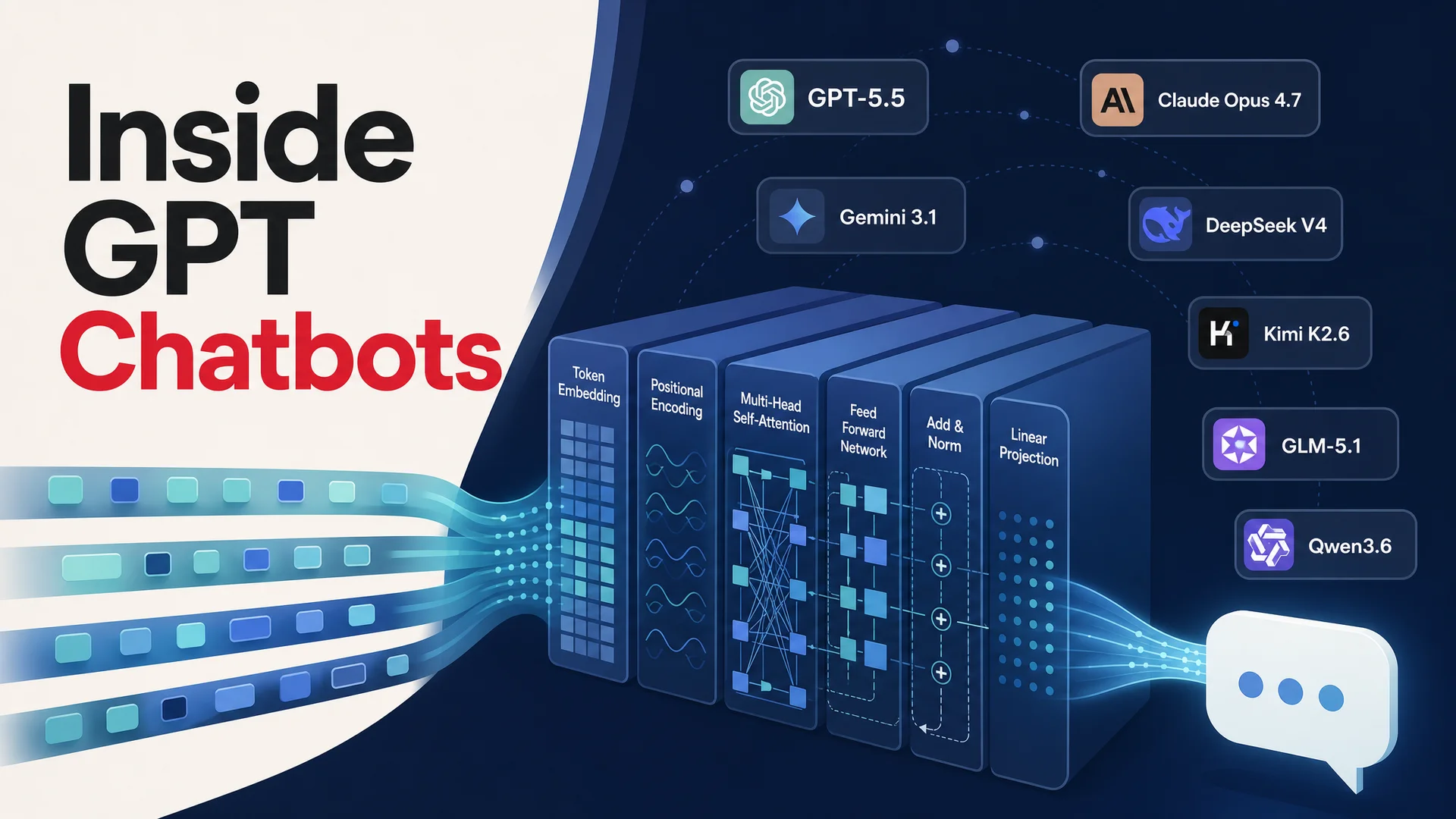
Most teams shipping an AI product in 2026 stand on top of a foundation model - GPT‑5.5, Claude Opus 4.7, Gemini 3.1 Ultra, DeepSeek V4, Kimi K2.6, GLM‑5.1, Qwen 3.6, MiniMax M2, or one of the other open‑weight frontier models that arrived in the last twelve months. The base intelligence is no longer the hard part. The hard part is teaching that intelligence about your product, your policies, and your customers in a way that is fast, cheap, accurate, and safe to put in front of a real user.
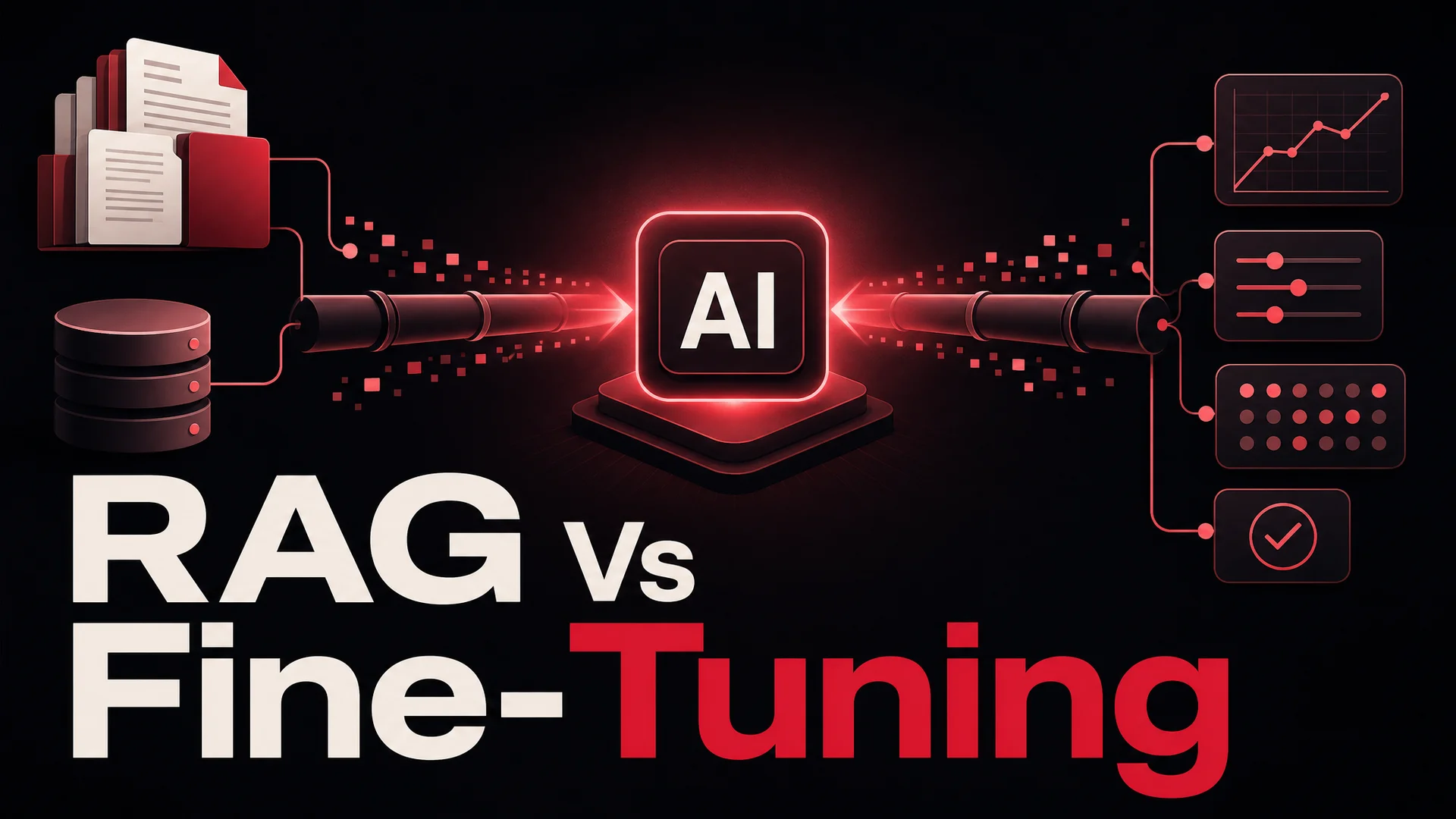
That is where two camps form, and where most engineering teams get stuck for a week longer than they should: do you wire the model up with Retrieval‑Augmented Generation (RAG), or do you fine‑tune it on your own data?
For some workloads the answer is obvious. A help center that changes every Tuesday is RAG. A model that has to write in your brand voice, in a regulated tone, every single time, is fine‑tuning. The interesting cases are the ones in between - the legal copilot that needs both the law and a house style, the support agent that needs a deep grasp of your SKUs and a live view of inventory, the field‑service tool that has to know last week's firmware bulletin and also speak like a senior technician.
This guide walks through both approaches, then lays out the criteria we use at Berrydesk when we help customers decide. By the end you should know which lever to pull first, and when to pull both.
RAG and fine‑tuning, defined
The two approaches solve overlapping problems with very different mechanics. Before we compare them, here is what each one actually does under the hood.
What RAG actually does
Retrieval‑Augmented Generation hands the model a fresh stack of context at the moment of each request. The model itself is not changed. Instead, an indexer chops your documents into chunks, embeds them, and stores them in a vector store. When a user asks a question, the system searches for the most relevant chunks, drops them into the prompt as evidence, and lets the model reason over that evidence to generate the answer.
The mental model is "open‑book exam." The model has its general training, but the specific facts it is allowed to cite come from sources you control. Update the source, and the next answer reflects the update - no retraining, no redeploy, no model surgery.
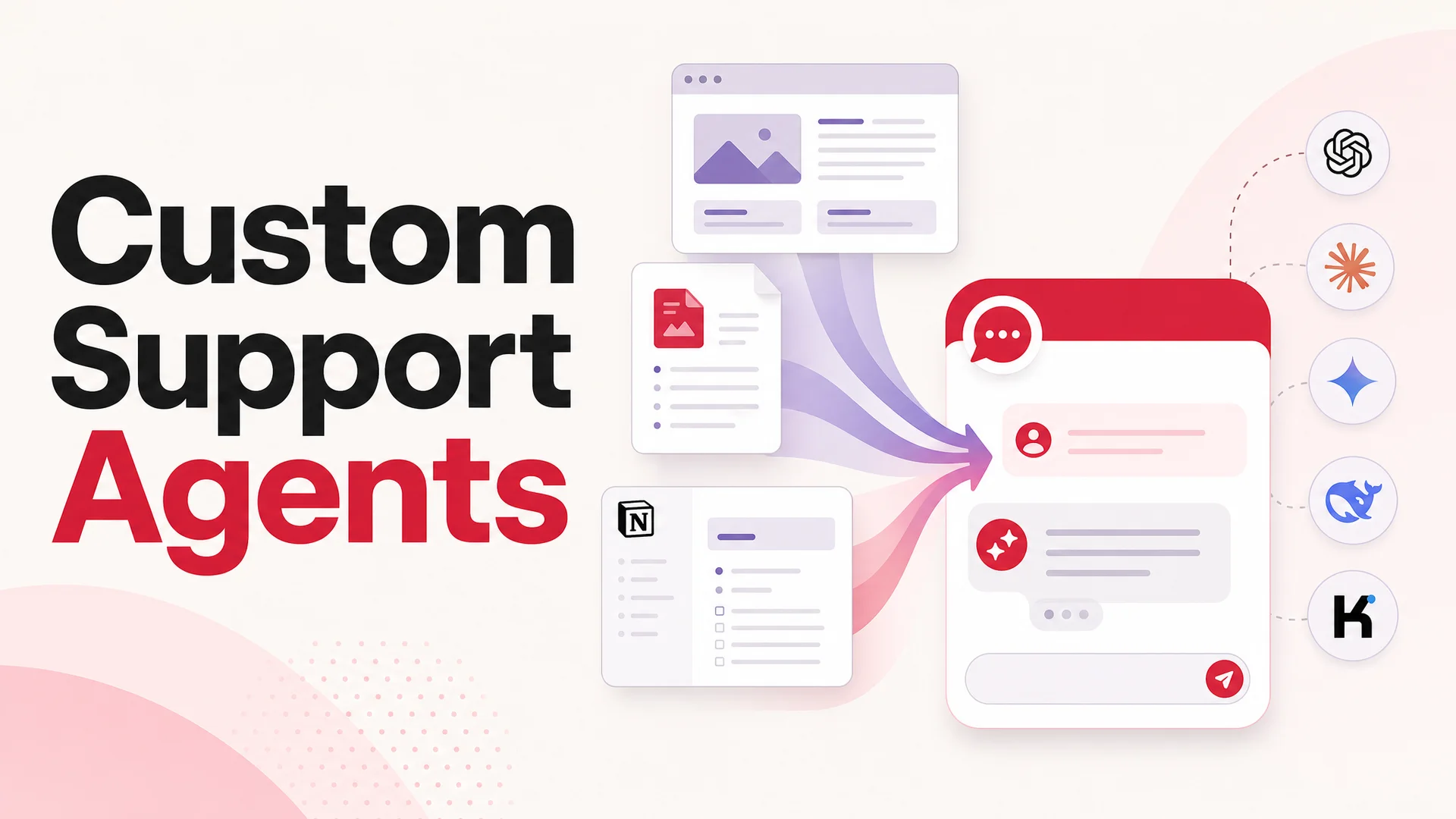
A practical example: imagine a Berrydesk agent for a SaaS company that ships product updates every two weeks. The release notes, changelog, API reference, and support macros all live in Notion and the docs site. Berrydesk re‑indexes those sources on a schedule. When a customer asks about a feature that shipped Monday morning, the agent retrieves the new docs, grounds its answer in them, and links back to the source - all without anyone touching a model.
One thing worth flagging up front: in 2026, RAG is not the only way to get fresh context into a model. The frontier models now ship with absurdly long context windows - Gemini 3.1 Ultra runs at 2M tokens, Claude Opus 4.6 and Sonnet 4.6 ship 1M tokens at no surcharge, and DeepSeek V4 Flash and Kimi K2.6 also handle 1M. For modest knowledge bases you can sometimes skip the vector store entirely and just stuff the documents into the prompt. That changes the tradeoff but does not erase it; we will come back to this.
What fine‑tuning actually does
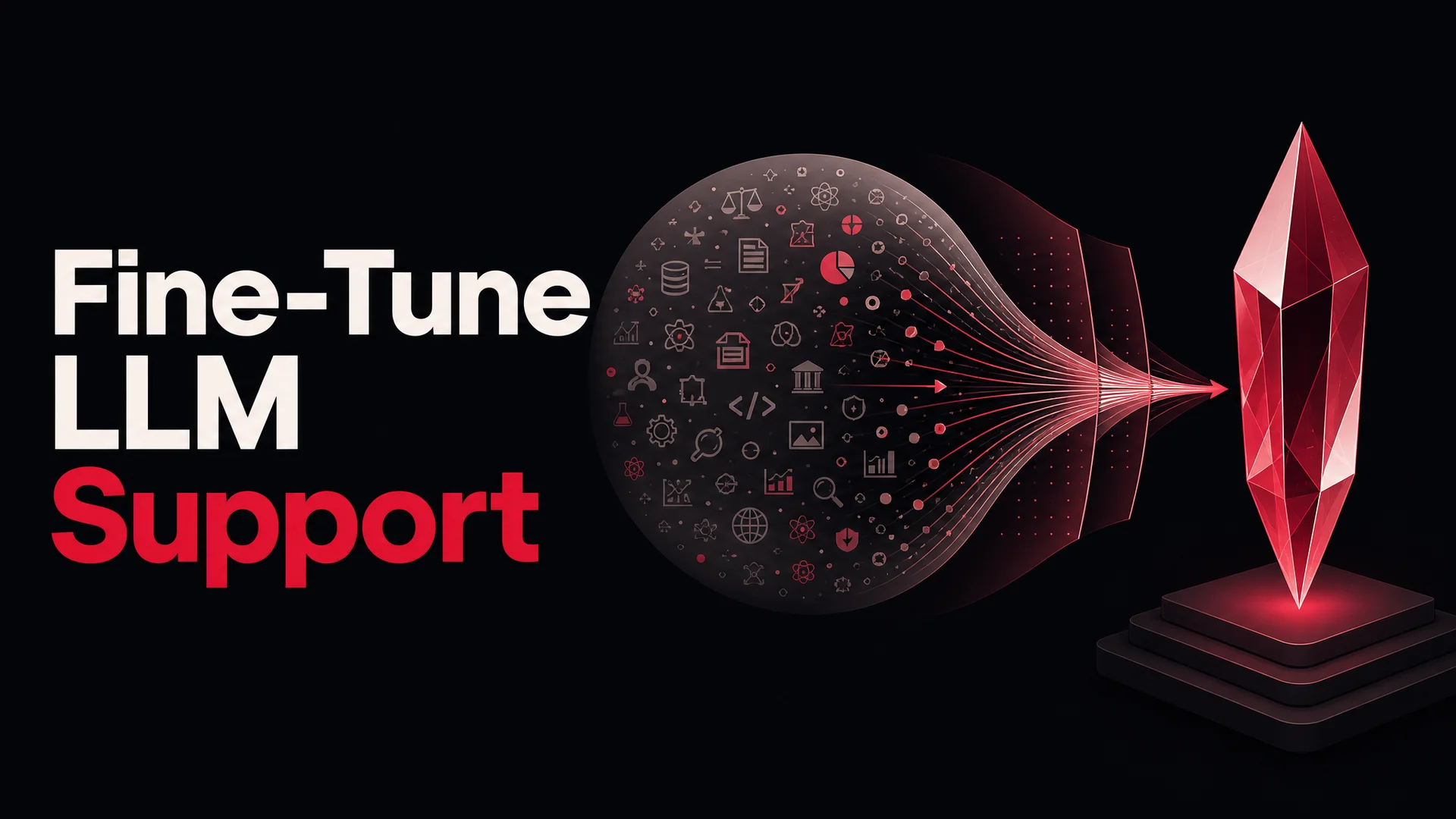
Fine‑tuning takes a pre‑trained model and continues its training on your data, nudging its weights so that its default behavior aligns with your task. You do not just give it new information at inference time - you bake patterns, vocabulary, formatting, and tone directly into the model.
The mental model is "apprenticeship." After thousands of examples of how you answer support tickets, the model starts to sound like your team without being asked. It learns your acronyms, your preferred sentence shape, the exact way your refund policy is phrased, the difference between a P1 and a P2 in your tracker.
The trade is that the model only knows what you taught it. It does not, by itself, know that you released a new pricing tier last week. It will keep generating the old tier until you re‑train, or until you bolt RAG on top.
Fine‑tuning has also gotten much cheaper and more targeted in 2026 thanks to LoRA‑style adapters and instruction tuning on small, high‑quality datasets. You no longer need a research team to ship a fine‑tune; you do still need a clean dataset and a clear definition of "good."
When RAG is the right first move
RAG earns its place when the source of truth is large, fast‑moving, or both, and when the cost of a wrong or stale answer is high enough that you want every response to be traceable back to a document.
1. Multi‑product customer support
Picture a 600‑employee electronics brand with seven product lines, each with its own manuals, firmware notes, warranty terms, and regional variants. Fine‑tuning a single model to memorize that landscape would be expensive on day one and obsolete by day thirty.
A Berrydesk agent built on RAG points at the same docs site, knowledge base, and Notion workspace your support team already maintains. When a customer asks "does the V3 hub work with my older sensors?", the agent retrieves the right compatibility table, pulls the recent firmware bulletin, and answers with a citation. When the docs change, the agent changes with them - no ML pipeline involved. Pair that with a low‑cost model like DeepSeek V4 Flash at $0.14 / $0.28 per million input/output tokens for routine traffic, and per‑resolution costs drop to fractions of a cent.
2. Legal and financial work
In law and finance, the underlying corpus moves constantly. New rulings, regulatory filings, rate decisions, and amendments roll in weekly. A fine‑tuned model is an authoritative voice on a snapshot - not what a compliance officer wants on a Tuesday morning.
A RAG‑driven assistant can hit a curated index of statutes, case law, internal memos, and recent commentary, then assemble a grounded answer with the actual passages it relied on. For deep reasoning over the retrieved material you can route to Claude Opus 4.7, which leads SWE‑bench Pro at 64.3% and is a strong long‑context reasoner, or Gemini 3.1 Pro, which leads GPQA Diamond at 94.3% and is excellent at scientific and quantitative analysis.
3. Healthcare and clinical support
Clinical guidelines update. Drug interactions get re‑classified. New trials shift the standard of care. A fine‑tuned medical model frozen on last year's literature is a liability; a RAG system pointed at vetted sources - guideline bodies, the latest journal access, internal protocols - is a tool a clinician can actually trust because every claim can be traced.
This is also the case where long context shines. A 1M‑token window can hold an entire patient summary, a stack of relevant guidelines, and the model's own scratch reasoning in one pass - useful when stitching evidence together across many documents.
Why RAG works
RAG is the right starting point when:
- The information moves. Anything where "current" is part of the spec - pricing, inventory, regulation, ticket queues, incident status - benefits from retrieval.
- The corpus is too big or too varied to memorize. Hundreds of product SKUs, thousands of policy pages, an entire help center: cheaper to retrieve than to embed in weights.
- Citations matter. When users - or auditors - need to see where an answer came from, retrieval gives you a built‑in trail.
- You want a fast feedback loop. Editing a doc and seeing the agent reflect it within minutes is a vastly tighter loop than re‑training.
When fine‑tuning earns its keep
Fine‑tuning is the right move when behavior matters more than facts - or when the facts are stable, narrow, and you want them woven into the model's default reflexes.
1. Specialized customer service with a strong house voice
If your brand has a distinctive tone - playful, terse, formal, technically dense - and your support team has trained itself for years to write a certain way, RAG alone will get you 80% there. Fine‑tuning can close the last 20%. By training on a few thousand of your best historical tickets, the model picks up phrasing, escalation patterns, and the small judgement calls that distinguish a junior reply from a senior one.
A SaaS company fine‑tuning on prior tier‑two tickets can ship an agent that handles SSO debugging, webhook retries, or rate‑limit explanations with the same shape and rigor as a senior engineer's reply - and pair that with RAG over the docs so the facts stay current.
2. Domain‑specific content generation
For technical writing, marketing copy in a specific voice, or content in a regulated field, fine‑tuning produces a model that "sounds right" by default. A model fine‑tuned on a brand's editorial archive will pick up sentence rhythm, banned words, and structural conventions that would be tedious to enforce through prompt instructions every single call.
3. Stable internal knowledge systems
If you have a body of internal information that is intentionally stable - an HR handbook, an evergreen onboarding guide, a fixed product line - fine‑tuning gives you a model that knows it cold without paying retrieval costs on every request. For a company answering thousands of "how many vacation days do I get" or "what's our travel reimbursement policy" questions per week, baking those answers into the model is faster and cheaper than retrieving them every time.
Why fine‑tuning works
Fine‑tuning shines when:
- You need depth, not breadth. Specialist behavior in a narrow domain is exactly what fine‑tuning was designed for.
- Tone, format, and style are first‑class requirements. Prompt instructions can guide style; fine‑tuning encodes it.
- The underlying knowledge is stable. If your data changes once a quarter rather than once a day, the cost of re‑training is acceptable.
- You want lower per‑call overhead. Fewer retrieved tokens in the prompt means lower latency and lower input cost at scale.
Long context changes the math
Before you reach for either approach, it is worth pausing on what 2026's frontier context windows do to the old playbook.
When Gemini 3.1 Ultra gives you 2M tokens, Claude Opus 4.6 and Sonnet 4.6 give you 1M at no premium, and DeepSeek V4 Flash and Kimi K2.6 match that, you can hold an entire mid‑sized knowledge base, a full conversation history, and a stack of policy documents in‑context on every request. For a support agent handling a fifty‑page product line, that is enough to skip the vector store and just include everything.
This does not kill RAG. It changes RAG from a hard requirement into a tuning lever. You still want retrieval when:
- the corpus is genuinely larger than the window;
- you need predictable per‑call cost (loading 800K tokens every request is expensive);
- you want explicit citations and source filtering;
- you care about latency, since smaller prompts are faster.
But for many small and mid‑sized deployments, "stuff the relevant docs into the prompt" is now a real option, and a Berrydesk agent backed by long‑context models can lean on it for high‑value sessions while routing routine traffic through a tighter RAG pipeline.
Choosing between them: the questions we ask
When a Berrydesk customer asks us which path to take, the decision usually falls out of five questions.
1. How stable is the data?
- RAG if the source of truth changes weekly or faster - products, prices, policies, inventory, status pages.
- Fine‑tuning if the data is genuinely stable, like an HR handbook, a fixed product line, or a body of evergreen training material.
2. How big and varied is the knowledge base?
- RAG for sprawling, heterogeneous corpora - multi‑product help centers, document repositories, full marketing sites. Retrieval lets you scale the index instead of the model.
- Fine‑tuning when the domain is narrow but deep, and you want the model to be a credentialed specialist rather than a search engine with manners.
3. Do users need real‑time information?
- RAG if "as of right now" is part of the answer - order status, balance, schedule, ticket queue, regulation, news.
- Fine‑tuning if the value is in how the model says things, not in whether the underlying facts shifted in the last hour.
4. What is your budget profile - upfront or ongoing?
- RAG is cheaper to set up. You build an indexer, point it at your sources, and use a base model. Ongoing costs scale with retrieval and inference. With open‑weight models like DeepSeek V4 Flash, MiniMax M2, GLM‑5.1, or Qwen3.6, that ongoing cost has dropped dramatically - MiniMax M2 is roughly 8% the price of Claude Sonnet at twice the speed, which makes high‑volume retrieval‑heavy workloads economically boring instead of scary.
- Fine‑tuning has a higher upfront cost - dataset curation, training, evaluation - but lower per‑call overhead because the prompt does not have to carry as much context. If you serve millions of calls a month over stable content, the math eventually flips toward fine‑tuning, especially with LoRA adapters.
5. How will you scale and maintain this thing?
- RAG scales by widening or refreshing the index. New product? New doc set? Re‑index. Less coupling between the model and the content.
- Fine‑tuning scales by retraining adapters. It works well when the workload is repetitive and consistent - say, ten thousand near‑identical SSO debugging tickets a month - but adds a maintenance loop you have to staff.
In our experience, the answer is rarely "one or the other." For most production support agents, the right architecture is RAG over your live knowledge base, plus a lightweight fine‑tune that enforces tone, format, and a few brand‑critical reflexes. RAG keeps the agent honest about facts; fine‑tuning keeps it sounding like you.
Pitfalls to avoid
A few traps we see often enough that they are worth calling out:
- Skipping retrieval evaluation. People treat RAG as plug‑and‑play, then ship an agent that retrieves the wrong chunks half the time. Build an eval set of real questions with known correct sources and measure recall before you measure answer quality.
- Fine‑tuning on a noisy dataset. A fine‑tune is only as good as the data behind it. A thousand carefully curated examples beat fifty thousand auto‑exported tickets every time.
- Conflating "long context" with "no context engineering." Stuffing 500K tokens into the prompt does not mean the model will use it well. Order matters, structure matters, and irrelevant context still degrades reasoning.
- Forgetting privacy boundaries. RAG can pull from sources containing personal data. Fine‑tuning can memorize personal data into the weights. Both need governance - what gets indexed, what gets trained on, who can query, and how outputs get logged.
- Locking yourself into a single model. The pace of model releases - DeepSeek V4 in April 2026, Kimi K2.6 in April 2026, GLM‑5.1 in April 2026, Qwen 3.6 in April 2026, GPT‑5.5 in April 2026 - means the right model for your workload three months from now is probably not the right model today. Pick a platform that lets you swap models without rewriting your agent.
How Berrydesk approaches this
Berrydesk is built RAG‑first because, for customer support, that is almost always the right starting point: the agent needs to track what your team writes, every day, with no ML pipeline in between. Connect docs, websites, Notion, Google Drive, or YouTube; pick from GPT‑5.5, Claude Opus 4.7, Gemini 3.1, DeepSeek V4, Kimi K2.6, GLM‑5.1, Qwen 3.6, MiniMax M2 and others; brand the chat widget; wire up AI Actions for bookings, refunds, or order lookups; and deploy to your site, Slack, Discord, WhatsApp, and more.
When you outgrow pure retrieval - when tone consistency, latency, or per‑call cost demand it - you can layer in fine‑tuning on top of the same architecture, routing high‑volume traffic to a tuned, low‑cost open‑weight model and reserving frontier models for the hard escalations.
Pick your model, point it at your knowledge, and ship. Build your Berrydesk agent for free →
 Berrydesk
Launch your support agent on the right model, with the right knowledge
- Pick from GPT-5.5, Claude Opus 4.7, Gemini 3.1, DeepSeek V4, Kimi K2.6, GLM-5.1, Qwen 3.6, MiniMax M2 and more
- Train on docs, websites, Notion, Drive, or YouTube - RAG-first, fine-tune-friendly
Set up in minutes

Chirag Asarpota is the founder of Strawberry Labs, the team behind Berrydesk - the AI agent platform that helps businesses deploy intelligent customer support, sales and operations agents across web, WhatsApp, Slack, Instagram, Discord and more. Chirag writes about agentic AI, frontier model selection, retrieval and 1M-token context strategy, AI Actions, and the engineering it takes to ship production-grade conversational AI that customers actually trust.