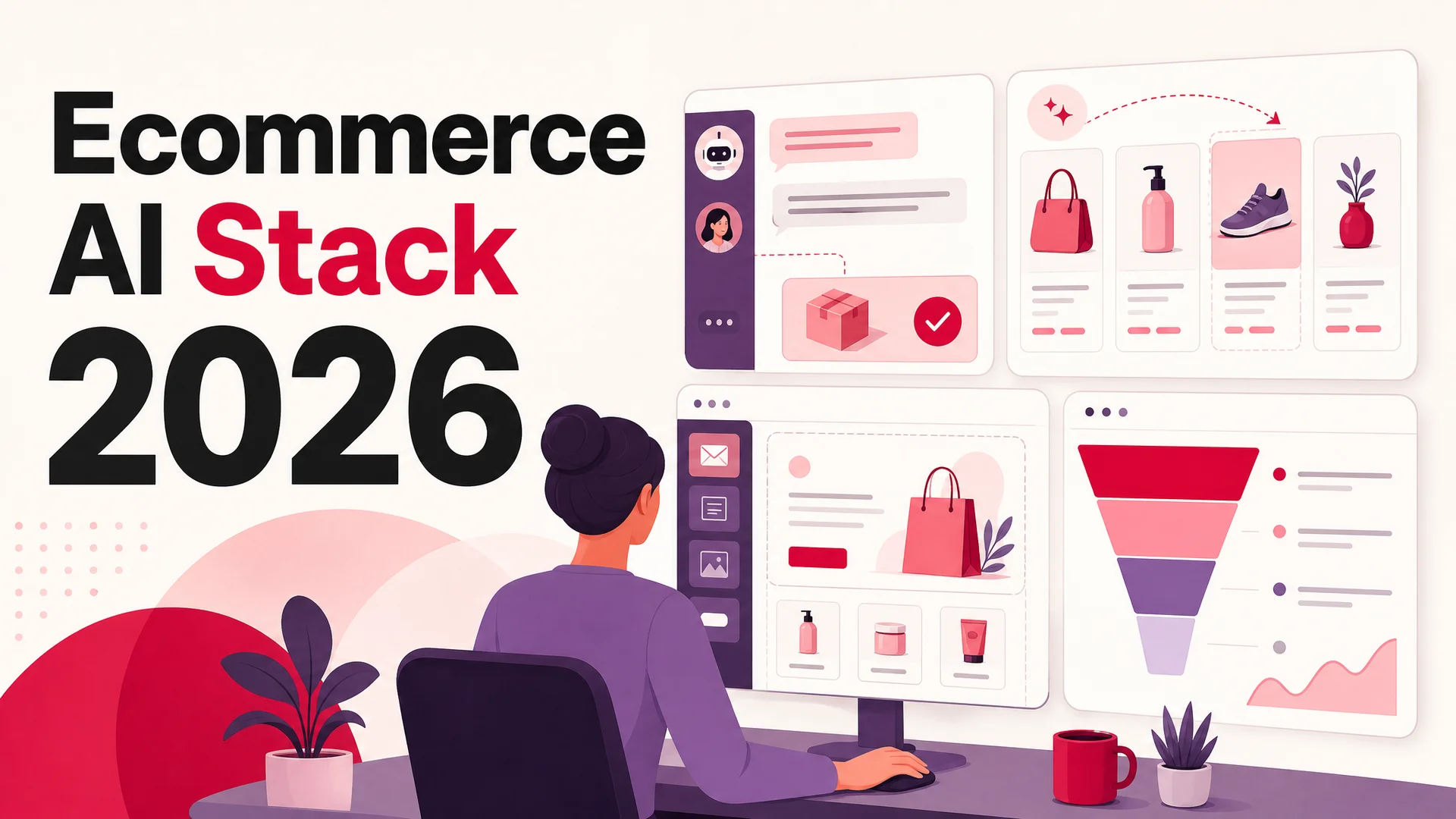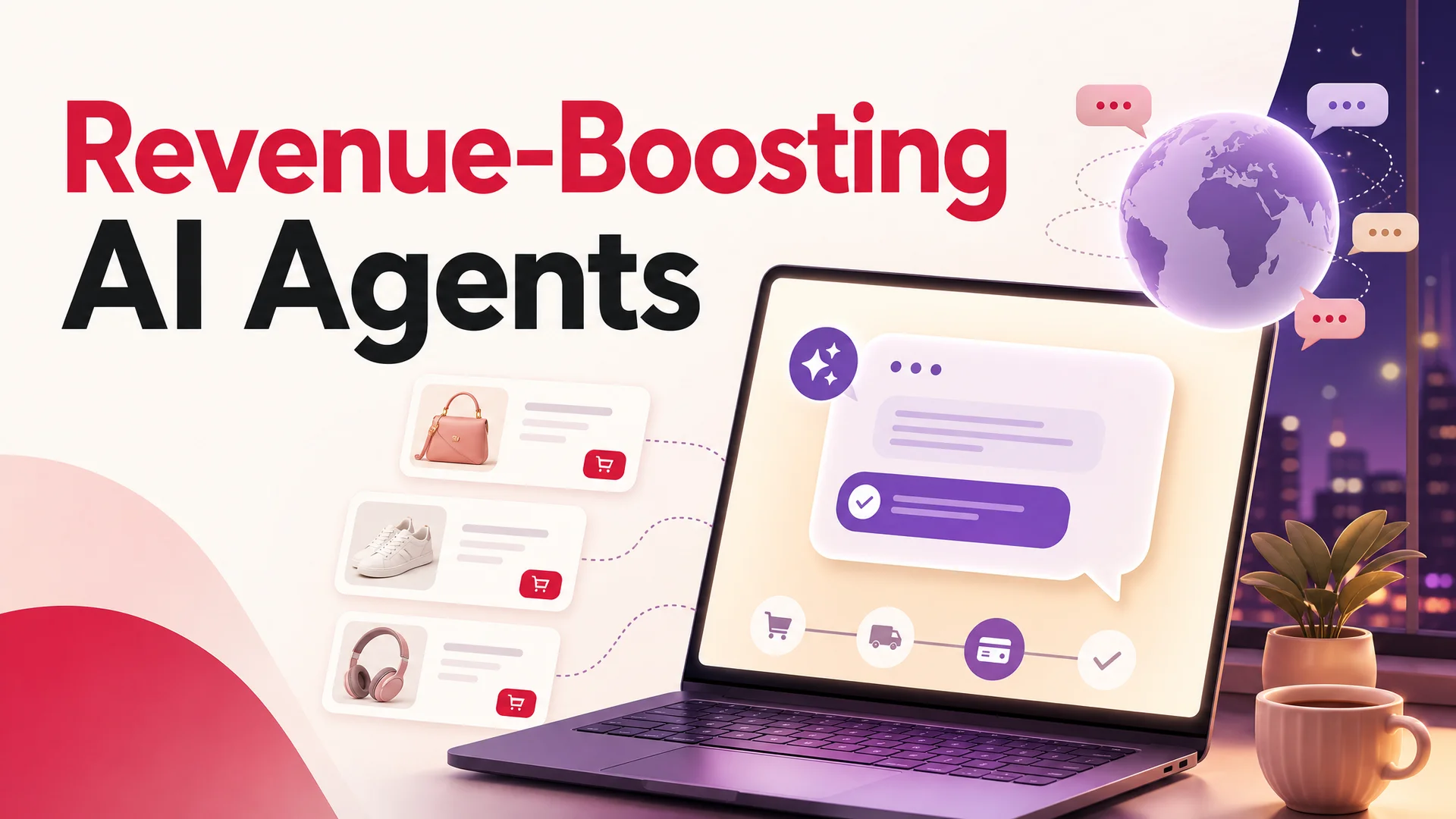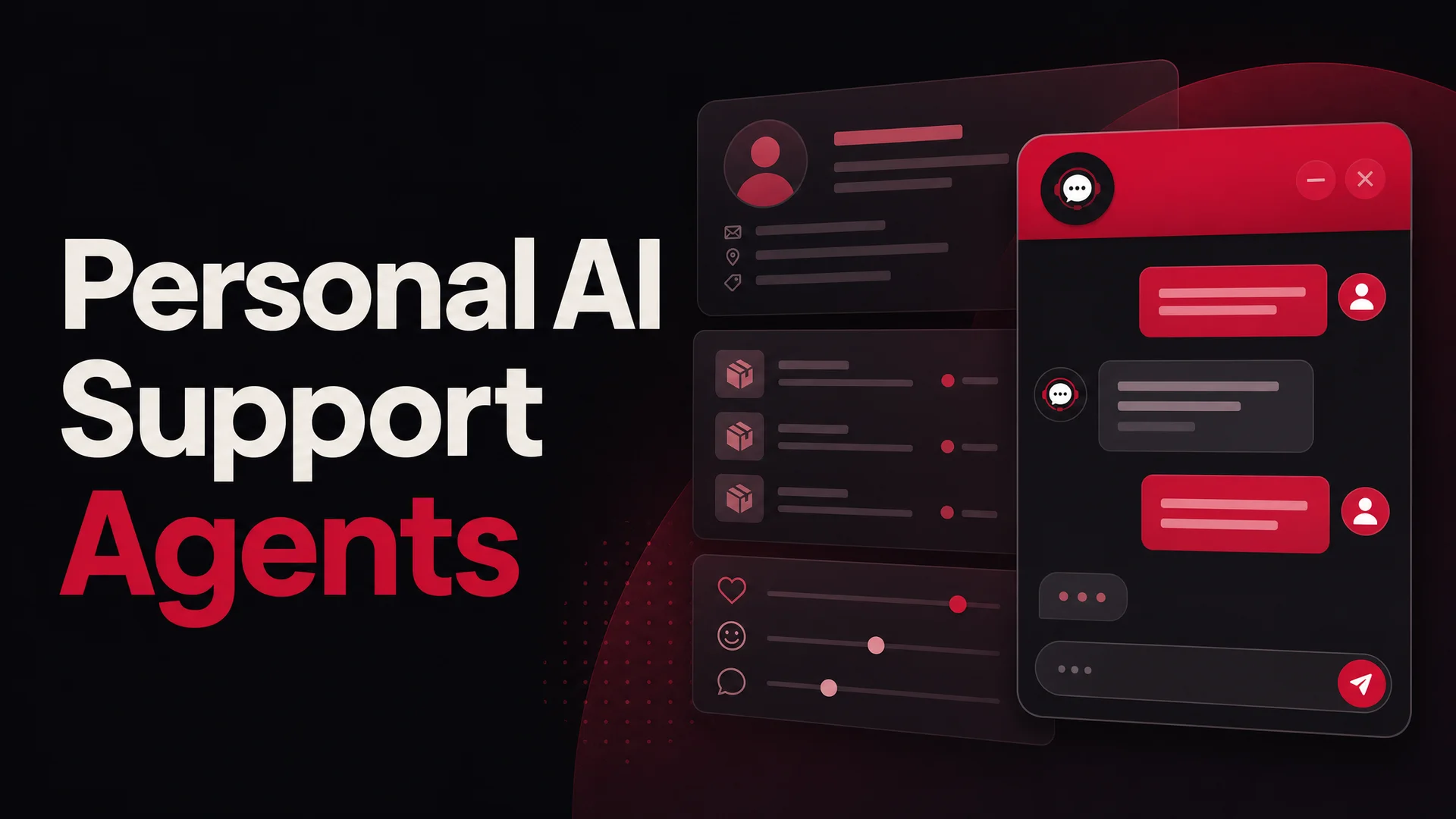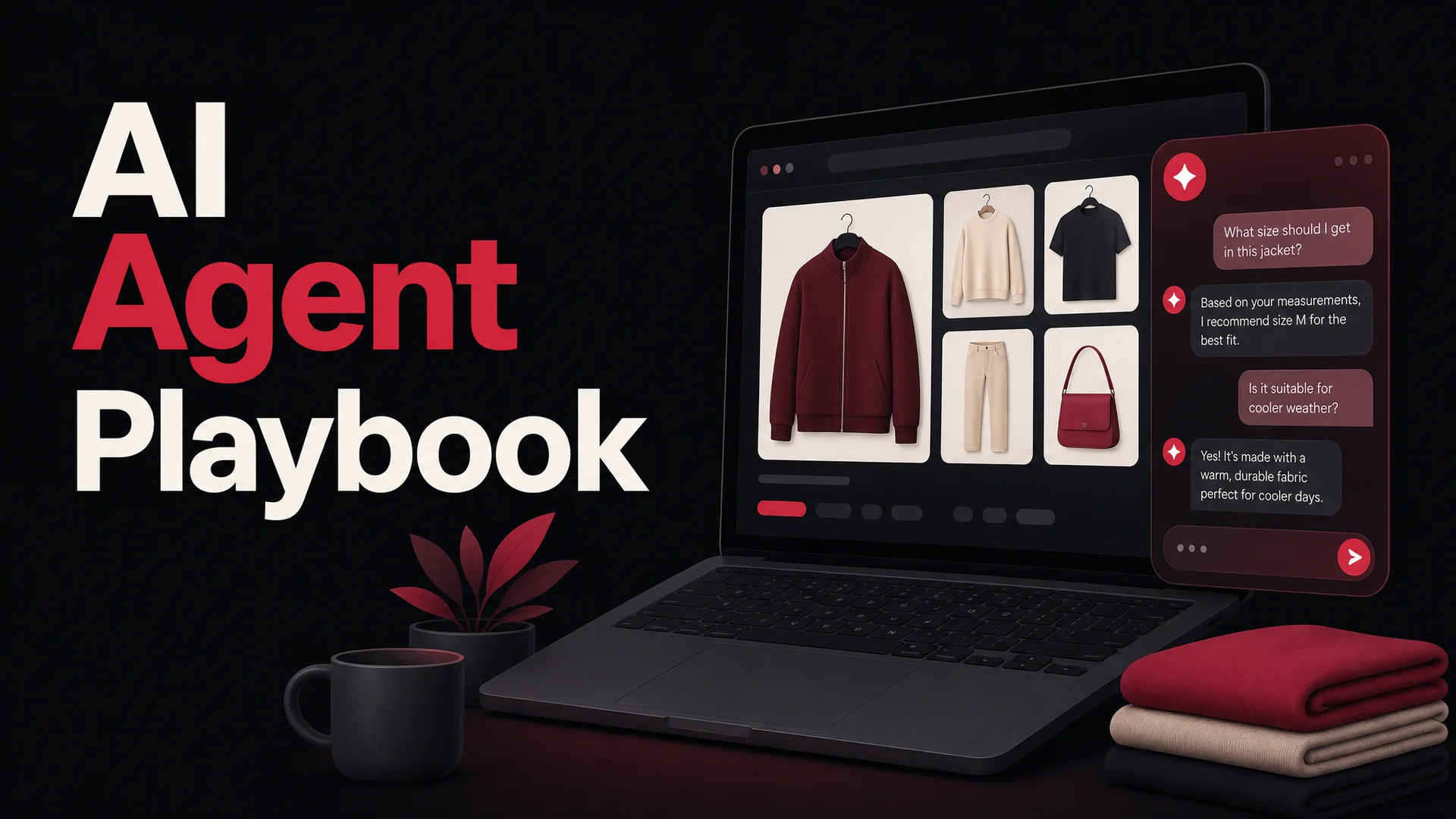
Walk into any e-commerce stack meeting in 2026 and AI is no longer the agenda item - it is the substrate. Cart recovery emails, product search, sizing assistants, "where is my order" chats, refund flows, post-purchase nurtures: most of it is now mediated by some form of language model, often without the shopper ever clocking it.
The reason it stuck is unglamorous. Shoppers expect instant answers, hyper-relevant suggestions, and zero friction at checkout, and very few stores can hire enough humans to deliver that on margins that already squeeze on shipping and ads. AI quietly fills that gap. Done thoughtfully, it gives a five-person Shopify team the response time, personalization, and coverage that used to require a 30-seat support floor and an in-house data science group.
You do not need to be a tech company to participate. With Berrydesk, any store can stand up a branded AI agent in an afternoon - pick the model that fits your traffic and budget, train it on your existing docs and site, brand the chat widget, and wire AI Actions for things like order lookup, refunds, and bookings. This guide is the practical version: what AI actually does for an e-commerce business in 2026, where to start, and how to avoid the traps.
What's actually changed for e-commerce in 2026
Three things shifted in the last twelve months and they all point the same direction: more capability, less cost, fewer reasons to wait.
The first is context. Claude Opus 4.6 and Sonnet 4.6 ship with a 1M-token context window at no surcharge. Gemini 3.1 Ultra has a 2M-token window. DeepSeek V4 (released April 24, 2026) carries 1M context across both its 1.6T-param Pro and 284B Flash variants. For a store, that means an agent can hold your entire knowledge base, the customer's full conversation and order history, your refund policy, and your sizing guides in-context simultaneously. RAG becomes a tuning lever, not a hard requirement, and "the bot forgot what we just discussed" largely stops being a complaint.
The second is cost. Open-weight frontier models from DeepSeek, Z.ai (GLM-5.1), Moonshot (Kimi K2.6), MiniMax (M2/M2.7), Alibaba (Qwen3.6), and Xiaomi (MiMo-V2) have collapsed the price of running a production support agent. DeepSeek V4 Flash at $0.14 / $0.28 per million input/output tokens makes a routine "where's my order" exchange cost a fraction of a cent. MiniMax M2 lands at roughly 8% the price of Claude Sonnet at twice the speed. The economic model that used to look like "AI is expensive, so use it sparingly" is now "AI is cheap on the routine path, and we reserve the frontier models for the hard cases."
The third is agentic reliability. Models like Claude Opus 4.7 (64.3% on SWE-bench Pro), Kimi K2.6 (12-hour autonomous coding sessions, swarms of up to 300 sub-agents), GLM-5.1 (8-hour autonomous plan-execute-test-fix loops), Qwen3.6, and MiMo-V2-Pro are built for tool use first. Translated into e-commerce: an agent calling your "look up order," "issue refund," "reschedule delivery," or "apply discount" actions is no longer demoware. It works reliably enough to put on the live storefront, with the right guardrails.
The point is not to chase model names. It is that the floor has risen so far that even an entry-level setup outperforms what enterprise stores were running 18 months ago.
What AI actually does for an online store
Before getting into "how to start," it helps to be specific about the business outcomes AI is now reliably producing. These are not aspirational - they are the table-stakes patterns most modern stores end up with.
1. Always-on customer support at human-feeling quality
Shoppers don't merely want fast replies anymore; they expect them at 11pm on a Sunday during a flash sale. Hiring a follow-the-sun support team is unrealistic for a store doing a few thousand orders a month. An AI agent picks up the slack, handling the bulk of the repetitive load:
- Order status and tracking ("Where is my package?" "When will it ship?")
- Returns, exchanges, and refund eligibility checks
- Stock and restock questions on a specific SKU or variant
- Sizing, fit, materials, care instructions
- Basic troubleshooting on electronics, beauty kits, or assembly
The detail that gets undersold is tone. With Berrydesk you train the agent on your FAQs, help-center docs, past tickets, product pages, and Notion runbooks, and configure how it sounds - playful, formal, brief, warm. That is the difference between a bot that drives shoppers into the ticket queue and one that quietly closes 70% of inbound chats. Among real stores we see deflection rates that translate into 60–80% reductions in human-handled volume on the top ten support questions, with the human team moving up the value chain to handle escalations and revenue-bearing conversations.
2. Personalization that doesn't feel like a tracking tag
There is a wide gulf between "you viewed this so here's a carousel" and personalization that actually moves the needle. Modern agents bridge it by reading behavior in real time - what a shopper viewed, hovered, abandoned, asked about - and matching it against the catalog with the kind of semantic understanding that keyword filters never had.
Picture a shopper browsing hiking gear. They click a pair of boots, linger on two jackets, and spend four minutes on a sleeping bag. As they nudge toward the exit, the agent - already aware of context - surfaces a three-piece kit with a bundle discount, or proactively asks whether they're packing for cold-weather backpacking and offers a thermal layer. That is the kind of attentive selling a good in-store associate would do. Shoppers respond to it because it is specific, not because it has the word "recommended" stamped on it.
Long-context models make this even sharper because the agent can hold the entire chat history, the cart contents, and the shopper's prior orders in mind without re-fetching them. The result is conversation that feels like it remembers you, because it does.
3. Less drudgery for the human team
Even with strong deflection, your humans still see the trickiest 20–30% of conversations. AI helps there too. Modern agents can automatically classify incoming tickets by topic and urgency, summarize long email threads or chat histories before a human picks them up, draft a first-pass reply that the agent edits and sends, and flag the conversations that look like they're heading toward a churn or a chargeback.
Think of it as giving your support lead a junior who has already read every conversation, tagged it, and pulled up the customer's order history. Faster replies, less burnout, fewer dropped balls during traffic spikes. Quality of human response actually goes up because the human is fresh and focused on the cases that matter.
4. Conversational data that tells you what to fix
E-commerce stacks generate enormous logs. Most of it is noise. AI flips that around - every conversation becomes searchable, taggable, structured data about what your customers want and where your store is failing them.
You can answer questions like:
- Which product pages produce the most "is this in stock?" questions, suggesting an inventory-display issue?
- What are the top three objections shoppers raise before abandoning carts?
- Which SKUs generate disproportionate post-purchase complaints - and is it the product, the packaging, or the listing copy?
- Where does the agent itself struggle, and what content do we need to write?
This is closer to an always-on customer-research panel than a support log. It informs UX fixes, copy revisions, product roadmap, and even merchandising calls, and it does so with quotes pulled from actual shopper language.
5. Loyalty built on relevance and speed
The formula isn't a secret: solve problems quickly, recommend things people actually want, and treat repeat customers like the system remembers them. AI just makes that scalable. A timely "your refill is due" nudge for a beauty brand. A proactive "need help completing your order?" when a shopper has been parked on the checkout page for ninety seconds. A post-delivery check-in that asks about fit before the return window closes. None of this is novel - what's novel is that you can deploy it in an afternoon, on every channel, without a marketing-ops team.
High-impact AI use cases worth deploying first
Within all of that, a handful of patterns produce most of the value. If you're prioritizing, this is the short list.
AI agents for real-time support
This is almost always the first thing stores deploy and the highest-ROI move. A well-built agent doesn't just respond - it understands intent. A shopper who types "do you have something like the Nike Pegasus but cheaper?" should not get a keyword match on "Nike." They should get a curated list of similarly-spec'd alternatives with a quick comparison.
Berrydesk turns this from a project into a workflow. Pick a model - Claude Opus 4.7 or Sonnet 4.6 if you want frontier reasoning, GPT-5.5 for general strength, DeepSeek V4 Flash or MiniMax M2 if you're optimizing for cost on routine traffic, GLM-5.1 or Qwen3.6 if you have on-prem or sovereignty constraints. Train it on your product catalog, FAQs, support archive, Notion docs, Google Drive, and YouTube tutorials. Brand the widget to match your storefront. Add AI Actions for the things that need to actually happen during a chat - order lookup, refund initiation, store credit issuance, appointment booking. Deploy to your site, Slack for internal team use, WhatsApp, Discord, or wherever your customers already are.
Personalized recommendations that read context
AI-driven recommendations now work off behavioral signals plus the conversation itself. The shopper asking about hiking boots also got asked "how many days are you packing for?" and that answer routes them to the right pack. The shopper looking at a yoga mat gets grip socks and a strap because the agent inferred a beginner. The merch isn't dictated by a static "customers also bought" rule - it's dynamic, adjusted in real time to what's actually being discussed.
Search that understands what shoppers mean
AI search interprets vague natural-language input ("a winter jacket that's not too bulky," "something for my mom who likes gardening but isn't outdoorsy"), handles synonyms, and learns from common queries. It dramatically reduces zero-result pages and the bounce-and-Google pattern that costs you the sale. With long-context models the entire catalog, plus reviews and Q&A, can sit in-context, so semantic relevance gets a step-change better than legacy on-site search.
Smarter email and retargeting
AI now drives the full lifecycle email program - abandoned-cart nudges, browse-to-buy reminders, replenishment, win-backs - selecting timing, product picks, and subject-line phrasing per shopper. This isn't a single big-bang send; it's continuously optimized. A note on plumbing: even brilliant copy fails if it lands in spam, so make sure your DMARC, SPF, and DKIM records are configured before you blame the AI.
Post-purchase engagement
AI keeps adding value after checkout. "Where's my order?" answered instantly with carrier data. "How do I care for this leather bag?" answered with the product's own care card. A check-in three days after delivery to catch issues before they become bad reviews. Post-purchase is one of the most underused surfaces in e-commerce, and it's now trivial to staff with AI.
How to start without overcomplicating it
The stores that succeed with AI aren't the ones running the most sophisticated models. They're the ones that pick a single high-leverage problem, ship, measure, and expand. Here is the path that consistently works.
1. Pick one high-impact, low-resistance use case
Don't try to AI-ify the whole store at once. Pick the one place where the gap between current experience and ideal experience is biggest and deploy there.
For most stores, that's customer support - specifically a chat agent on the storefront. It immediately reduces support volume, compresses response time from hours to seconds, and lifts conversion because shoppers who would otherwise bounce get their question answered. With Berrydesk the build takes minutes, not weeks. Connect your help center, product pages, past tickets, and any policy docs in Google Drive or Notion, and the agent is ready for a sandbox test that same day. You'll see real impact within a week.
That's the foothold. Learn from it, then expand.
2. Feed it the data you already own
AI doesn't need a greenfield dataset. It needs the assets your store has accumulated for years: product descriptions, FAQ pages, past support transcripts, return-policy docs, order data, on-site search logs, customer reviews. Pull from what exists. The depth and specificity of that corpus is what makes the agent feel like it actually works at your store rather than at "a store."
This is also where the shift to long-context models pays off. Rather than agonizing over which 20 chunks to retrieve for any given query, you can keep the whole policy, the full catalog, and the recent conversation in-context and let the model find the right grounding itself. RAG still helps for very large catalogs, but it's no longer a do-or-die architectural decision.
3. Match the agent to your brand
The agent should sound like your store, not like a model demo. If you sell streetwear and your Instagram captions are dry and punchy, your agent should be dry and punchy. If you sell premium skincare and your emails are warm and reassuring, the agent should be warm and reassuring. Customers can feel a tonal mismatch in two messages and they will trust you less for it.
Berrydesk lets you shape persona, formality, humor, escalation style, even how the agent handles complaints versus pre-sales questions. Spend an hour iterating on tone. It compounds.
4. Define what success means up front
Don't launch without KPIs. The "we added AI but I don't know what it's doing" trap is real and it's where most projects stall. Decide before launch what you care about:
- Reduction in human-handled tickets per 1,000 sessions
- First-response time
- Self-serve resolution rate
- Conversion lift on sessions that engaged the agent
- Cart-recovery revenue from agent-driven nudges
- AOV change from agent-driven recommendations
Pick two or three. Track them weekly. Use the agent's own analytics to see which queries it handled cleanly and which forced escalations - then write the missing content or rework the policy that confused it.
5. Don't overcommit on day one
You do not need a multi-quarter program. Start on a free or low-cost plan, test on a single channel, expand only when you have data. The fastest stores ship a working agent in an afternoon and add channels (WhatsApp, Slack, Discord) and AI Actions (refunds, bookings, payments) over the following weeks, in the order their support load demands.
Open-weight vs. frontier: the model choice you didn't have last year
A new question that didn't exist eighteen months ago: which model should the agent run on?
Pre-2026, this was effectively decided for you - there were a few closed frontier options and you picked one. In 2026, the open-weight frontier is real and the math has changed. The right answer for most stores is not a single model but a small portfolio.
- Routine traffic ("where's my order," "what's your return policy," "do you ship to Canada"): DeepSeek V4 Flash or MiniMax M2 are nearly free at scale and fast enough that the shopper notices the speed, not the cost. Qwen3.6-27B is dense, Apache 2.0, and beats much larger MoE models on agentic coding tasks - which matters when your AI Actions need to chain reliably.
- Hard escalations and sensitive cases (chargeback risk, angry customer, complex multi-step refund, B2B procurement question): Claude Opus 4.7, GPT-5.5 Pro, or Gemini 3.1 Ultra. The cost per conversation is higher; the cost of getting these wrong is much higher still.
- Sovereignty or on-prem deploys (regulated retail, EU data-residency requirements, B2B with strict procurement): GLM-5.1 (MIT), Qwen3.6-27B (Apache 2.0), or MiMo-V2 (MIT). The Chinese open-weight ecosystem in particular has moved past parity on agentic benchmarks and is genuinely competitive with closed frontier on most tasks while being deployable on your own hardware.
- Multimodal inputs (a shopper sending a photo of a product defect, a video of an assembly question): Gemini 3.1 Ultra and Kimi K2.6 (native video input) are the strongest defaults.
Berrydesk lets you pick per-agent or even per-flow, so the routing strategy is configurable rather than baked in. The lesson is that "which AI" is no longer an existential decision - it's a tuning knob.
Common pitfalls and how to avoid them
A few traps to skip on your way up the curve.
Hallucinated policy. The classic failure: an agent confidently quoting a 60-day return window when yours is 30. The fix is grounding - make the agent always cite which doc its answer came from, and write your policy doc as the canonical source. Long-context models reduce this risk because they can keep the whole policy in view, but you still need clean source content.
Tone drift. As you add training material from many sources (old tickets, marketing copy, blog posts), the agent's voice can fragment. Periodically test it with a small set of standard questions and adjust the persona prompt. Treat the persona as a living artifact, not a one-time setting.
No human escape hatch. Every conversation should have a clear path to a human, especially for emotional or high-stakes cases. The agent should detect this and route - anger, repeated dissatisfaction, fraud signals, accessibility needs. Get this right and AI raises customer satisfaction; get it wrong and AI tanks it.
Over-eager AI Actions. It is tempting to wire every action to the agent on day one - refunds, charges, address changes, subscription pauses. Don't. Start with read-only and low-risk actions (order lookup, tracking, FAQ retrieval), watch the audit logs, and graduate to write-actions one by one. Each new action should have a confirmation step and a rate limit until you trust it.
Optimizing only for deflection. Deflection is the easy KPI to game (just refuse harder). The metric that matters is shopper outcome - did they get the answer, did they convert, did they return. Track resolution and CSAT, not just how many tickets the agent ate.
The honest bottom line
AI is not for enterprise giants anymore, and it is also not a silver bullet. It is a high-leverage tool that works extraordinarily well when you point it at a real problem with real data and measure it like you would any other channel.
For most online stores, the highest-impact starting point is still a chat agent on the storefront, trained on the content you already have, and authorized to take a few low-risk actions. Done well, it operates as a 24/7 sales associate who:
- Upsells and cross-sells based on what the shopper is actively browsing
- Handles objections and nudges hesitant buyers across the line
- Recovers carts with timely, conversational pushback
- Guides shoppers to the right products through smart questions
- Executes actions - order status, refund, reschedule - instead of just talking about them
With Berrydesk, all of this is plug-and-play. Train the agent on your existing content, brand the widget to match your store, choose the model mix that fits your cost and quality targets, and deploy across your site, Slack, Discord, WhatsApp, and more. No developers, no code, no multi-quarter project plan.
If you've been waiting for the right moment to test AI in your store without the risk and without the guesswork, this is it. Build your agent for free and see what an AI-first storefront actually feels like.
 Berrydesk
Launch your store's AI support agent in minutes
- Train on product pages, FAQs, and past tickets - no code
- Route routine chats to fast cheap models, escalations to frontier
Set up in minutes

Chirag Asarpota is the founder of Strawberry Labs, the team behind Berrydesk - the AI agent platform that helps businesses deploy intelligent customer support, sales and operations agents across web, WhatsApp, Slack, Instagram, Discord and more. Chirag writes about agentic AI, frontier model selection, retrieval and 1M-token context strategy, AI Actions, and the engineering it takes to ship production-grade conversational AI that customers actually trust.