Voice has quietly become the most demanding surface in customer support. A web chat tolerates a half-second pause; a phone call does not. A typed reply can hide behind a spinner; a spoken reply has to start within roughly 300 milliseconds or the caller will talk over it. By 2026, the gap between "voice bot you avoid" and "voice agent that actually resolves the ticket" has been closed by a stack of models that can hear, reason, act on backend systems, and respond in a natural voice - all in well under a second.
This guide walks through what AI voice agents actually are in 2026, the architecture under the hood, the five realistic ways to set one up, and the things that decide whether your rollout looks like a triumph or a viral support thread.
What an AI voice agent really is
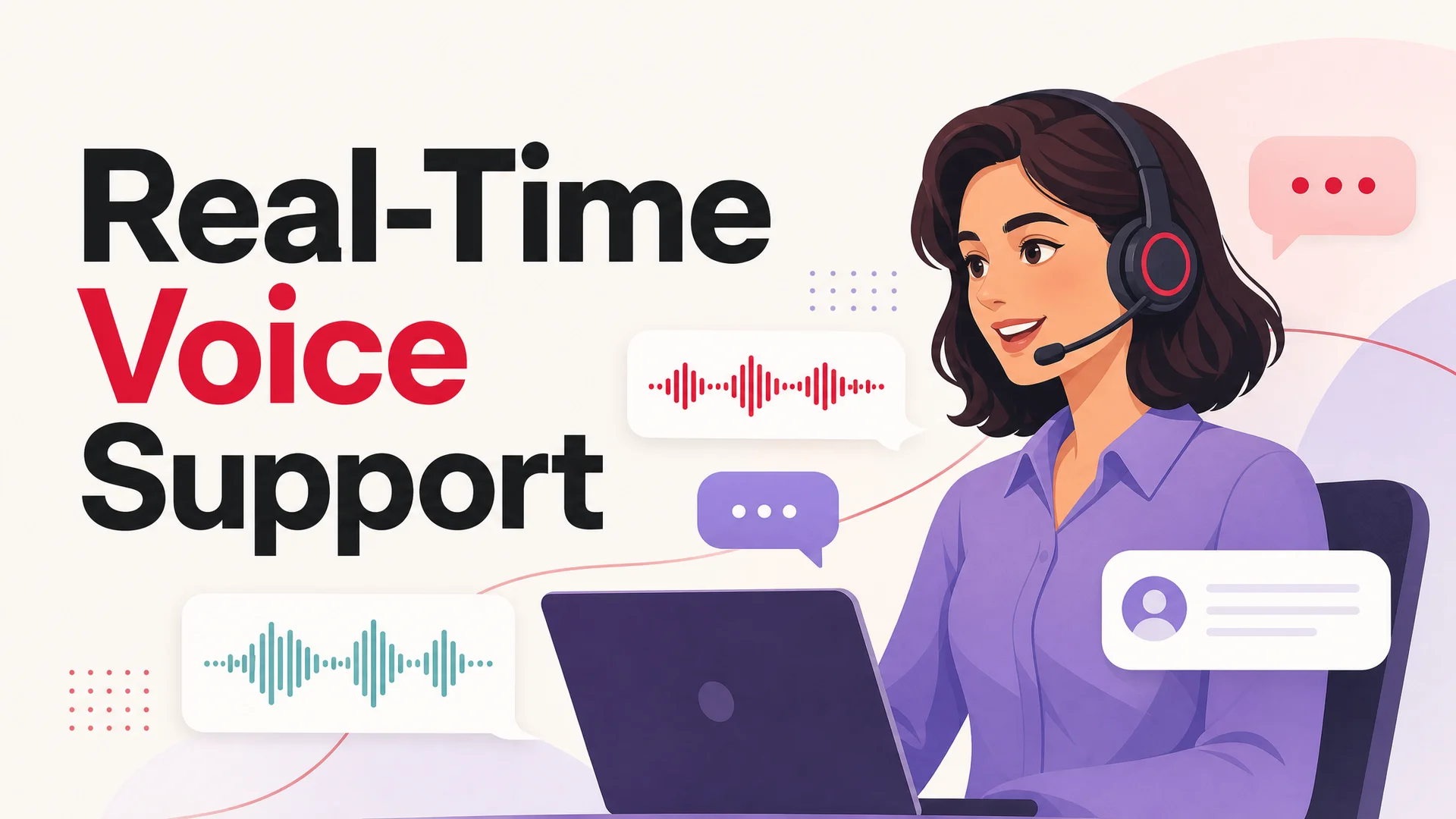
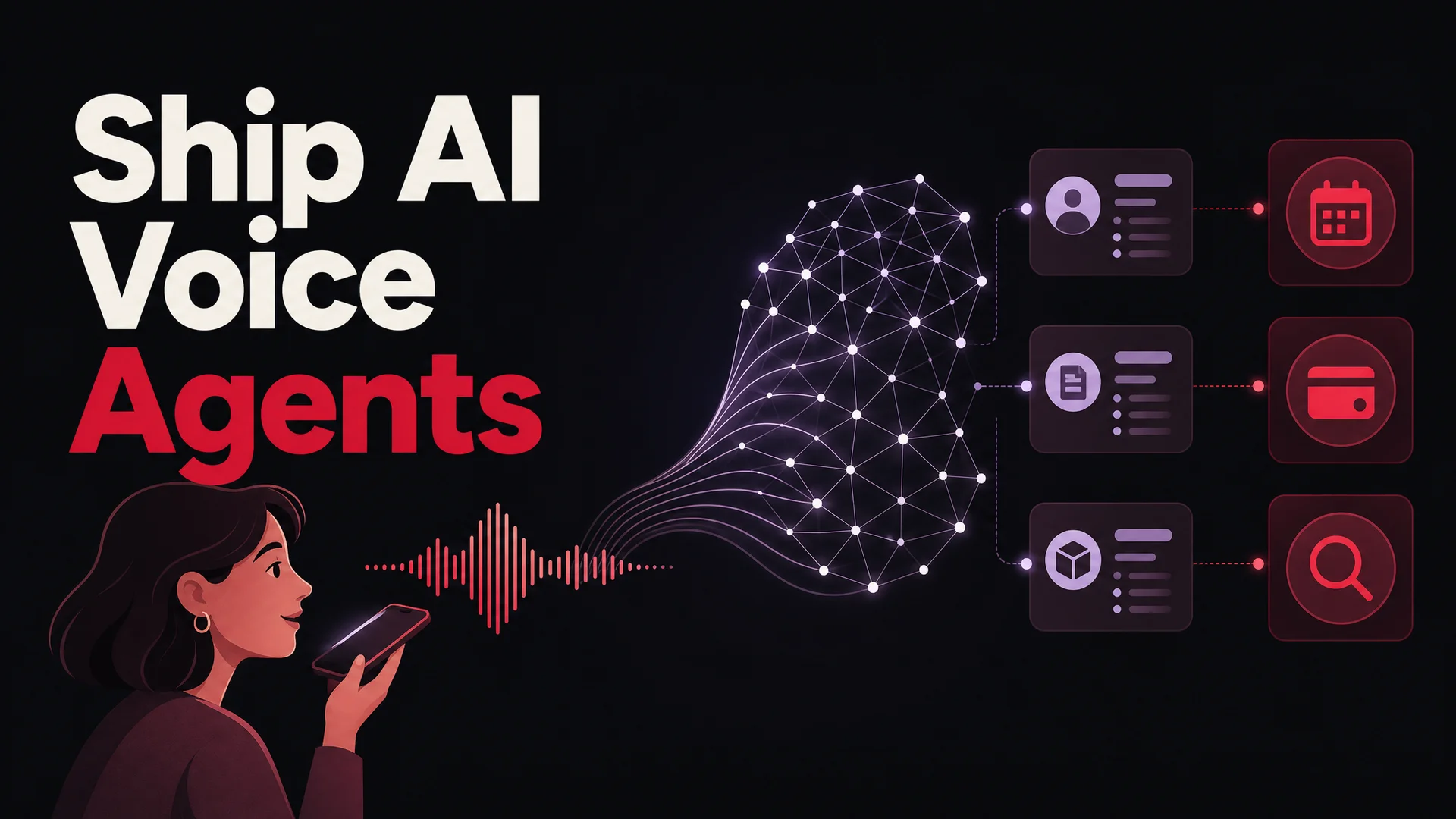
An AI voice agent is a software system that holds a spoken conversation with a person - usually over the phone, sometimes inside an app or a kiosk - and uses AI at every layer to do it convincingly. It is not the touch-tone phone tree of 2010 ("Press 1 for billing"), and it is not the single-shot smart speaker of 2019 ("Set a timer for 10 minutes"). A modern voice agent stitches together four capabilities:
- Speech recognition (ASR) to convert audio into text in real time.
- Reasoning (LLM) to interpret what the caller said, decide what to do, and draft what to say.
- Tools and integrations to actually do things - look up an order, reschedule an appointment, take a payment, escalate to a human.
- Speech synthesis (TTS) to speak back in a voice that sounds like a person, with pauses, intonation, and barge-in handling.
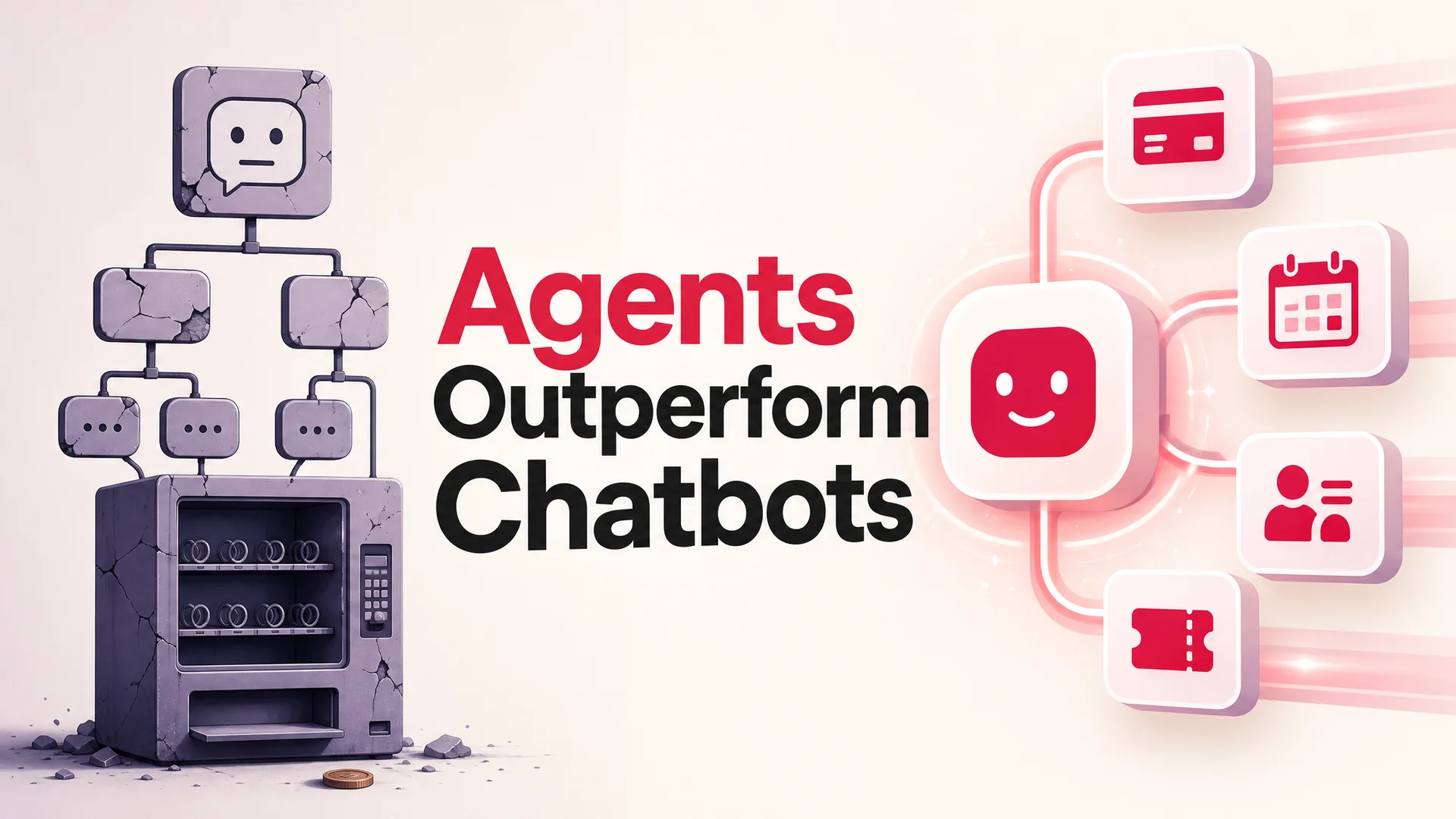
The interesting word in that list is agent. A 2024-vintage voice bot would read out a paragraph from a help article. A 2026-vintage voice agent will pull up the customer record, see that the order is stuck in customs, file the carrier ticket, refund the shipping fee, and tell the customer what just happened - inside the same call. The shift from "assistant that talks" to "agent that acts" is the whole story.
Why voice agents matter for support teams in 2026
Three things changed at once, and together they made voice agents a serious operational lever rather than a novelty.
Models got fast enough to interrupt politely
Latency was the boss-level problem for years. The first wave of LLM-powered voice agents felt like talking to someone on a satellite link - you finished speaking, then waited an awkward beat, then heard a reply. In 2026, frontier models from OpenAI (GPT-5.5), Anthropic (Claude Opus 4.7 and Sonnet 4.6), and Google (Gemini 3.1 Pro) reason fast enough that the bottleneck has shifted back to the audio pipeline. ASR providers and TTS providers now design end-to-end for sub-300ms response onset, which is the threshold at which a caller stops noticing the agent is artificial.
Tool use stopped being demoware
The old joke about voice bots was that they could talk about your refund all day but couldn't issue one. That changed when a generation of agentic models - Claude Opus 4.7, Kimi K2.6, GLM-5.1, Qwen3.6, MiniMax M2.7, Xiaomi MiMo-V2-Pro - were trained specifically to chain tool calls reliably across long horizons. Kimi K2.6 can run a 12-hour autonomous coding session with up to 4,000 coordinated steps; GLM-5.1 runs an eight-hour plan-execute-test-fix loop. You do not need eight hours on a support call, but the same training discipline that gets a model through a 4,000-step coding run is what gets it through "look up the order, check the carrier API, file the dispute, send the confirmation email" without losing its place.
The cost floor dropped through it
The other thing that quietly happened in 2026 is that open-weight frontier models from DeepSeek, Z.ai, Moonshot, MiniMax, Alibaba, and Xiaomi made running a voice agent dramatically cheaper. DeepSeek V4 Flash sits at $0.14 per million input tokens and $0.28 per million output tokens; MiniMax M2 runs at roughly 8% of the price of Claude Sonnet at twice the speed. For a support team handling tens of thousands of calls per month, the difference between a $1.20 voice resolution and a $0.07 one is not a rounding error - it is the difference between voice automation being a budget line and being free.
How a voice agent works, end to end
Here is what actually happens between "caller picks up" and "caller hangs up satisfied."
1. Audio capture and turn detection
The phone carrier (or browser, or app) streams the caller's audio to your stack. The first job is figuring out when the caller has stopped talking. Naive systems wait for silence; modern ones use a small voice-activity model that runs on every audio frame and predicts turn-end probability, so the agent can begin processing before the silence is even confirmed.
2. Streaming speech-to-text
The audio is transcribed incrementally. The reasoning model does not wait for a final transcript - it reads partial transcripts as they update, which lets it begin formulating a response while the caller is still speaking. This is the difference between a bot that feels alert and one that feels asleep.
3. Reasoning and tool routing
The transcribed text, plus conversation history, plus the caller's known context (account, recent tickets, order history) is sent to the reasoning model. With 2026's 1M-token context windows on Claude Opus 4.6/Sonnet 4.6, DeepSeek V4, Kimi K2.6, and Xiaomi MiMo-V2-Pro - and Gemini 3.1 Ultra's 2M-token window - the agent can carry the entire knowledge base, every prior conversation, and the relevant policy documents in-context. RAG becomes a tuning lever for cost, not a hard architectural requirement.
The model decides whether to answer directly, ask a clarifying question, or call a tool. Tool calls might be: lookup_order(id), reschedule_appointment(slot), issue_refund(order_id, amount), escalate_to_human(reason).
4. Action execution
The agent runs the tool calls against your backends - order management, calendar, payment processor, CRM - and waits for the results. Berrydesk's AI Actions framework is built specifically for this layer: bookings, payments, lookups, and custom REST calls become tools the model can invoke, with auth, rate limits, and audit logs handled out of the box.
5. Streaming text-to-speech
The model's reply tokens are piped into a streaming TTS engine. Instead of waiting for the full sentence to be drafted, the TTS starts speaking the first phrase the moment it is available. Modern TTS handles barge-in: if the caller starts talking, the agent hears it, drops what it was saying, and listens. That single capability is most of the difference between "feels human" and "feels like a robot reading a script."
6. Logging, escalation, and learning
Everything - audio, transcripts, tool calls, decisions - gets logged so you can review failed calls, retrain prompts, and feed real conversations back into your improvement loop. Voice agents that improve quickly are the ones whose teams treat call review as a weekly habit, not a quarterly compliance chore.
Five ways to actually set one up
There is no single right architecture for voice agents - there is only the right one for your team's resources, customization needs, and tolerance for vendor lock-in. Here are the five paths most companies pick from in 2026, ordered roughly from fastest-to-ship to most-customizable.
1. No-code agent platforms with voice support
The fastest route is a platform like Berrydesk that lets you build the agent visually, train it on your docs, websites, Notion, Google Drive, and YouTube content, and turn on voice as a deployment channel. You pick a model - GPT-5.5, Claude Opus 4.7, Gemini 3.1, DeepSeek V4, Kimi K2.6, GLM-5.1, Qwen3.6, MiniMax M2, or others - and the platform handles ASR, TTS, telephony, and tool execution.
This is the right call for most support teams. You get production-quality voice in days, not quarters; you skip the hard latency engineering; and you keep the option to route easy traffic to a cheap open-weight model and hard escalations to a frontier one. The trade-off is that you are working inside the platform's design surface, which is usually plenty for support but limiting if you are building something exotic.
2. Cloud AI services from hyperscalers
Google's Dialogflow CX (now wired into Gemini 3.1), Amazon's Lex with Bedrock, and Microsoft's Azure AI Speech + Bot Service all give you the building blocks: ASR, NLU, TTS, dialog management, and the integrations to fold them into the rest of the cloud. You assemble the pieces in their consoles and APIs.
This makes sense if your team already lives in one of those clouds, has compliance constraints that pin you there, or needs the agent tightly coupled to data already sitting in BigQuery or Cosmos DB. Expect more configuration work than a no-code platform and less flexibility on which underlying LLM you use. The hyperscalers will gladly route you to their own models first.
3. Voice features inside CCaaS / CRM platforms
Genesys Cloud CX, NICE CXone, Salesforce Einstein, and Zendesk AI all ship native voice agent capabilities for customers already on their stack. The pitch is integration: the agent has direct access to your customer records, ticket history, and routing rules without you wiring anything up.
The catch is that these features are usually one or two model generations behind, and you are paying for them inside an enterprise license. They work well for companies whose constraint is change management, not capability - if your contact center is already running on one of these, adding their voice agent is a smaller political fight than introducing a new vendor.
4. Open-source frameworks plus your own glue
Rasa, Pipecat, LiveKit Agents, and the broader LangChain / LlamaIndex ecosystem give you composable parts: dialog managers, voice pipelines, tool frameworks. You write code to assemble them and run them on your own infrastructure.
This is the right path when you have specific privacy or sovereignty requirements - for example, a regulated industry that needs an air-gapped deploy. The combination of MIT-licensed open-weight models like GLM-5.1, Qwen3.6-27B, and Xiaomi MiMo, plus a self-hosted voice framework, is the cleanest "we own everything" architecture available today. Be honest about the team you need: this path is fast for engineers who like building infrastructure and slow for everyone else.
5. Custom integration of best-of-breed APIs
The most flexible and most expensive route: pick the best ASR (Deepgram, AssemblyAI, or a frontier multimodal model used directly), the best LLM for your routing strategy, the best TTS (ElevenLabs, Cartesia, PlayHT), and the best telephony layer (Twilio, Vonage, Telnyx). Write your own orchestrator. Manage every millisecond of latency yourself.
This is what teams pick when they are differentiating on the voice itself - a company whose product is the voice agent, not a company whose product uses a voice agent. The bar is real engineering investment: the hard parts are not the model calls, they are barge-in, turn detection, error recovery on backend timeouts, and graceful handoff to humans.
Pitfalls that kill voice rollouts
Voice agents are one of the few AI surfaces where the gap between "looked great in a demo" and "broke in production" is genuinely large. The failures cluster in a few categories.
Latency creep. Every component in the stack adds milliseconds. ASR adds 100ms. The model adds 200–600ms depending on which one and how you stream. TTS adds 100–250ms before the first phoneme is audible. Tool calls add whatever your slowest backend takes. The math gets ugly fast. Budget end-to-end response onset target as a hard constraint, not a hope.
Tool calls that look right but aren't. A voice agent calling issue_refund(order_id="ORD-1234", amount=100.00) against your payment processor is doing something with real money. In 2026 the agentic models are dramatically better at this than the 2024 generation, but they are not infallible. Build idempotency, dry-run modes, and a sane human-in-the-loop threshold for high-value actions. Log every tool call. Make it trivially easy to find the call later.
Voice that lands in the uncanny valley. Modern TTS is good enough that most people will not realize they are talking to a bot - until the agent mispronounces a product name or stumbles over an unusual word. Give your TTS a custom pronunciation dictionary for your brand, your products, and your common customer name patterns. Test with a sample of real call transcripts before you launch.
Identity verification handled badly. A voice agent that can take action on an account needs a way to confirm the caller is who they say they are. Decide upfront whether you are using ANI verification, voice biometrics, knowledge-based questions, or a one-time code sent to the account on file. Do not let a high-value action ship without one of these in place.
No graceful escalation. The single most common mistake in voice rollouts is making the AI agent feel like a wall the caller has to break through to reach a human. The right design makes escalation a first-class option from the first turn - and warm-transfers the call with the conversation context already filled in, so the human picking up is not asking the caller to repeat themselves.
Five tips for getting a rollout right
1. Pick one job and finish it
Do not start with "the AI voice agent for our entire support org." Pick the highest-volume, lowest-risk call type - order status, appointment confirmation, password reset - and ship that. Define the success metric before you start: deflection rate, average handle time, or CSAT delta. Hold yourself to it.
2. Treat conversation design as the product
The model is rented; the conversation design is yours. Spend disproportionate time on the opening line, the clarifying questions, the apology when the agent gets something wrong, and the transition into a human handoff. These are the moments callers remember. A2026 model with a thoughtful conversation design will outperform a stronger model used carelessly.
3. Wire the integrations before you wire the voice
Most voice agent projects underestimate the integration work and overestimate the AI work. Map every tool the agent will need - order lookup, calendar, billing, escalation queue - and have working tool calls in a text-only environment first. Voice is a deployment surface; the agent is what's underneath.
4. Route models by traffic class
A single-model deployment is rarely the right architecture in 2026. Route routine traffic - order status, store hours, FAQ - to a fast, cheap open-weight model like DeepSeek V4 Flash, MiniMax M2, or Qwen3.6-27B. Reserve Claude Opus 4.7, GPT-5.5, or Gemini 3.1 Ultra for the harder calls - multi-step refunds, ambiguous complaints, anything where you can afford a few extra cents per resolution because the alternative is escalation. Berrydesk lets you set this routing per intent, so you do not have to pick one model for the whole agent.
5. Review failed calls every week
The teams whose voice agents quietly improve over months are the ones who hold a 30-minute call review every week. Pull the 10 worst-rated or longest calls. Listen to them. Find the pattern - a missing intent, a wrong tool call, a confusing prompt - and fix it. The model will not get better on its own; the system around the model will, if you tend to it.
Where this is going
Voice agents in 2026 have crossed the line from "interesting demo" to "boring infrastructure" - which is the highest compliment a piece of technology can receive. The hard parts are no longer "can the AI understand the customer" but "did we route the call to the right model, did we wire the right tools, and do we know when a human needs to step in."
That is a workflow problem, not a model problem. And it is the part Berrydesk is built around: pick from GPT-5.5, Claude Opus 4.7, Gemini 3.1, DeepSeek V4, Kimi K2.6, GLM-5.1, Qwen3.6, MiniMax M2 and others, train your agent on your docs and sources, brand the experience, define your AI Actions for bookings and payments, and deploy to phone, web, Slack, Discord, and WhatsApp. The voice agent your customers will actually use is a dozen good decisions, not one big one.
Want to try it on your own support workload? Spin up a free agent at berrydesk.com and have a real one taking calls before the end of the day.
 Berrydesk
Launch a branded AI agent your customers can talk to
- Pick from GPT-5.5, Claude Opus 4.7, Gemini 3.1, DeepSeek V4, Kimi K2.6, GLM-5.1, Qwen3.6, MiniMax M2 and more
- Connect to phone, web, Slack, Discord, and WhatsApp with AI Actions for bookings and payments
Set up in minutes

Chirag Asarpota is the founder of Strawberry Labs, the team behind Berrydesk - the AI agent platform that helps businesses deploy intelligent customer support, sales and operations agents across web, WhatsApp, Slack, Instagram, Discord and more. Chirag writes about agentic AI, frontier model selection, retrieval and 1M-token context strategy, AI Actions, and the engineering it takes to ship production-grade conversational AI that customers actually trust.