AI agents have stopped being a science-fair demo. In the eighteen months between the first wave of GPT-4-era chatbots and where we are now in mid-2026, the gap between "neat conversational toy" and "actually resolves the ticket, books the meeting, and refunds the order" has more or less closed. The agentic frontier - Claude Opus 4.7, Kimi K2.6, GLM-5.1, Qwen3.6, MiMo-V2-Pro - is good enough that the bottleneck has moved. It is no longer "can the model do it?" It is "which platform should I use to wire it up?"
That is a much harder question than it sounds, because the agent-builder market in 2026 is fragmented. Some platforms are aimed squarely at customer support. Some are open-source SDKs that assume you have engineers. Some are full PaaS environments that come with their own GPU bill. Some are voice-first. Some are, frankly, half-finished. Picking the wrong one wastes a quarter; picking the right one ships a working agent in an afternoon.
This post walks through the platforms worth shortlisting, what each is genuinely good at, where each falls down, and who each is for. We will start with the one we make - Berrydesk - and then move through the rest of the field with as little marketing varnish as we can manage.
1. Berrydesk
Berrydesk is an AI agent platform built specifically for customer-facing teams: support, sales, success, and the front-of-house automation that touches a paying user. The product is opinionated about that focus, and the four-step path from "I have a knowledge base" to "I have a deployed agent" is the entire reason it exists.
What Berrydesk does
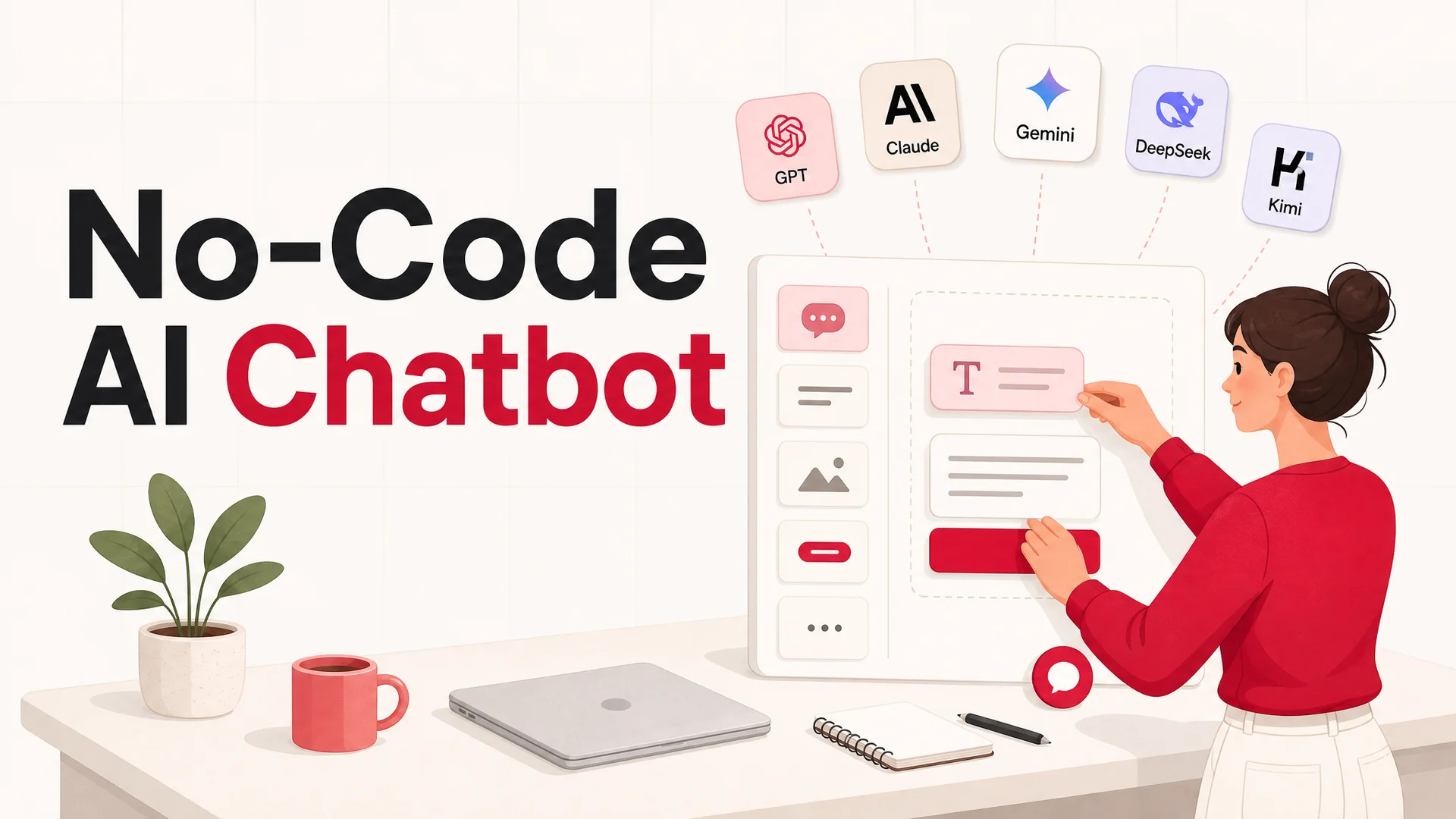
- Multi-model from day one. Pick from GPT-5.5 and GPT-5.5 Pro, Claude Opus 4.7 and Sonnet 4.6 (both with 1M-token context at no surcharge), Gemini 3.1 Ultra and Pro, DeepSeek V4 Pro and Flash, Kimi K2.6, GLM-5.1, Qwen3.6, MiniMax M2/M2.7, MiMo-V2-Pro, and several others. You can route different conversation types to different models - cheap models for triage, frontier models for escalation - without rebuilding anything.
- Train on the sources you already have. Upload PDFs, point at a site, sync from Notion, plug in Google Drive folders, ingest YouTube transcripts. Berrydesk handles chunking, embedding, refresh schedules, and retrieval so you do not have to stitch together a RAG pipeline. With 1M–2M-token context windows now standard on the frontier, the agent can also keep your full policy library in-context for hard questions.
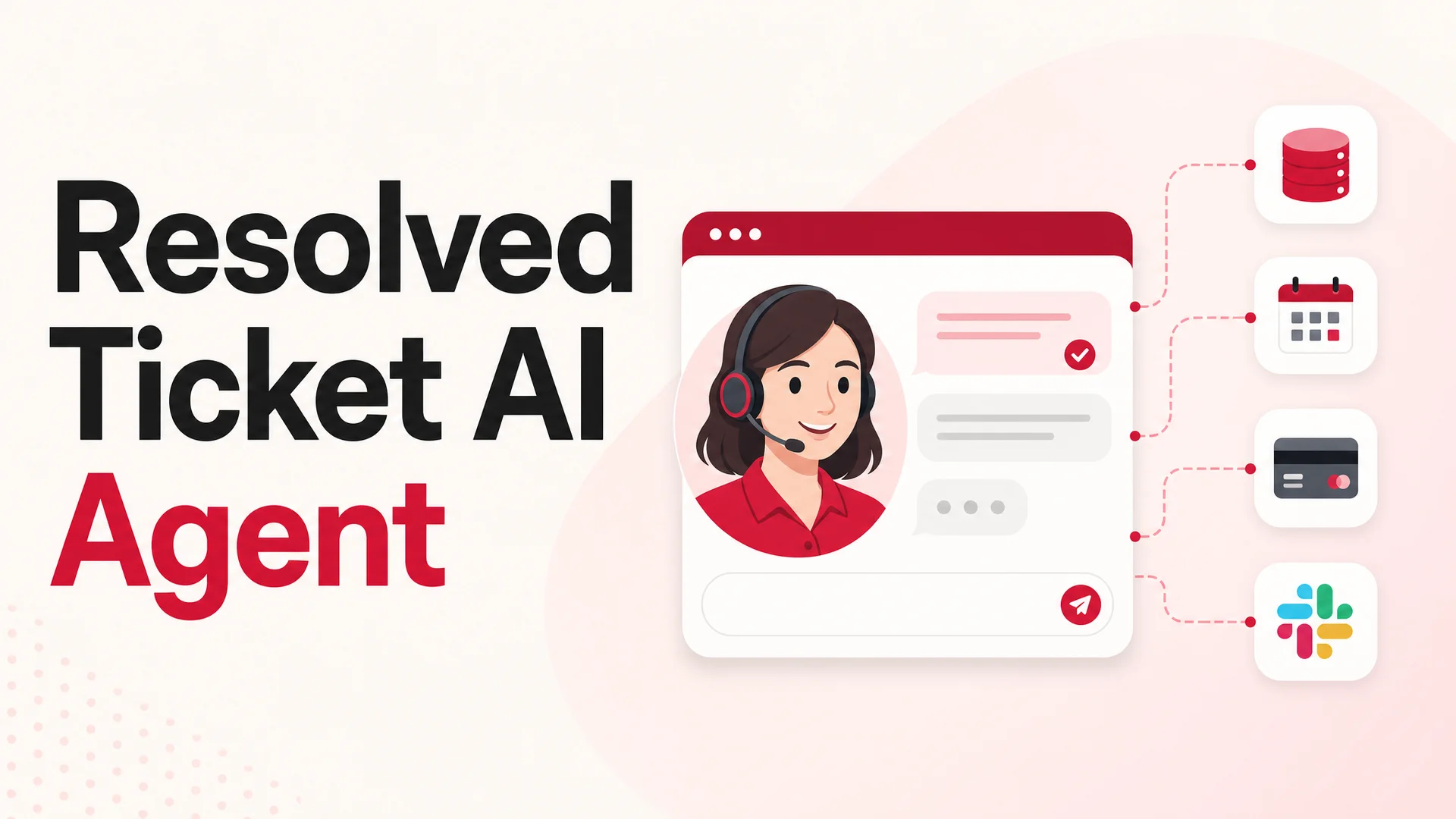
- AI Actions for real work. This is the difference between a chatbot and an agent. Berrydesk lets you wire actions to your existing systems - booking calendars, payment links, order lookups, refund flows, password resets, ticket updates - so the agent resolves the request instead of describing how the user could resolve it themselves.
- Branded chat widget. Logo, colors, fonts, suggested questions, custom greetings, opt-in collection - none of which require a frontend dev.
- Deploy where the conversation actually happens. Embed on a website, drop into Slack or Discord, run inside WhatsApp, send messages over email, or expose a JSON API. One agent, many surfaces.
Where Berrydesk fits
Berrydesk is the right call if your goal is a production support or sales agent and you want to be answering tickets this week, not architecting a multi-agent framework for a quarter. It is intentionally more focused than a horizontal "build any agent" platform. If you need to coordinate 300 sub-agents to direct a research swarm, this is not that tool. If you need an agent that knows your product and resolves customer issues across every channel a customer might reach you on, this is squarely the tool.
The simplicity is the point. Non-technical operators can ship; engineering teams can still drop into the API for the 5% of cases that need it. Start at berrydesk.com and you will have a trained agent in the time it takes to drink a coffee.
2. Voiceflow
Voiceflow has spent the last several years being the serious answer for voice-first conversational AI. If your agent needs to live inside a phone call, a smart speaker, or a contact-center IVR - and especially if you care about the design surface for that experience - Voiceflow is one of the best places to do that work.
What Voiceflow does well
- Voice-native design. The canvas treats voice as a first-class input rather than a checkbox. Intent design, dialogue state, barge-in, fallback handling - all of it is closer to "telephony product" than "chatbot with TTS bolted on."
- Cross-channel deployment. The same flow can ship to Alexa, Google Assistant, web, mobile, and contact-center platforms, which makes it useful when your brand needs to be reachable everywhere.
- API extensibility. You can call out to your own services to fetch data and take action mid-conversation, which is essential for any non-trivial agent.
- Collaborative workflow. Designed for teams: PMs, conversation designers, and engineers can all live in the same workspace.
Where Voiceflow can be tough
- Steeper than it looks. The drag-and-drop surface hides the complexity right up until you need to do something real, at which point you are deep in custom code blocks and managing intent training data.
- Cost at scale. Voice minutes plus the underlying model calls can stack up quickly on enterprise-tier features.
Who should use Voiceflow
Pick Voiceflow when voice is the primary channel and you have a designer or PM who can own the conversation flow as a craft. For a chat-first support deployment, the overhead is hard to justify.
3. Botpress
Botpress has positioned itself as the open-source, developer-leaning option for teams that want to own and customize their stack. It rewards a certain kind of buyer: large engineering org, real ops capacity, allergy to proprietary lock-in.
Why Botpress shows up on shortlists
- Open-source core. You can read the code, modify it, and deploy on your own infrastructure if compliance demands it. That is rare in this category.
- Modular architecture. Components - NLU engine, channels, storage, action library - can be swapped or extended. With open-weight frontier models like GLM-5.1 (MIT-licensed, 754B-param MoE) and Qwen3.6-27B (Apache 2.0, dense, beats much larger MoE rivals on agentic coding) now competitive with closed frontier on many benchmarks, the "bring your own model" story is genuinely meaningful in 2026.
- Multi-channel deployment. Slack, Teams, Messenger, web, custom - all supported.
What to expect going in
- You need engineers. This is not a no-code platform pretending to be a developer platform; it is a developer platform with a UI. Expect to write code.
- Heavy for small teams. If you have one engineer split across five projects, Botpress will eat them.
Who should use Botpress
Enterprises with a dedicated platform team, strict deployment requirements (on-prem, air-gapped, region-pinned), and a real need to own the agent stack end-to-end. Everyone else will be happier on a hosted platform.
4. Vertex AI Agent Builder
Vertex AI Agent Builder is Google's entry, and like most Google Cloud products it is enormously capable, deeply integrated with the rest of GCP, and somewhat punishing if you have not lived inside Google's ecosystem before.
What Vertex AI offers
- Generality. You are not boxed into a use case. Customer service, internal copilots, document agents, multi-step workflows - Vertex can do them all because it is essentially a thin layer over the underlying Google AI stack.
- Native Gemini access. Direct integration with Gemini 3.1 Ultra (2M-token context, natively multimodal across text, image, audio, and video) and Gemini 3.1 Pro (94.3 on GPQA Diamond). For agents that genuinely need long-context reasoning over enterprise data, the 2M window is a real advantage.
- Grounding on enterprise data. Vertex Search and your own data sources can be plugged in to ground the agent's responses, which is the difference between an agent that hallucinates and one that cites the right doc.
- Agent stitching. Multiple specialized agents can be composed into a single user-facing experience, which maps well onto how complex enterprise workflows actually look.
The downsides
- Cognitive overhead. Vertex's surface area is large. You will spend real time learning IAM, service accounts, quotas, region behavior, and the way Vertex's various sub-products interact. None of this is hard, exactly - it is just a tax.
- GCP gravity. This product makes the most sense if you are already a GCP shop. If you are a multi-cloud or AWS-primary org, the integration value drops fast.
Who should use Vertex AI
Enterprises already on Google Cloud who want to run agents on Gemini, ground them on data living in BigQuery and Cloud Storage, and have the cloud-engineering chops to operate the whole stack.
5. Microsoft Copilot Studio
Copilot Studio is Microsoft's bet on agents that live inside the Microsoft 365 universe. It is the natural choice if your users open Teams every morning and your data lives in SharePoint, Dataverse, and Outlook.
Why Copilot Studio is interesting
- Graphical authoring with code escape hatches. Most flows can be designed visually; when you need real logic, Power Fx and custom connectors are right there.
- Business-process focus. It is purpose-built for the kinds of agents large companies actually deploy - onboarding, expense workflows, ticket triage, internal Q&A, IT helpdesk.
- No-code and pro-code paths. A business analyst can build a useful first version; a developer can take it the rest of the way without rebuilding from scratch.
- Microsoft 365 integration. Native hooks into Teams, Outlook, SharePoint, Dataverse, and Power Platform. If your operational data lives in this stack, the integration value is enormous.
- Pre-built templates. Microsoft ships starter agents for common scenarios you can fork rather than design from zero.
What to know going in
- Advanced features assume Microsoft fluency. Power Platform expressions, Dataverse schema modeling, and Graph API patterns are all part of the deal once you go past the basics.
- Less compelling outside the Microsoft world. If you do not use Microsoft 365, the value drops sharply.
Who should use Copilot Studio
Mid-market and enterprise customers whose work happens inside Teams, SharePoint, and the rest of M365. Especially compelling for internal-facing agents - IT helpdesk, HR, finance - where the data and the users already live in Microsoft.
6. Lindy AI
Lindy is the friendliest no-code option in this list. It is built for "I want to automate this thing on my desk" rather than "I want to deploy a customer-facing agent across millions of conversations." The distinction matters.
Why Lindy works for the right buyer
- Genuinely no-code. The authoring experience is closer to Zapier than to a developer console. Founders, ops leads, and SMBs can build something useful in a single afternoon without help.
- Sensible automation breadth. Meeting summaries, email triage, lead outreach, calendar coordination, social-media support - Lindy spans the kinds of small-but-tedious workflows that pile up at growing companies.
- Pre-built templates. A library of agents you can clone and tweak rather than design from scratch.
- Integrations with the day-to-day stack. Slack, Notion, Zendesk, Google Workspace, and more are first-class connectors.
- HIPAA-compliant tier. Useful if you are even adjacent to healthcare workflows.
Where Lindy gets thinner
- Complexity ceiling. Once you push past "automate this five-step task" into "run a multi-channel support agent with custom escalation logic," the seams start to show.
- Narrow scope. Lindy is not trying to be a general agent platform. That focus is a feature for SMB users and a limitation if your needs grow past it.
Who should use Lindy
Solo founders and small teams who need their own AI assistant for routine ops, not a customer-facing support agent. Use Lindy for inside-the-company automation; reach for a focused platform for outside-the-company conversations.
7. Dify
Dify is an open-source LLM application platform with a low-code surface. It sits in an interesting middle of the market: more flexible than Lindy, more accessible than Botpress, and self-hostable for teams that need it.
What Dify brings
- Low-code authoring. Build an LLM app - chat, retrieval, workflow, agent - without writing the boilerplate. Useful for teams that have some technical capacity but do not want to start from a blank Python file.
- Multi-model freedom. Dify connects to a wide range of providers, so you can A/B test Claude Opus 4.7 against GPT-5.5 against DeepSeek V4 Flash against Qwen3.6 against MiniMax M2 on the same workflow. With the open-weight tier collapsing inference cost - DeepSeek V4 Flash at $0.14 / $0.28 per million input/output tokens, MiniMax M2 at roughly 8% of Claude Sonnet pricing - that flexibility is worth real money over a year.
- Workflow builder. Compose retrieval, tool use, model calls, and conditionals into a single graph.
- Self-hosting. Deploy on your own infrastructure if data residency or compliance demands it.
The honest tradeoffs
- Learning curve. "Low-code" undersells the ramp. Once you go past the templates, the platform expects you to think like an LLM-app developer.
- Feature gaps. For something pitched as a build-anything platform, you will hit "wait, this is not in here yet" moments. Operability, observability, and channel coverage are all areas where the polish lags the hosted competitors.
- Work in progress. Active development is good news; it also means quarterly breakage and best-practices that change.
Who should use Dify
Engineering-led teams that want a self-hostable, model-agnostic LLM application platform and are comfortable being slightly ahead of the polish curve. Less ideal if you need to be in production by Friday.
8. AutoGen
AutoGen is the framework wing of this market. Microsoft's open-source library is for engineers who want to design multi-agent systems where agents talk to each other, divide labor, and collaborate to finish a task. It is closer to a programming model than a product.
Where AutoGen genuinely shines
- Multi-agent orchestration. This is what AutoGen was built for. Specialist agents - planner, coder, critic, executor - coordinated through structured conversations. The latest agentic frontier models (Kimi K2.6 swarming up to 300 sub-agents across 4,000 coordinated steps, GLM-5.1 running 8-hour autonomous plan-execute-test-fix loops) make this kind of orchestration genuinely productive in 2026 in a way it was not even a year ago.
- Multi-modal compositions. Agents working over text, code, and tools in a single workflow.
- API-deployable. You can wrap a finished workflow as an API and call it from elsewhere in your stack.
- Strong research community. AutoGen is a center of gravity for multi-agent research, which means new patterns show up here first.
What you sign up for
- It is a framework. You are writing Python. There is a low-code studio layer, but the productive path is still code.
- Microsoft ecosystem habits. Some of the conventions are recognizably "Microsoft research" rather than "developer-first SDK."
- Operational story is your problem. Logging, retries, evals, observability, cost tracking - none of this is the framework's job.
Who should use AutoGen
R&D teams, ML engineers, and developers building genuinely novel multi-agent architectures. If your goal is "deploy a support agent on our website," reach for a hosted platform. If your goal is "explore how a 12-agent system can debug a codebase autonomously," AutoGen is one of the right starting points.
9. RAGaaS
RAGaaS - retrieval-augmented generation as a service - is not technically an agent builder. It is the unglamorous infrastructure layer underneath agents that retrieve from custom data, and it deserves a spot in this conversation because skipping it is one of the most common ways agent projects flop.
What RAGaaS handles
- Ingestion breadth. PDFs, Word docs, slides, spreadsheets, plain text, web scrapes, sitemap crawls, and structured connectors to Notion, Google Drive, Dropbox, and the rest. Whatever shape your data is in, you can probably get it into the index.
- Storage flexibility. Works with S3-compatible object storage and most popular vector databases.
- API-first. Designed to be consumed by other tools, including agent platforms.
- Production-grade infrastructure. Chunking, embedding refresh, dedup, scale - handled rather than hand-rolled.
Why this still matters in the 1M-context era
A reasonable question in 2026 is whether RAG is still necessary now that Claude Opus 4.6 and Sonnet 4.6 ship with 1M tokens, Gemini 3.1 Ultra ships with 2M, and DeepSeek V4 and Kimi K2.6 also reach 1M. The answer for production support is: long context replaces some RAG and complements the rest. You still want retrieval when your knowledge base is changing daily, when you want citations, when you want to control which subset of docs informs a given response, and when you want to keep per-call cost predictable. Long context is now a tuning lever; RAG is not dead, it is more focused.
Who should use RAGaaS
Teams building custom agents that need a robust retrieval pipeline they do not want to operate themselves. If you are using a hosted platform like Berrydesk, this work is already done for you - RAGaaS is for the teams building from a lower layer.
10. TIR by E2E Cloud
TIR is for teams that want a no-code surface backed by full-fledged ML infrastructure. Built on JupyterLab and high-performance GPUs, it sits at the seam between "drag-and-drop agent builder" and "model training and deployment platform."
What TIR offers
- No-code agent creation. Quick path from idea to deployed agent through a visual surface.
- Built-in RAG. Retrieval is included rather than bolted on, so agents can answer from your documents out of the box.
- Interactive playground. Iterate on prompts and configurations in real time.
- Tool integrations. Hugging Face, Weights & Biases, and E2E object storage are first-class.
- GPU-backed inference. NVIDIA infrastructure underneath, with deployment options across NVIDIA Triton, TensorRT-LLM, and PyTorch Serve.
- Code-first when needed. JupyterLab workspaces for the parts of the project that need real engineering.
Where TIR fits
TIR is interesting when you need both ends of the spectrum - non-technical builders shipping agents through a UI and data scientists fine-tuning models in notebooks - without splitting across two platforms. For teams that fit that shape, it is a strong option. For pure customer-support agent deployments, the infrastructure depth is overkill.
How to actually pick
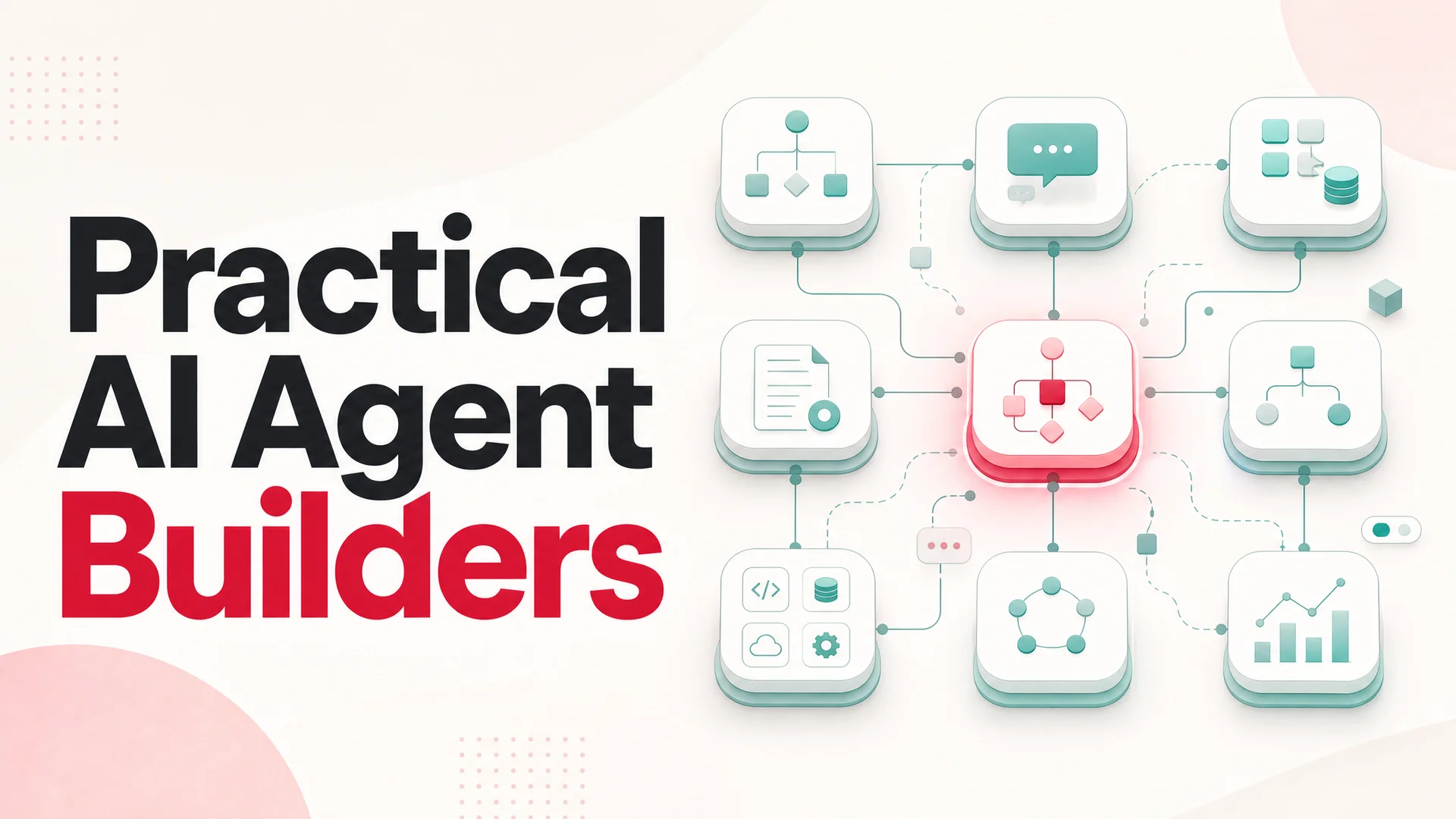
The platforms above split, more or less, into four buckets. Knowing which bucket you are in narrows the decision quickly.
Customer-facing support and sales agents
If your goal is an agent that lives on your site, in Slack, Discord, or WhatsApp, learns your product, and resolves real customer requests - Berrydesk is purpose-built for that, and the multi-model story (route routine traffic to DeepSeek V4 Flash or MiniMax M2 at fractions of a cent per resolution, reserve Claude Opus 4.7 or GPT-5.5 Pro for hard escalations) is the practical answer to the cost question every support leader asks.
Voice-first experiences
Voiceflow, full stop. Nothing else in this list takes voice as seriously.
Internal Microsoft 365 agents
Copilot Studio, especially if your users live in Teams and your data lives in SharePoint and Dataverse.
Open-source and self-hosted
Botpress for the operability story, Dify for the application-platform story, AutoGen if you are doing multi-agent research. With the new wave of MIT and Apache-licensed open-weight frontier models - GLM-5.1, Qwen3.6-27B, MiMo - the "we will run our own models on our own hardware" path is more viable in 2026 than it has ever been, especially for regulated industries doing on-prem or air-gapped deploys.
General-purpose / enterprise / GCP-aligned
Vertex AI Agent Builder, particularly if you need 2M-token Gemini 3.1 Ultra reasoning over data already in GCP.
What to watch out for
A few things bite teams more often than they should.
Demo-grade vs. production-grade. A platform that can show a good demo is not the same as a platform you can run in production for a year without crying. The question to ask: what is the eval, observability, and rollback story when something regresses?
Single-model lock-in. A year ago, betting on one frontier model felt safe. In 2026, with Kimi K2.6, GLM-5.1, DeepSeek V4, Qwen3.6, MiniMax M2, and MiMo-V2-Pro all releasing within weeks of each other, lock-in is genuinely costly. Pick a platform that lets you swap models per route - your cost curve will thank you.
RAG vs. long context. Do not over-engineer. Your first agent does not need a hand-rolled hybrid retrieval pipeline; with 1M-token context now standard on Claude and DeepSeek and 2M on Gemini, you can probably get further than you think with simpler retrieval plus long context, and add complexity only where the eval data demands it.
The "build anything" trap. General-purpose agent platforms are seductive and will let you spend a quarter on architecture before shipping anything. If your real goal is a support agent, use a tool focused on support agents.
Where the agent actually lives. Customers do not care that you have a chatbot on the website if they prefer WhatsApp. Channel coverage is a feature, not a footnote.
Get started
AI agents in 2026 are at the point where the question is no longer whether to deploy one, but how to deploy one well. The frontier - closed and open - has moved past the "interesting prototype" stage into the "this resolves the ticket and books the meeting" stage. The bottleneck is now choice of platform, channel coverage, and operational discipline.
If you are starting from zero and the goal is a customer-facing support or sales agent, Berrydesk is the fastest path from "I have docs and a website" to "I have an agent in production." Pick a model, train on your sources, brand the widget, wire up AI Actions, and deploy across web, Slack, Discord, WhatsApp, and beyond - in less time than it takes to schedule the kickoff meeting at most companies.
Try Berrydesk for free and see what an agent built specifically for customer-facing teams feels like.
 Berrydesk
Launch your AI agent in minutes
- Train on your docs, site, Notion, Drive, or YouTube - no code required.
- Pick the model that fits the job: Claude Opus 4.7, GPT-5.5, Gemini 3.1, DeepSeek V4, Kimi K2.6, GLM-5.1, Qwen3.6, MiniMax M2 - all on one platform.
Set up in minutes

Chirag Asarpota is the founder of Strawberry Labs, the team behind Berrydesk - the AI agent platform that helps businesses deploy intelligent customer support, sales and operations agents across web, WhatsApp, Slack, Instagram, Discord and more. Chirag writes about agentic AI, frontier model selection, retrieval and 1M-token context strategy, AI Actions, and the engineering it takes to ship production-grade conversational AI that customers actually trust.