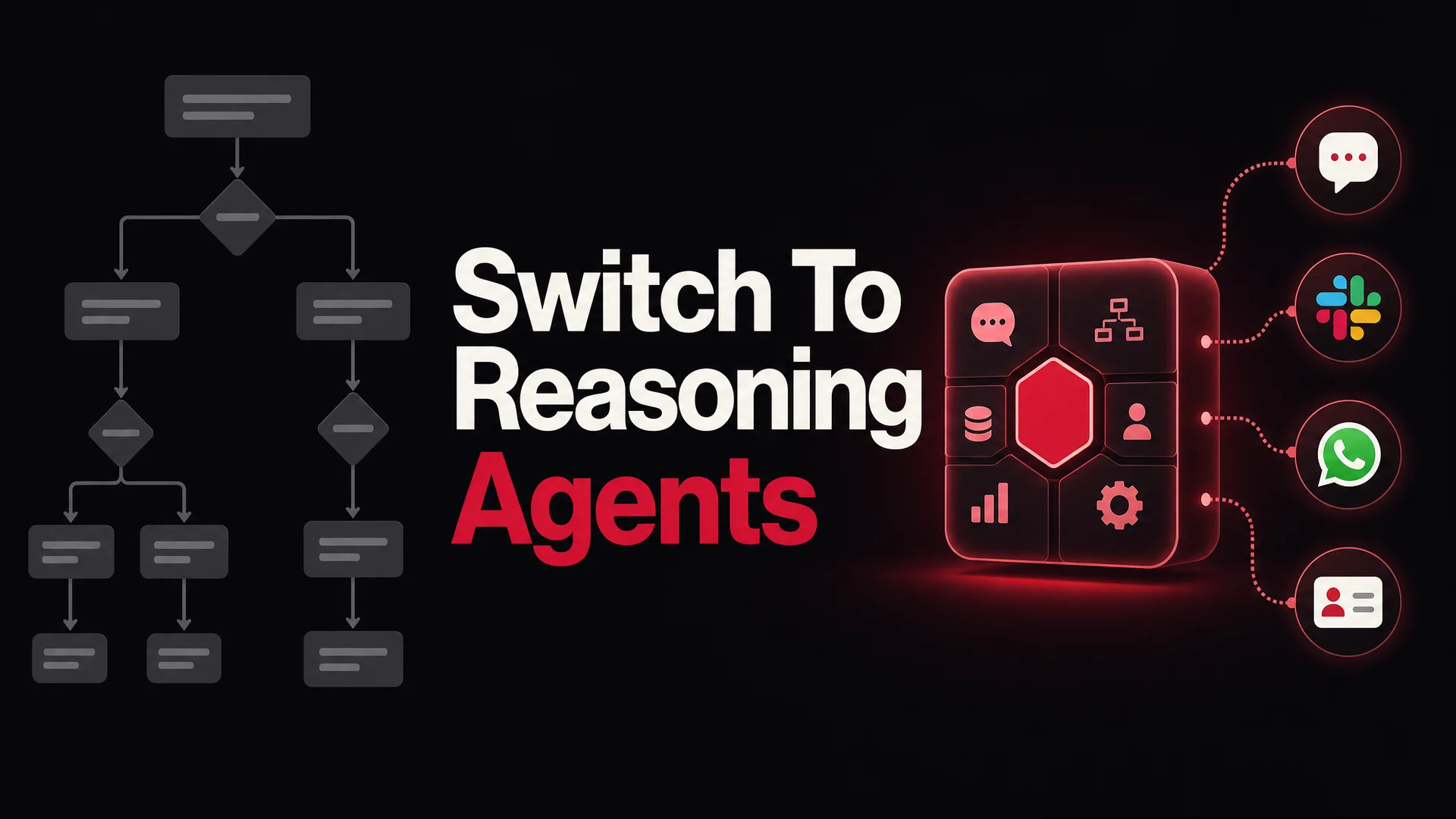
Customer support buyers in 2026 are not really shopping for a "chatbot" anymore. They are shopping for a teammate that can read a knowledge base, follow a policy, look something up in an internal system, and finish a task on the customer's behalf. That shift - from scripted chatbots to reasoning agents - is the single biggest reason longtime Chatbot.com customers are reevaluating their stack right now.
Chatbot.com has spent years building a credible product around visual flow builders and rule-based conversations. It does that job well. But the underlying assumption - that you can map customer intents into a finite tree of buttons and scripted replies - has aged badly against a class of models that can simply read your docs and reason. If you are pricing out a renewal or a migration, this is the comparison you actually need: Chatbot.com against a current-generation AI agent platform like Berrydesk, evaluated against the model landscape as it exists in 2026.
Where Chatbot.com fits, and where it strains
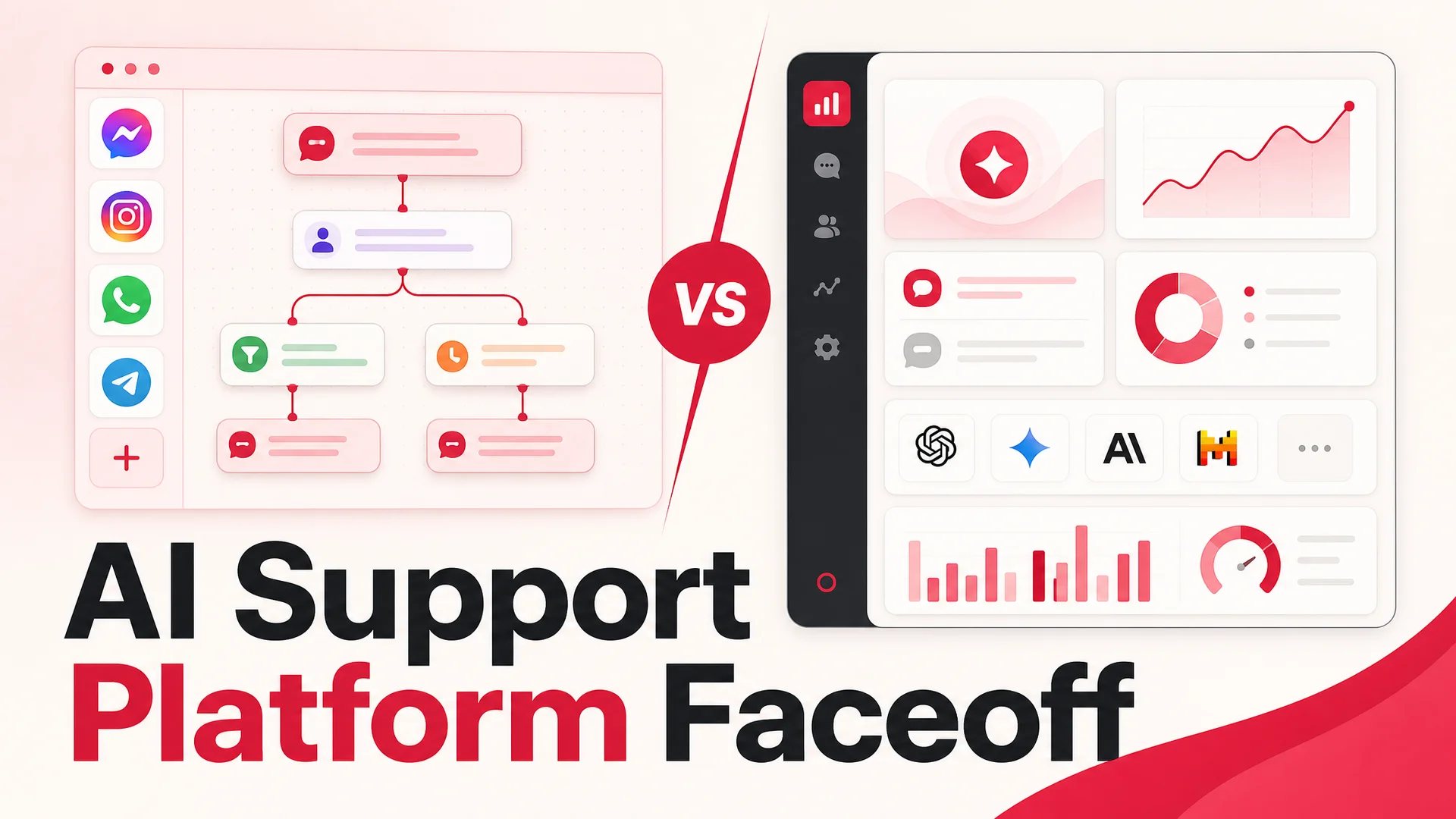
Chatbot.com's core product is a visual builder. You drag nodes, you wire decision logic, you attach quick replies, and you ship the result to a website widget or messaging channel. For brochure-style FAQs and lead capture forms, that is a perfectly reasonable architecture. The flows are predictable, the variables are inspectable, and a non-technical owner can ship changes without touching code.
The strain shows up the moment a real support workload hits the bot. Customer questions do not arrive in the shape of buttons. A subscriber asking "why was I charged twice last week" needs the agent to look at billing history, recognize a duplicate authorization, explain the refund timing in the language of your policy, and offer to escalate if the customer is unhappy. That is not a flow you can draw - it is a chain of reasoning steps over real data. Teams with this kind of traffic typically end up either bolting an LLM onto Chatbot.com via custom integrations or hopping to a platform that was built around models from day one.
What an AI agent platform actually changes
The category that has emerged to replace classic chatbot builders is, for lack of a less marketed term, the AI agent platform. Berrydesk is one example, and the design center is different in three concrete ways.
The model is the runtime, not a feature. Where Chatbot.com treats AI replies as one possible node inside a flow, Berrydesk treats the model as the conversation engine. Routing, fallback, policy adherence, and tool use are all decisions the model makes at inference time, grounded in the knowledge you train on. You configure guardrails and tools; you do not draw the conversation.
Knowledge ingestion is first-class. Berrydesk reads your help center, your marketing site, Notion workspaces, Google Drive folders, PDFs, raw text, and YouTube transcripts, then keeps that index in sync. The agent answers from your actual documentation rather than from a curated list of canned responses.
Actions are part of the agent, not a separate automation. Booking a meeting, issuing a refund, looking up an order, taking a payment - Berrydesk's AI Actions let the agent finish those tasks inside the same conversation, using your APIs. That is the line between a chatbot that explains and an agent that resolves.
A short tour of Berrydesk
If you are coming from Chatbot.com, the easiest mental map is: your flow builder gets replaced by a model, your message templates get replaced by your knowledge base, and your integrations get expressed as AI Actions. The product itself sits around four steps.
Pick a model
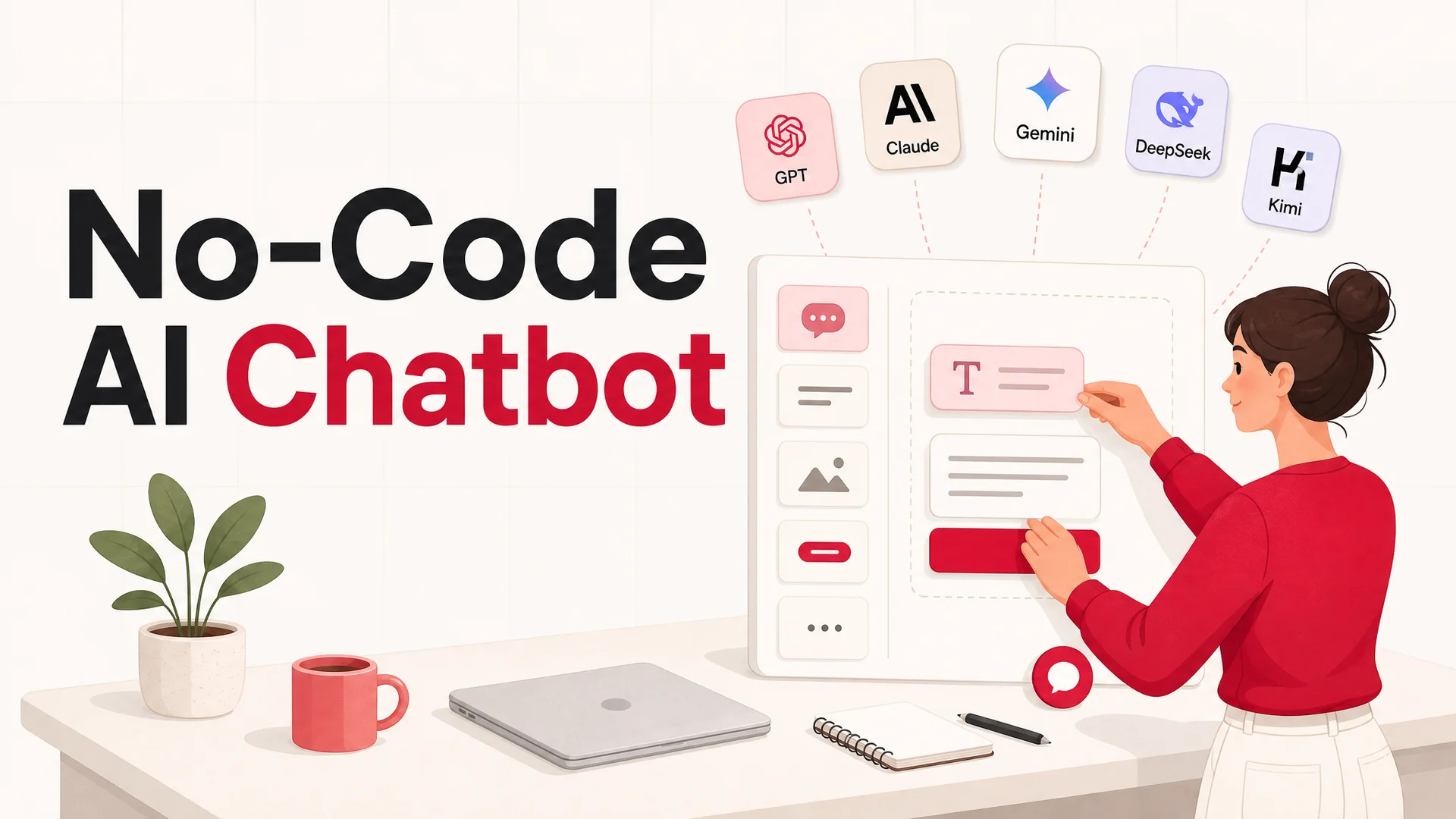
Berrydesk is model-agnostic. You can deploy on OpenAI's GPT-5.5 or GPT-5.5 Pro, Anthropic's Claude Opus 4.7 or Sonnet 4.6 (both with a 1M-token context window at no extra cost), or Google's Gemini 3.1 Ultra and Pro. You can also pick from the open-weight frontier - DeepSeek V4 Flash and V4 Pro, Moonshot's Kimi K2.6, Z.ai's GLM-5.1, Alibaba's Qwen 3.6 family, MiniMax M2.7, or Xiaomi's MiMo-V2-Pro. The practical effect is that you stop being held hostage to one lab's pricing or release cadence. Routine "where is my order" traffic can run on DeepSeek V4 Flash at $0.14 per million input tokens; the hard escalations get Claude Opus 4.7, which currently leads SWE-bench Pro at 64.3% and handles long, ambiguous reasoning the best.
Train on your sources
Point Berrydesk at the URLs, files, Notion pages, Drive folders, or video transcripts that describe how your business actually works. The platform crawls, chunks, and indexes the content, and re-syncs on a schedule. You can layer on persona instructions - tone, escalation thresholds, policies the agent must never break - and the model will treat those as system-level constraints rather than suggestions.
Brand the surface
Logo, colors, avatar, welcome message, suggested questions, and the small details that make a widget feel like part of your product. You can match Berrydesk to a marketing site, a SaaS dashboard, or a regulated-industry portal without writing CSS.
Connect actions and channels
Wire AI Actions for the tasks the agent is allowed to perform - checking order status against Shopify, scheduling on Google Calendar, taking a payment via Stripe, writing a CRM note, opening a Zendesk ticket. Then deploy. A Berrydesk agent can live as a website widget, a Slack bot, a Discord app, a WhatsApp number, or several at once, with shared memory across channels.
Why teams migrate from Chatbot.com to Berrydesk
The decision is rarely about a single feature; it is about what each platform makes easy. Five themes come up repeatedly in migration conversations.
Reasoning over scripting
This is the headline. A Chatbot.com flow is a finite map of expected paths; a Berrydesk agent reads the customer's actual message, consults your knowledge base, and produces an answer grounded in that knowledge. With models like Claude Opus 4.7 and Kimi K2.6 - which can sustain agentic reasoning across thousands of coordinated steps - the agent can chain "look up the order, check the policy, calculate the refund, draft the email" without a human having to pre-draw any of it. Teams that previously spent weeks maintaining flows describe this shift as switching from a rule engine to a colleague.
Real long-context support
Claude Opus 4.6 and Sonnet 4.6 ship with a 1M-token context window at no surcharge, DeepSeek V4 matches that, and Gemini 3.1 Ultra goes to 2M tokens. For support, this changes the math on retrieval. Instead of frantically tuning a RAG pipeline to fetch the right paragraph, you can keep an entire product manual, the customer's full ticket history, and your refund policy resident in context for a single conversation. RAG remains useful as a cost lever, but it is no longer the precondition for a coherent answer. Chatbot.com's flow-first architecture cannot take advantage of this; Berrydesk is built to.
A cost curve that respects your CFO
The open-weight frontier has collapsed unit economics for support workloads. DeepSeek V4 Flash, MiniMax M2.7, and Qwen3.6-27B can resolve routine tickets at fractions of a cent each. Berrydesk lets you set routing rules so that 80% of traffic - the password resets, the order lookups, the shipping FAQs - runs on the cheapest model that handles them well, while only the genuinely hard tickets are sent to GPT-5.5 Pro or Claude Opus 4.7. Chatbot.com's classic per-conversation pricing model does not give you this lever; you are buying conversations, not compute, and you cannot trade complexity for cost.
Multi-channel that shares one brain
Both platforms can deploy across channels. The difference is what travels with the customer. Berrydesk runs the same agent - same training, same actions, same persona, same memory - across the website widget, Slack, Discord, WhatsApp, Messenger, and email handoffs. A Chatbot.com flow is generally rebuilt or duplicated per channel, which means the version on WhatsApp drifts from the one on the site. For support teams trying to deliver consistent experiences, that drift is where customer trust quietly leaks out.
Compliance and on-prem options
The MIT-licensed and Apache-2.0 open-weight models that landed in early 2026 - GLM-5.1, Qwen3.6-27B, MiMo-V2-Pro - make on-prem and air-gapped deployments genuinely viable. For regulated industries, Berrydesk supports running an agent against an open-weight model inside your own VPC, keeping training data and conversation logs out of any third-party cloud. Chatbot.com's architecture, like most flow builders, was not designed around that level of deployment flexibility.
Where Berrydesk earns its keep
Five workloads in particular are where the platform pays back quickly.
Customer support deflection. Train Berrydesk on your help center, knowledge base, and product documentation. Connect it to your order management system, billing tool, and ticketing platform. The agent answers high-volume questions instantly, performs routine actions, and escalates the rest with a clean handoff that includes everything it has already learned about the customer.
Lead qualification and booking. Berrydesk agents can run a discovery conversation, score the lead against criteria you define, and book a meeting on a sales rep's calendar - all in the same conversation. With AI Actions wired to Salesforce or HubSpot, the resulting record lands cleanly in the CRM, with notes the rep can actually use.
E-commerce concierge. Connect product catalog, inventory, order status, and shipping APIs. The agent answers "is this in my size," "where is my package," and "can I exchange for a different color" without bouncing the customer to a help desk. With native video input on models like Kimi K2.6, customers can even send a photo of a damaged item and have the agent open the return for them.
Internal knowledge agent. Train Berrydesk on your wiki, HR policies, IT runbooks, and engineering docs. Deploy it in Slack so employees can ask "how do I expense this," "what is the incident response procedure," or "who owns the billing service" and get a grounded, source-cited answer. This is one of the highest-ROI uses, because the audience is captive and the sources are well-bounded.
B2B onboarding. Embed a Berrydesk agent inside your product so new customers can ask configuration questions in context. Because the agent has access to your docs and your APIs, it can not only explain how a feature works but also offer to set it up.
Common pitfalls when you switch
Migrations that go badly tend to make the same handful of mistakes. Worth flagging before you commit.
Treating the model like a flow. The first instinct after years on Chatbot.com is to recreate every old branch as a system prompt instruction. Don't. Trim the prompt down to persona, hard constraints, and escalation rules; let the knowledge base and actions do the work. Over-prompted agents become brittle.
Underinvesting in the knowledge base. A Berrydesk agent is exactly as good as the documentation it is trained on. If your help center is stale, the agent will be stale. The first week of a serious deployment is usually 70% content cleanup and 30% configuration.
Skipping the routing strategy. It is tempting to point everything at the most capable model. That works, but it is expensive. Spend an afternoon classifying ticket types and route accordingly: cheap models for high-volume routine traffic, premium frontier models for the long tail. The savings compound fast.
Not gating actions. AI Actions are powerful, which means they need limits. Cap refund amounts, require confirmation for irreversible operations, log everything. The right mental model is "junior agent on day one" - capable but supervised.
Measuring deflection only. Resolution rate matters more than deflection rate. A bot that closes 80% of tickets but generates 30% follow-up complaints is not winning. Track CSAT on agent-handled conversations, time-to-resolution, and escalation quality alongside raw deflection.
Open-weight versus closed frontier: a quick frame
One of the recurring buyer questions is whether to standardize on a single closed model or lean into the open-weight frontier. The honest answer in May 2026 is: route, do not standardize.
Closed frontier models still own the hardest reasoning. Claude Opus 4.7 leads SWE-bench Pro at 64.3%, GPT-5.5 Pro brings parallel reasoning that helps on multi-tool workflows, and Gemini 3.1 Pro tops GPQA Diamond at 94.3%. For ambiguous, high-stakes escalations, paying for those models is worth it.
The open-weight frontier owns volume economics. GLM-5.1 hits 58.4 on SWE-Bench Pro under an MIT license. Qwen3.6-27B is dense, Apache-2.0, and competitive with much larger MoE rivals. MiniMax M2.7 runs at roughly 8% the price of Claude Sonnet at twice the speed. For a support workload where most tickets are repetitive, these models change the unit economics by an order of magnitude. Berrydesk's job is to make routing between them a configuration choice, not an engineering project.
What to expect in the next twelve months
Three trends are worth tracking if you are making a multi-year platform decision. First, agentic reliability is improving fast - Kimi K2.6's 12-hour autonomous coding sessions and GLM-5.1's 8-hour plan-execute-test-fix loops are research benchmarks today, but they preview a world where a support agent can own multi-day cases end to end. Second, native multimodality is becoming table stakes; Gemini 3.1 Ultra and Kimi K2.6 already accept video, which matters for any business where customers describe problems visually. Third, on-prem deployments of frontier-class models are no longer exotic, which will pull more regulated industries into the AI agent category for the first time.
A platform decision today is really a bet on whether your stack can absorb those shifts without a rewrite. Flow-builder products like Chatbot.com tend to absorb them slowly, because the underlying architecture assumes humans draw the conversation. Model-native platforms like Berrydesk inherit improvements automatically - when a new frontier model lands, you change a dropdown.
The bottom line
Chatbot.com is a fine choice if your workload is genuinely a small set of scripted flows and a contact form. The moment your support traffic looks like real questions about real data, the architecture starts working against you. Berrydesk takes the opposite bet: model-native conversations, knowledge ingestion as a first-class concept, AI Actions for actual task completion, and the freedom to mix closed and open-weight models against your specific cost and compliance constraints.
If you are renewing a Chatbot.com contract this quarter, the cheapest experiment is to stand up a Berrydesk agent on the same knowledge base and run it in shadow mode for a week. You will see fairly quickly which architecture your customers prefer.
Spin up a free agent at berrydesk.com, point it at your docs, and have a working AI support teammate before lunch.
 Berrydesk
Move from scripted bots to a real AI agent
- Train on your docs, site, Notion, and Drive in minutes
- Pick GPT-5.5, Claude Opus 4.7, DeepSeek V4, or any model that fits your budget
Set up in minutes

Chirag Asarpota is the founder of Strawberry Labs, the team behind Berrydesk - the AI agent platform that helps businesses deploy intelligent customer support, sales and operations agents across web, WhatsApp, Slack, Instagram, Discord and more. Chirag writes about agentic AI, frontier model selection, retrieval and 1M-token context strategy, AI Actions, and the engineering it takes to ship production-grade conversational AI that customers actually trust.