A visitor lands on your pricing page at 11:42 PM. They have one question between them and a purchase. The page can't answer it. Your contact form takes them to a thank-you screen. By morning, they're gone.
Chatbot marketing exists to close that gap. Not with another popup, but with an actual conversation: an AI agent that greets the visitor, answers the question, qualifies the intent, and books the next step - all before anyone on your team has poured a coffee. The category is no longer experimental. Industry analysts now place chatbot-mediated retail spend at well over $140 billion annually, with the share of business-to-consumer chats touched by AI hovering around 39%. The interesting question in 2026 isn't whether to deploy a marketing agent. It's how to deploy one that actually moves revenue.
This guide walks through what chatbot marketing means today, why the underlying models changed the economics, the patterns that work, and how to ship one with Berrydesk without writing code.
Chatbot Marketing, Defined for 2026
Chatbot marketing is the use of AI agents to engage prospects, qualify intent, and progress them through a funnel inside a conversational interface - your site, your messaging apps, your social inbox. The label has been around for a decade, but the underlying capability has changed twice over.
A chatbot in 2018 was a decision tree pretending to chat. A chatbot in 2022 could write fluently but couldn't reliably take action. A chatbot in 2026, built on models like Claude Opus 4.7, GPT-5.5, Gemini 3.1 Ultra, DeepSeek V4, Moonshot Kimi K2.6, or Z.ai's GLM-5.1, is something closer to a junior teammate. It reasons across million-token context windows, executes tools against your CRM and billing system, and runs multi-step plans without losing the thread.
For a marketer, the practical shift is this: you're no longer scripting flows. You're describing a goal, providing the knowledge, exposing the actions, and letting the agent figure out the path for each visitor.
Monologue vs. Dialogue: Why the Format Wins
Most marketing is one-way. You publish a page, run an ad, send an email - and then wait. Forms are the closest most companies come to interactivity, and forms are friction by design. Every additional field measurably reduces submissions.
A conversation flips the dynamic. Instead of asking a stranger to fill in ten fields, the agent asks one relevant question, listens to the answer, asks the next, and quietly assembles a complete lead profile from the dialogue. The visitor never feels interrogated because they're not staring at a form - they're getting answers they wanted in exchange for context they didn't mind sharing.
That's the structural advantage. The 2026 model layer makes it operational. With a 1M-token context window - standard now on Claude Opus 4.6, Sonnet 4.6, DeepSeek V4, and Kimi K2.6, and 2M on Gemini 3.1 Ultra - the agent can hold your entire product catalog, pricing matrix, brand voice guide, and the visitor's full session history in working memory. There's no "let me transfer you" because the agent never forgot you in the first place.
The Two Architectures Behind Marketing Bots
It's still worth knowing how the bot under your widget actually works, because it determines what you can promise the agent will do.
Scripted, Rule-Based Bots
A rule-based bot follows a predefined tree. The visitor clicks one of three buttons, the bot responds with one of three branches, and so on until the conversation hits a leaf. This pattern is cheap, predictable, and easy to audit. It works for narrow, transactional jobs: confirming a delivery date, surfacing a tracking number, gating a download behind an email.
The cost is that any visitor whose question doesn't fit your tree falls off. Rule-based bots also age badly - every time you launch a new product or campaign, someone has to update the script.
Conversational AI Agents
An agent built on a frontier model - closed (GPT-5.5, Claude Opus 4.7, Gemini 3.1 Pro) or open-weight (DeepSeek V4, GLM-5.1, Qwen3.6, MiniMax M2.7) - works differently. You give it source material and a description of what success looks like. It interprets the visitor's intent, matches it against your knowledge, and produces an answer that wasn't pre-written.
The trade-off used to be cost: large-model inference was expensive enough that companies routed only the hardest queries to it. In 2026, that calculus has flipped. DeepSeek V4 Flash is priced at $0.14 per million input tokens and $0.28 per million output tokens. MiniMax M2 runs at roughly 8% the price of comparable closed models at twice the throughput. A serious marketing agent can answer routine questions on a cheap open-weight model and escalate edge cases to Claude Opus 4.7 or GPT-5.5 Pro - and the blended cost per resolved conversation now sits at a small fraction of a cent.
That's the shift to internalize: the model is no longer the bottleneck. Your knowledge base, your conversion design, and the tools you let the agent call are.
Why Chatbot Marketing Earns Its Keep
The arguments for the channel haven't changed in spirit, but the numbers behind them have.
1. Always-On Coverage
Roughly half of buyers expect a response any hour of any day. An AI agent gives it to them at the marginal cost of a few cents per conversation. A travel operator, for example, can have an agent handle a same-night booking inquiry at 2 AM during a flash sale - the kind of conversation that previously sat in a queue until morning, by which point the visitor had compared three competitors and chosen one of them.
What's new in 2026: the agent isn't just available, it can finish the job. With Berrydesk's AI Actions, the same conversation that surfaces availability can take payment, send a confirmation, and add the booking to the operator's calendar. Reach without execution is just expensive marketing copy.
2. Frictionless Lead Qualification
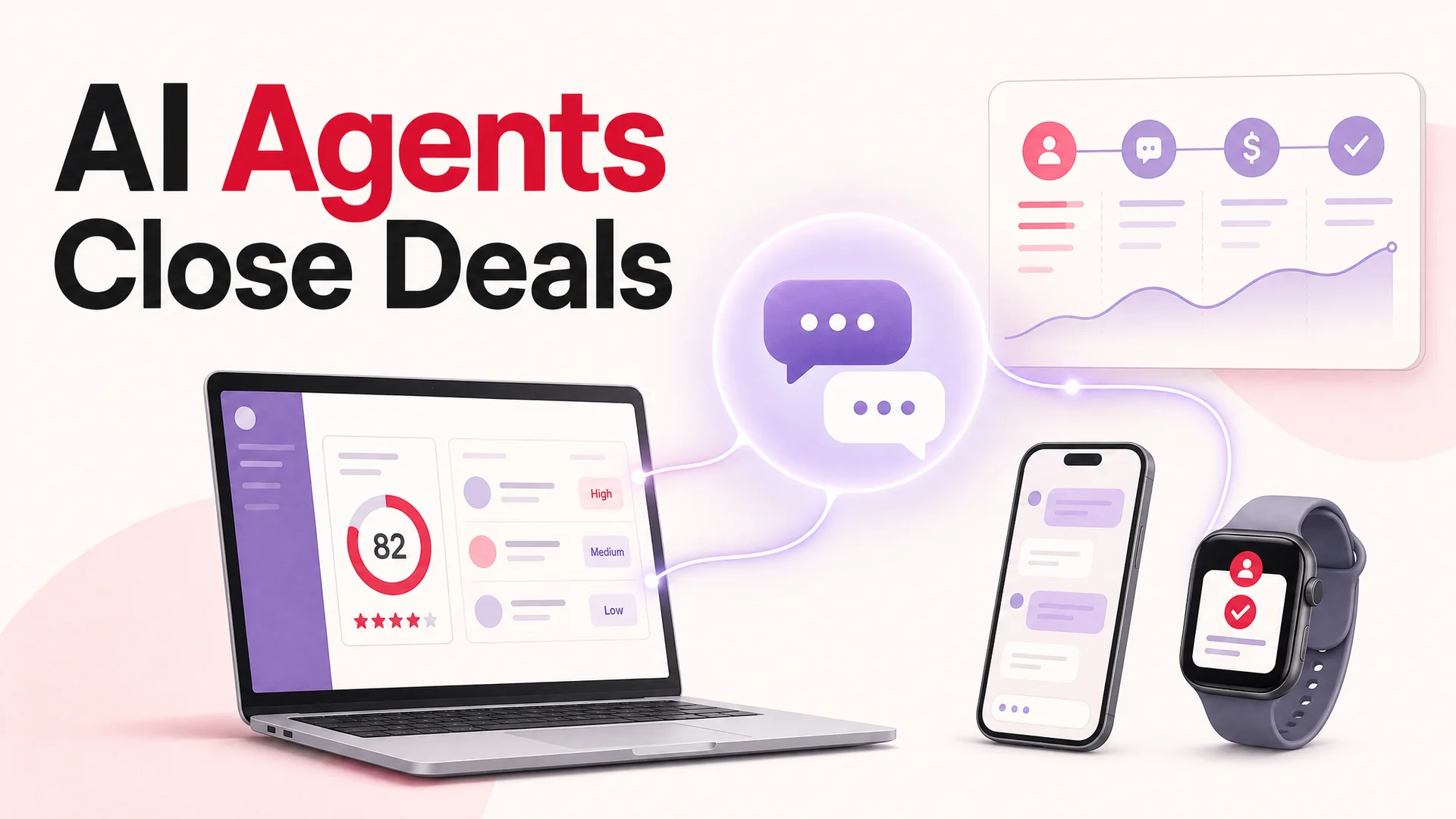
Forms convert badly because they ask for everything up front. A conversation extracts the same information across five short turns and feels like service rather than gatekeeping. You define what "qualified" means - company size, budget band, urgency, role - and the agent works the questions into the dialogue at natural moments.
A growth-marketing agency running paid traffic to a B2B SaaS tool can use this pattern to triple the volume of qualified leads from the same Google Ads spend, simply by replacing the demo-request form with a conversational qualifier. The cost-per-lead drop comes from two places: more visitors complete the qualifier than complete the form, and the sales team only takes meetings with leads the agent has already screened.
3. Personalization That Actually Personalizes
"Personalization" usually means a first-name token in an email. Real personalization means the next message reflects what the visitor just told you, what they bought last time, and what they're looking at right now. An AI agent has all three signals in a single context.
In practice this looks like: a returning customer on your store opens chat asking about a replacement part. The agent already knows what they bought, recognizes the SKU is now superseded, and offers the upgraded version with a loyalty discount applied - all in the first reply. With million-token context and tool access to your CRM, that exchange takes one prompt to design and one widget to deploy.
4. Volume Without Headcount
A team of two marketers can run a chat presence that, in headcount terms, would have required twenty agents in 2020. The bot resolves the routine, your humans handle the complex, and the system scales with traffic instead of with hiring plans. An ecommerce brand integrating an AI agent across its site and Messenger surface can lift average order rates and overall sales meaningfully without adding a single CX hire - the agent recovers carts, recommends complements, and answers stock questions in real time.
The economics get more attractive when you route deliberately. Send routine product Q&A to DeepSeek V4 Flash or MiniMax M2; send escalations and complex multi-step reasoning to Claude Opus 4.7 or Gemini 3.1 Ultra. Berrydesk supports both modes natively, so you tune the cost ceiling without rewriting the bot.
Patterns That Work: Six Examples
Lead Generation Agents
This is the highest-leverage pattern for B2B. The agent replaces your "Talk to Sales" form. It asks the qualifying questions naturally - what are you trying to solve, how big is your team, what's your timeline - and books a meeting only with prospects that hit your bar. Everyone else gets a useful answer and an invitation back into a nurture flow. The net effect is more qualified meetings on the calendar and less time spent disqualifying tire-kickers.
For a deeper play, train the agent on your sales objection library. When a prospect says "we already use [competitor]," the agent surfaces a real, brand-appropriate response instead of falling back to "let me have a rep reach out."
Full-Funnel Sales Agents
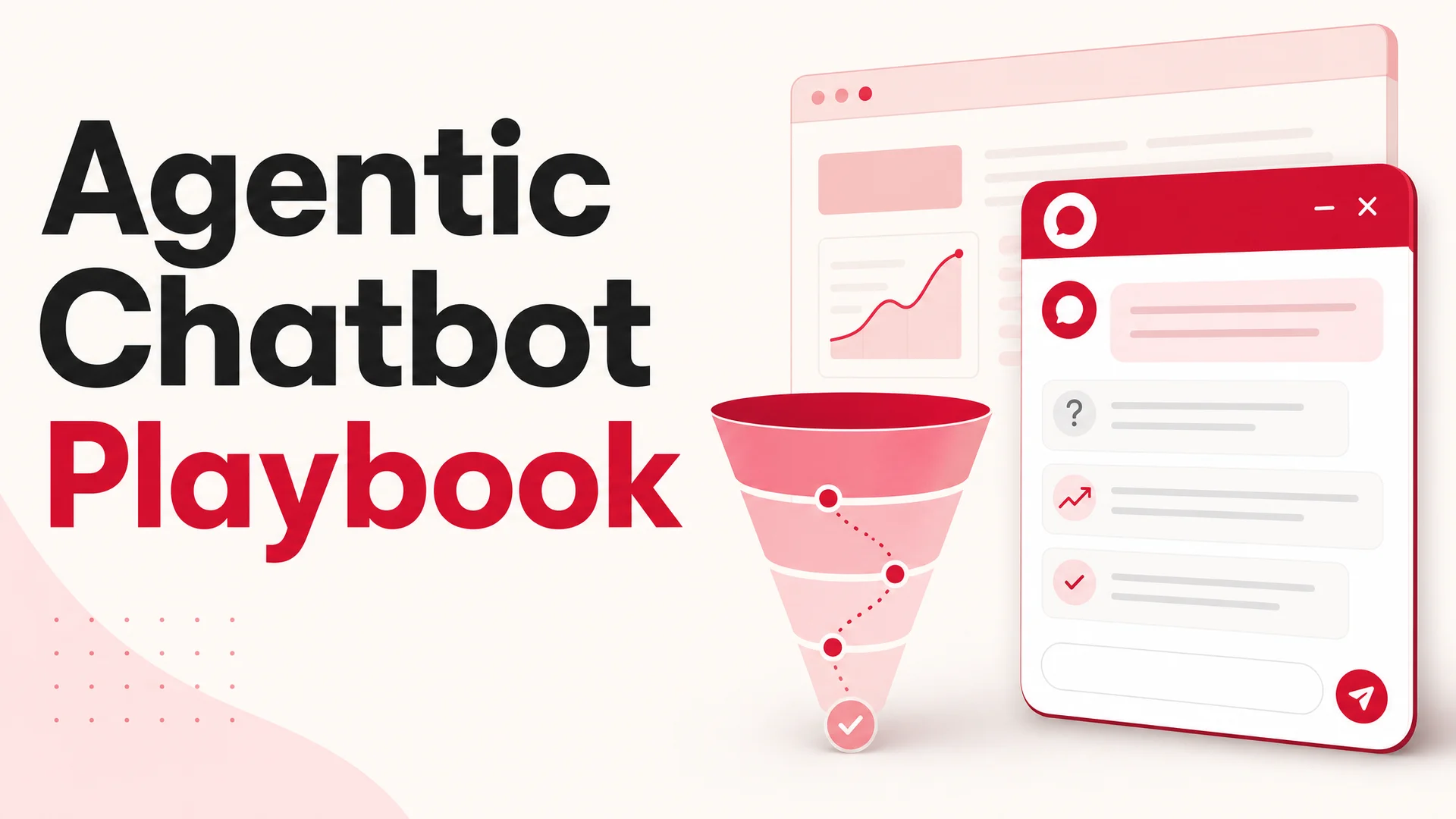
A funnel agent doesn't stop at qualification. It nurtures, schedules, follows up, and re-engages. The sequence usually looks like:
- Attract - engage the visitor, capture initial signals
- Qualify - score against your criteria mid-conversation
- Nurture - drop into an email/messaging cadence with the agent picking up where it left off
- Convert - book the demo, send the contract, take the deposit
- Optimize - analyze the transcripts to refine prompts, knowledge gaps, and CTAs
Imagine a small SaaS founder running a launch campaign. Without automation, they're triaging hundreds of inbound leads and most go cold. With a funnel agent, every lead gets immediate engagement, the highest-intent ones jump to the calendar, and the rest sit in a sequence that the agent can re-open whenever they come back to the site.
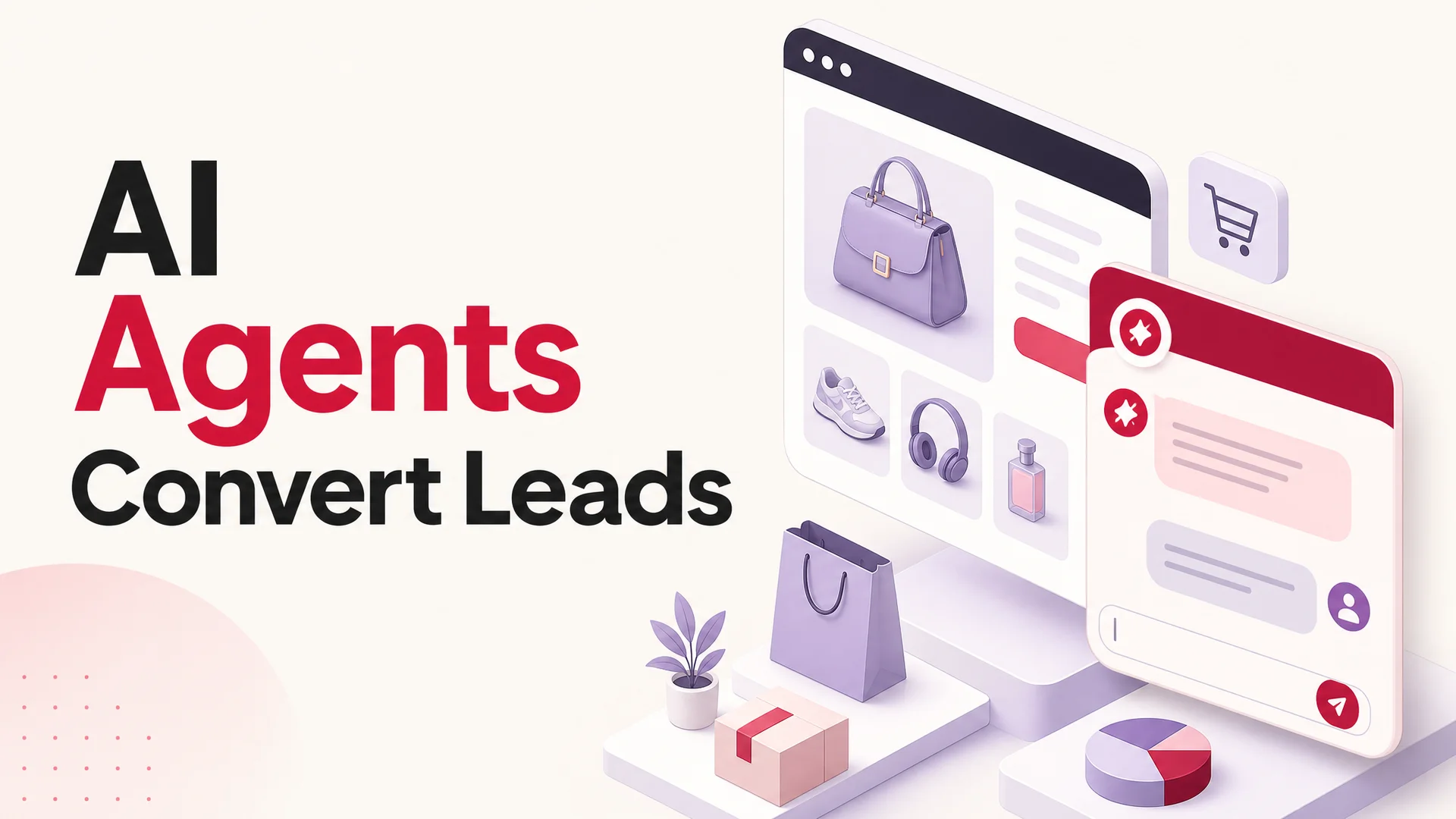
Ecommerce Agents
Commerce is where AI Actions earn their keep. A capable ecommerce agent can:
- Answer detailed product questions, including variants and compatibility
- Recommend based on stated preferences, not just collaborative-filtering signals
- Read live inventory and pricing from your catalog
- Handle the full checkout flow inside the chat
- Push targeted promotions to the visitor's likely budget band
- Provide order status without a tickets system in between
A fashion retailer can run an agent that doubles as a stylist - ask about an occasion, get a complete outfit, add the look to the cart in a single click. A grocery brand can run a wine recommender that asks about food pairings and price ceilings before suggesting bottles, positioning the brand as expert rather than transactional.
The 2026 unlock is reliability. Agentic models like Kimi K2.6, Qwen3.6, and GLM-5.1 are built for tool-calling at production quality. The "looks great in a demo, melts down in production" gap that plagued earlier generations has narrowed sharply.
Social and Messaging Agents
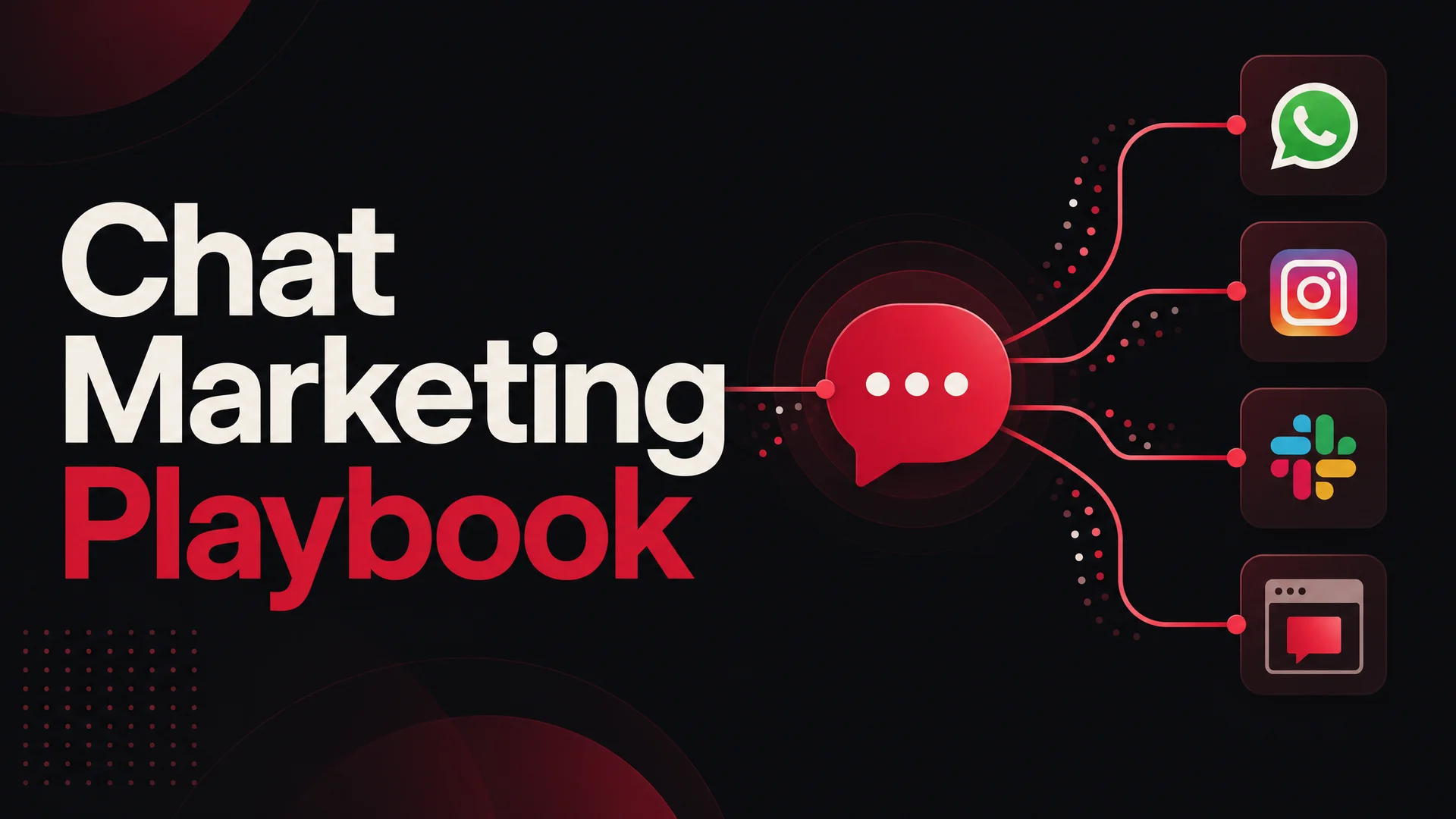
The visitor isn't always on your site. A meaningful share of conversational marketing now happens inside Messenger, WhatsApp, Instagram DMs, Slack communities, and Discord servers. Berrydesk deploys the same agent across all of these without you rewriting prompts per channel - the brand voice, knowledge, and AI Actions stay consistent.
A beauty brand using a Messenger agent for personalized recommendations, virtual try-ons, and in-store appointment booking typically sees double-digit conversion lift on the booking flow versus their standard scheduling page. The reason is simple: the conversation answers the questions that the booking page doesn't.
Content Distribution Agents
Most content libraries fail at discovery. A learner lands on your education site, looks at three course titles, and bounces because they don't know which one fits. A content agent fixes that by asking a few questions about goals and skill level, then surfacing the two or three resources that actually match.
For a learning platform, this is the difference between a sprawling catalog and a guided journey. The agent acts as a curator and converts more visitors into enrolled learners - not by being pushy, but by removing the cognitive load of choosing.
Activation and Contest Agents
Campaigns that ask visitors to do something - write a pitch, enter a giveaway, vote on something - perform better when the entry mechanism is a conversation. A spirits brand once ran a virtual-bouncer bot for a launch party: visitors had to convince the bot to grant them entry. The campaign generated organic shares because the interaction itself was the content. That pattern still works, and it's now cheap enough to deploy as a one-off marketing stunt rather than a six-figure agency build.
How to Deploy One in Berrydesk
The mechanics matter as much as the strategy. Here's the workflow.
1. Pick Your Model
Berrydesk lets you choose from GPT-5.5, Claude Opus 4.7 and Sonnet 4.6, Gemini 3.1 Ultra and Pro, DeepSeek V4, Kimi K2.6, GLM-5.1, Qwen3.6, MiniMax M2.7, and others. The honest answer for most marketing teams is to start with a strong general-purpose model - Claude Sonnet 4.6 or GPT-5.5 are good defaults - and route specific tasks to cheaper open-weight options once you see the traffic patterns. For regulated industries that need on-prem or air-gapped deployment, the MIT-licensed open weights from Z.ai (GLM-5.1) and Alibaba (Qwen3.6-27B) make that path feasible without giving up frontier-class quality.
2. Define the Job
Be specific. "Help website visitors" is not a goal; "qualify pricing-page visitors against our ICP and book a 30-minute demo with sales for any prospect at 50+ employees in retail or hospitality" is. Berrydesk's playbook editor lets you express that as a goal plus a few examples of good and bad outcomes, which the agent uses to self-evaluate.
The KPIs to track from day one:
- Goal completion rate - what share of conversations end with the action you wanted
- Engagement rate - what share of visitors enter the chat at all
- Conversion rate - downstream actions taken after the chat
- CSAT or thumbs-up rate - how the conversation felt to the visitor
- Cost per resolved conversation - total inference spend divided by resolutions
3. Train on Your Material
Upload your site, product docs, pricing sheets, brand voice guide, FAQs, and competitive battlecards. Connect Notion, Google Drive, or YouTube for content that lives outside your site. The bigger context windows in 2026 mean you don't have to be precious about chunking - the agent can keep your full knowledge corpus in working memory and use retrieval as a precision tool, not a hard requirement.
A useful rule: anything a junior salesperson would need to do their job, the agent should have access to. Anything they shouldn't say, write down explicitly in the system prompt.
4. Brand the Widget
The widget is part of your marketing surface. It should match your visual system, use your tone, and feel like an extension of the page rather than a foreign object pasted on top. Berrydesk's widget customization covers colors, copy, avatars, opening lines, and proactive triggers (e.g., open after 30 seconds on the pricing page, but not on the careers page).
5. Wire Up AI Actions
This is where most marketing bots stop and serious ones keep going. Hook the agent up to:
- Your calendar (Google, Microsoft, Calendly) for booking
- Your CRM (HubSpot, Salesforce, Attio) for lead writing
- Your billing system (Stripe) for payments and upgrades
- Your help desk for human handoff
- Your product catalog for live inventory and pricing
Once Actions are wired, the agent stops being a search box and starts being an operator.
6. Test, Launch, Iterate
Run scripted scenarios first - happy path, awkward edge cases, deliberately ambiguous questions. Then soft-launch to a slice of your traffic, watch the transcripts, and tune. Look for the moments the agent hedges, the questions it can't answer, the offers it's missing. Every gap is a row of training data away from being closed.
Re-review weekly for the first month. After that, monthly is usually enough.
Advanced Plays
Predictive Engagement
Don't wait for the visitor to start the conversation. Use behavioral signals - pages visited, time on page, returning visitor, cart contents - to trigger the agent proactively at the moment of highest intent. Telcos do a version of this when they reach out to customers about network issues before the customer notices. The marketing version is the same idea: predict the question, surface the agent before the visitor leaves to find an answer somewhere else.
Omnichannel Continuity
A conversation that starts on your site and continues on WhatsApp should pick up where it left off. That means a single conversation memory across channels, not a bot per channel with shared training. Berrydesk treats the visitor as the entity, not the channel - so the agent that booked the demo on your site can follow up on WhatsApp the next morning with the same context.
Tight Stack Integration
The agent should write to your CRM the moment a lead qualifies, hand off to a human when a deal hits a certain size, and trigger your email platform when a visitor enters a specific intent state. Treat the chat layer as an event source, not a silo. The data it generates is some of the highest-signal first-party data your business has.
Where Teams Get It Wrong
A few patterns to avoid:
Trying to launch a perfect agent. Ship a narrow, high-quality v1. Expand surfaces and use cases as you learn. The teams that try to cover everything on day one ship something that does nothing well.
Pretending it's a human. Be transparent. Visitors trust an AI agent that introduces itself as one and offers a clean handoff to a human when needed. They don't trust a bot caught lying about its identity.
Skipping the analytics. If you can't tell which conversations converted and which didn't, you can't improve. Berrydesk surfaces transcripts, outcomes, and goal-completion metrics out of the box - use them.
Generic answers. A bot that gives the same response to every visitor is a worse version of your FAQ page. Personalize on what you actually know - the page they came from, the product they viewed, the history they have with you.
No human escape hatch. Some conversations need a person. Make it one click to get one. Refusing to escalate is the fastest way to turn an asset into a liability.
One model for everything. A single frontier model on every conversation is expensive. A single cheap model on every conversation is fragile. Routing by intent - open-weight for routine, frontier for hard - is how 2026-grade deployments stay both reliable and economical.
Where This Goes Next
Two trends are worth watching.
Long-context replaces a lot of RAG. With 1M-token windows on most frontier and open-weight models - and 2M on Gemini 3.1 Ultra - many teams are stripping out retrieval pipelines for use cases where the corpus fits in context. RAG isn't going away, but it's becoming a tuning lever for very large knowledge bases rather than the default architecture.
Agentic models make Actions reliably production-ready. The leap from Kimi K2.6, GLM-5.1, Qwen3.6, and Claude Opus 4.7 isn't just better answers - it's the ability to plan, call tools, recover from failure, and finish multi-step jobs. Kimi K2.6, for instance, can sustain 12-hour autonomous coding sessions with up to 300 sub-agents and 4,000 coordinated steps; GLM-5.1 runs an 8-hour autonomous plan-execute-test-fix loop. The marketing implication is mundane but enormous: refunds, bookings, upgrades, and account changes can all be handled by the agent instead of opened as tickets.
The brands that internalize this shift will treat the chatbot not as a marketing tactic but as a layer of their product - the place where the visitor and the company actually meet.
Wrapping Up
Chatbot marketing isn't a novelty channel anymore. It's where high-intent visitors meet your brand, get their questions answered, and decide whether to keep going. The economics now favor deploying one. The model layer makes the conversations good. The action layer makes the conversations consequential.
If you've been waiting for the technology to catch up to the promise, it has. Berrydesk lets you launch a branded AI agent in four steps - pick a model, train it on your material, brand the widget, wire up the Actions you care about - and deploy it across your site, Slack, Discord, WhatsApp, and beyond. No code, no months-long rollout. Build for free at berrydesk.com and see what your site does when it learns how to talk back.
 Berrydesk
Launch a marketing-grade AI agent in minutes
- Train it on your site, docs, and product catalog - no code
- Route bookings, demos, and payments through AI Actions
Set up in minutes

Chirag Asarpota is the founder of Strawberry Labs, the team behind Berrydesk - the AI agent platform that helps businesses deploy intelligent customer support, sales and operations agents across web, WhatsApp, Slack, Instagram, Discord and more. Chirag writes about agentic AI, frontier model selection, retrieval and 1M-token context strategy, AI Actions, and the engineering it takes to ship production-grade conversational AI that customers actually trust.