Most companies do not have a customer data problem. They have a customer-data-that-never-reaches-a-decision problem. The dashboards exist. The CDP is paid for. The conversation logs sit in a warehouse. And yet, when leadership asks why churn ticked up in March or why one persona converts at twice the rate of another, the answer is still a guess.
This is the gap customer data analytics is supposed to close - and in 2026, with frontier reasoning models cheap enough to run against every transcript, it finally can. This guide walks through what customer data analytics is, how the picture has changed in the last twelve months, and how a support team specifically can wire it up so insights translate into shipped changes.
What customer data analytics actually means
Customer data analytics is the discipline of collecting signals about your customers from every touchpoint they have with your business, joining those signals together, and asking specific, decision-shaped questions of the result. The deliverable is not a chart. It is a change - to a product, a policy, a workflow, a piece of copy, or an automated agent's behavior.
It overlaps with market research but is meaningfully different. Market research samples a population to make a generalization. Customer data analytics works at the level of the individual record and rolls up. The difference matters: the same dataset that tells you "NPS dropped four points" can also tell you "the drop is concentrated in customers who hit a specific error during onboarding on Android," and only one of those is actionable.
The four data types you will be joining
Most analytics work pulls from four families of data, and most of the value comes from joining them, not analyzing each one alone:
- Demographic data - age, geography, role, plan tier, account age. The slowest-changing layer and the easiest to over-trust. Useful as a slicer, not a driver.
- Behavioral data - sessions, clicks, feature adoption, purchases, cart events, time-to-first-value. The richest signal for product and growth teams, and the noisiest. Heavy on volume, light on intent.
- Attitudinal data - CSAT, NPS, survey responses, review text, support ticket tone. Sparse but high signal: it tells you what the customer thinks they want, which is not always what their behavior says.
- Psychographic data - values, interests, lifestyle. Common in B2C marketing, less load-bearing in B2B unless you are doing enrichment from third-party providers.
A useful exercise: write down the last five product or policy decisions your team made. For each, ask which data types were actually consulted. Most teams find they lean almost entirely on behavioral data and ignore the attitudinal layer - which is exactly the layer your support agent is sitting on top of.
Why support is now the highest-leverage analytics surface
For most of the last decade, customer support data was the worst-instrumented surface in the company. Tickets were closed and forgotten. Chat transcripts piled up in a Zendesk export. Tagging was either wildly inconsistent or didn't happen at all.
Two things changed that in 2026. First, frontier reasoning models got cheap. DeepSeek V4 Flash runs at about $0.14 per million input tokens and $0.28 per million output tokens, and MiniMax M2 ships at roughly 8% the cost of Claude Sonnet at twice the speed. At those rates, classifying every conversation you have ever had - by intent, by sentiment, by mentioned product area, by resolution status - is a rounding error in the budget.
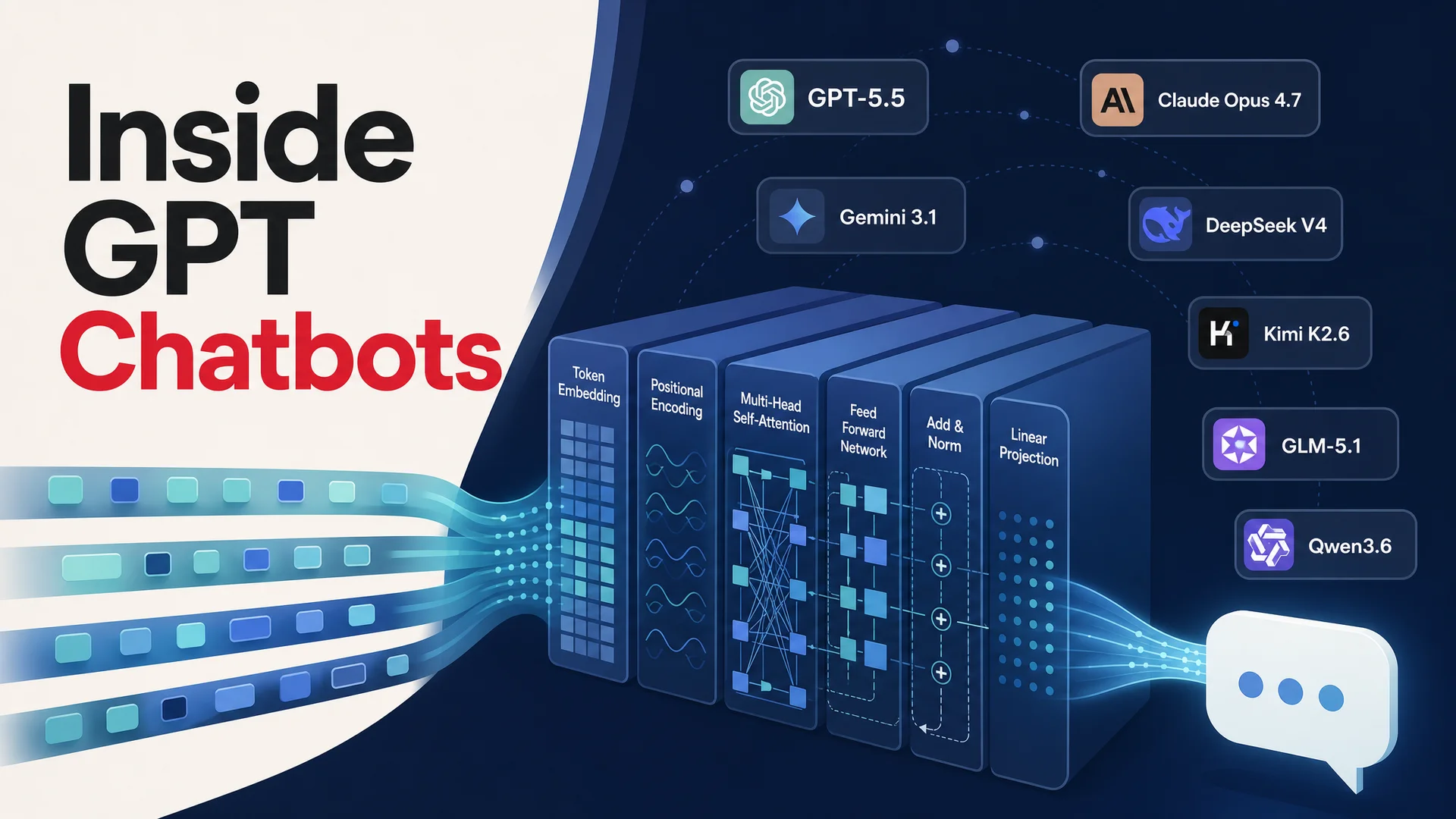
Second, context windows expanded past the point where you have to think about them. Claude Opus 4.6 and Sonnet 4.6 ship with a 1M-token context at no surcharge. Gemini 3.1 Ultra goes to 2M. DeepSeek V4 and Kimi K2.6 are both 1M. That means an analytics agent can read an entire customer's history - every ticket, every chat, every relevant order - in one pass, instead of stitching together a RAG pipeline and praying the retriever picked the right chunks.
The practical effect on the analytics surface: a tier-one support team that handles 5,000 conversations a week can now have all 5,000 read, classified, summarized, and joined to revenue and behavior data the same night, by a model good enough to spot patterns a senior analyst would. A year ago, that pipeline cost too much to run continuously. Today it does not.
What you actually get out of it
Concretely, here is what customer data analytics, applied seriously to a support surface, gives a business:
- Personalized experiences with receipts. Personalization stops being "we use your first name in the email" and becomes "the agent already knows you tried to upgrade twice last month and one attempt failed at checkout." The data is in the warehouse; the agent just needs access to it.
- Product feedback at the resolution level. Every ticket about a confusing feature is a product spec waiting to be written. Cluster them, sort by volume, hand the top three to engineering with verbatim quotes.
- Marketing that targets like the support team thinks. Support teams know which segments are price-sensitive, which need hand-holding, which respond to social proof. Codify that in your CRM and your campaigns will outperform anything generic targeting can produce.
- Retention you can see coming. Most churn is preceded by a behavioral or sentiment signal three to eight weeks out. Predictive models on combined behavior + ticket sentiment data routinely catch 60–70% of at-risk accounts in time to intervene.
- Decisions with evidence. "We should change the pricing page" loses to "we should change the pricing page because 14% of trial users mentioned the same confusion in chat last quarter, and that cohort converted 30% lower than baseline."
The four flavors of analytics, and which one your team is stuck in
A useful framework, lightly overused but still correct:
- Descriptive analytics answers what happened. Tickets by category, response time by week, deflection rate by channel. Most teams live here.
- Diagnostic analytics answers why it happened. Why did first-response time spike last Tuesday? Why is CSAT lower for billing tickets than for technical ones? This is where most teams get stuck - they have the dashboards but not the joins.
- Predictive analytics answers what is likely to happen. Which accounts will churn? Which trial users will convert? Which tickets will need escalation? This requires modeling, not just reporting.
- Prescriptive analytics answers what should we do about it. The frontier - and the one where AI agents start to earn their keep, because a model that can read the data, generate the recommendation, and (with AI Actions) execute the recommendation collapses three steps into one.
In 2026, the cost of moving up this ladder is mostly an organizational cost, not a technology cost. The tooling is sitting there.
How to actually implement this
A four-step skeleton that survives contact with reality:
1. Collect from every meaningful touchpoint
Site analytics, product analytics, CRM, billing, support tickets, chat transcripts, NPS, reviews, social mentions. The temptation is to start small with one or two sources. Resist it. The whole point of customer data analytics is the join - a single source on its own is just a report.
2. Centralize and clean
A warehouse (Snowflake, BigQuery, Redshift) or a customer data platform. Composable CDPs - where the warehouse is the source of truth and tools sit on top - have largely won the architectural argument over bundled CDPs for teams above a few hundred employees. Either way, the goal is one identity per customer, stitched across email, user ID, anonymous device ID, and account ID, and a clean event schema you trust.
3. Analyze with the right tool for the question
BI tools (Looker, Metabase, Hex, Mode) for repeatable dashboards. Notebooks for one-off investigations. Reverse ETL for activating insights into ad platforms and CRMs. And - increasingly - a frontier reasoning model with access to the warehouse for the long-tail "why is this metric weird" questions a junior analyst would have spent a day on.
4. Close the loop
Insights that don't change anything are expensive entertainment. Every recurring analysis should have a named owner, a decision it informs, and a cadence on which that decision is revisited. If you can't say which decision an insight serves, kill the report.
The toolchain that actually matters in 2026
A short list, opinionated:
- Customer data platform or warehouse-native equivalent. Pick one. Do not run two.
- BI tool with a strong semantic layer. The semantic layer is what stops different teams from defining "active customer" three different ways and arguing about the result.
- AI and machine learning, but applied narrowly. Predictive churn, ticket classification, sentiment, intent - all solved problems with off-the-shelf models. Resist the urge to build a generic "AI for everything" pipeline. Build one model per question.
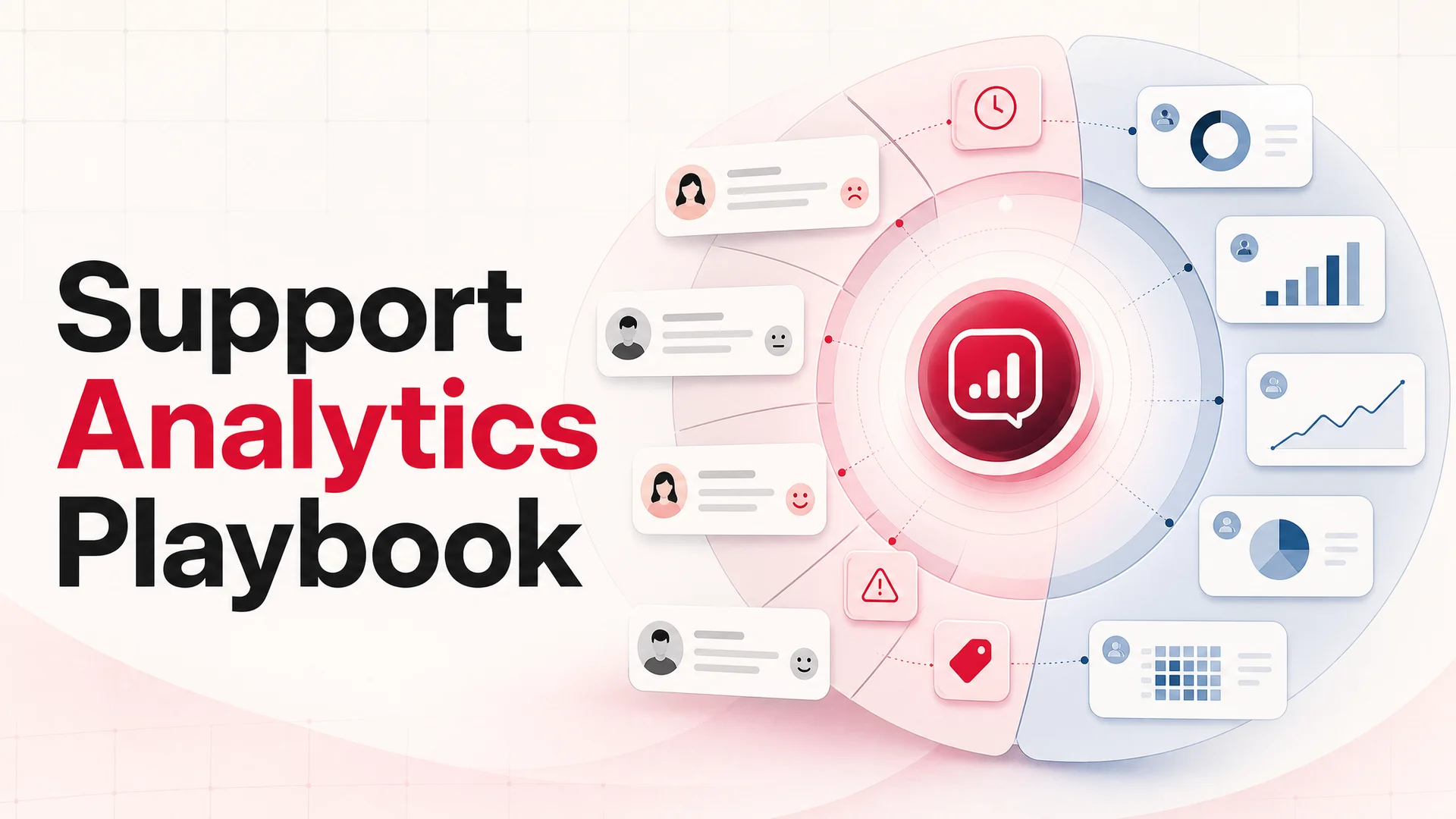
- Conversational AI analytics. This is where Berrydesk fits. Every conversation your AI agent has produces a structured artifact - intent, resolution, sentiment, escalation reason, mentioned products, suggested follow-up - that can be joined back to the rest of your customer data. Without that, you are leaving the richest signal in the company on the floor.
Routing models for cost and quality
A specific 2026 pattern worth calling out, because it is genuinely new: routed inference. You do not have to pick one model for the whole agent. A typical Berrydesk deployment can route the bulk of routine traffic - password resets, order lookups, simple FAQs - to DeepSeek V4 Flash or MiniMax M2 at a fraction of a cent per resolution, and reserve Claude Opus 4.7, GPT-5.5 Pro, or Gemini 3.1 Ultra for the messy escalations where a 64.3% SWE-bench Pro brain actually pays for itself. The same logic applies to your analytics layer: classification can run on cheap open weights, the "explain this anomaly to me in plain English" pass can run on a frontier model.
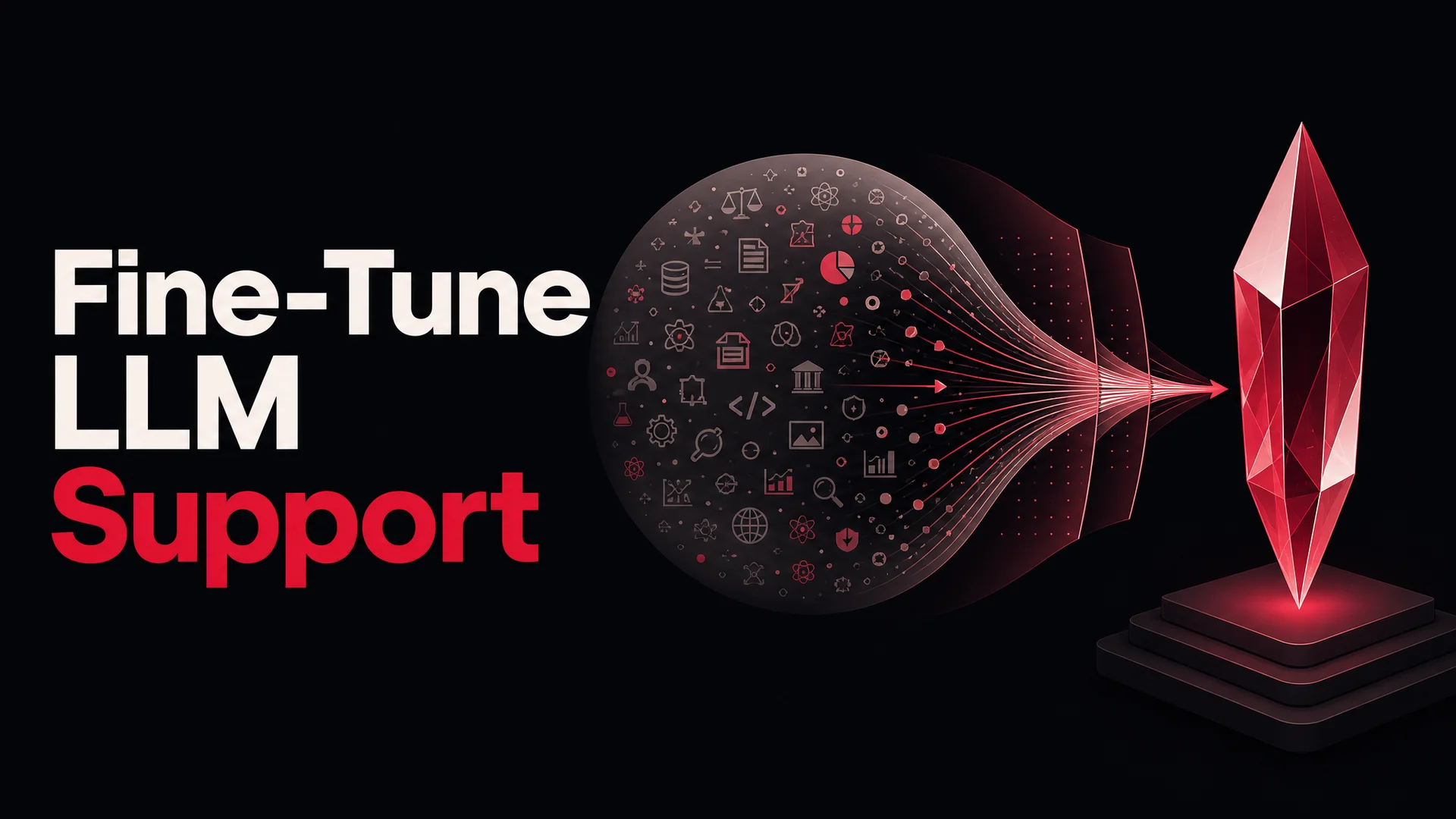
For regulated industries, the open-weight side of this matters even more. GLM-5.1 (MIT license, 754B-param MoE), Qwen3.6-27B (Apache 2.0), and Xiaomi MiMo-V2-Pro (MIT, >1T params) make on-prem and air-gapped deployments genuinely viable in 2026 - meaning a healthcare, legal, or financial services team can run the same analytics stack their cloud-native peers run, without the data ever leaving their VPC.
Best practices that survive an audit
- Treat data quality as a product. Bad data does not get better with more dashboards. Invest in tests, monitors, and clear ownership of pipelines.
- Comply genuinely, not theatrically. GDPR, CCPA, and the newer state-level privacy laws all reward teams that minimize collection. Do not store data you cannot articulate a use for.
- Build a culture, not a department. The teams that get the most out of customer data are the ones where a PM, a marketer, and a support lead can all run a query without filing a ticket.
- Refine continuously. The half-life of an analytics tool, model, or technique in 2026 is about eighteen months. Plan for replacement.
Common pitfalls
A few patterns that show up over and over in audits of analytics programs that are not delivering:
- Vanity dashboards. A wall of charts no one looks at. Cut anything that has not informed a decision in the last quarter.
- Personalization without consent. "We know everything about you" is not a value proposition. Tell customers what you know, why, and let them edit it.
- AI hype without a question. Buying an "AI analytics platform" without a specific question you want answered is how teams end up with expensive software and the same intuitions they started with.
- Insights with no owner. If three people read the report and none of them owns the response, the report does not exist.
- Treating support data as a cost center exhaust. It is the highest-density signal you have about why customers are unhappy, what they are confused by, and what they would pay you more for. Mine it accordingly.
Where this is heading
Three trends to watch:
- Real-time decisioning. The lag between event and personalized response is collapsing. By the end of 2026, sub-second personalization on every web session is the new baseline, not a competitive advantage.
- Agentic analytics. Models like Kimi K2.6 (12-hour autonomous coding sessions, 300 sub-agents) and GLM-5.1 (8-hour autonomous plan-execute-test-fix loops) are starting to show up as analytics agents - handed a question, they plan a query, run it, validate the result, and write the recommendation. Still rough, but moving fast.
- Privacy-preserving analytics as table stakes. Differential privacy, on-device inference, and federated learning are no longer research projects. Customers - and regulators - increasingly expect them.
Closing thought
Customer data analytics is not a project you finish. It is a capability you grow. Start with one decision you make every week that would be better with data, wire up the smallest pipeline that answers it, and ship. Then do it again. The compounding effect of fifty of those small loops is what separates teams that talk about being data-driven from teams that actually are.
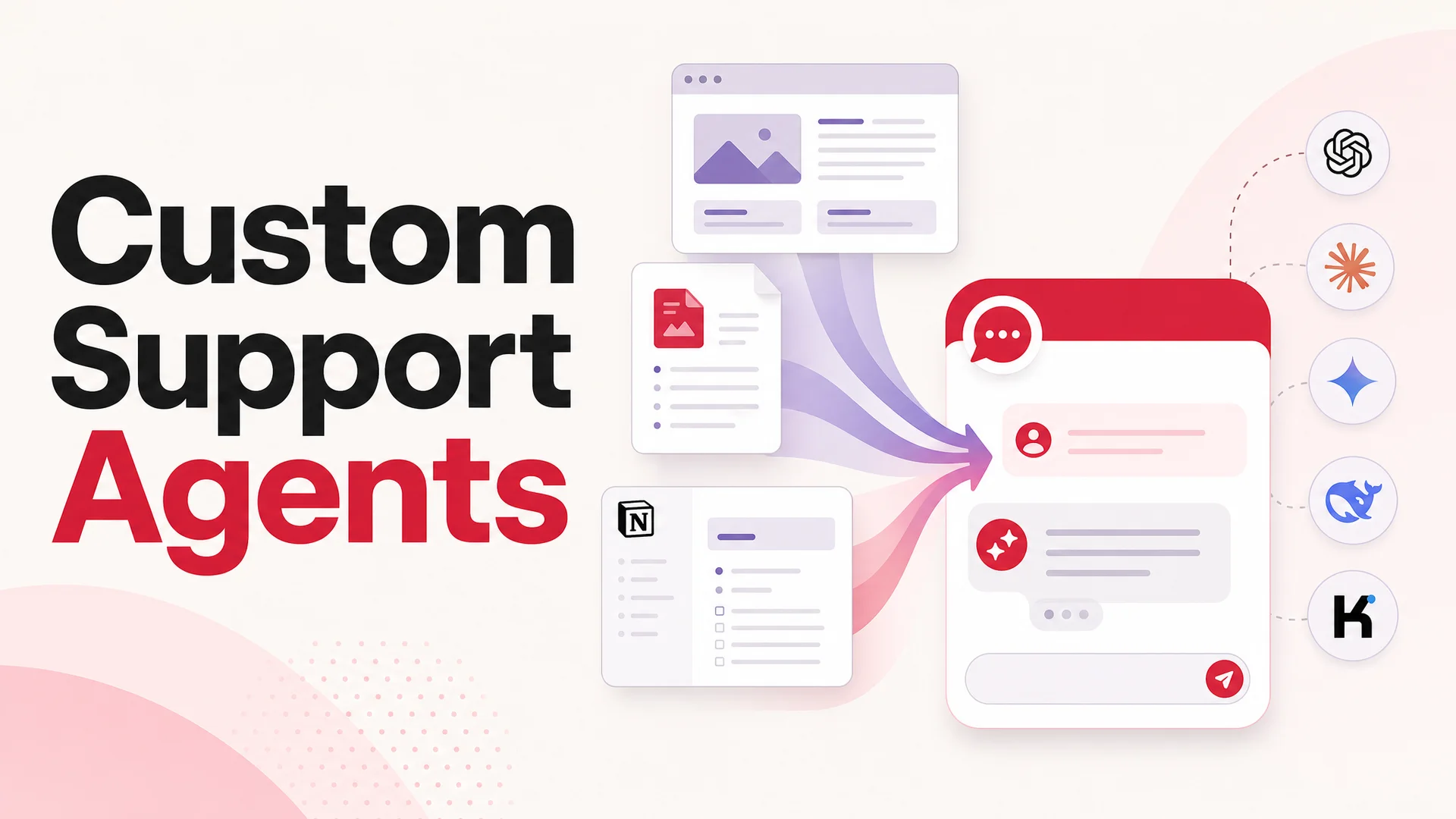
If you want a fast way to start on the support side specifically, Berrydesk lets you launch a branded AI support agent in four steps - pick a model, train it on your docs, brand the widget, and deploy. Every conversation it has becomes structured, queryable signal: intent, sentiment, resolution, escalation reason. That is a customer data layer most companies are not collecting at all today, and it is the first one we would turn on.
 Berrydesk
Turn every support conversation into a data point you can act on
- Deploy a branded AI agent trained on your docs, Notion, and site in minutes.
- Route routine traffic to low-cost open models, escalate hard tickets to frontier reasoning.
Set up in minutes

Chirag Asarpota is the founder of Strawberry Labs, the team behind Berrydesk - the AI agent platform that helps businesses deploy intelligent customer support, sales and operations agents across web, WhatsApp, Slack, Instagram, Discord and more. Chirag writes about agentic AI, frontier model selection, retrieval and 1M-token context strategy, AI Actions, and the engineering it takes to ship production-grade conversational AI that customers actually trust.