Most teams say they care about customer satisfaction. Far fewer treat it as a system. They send a survey, watch a number drift up or down, and call it a quarter. That is not a satisfaction practice. That is a thermometer pointed at a building that is on fire somewhere on the third floor.
This piece is the version of the conversation we wish more support and product leaders had. Not the slide-deck definition. The operator's view. What customer satisfaction actually is, why it pays back harder than almost any other lever in the business, where to find the signal, and the stack - including AI agents - that lets a small team run circles around a big one in 2026.
What customer satisfaction really measures
Customer satisfaction is the gap between the experience you promised and the experience the customer got. That is the entire definition. Everything else is commentary.
It is not what your roadmap says you shipped. It is not what your homepage advertises. It is what landed - what the customer remembers when they close the tab, walk out of the store, hang up the phone, or end the chat session.
That gap can be positive or negative. A B2B platform that loads in a second when the user expected three is delivering a tiny burst of satisfaction. A retailer who promised two-day delivery and shipped in four is bleeding satisfaction even if the product itself is fine. The promise sets the reference point. The experience either clears it or doesn't.
Two practical implications fall out of this framing. First, you can move satisfaction by changing the experience or by changing the promise. Most teams over-index on the first and never touch the second. A clearer pricing page, a more honest onboarding email, a chatbot that says "I can't do that, but here's a human who can" - these reset expectations downward in ways that protect satisfaction far better than another sprint of polish.
Second, satisfaction is not the same as delight. You do not need to wow anyone. You need to remove friction, hit promises, and resolve issues quickly. The bar most companies fail to clear is competence, not magic.
Why satisfaction is the highest-leverage metric you have
The obvious answer is retention. Satisfied customers renew, repurchase, and refer. Unsatisfied ones churn. True. But that framing undersells how much downstream work satisfaction quietly does for the rest of the business.
It compounds against your acquisition cost
CAC has been climbing in nearly every category for years, and 2026 has not given that a break. Paid channels are saturated, organic search is being reshaped by generative answers, and outbound is increasingly filtered by the buyer's own AI gatekeeper. The arithmetic is simple - if a customer leaves after thirty days, you eat the entire acquisition cost. If they stay twelve months, that cost is amortised over twelve invoices. Stay eighteen, twenty-four, thirty-six months, and the math turns into the kind of returns that fund whole companies.
Satisfaction is what determines which of those scenarios you live in.
It cleans your feedback signal
Customers who are barely tolerating you give you noise. They rant, generalise, threaten cancellation, and disappear. Satisfied customers give you specific, useful feedback because they actually want the product to keep getting better - they have skin in the game. Product teams that operate on signal from a satisfied base ship better roadmaps because the input is sharper.
It is the only word-of-mouth engine that scales for free
Nobody recommends a vendor that is "fine." Nobody starts a Slack thread about a product that is mediocre. Genuine satisfaction is what produces unprompted referrals, community testimonials, and the side-conversations in private groups that you can never buy into. In a market where buyers trust each other more than any ad, this is the most under-priced marketing channel that exists.
It lowers your support load
Happy customers do not flood the inbox. They do not open tickets for things they could find themselves. They do not escalate to your CEO over a billing question. Every uplift in satisfaction translates into fewer tickets per active user, which lets the team you have go further without hiring.
It gives you pricing power
When customers feel they got more than they paid for, you can charge more next year. You can introduce a higher tier and have people upgrade. You can change the pricing model from seat-based to consumption-based without revolt. Pricing power is downstream of perceived value, and perceived value is downstream of satisfaction.
It stabilises your forecasts
Unsatisfied customers behave randomly. They ghost during renewal week, rage-cancel the morning after a small bug, and skew the cohort. Satisfied customers behave like a population. The renewal curve becomes predictable, expansion becomes plannable, hiring becomes safer, and the board deck stops being fiction.
It buys you forgiveness during incidents
Outages happen. Bugs happen. Shipping glitches happen. The teams that survive these moments without losing customers are the ones who had earned trust in advance. A satisfied customer reads a status page update and waits. An unsatisfied one reads the same update and starts a thread on X. You cannot manufacture that grace in the middle of the crisis. You build it in the boring weeks before.
It tells investors what numbers cannot
If you are fundraising, MRR alone is a thin story. A renewal curve, a retention cohort, and a CSAT trend together tell the version of the story that gets a check written. Satisfaction is the qualitative spine that makes the quantitative growth credible.
How to actually improve it
Now to the part where most articles get vague. Here is what works in practice.
Listen with context, not just a star rating
A 4-out-of-5 with no comment teaches you nothing. A 4-out-of-5 next to "the agent solved my issue but I had to repeat my account number twice" teaches you something specific about your data plumbing. You need both the score and the substrate around it - chat transcripts, support emails, social DMs, in-product session recordings, NPS verbatims, app store reviews.
The job is not to collect more feedback. The job is to spend more time inside the feedback you already have. Most teams have plenty; they just rarely sit with it.
A practical move: pick one hour every Friday for the entire team - including engineering and product, not just support - to read a randomly sampled stack of recent conversations. No agenda, no action items required. Just exposure. The pattern recognition this builds is worth more than any quarterly report.
Close the loop, fast
If a customer raises a concern and the trail goes cold, you have moved their satisfaction down a notch - sometimes a big one. The fix is not to be perfect. It is to be visibly accountable.
A working closed-loop looks like: acknowledge within minutes, resolve or set an expectation within hours, follow up after the fix to confirm it landed. Three small touches, each one cheap, each one earning trust. The companies that nail this are not the ones with the largest support teams. They are the ones who removed handoffs between channels, gave frontline agents the authority to act, and instrumented the loop so nothing falls through.
Pick a stack that actually surfaces signal
You cannot fix what you cannot see. A modern satisfaction stack pulls from at least five places - the support inbox, the live chat or AI agent, in-product analytics, post-interaction surveys, and a customer experience layer that joins them all. We will get to the specific tool categories below, but the principle matters first: every channel you operate is generating signal, and the goal of the stack is to consolidate it before it scatters.
A specific 2026 angle: AI agents are now the largest single source of structured customer-conversation data most companies have. A platform like Berrydesk handles thousands of conversations per day for a mid-sized SaaS, each one tagged, summarised, and queryable. Treat that corpus as a research asset, not just an answer queue.
Build proactive support into the product itself
The cheapest support ticket is the one nobody had to file. Every confused user who never reached out - and silently left - counts against your satisfaction even if they never showed up in your inbox.
Proactive support means anticipating where users get stuck and getting in front of it. In-app tooltips on the screens where new users abandon. Onboarding checklists that nudge but do not nag. Smart empty states. Contextual links to documentation. Pre-filled error messages that explain the actual cause.
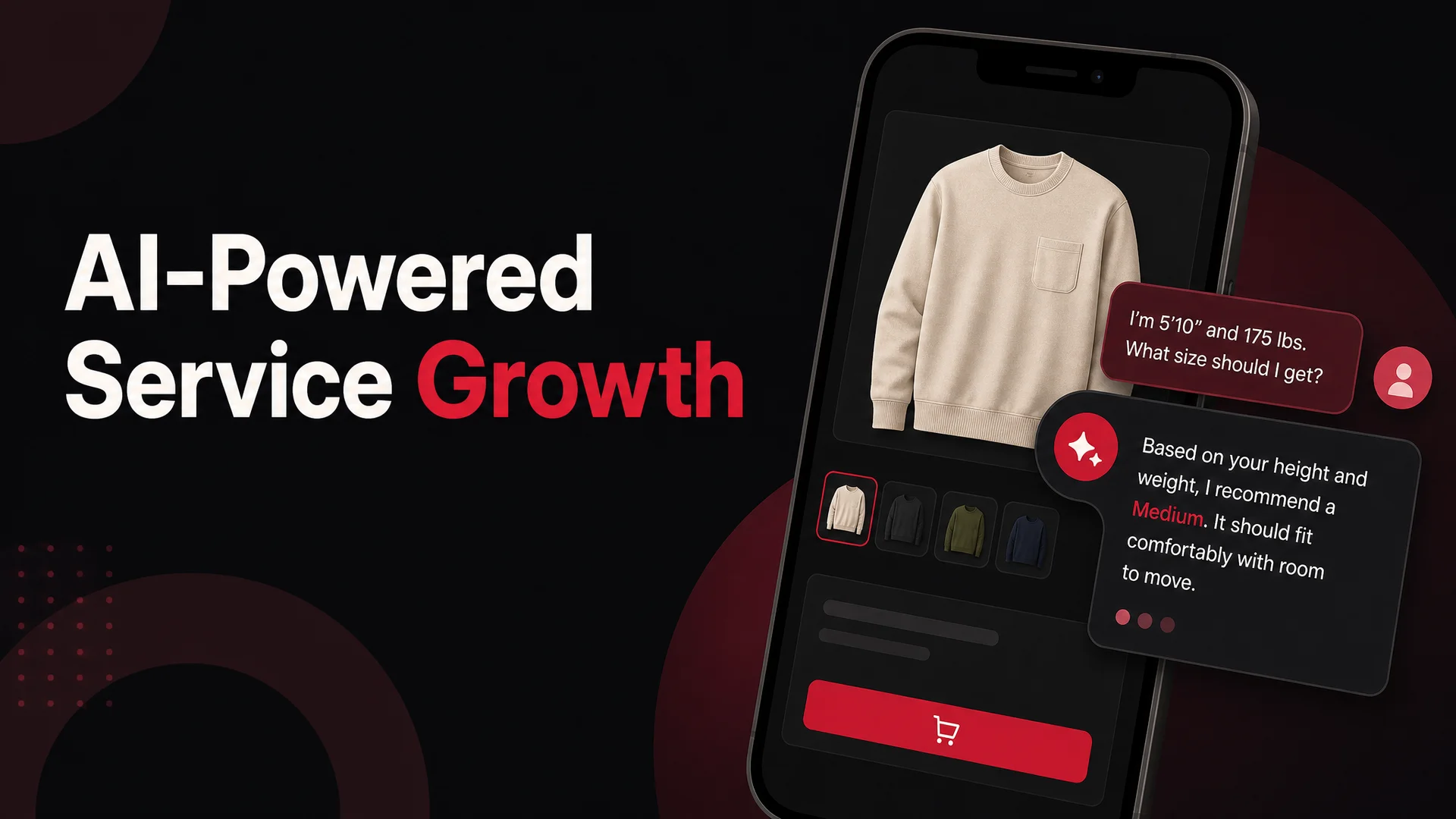
The newer move is putting an AI agent inside the product itself, not just on the marketing site. The agent has the user's account context, can see what page they are on, and can answer "why isn't my payout showing?" with their actual data instead of a generic article. This is where 2026's long-context models change the texture of support - Claude Opus 4.6 and Sonnet 4.6 ship with 1M-token windows by default, and Gemini 3.1 Ultra runs at 2M. That is enough headroom to keep the entire knowledge base, the user's account state, and the recent session in the same prompt.
Train your team to care, then give them room to act
Customers do not remember the script. They remember the moment. Your frontline needs three things: the training to recognise what kind of conversation they are in, the authority to do something about it without escalating, and the cover when the call they made was reasonable but the outcome was imperfect.
A common failure mode: a new agent identifies a real customer problem, but does not have the permission to issue a refund, send a replacement, or extend a trial. They escalate to a manager. The manager is in a meeting. The customer waits a day. The fix arrives, but the satisfaction is already gone - not because of what was done, but because of how long it took. The cure is empowering the first person who picks up the conversation. Set the loss limits, document the playbook, and trust your team inside those bounds.
The customer satisfaction tool stack in 2026
Tools do not create satisfaction. But the wrong stack will absolutely cap how high your satisfaction can go. Here is the working set, with what each layer actually does.
AI support agents
This is the layer that handles the volume in 2026. A modern AI agent answers most routine questions, takes actions inside connected systems, escalates to humans cleanly, and learns from every conversation. Done well, it removes 50–80% of inbound from human queues without hurting CSAT - done badly, it creates an extra layer of frustration before the human eventually gets the ticket.
What separates the two is model quality, retrieval quality, and the ability to take real actions. On the model side, 2026 gave operators an embarrassment of choices: GPT-5.5 and 5.5 Pro from OpenAI for parallel reasoning, Claude Opus 4.7 from Anthropic leading SWE-Bench Pro at 64.3% for the harder agentic flows, Gemini 3.1 Ultra and Pro from Google for native multimodal handling, plus an open-weight tier - DeepSeek V4 Flash at $0.14 per million input tokens, Moonshot Kimi K2.6 with 12-hour autonomous sessions, Z.ai's GLM-5.1 under MIT license at 58.4 on SWE-Bench Pro, Alibaba's Qwen 3.6 family, MiniMax M2.7 at roughly 8% the price of Claude Sonnet, and Xiaomi's MiMo-V2-Pro under MIT - that collapses the unit cost of a resolution to fractions of a cent. The right answer for most support teams is not to pick one. It is to route - frontier models for ambiguous escalations, open-weight models for the long tail of routine questions.
Berrydesk is built around this routing premise. You pick the model - or models - train the agent on your knowledge sources, brand the widget, wire up AI Actions for things like refunds and bookings, and ship.
Human helpdesks and ticketing
Even a great AI agent will hand off some conversations. When that happens, you need a real ticketing layer - Zendesk, Intercom, Freshdesk, Zoho Desk, Help Scout, whichever fits - that gives the conversation a structure, an owner, an SLA, and an audit trail. The criterion that matters most is bidirectional context flow with your AI layer. The human picking up should see what the agent already tried; the agent should see how the human resolved it, and update its behaviour accordingly. Teams that treat AI and human support as separate stacks lose this loop.
CSAT, NPS, and post-interaction surveys
These are your numerical pulse. Tools like Delighted, Zonka Feedback, Simplesat, and the survey modules built into most helpdesks let you fire a one-question survey after every meaningful interaction. The key is keeping the question short, the timing tight (within the same session, not three days later), and the data segmented - CSAT after a billing question is a different signal than CSAT after a bug report.
The trap is treating CSAT as a vanity metric to report at the QBR. The actual value is in the dispersion. If your overall CSAT is healthy but it cratered on a specific cohort or after a specific feature shipped, you have a precise place to dig.
Long-form survey tools
For the times when you need to go beyond the one-tap question. Typeform for friendly conversational surveys, Survicate for in-product targeting, Hotjar Surveys for behavioural triggers, Google Forms when you just need it to work in twenty seconds. Use these sparingly - survey fatigue is real, and a thoughtful five-question survey sent quarterly to the right segment will outperform a fourteen-question one fired indiscriminately.
Product and behaviour analytics
Mixpanel and Amplitude for event-level user journeys. Heap for retroactive analysis without instrumenting every event upfront. PostHog if you want product analytics, session replay, and feature flags in one stack. FullStory or LogRocket for the moment-by-moment "what did the user actually see and click" view.
The tie back to satisfaction: the moments where users abandon are usually the same moments where, if you asked them, they would tell you they're frustrated. Behaviour analytics catches the silent dissatisfaction that surveys never see.
Lightweight in-product feedback
A Userback, Marker.io, or Canny widget inside the product lets users say what is on their mind without leaving the page. The bar for participation is low, the signal-to-noise is decent if you ask focused questions, and the time-to-insight is much faster than waiting for the next NPS cycle.
Self-serve knowledge
The cheapest CSAT point is the one a user gives themselves by finding an answer in your docs. HelpDocs, Document360, GitBook, or a public Notion knowledge base - pick whichever fits your editorial process - and connect it directly to your AI agent. With 1M-token context windows and capable retrieval, modern AI agents can read the entire knowledge base on every turn. That makes documentation quality the highest-leverage investment most support orgs are still under-funding.
Customer experience platforms
For companies that have outgrown stitching tools by hand, Qualtrics, Medallia, and Totango bring the full customer journey into one view - onboarding signal, support signal, product usage, and renewal risk in the same dashboard. Most early-stage companies do not need this. Most mature ones do, even if they avoid admitting it.
Trade-offs worth understanding
A few choices come up over and over once you start building this stack seriously, and the textbook answer is rarely the right one.
Open-weight vs frontier models. The open-weight wave from DeepSeek, Z.ai, Moonshot, MiniMax, Alibaba, and Xiaomi has compressed cost per token to a small fraction of the frontier closed models. For routine support traffic - order lookups, FAQ answers, simple troubleshooting - running on DeepSeek V4 Flash or MiniMax M2 is functionally indistinguishable in CSAT terms from running on GPT-5.5 or Claude Opus 4.7, at a tenth or less of the cost. The closed frontier earns its premium on the ambiguous cases - the angry customer with three intertwined issues, the multi-step refund-and-replace flow, the escalation that requires real reasoning. Route by intent.
RAG vs long context. With 1M and 2M-token windows now standard at the frontier, you can stuff an entire knowledge base into the prompt rather than retrieving the relevant chunks. For small docs, just-in-context wins on simplicity and recall. For large or fast-changing documentation, retrieval still wins on cost and freshness. The pragmatic answer for most teams is hybrid - retrieval for the hot path, long context for the edge cases where the agent needs to reason across multiple documents at once.
Single model vs routed. Picking one model is operationally simpler but fragile to outages, pricing changes, and capability gaps. Routing across multiple models is more resilient and usually cheaper, but adds an evaluation surface - you need to actually measure quality per route. Most teams should start with one and graduate to routing once they have ground-truth conversation data to evaluate against.
Air-gapped vs hosted. Regulated industries - healthcare, finance, defence, parts of public sector - have until recently been priced out of frontier AI by data residency requirements. The MIT-licensed open weights from Z.ai (GLM-5.1), Alibaba (Qwen 3.6-27B), and Xiaomi (MiMo) change that. On-prem deployment of a 27B-parameter dense model on commodity hardware is now a viable production path for support automation in compliance-heavy environments.
Common pitfalls that quietly tank CSAT
A short list of things that look like good ideas and aren't.
- Hiding the human. AI agents that refuse to escalate, or make escalation a maze of sub-menus, produce worse satisfaction than no agent at all. Make the human handoff one click.
- Optimising for deflection rate. If your KPI is "tickets resolved by AI without human contact," the agent will eventually start resolving things by quietly closing them. Optimise for resolution and CSAT together, not deflection alone.
- Ignoring the silent majority. The customers who fill out the survey are a self-selected sample. The ones who leave without a word are the ones you most need to hear from. Pair survey data with churn-cohort interviews.
- One satisfaction number for the whole company. A single CSAT figure hides everything that matters - the cohort, the channel, the product area, the type of question. Always slice.
- Letting the AI agent get stale. A model trained on last quarter's docs will start hallucinating the moment the product changes. Re-sync the knowledge base on every meaningful release, and audit a sample of conversations weekly for drift.
- Treating tooling as the answer. No platform will save you from a product that misfires on its core promise. Tools amplify; they do not invent.
Where Berrydesk fits
If you are building this stack from scratch in 2026, the AI agent layer is where you get the biggest lift for the least configuration - and that is where Berrydesk lives.
You launch a branded support agent in four steps. Pick the model - GPT-5.5, Claude Opus 4.7, Gemini 3.1, DeepSeek V4, Kimi K2.6, GLM-5.1, Qwen, MiniMax, or others - or route between them. Train it on docs, websites, Notion, Google Drive, and YouTube. Brand the chat widget so it actually looks like part of your product. Wire up AI Actions for the things customers ask for most - bookings, refunds, order lookups, payment flows - so the agent resolves the request instead of describing how the customer could do it themselves. Then deploy to the channels where your customers actually are: a website widget, Slack, Discord, WhatsApp, and beyond.
The point is not the agent. The point is the satisfaction lift you get when the median question is answered in seconds, by something that knows your business, with a real action at the end of the conversation rather than another link to another article.
Customer satisfaction is a system. The team, the listening practice, the proactive product moves, the closed loops, and the stack all have to pull in the same direction. Get them aligned and the metric will climb on its own - and stay there.
Want to see what an AI agent built on your own knowledge base would do for your CSAT? Build a Berrydesk agent for free and try it on a slice of your real traffic.
 Berrydesk
Launch a support agent your customers actually like talking to
- Pick from GPT-5.5, Claude Opus 4.7, Gemini 3.1, DeepSeek V4, Kimi K2.6 and more
- Train on docs, websites, Notion, Drive, YouTube - deploy to web, Slack, WhatsApp, Discord
Set up in minutes

Chirag Asarpota is the founder of Strawberry Labs, the team behind Berrydesk - the AI agent platform that helps businesses deploy intelligent customer support, sales and operations agents across web, WhatsApp, Slack, Instagram, Discord and more. Chirag writes about agentic AI, frontier model selection, retrieval and 1M-token context strategy, AI Actions, and the engineering it takes to ship production-grade conversational AI that customers actually trust.