DeepSeek has had one of the strangest trajectories in modern AI. It went from a curious open-weight project to the model that detonated half of Silicon Valley's pricing assumptions in roughly eighteen months. With the April 2026 release of DeepSeek V4 - and especially V4 Flash at fourteen cents per million input tokens - the conversation has shifted again. The question is no longer "can a Chinese open-weight model compete with the frontier?" That argument was settled some time ago. The question that support, IT, and security leaders keep asking is much more pragmatic.
Is DeepSeek safe to use?
It is a fair question, and an important one. AI safety covers a lot of territory: data residency, training data provenance, content moderation, jurisdictional risk, prompt injection, model behavior under adversarial inputs, and the regulatory exposure that comes with handing customer conversations to any third party. DeepSeek attracts more scrutiny than most because it ships from China, because the original company is famously opaque about training pipelines, and because rapid efficiency gains have a way of triggering geopolitical reflexes.
This guide walks through what DeepSeek actually is in 2026, where the real risks live, and how to use it inside a customer support stack - including how Berrydesk customers route DeepSeek workloads safely.
What DeepSeek is in 2026
DeepSeek is an open-weight large language model family released by High-Flyer's AI lab. The current flagship release, DeepSeek V4, dropped on April 24, 2026 and ships in two configurations:
- V4 Pro - a 1.6 trillion parameter mixture-of-experts model with 49B active parameters per forward pass and a 1M-token context window. It is positioned for the hardest reasoning, coding, and long-document tasks.
- V4 Flash - a leaner 284B MoE with 13B active parameters, also at 1M context, priced at $0.14 per million input tokens and $0.28 per million output tokens. This is the model that has rewritten the cost curve for high-volume production workloads.
Both are released under permissive open-weight terms, which means you can pull them down, run them on your own GPUs, fine-tune them, and never send a byte to DeepSeek's servers if you do not want to. That single fact is the core of every realistic safety story.
For context, the broader open-weight frontier has moved at the same pace. Z.ai's GLM-5.1 (MIT licensed, scoring 58.4 on SWE-Bench Pro), Moonshot's Kimi K2.6 (1T parameters, 12-hour autonomous coding sessions), Alibaba's Qwen 3.6 family (Apache 2.0 for the dense and 35B-A3B variants), MiniMax M2.7 at roughly 8% the price of Claude Sonnet, and Xiaomi's MiMo-V2 series have all landed within weeks of one another. DeepSeek does not stand alone any more - it stands inside a peer group of MIT- and Apache-licensed Chinese open-weight models that are collectively reshaping enterprise AI economics.
Why DeepSeek keeps stealing oxygen
A few concrete things explain why DeepSeek shows up in every procurement conversation.
Cost. A typical customer support resolution on V4 Flash costs a fraction of a cent in token spend, while comparable closed-frontier resolutions on GPT-5.5 or Claude Opus 4.7 can run an order of magnitude higher. For a SaaS with a million tickets a year, that gap is the difference between a line item and a board discussion.
Transparent reasoning traces. V4 Pro exposes its chain-of-thought more legibly than the closed reasoning models. For QA, audit, and hallucination triage on a support agent, that visibility is genuinely useful - you can see why the model decided to escalate, refund, or route a conversation, not just what it did.
Open weights. You can run DeepSeek on your own infrastructure, fine-tune it, quantize it for cheaper inference, or air-gap it. Closed models simply do not let you do this. For regulated industries, that flexibility is the entire game.
Genuinely competitive quality. V4 Pro is not the SWE-Bench Pro leader (Claude Opus 4.7 holds that at 64.3%), but it sits comfortably in the conversation alongside GPT-5.5 and Gemini 3.1 Pro for general support, knowledge, and reasoning workloads. It is not a discount alternative - it is a peer with a different cost structure.
The real safety questions
Most of the "is DeepSeek safe" coverage online conflates several very different concerns. Let's separate them, because the answers - and the mitigations - are not the same.
1. Data residency and where your prompts are processed
The single most important question is which DeepSeek are you using? Calling the official DeepSeek API hosted in China is genuinely different from running V4 weights on your own AWS, Azure, or on-prem GPUs. The first sends your customer data across a jurisdictional boundary. The second does not.
If you call api.deepseek.com from your support stack, your prompts and the conversational context attached to them transit and are processed in mainland China. That is fine for hobby projects and internal tools; it is usually unacceptable for regulated customer data, EU residents under GDPR, or anyone with a SOC 2 attestation that constrains sub-processors.
The fix is straightforward: do not use the upstream API for sensitive workloads. Use a Western-hosted inference provider, a hyperscaler-hosted endpoint, or self-hosted weights. Same model, completely different data path.
2. Training data provenance
DeepSeek has not published the kind of training data documentation that, say, Hugging Face's BLOOM project did. Neither, in fairness, have OpenAI, Anthropic, or Google for their flagship models - frontier training corpora are universally opaque. Treat this as table stakes opacity rather than a DeepSeek-specific red flag.
What matters for a support deployment is whether your data ends up in someone else's training run. With self-hosted weights, the answer is unambiguously no. With the upstream API, you are accepting whatever the published terms allow at the time. Read them.
3. Censorship and politically sensitive topics
This one is real and well-documented. DeepSeek models, like other Chinese-origin models, refuse or deflect on a defined set of politically sensitive topics. For customer support workloads this almost never matters - a billing question or an order lookup does not stray into Tiananmen territory. But if you are building a general-purpose research or news assistant, this is a substantive limitation, and it does not fully go away with self-hosting because the behavior is baked into the weights.
Mitigations include light fine-tuning on your own corpus, using DeepSeek for narrow task surfaces only, or routing politically adjacent queries to a different model.
4. Model behavior on adversarial inputs
Open-weight models are easier to red-team than closed ones, which is a genuine safety advantage. Researchers have published prompt injection results, jailbreak results, and refusal rates for DeepSeek V4 within weeks of release. You can review the literature, run your own evals, and decide whether the model's refusal posture matches your risk tolerance - none of which is possible with a black-box API.
5. Supply chain and dependency risk
A practical concern: if you build a critical support workflow around the DeepSeek upstream API and that API becomes unavailable in your region for political reasons, what is your fallback? Single-vendor risk is real for every model. The mitigation is the same regardless of vendor - keep your prompts, tools, and orchestration provider-portable so you can swap models without rewriting your stack.
Five ways to deploy DeepSeek without giving up control
Most of the safety conversation collapses once you stop assuming "use DeepSeek" means "call the upstream API with sensitive customer data." Here are the patterns that actually work for production support teams in 2026.
1. Run V4 weights on your own cloud
Pull the V4 Flash weights, deploy on your existing GPU footprint in AWS, GCP, or Azure, and serve inference behind your own VPC. Your customer data never leaves your environment. This is the path most regulated industries take, and it is dramatically cheaper than it was a year ago - V4 Flash with 13B active parameters is comfortably servable on a single H100 or H200 node for moderate concurrency, and even consumer-tier hardware can run quantized variants for development.
The trade-off is operational complexity. You own patching, scaling, monitoring, and inference optimization. For teams without dedicated ML infrastructure engineers, this is real work.
2. Use a Western inference host
Providers like Together, Fireworks, Hyperbolic, Groq, and most major hyperscalers now host DeepSeek V4 in their North American or European regions under their own data processing agreements. You get the cost advantages of an open-weight model with the procurement story of a US- or EU-based vendor. Your data is handled under their privacy posture, not the upstream model author's.
For most mid-market support teams, this is the highest leverage option - minimal operational overhead, proper data residency, and predictable per-token pricing.
3. On-premise deployment
For air-gapped environments - defense, certain healthcare contexts, financial trading desks - you can deploy V4 weights entirely on-prem on a Dell, HPE, or Supermicro GPU cluster. Combined with the MIT-licensed alternatives like GLM-5.1 and the Apache-licensed Qwen3.6-27B, support teams in regulated industries now have a credible roster of frontier-grade models that can run without ever touching the internet.
This is the pattern we see at customers in defense contracting, regional banks, and EU healthcare providers.
4. Apple Silicon for development and small deployments
Quantized DeepSeek V4 distills and the smaller variants run respectably on M3 Ultra, M4 Pro, and M4 Max hardware. This is not how you serve millions of tickets - but it is a perfectly reasonable way to prototype, evaluate, and run low-volume internal-tool assistants without spinning up cloud GPUs.
5. Berrydesk
The fifth path, and the one we obviously care about most, is running DeepSeek inside a Berrydesk agent. Berrydesk is model-agnostic - you can pick DeepSeek V4 Pro, V4 Flash, GLM-5.1, Kimi K2.6, Qwen3.6, MiniMax M2.7, GPT-5.5, Claude Opus 4.7, Gemini 3.1 Ultra, or any combination, and switch between them without rebuilding your agent.
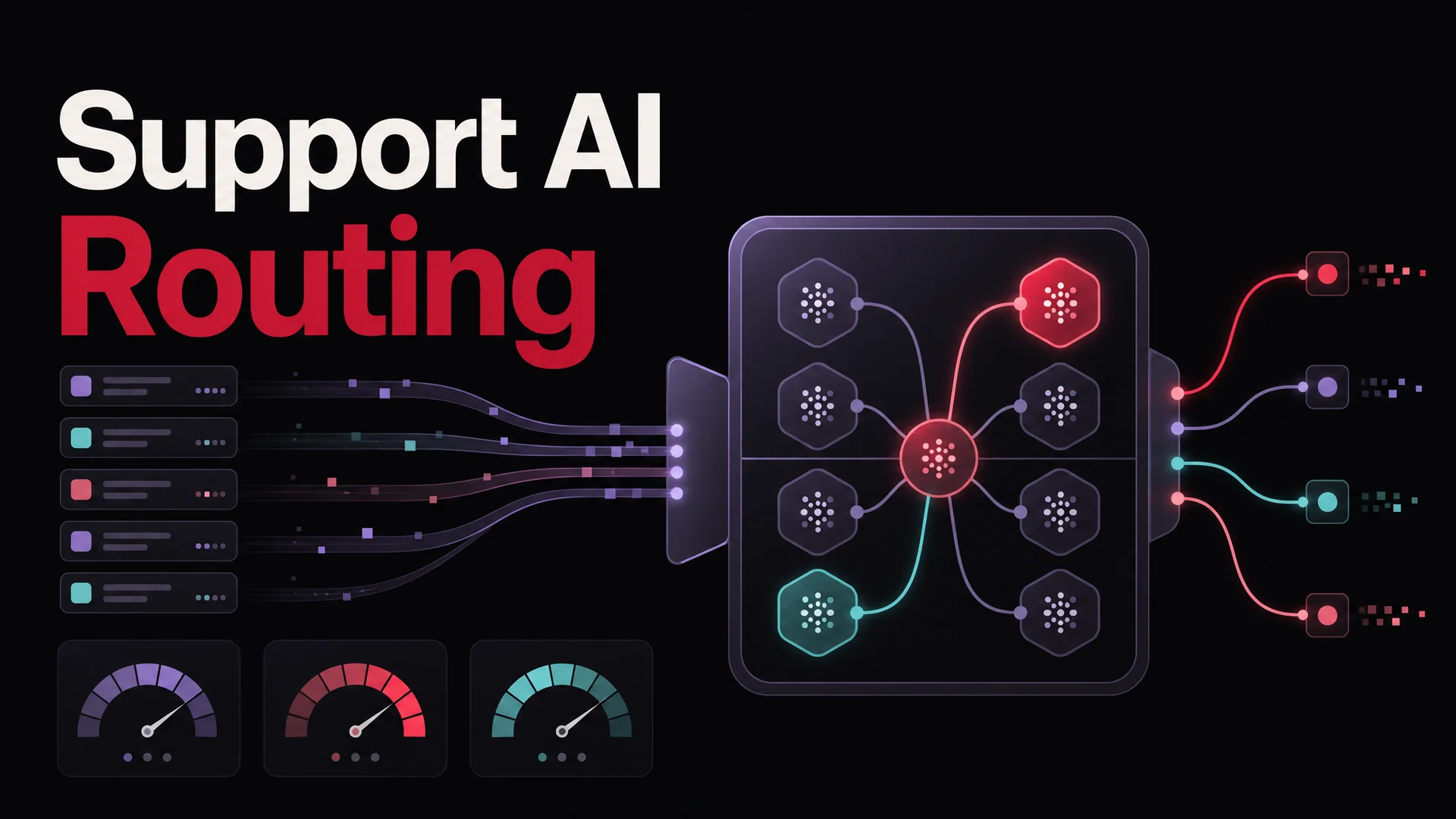
That model flexibility matters for safety in two specific ways. First, you are not locked in: if a model's safety posture or pricing changes, you swap it from a dropdown rather than rewriting integrations. Second, you can route - send routine, low-risk traffic to V4 Flash for cost efficiency, and reserve Claude Opus 4.7 or GPT-5.5 Pro for the small share of conversations that need top-tier reasoning, sensitive content handling, or escalation logic. We see typical Berrydesk customers cut inference spend by 80–90% with that pattern while improving CSAT, because the cheap model handles 95% of tickets faster, and the expensive model handles the 5% where quality genuinely matters.
Beyond model choice, the operational story is the same one any support team needs from any AI vendor: data is scoped to your workspace, never used to train models, deletable on request, and processed in your chosen region.
Common pitfalls when adopting DeepSeek
A few mistakes show up over and over when teams move quickly on DeepSeek.
Treating API-hosted and self-hosted as interchangeable. They are not. Your security review needs to specify which deployment path you are evaluating. A team that approves "DeepSeek V4 via Together AI in us-east" should not assume that approval extends to api.deepseek.com.
Skipping evals. Cheap inference is only cheap if quality holds. Always run a representative slice of your own historical tickets through any candidate model and measure resolution quality, hallucination rate, and refusal rate before flipping production. This is true for DeepSeek and for every other model.
Ignoring tool-use behavior. For agentic workflows - bookings, refunds, order status lookups, payment links - the right question is not "is the model smart?" but "does it call my tools correctly?" V4 Pro is strong here, but Kimi K2.6 and Claude Opus 4.7 are stronger for heavy multi-step tool chains. Match the model to the workflow.
Forgetting about fallback. Every production agent should have a fallback model and a graceful degradation path. Routing 100% of your traffic to a single model - open or closed - is a single point of failure.
Letting the procurement conversation die. "It's a Chinese model" is not a security conclusion. "Our customer data is processed in this jurisdiction by this sub-processor under this DPA" is. Push the conversation to the second sentence.
Open weights vs closed frontier: a quick framing
The real choice in 2026 is rarely "DeepSeek vs everything else." It is "open-weight vs closed frontier" as an architectural posture, with DeepSeek as the leading example of the open side.
Closed frontier - GPT-5.5, Claude Opus 4.7, Gemini 3.1 Ultra - wins on top-end reasoning, on agentic tool-use polish (Claude Opus 4.7 leads SWE-Bench Pro at 64.3%), and on compliance paperwork being already done for you.
Open-weight frontier - DeepSeek V4, GLM-5.1, Kimi K2.6, Qwen3.6, MiniMax M2.7, MiMo-V2 - wins on cost (often 10–50× cheaper per token), on data residency flexibility (you choose where it runs), on customization (fine-tune freely), and on the regulatory story for air-gapped deploys.
The right answer for most customer support teams is not one or the other. It is a routed stack: open weights for the high-volume base, closed frontier for the escalations, and a tool surface that lets you change the routing as models, prices, and benchmarks shift.
So - should you use DeepSeek?
For most support teams, yes - with the caveats above.
DeepSeek V4 is one of the most capable, lowest-cost models available, with a degree of deployment flexibility that closed competitors structurally cannot match. The genuine safety concerns - data residency on the upstream API, censorship on a narrow topic surface, opaque training data - all have practical mitigations: use a Western host, scope the deployment to your actual use case, and treat the model as one option in a routed stack rather than the only option.
The version of this question worth asking is not "is DeepSeek safe in the abstract?" It is "for my specific workload, with my specific data, on my specific infrastructure, is this configuration acceptable?" That question has a clean answer for almost every support team in 2026, and that answer is increasingly yes.
If you want to try DeepSeek V4 inside a production-grade support agent without standing up your own inference stack, Berrydesk lets you launch one in a few minutes - pick the model, train it on your docs, brand the widget, wire up AI Actions for bookings and refunds, and deploy to your site, Slack, Discord, or WhatsApp. Swap models whenever you want. Route traffic however you want. Keep your data where you want it.
 Berrydesk
Run DeepSeek V4 inside your own support agent
- Switch between DeepSeek, GPT-5.5, Claude Opus 4.7, and more with one click
- Keep customer data scoped, audited, and never used for model training
Set up in minutes

Chirag Asarpota is the founder of Strawberry Labs, the team behind Berrydesk - the AI agent platform that helps businesses deploy intelligent customer support, sales and operations agents across web, WhatsApp, Slack, Instagram, Discord and more. Chirag writes about agentic AI, frontier model selection, retrieval and 1M-token context strategy, AI Actions, and the engineering it takes to ship production-grade conversational AI that customers actually trust.