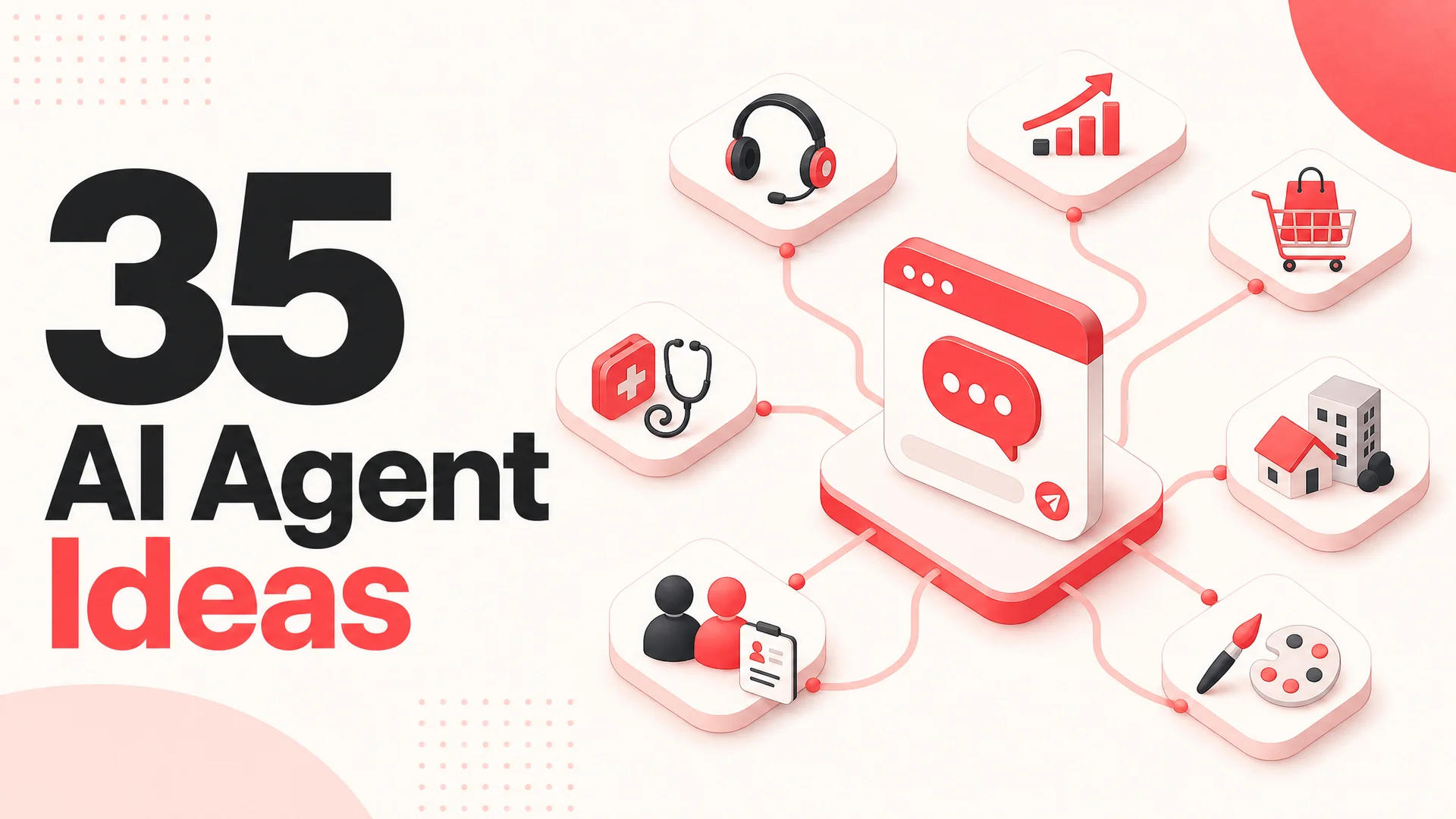
Most "chatbot ideas" posts are brainstorm dumps. Fifteen vague categories, no numbers, and no opinion on what to build first. This one is built differently. We have 35+ AI agent ideas grouped by how they actually get used in a business, paired with the channels each one belongs on, the training data you need, and the kind of return you can realistically expect in 2026.
Whether you are stitching together your first internal agent, freelancing as a setup specialist, or building a productized side hustle that pays $500–$2,000 per client, the idea is what determines whether the project lands. Platform choice matters less than people pretend. By the end of this guide you will know exactly which one to start with - and how to ship it on Berrydesk this week.
What Counts as an AI Agent in 2026
Before the list, a quick reframe. The "press 1 for billing" decision tree from a decade ago has nothing in common with the agents being deployed today. A modern AI agent is trained on your real business data - help docs, product pages, support transcripts, knowledge bases - and is powered by a frontier large language model that can hold an entire conversation, reason about it, and call tools in your stack to actually do things on the customer's behalf.
The vocabulary is still messy. "Chatbot" and "AI agent" get used interchangeably, but there is a real distinction. Many products labeled "agents" are still glorified workflows - a script with branches and a friendly avatar. A genuine agent reasons through a goal, breaks it into sub-steps, calls the right tools, recovers from errors, and adapts when the conversation veers. Throughout this guide we use "agent" when the use case calls for that depth and "chatbot" when a thinner deployment is enough.
The other thing that has changed since the 2024 wave of AI assistants is the engine. The 2026 frontier looks completely different from what most existing chatbots were built on. On the closed side, GPT-5.5 and GPT-5.5 Pro shipped in April 2026 with parallel reasoning, Claude Opus 4.7 leads SWE-bench Pro at 64.3% on complex coding work, and Gemini 3.1 Ultra now carries a 2M-token context window with native multimodal grounding across text, image, audio, and video. On the open side, the math has flipped: DeepSeek V4 Flash runs at $0.14 / $0.28 per million input/output tokens, MiniMax M2 hits roughly 8% the cost of Claude Sonnet at twice the speed, and Z.ai's GLM-5.1 (MIT-licensed, trained entirely on Huawei Ascend chips) edges past GPT-5.4 and Claude Opus 4.6 on SWE-Bench Pro. What this means for the ideas below is simple: the cost floor for "production agent that talks to your customers" has collapsed, and the ceiling on what an agent can autonomously do has shot up.
If you want to skip the hand-build and ship one of these ideas today, Berrydesk lets you train an AI agent on your data, brand the widget, wire up AI Actions, and deploy across web, Slack, Discord, WhatsApp, and more in four steps.
Customer Support Agent Ideas
Customer support is where almost every AI agent project starts, and for good reason. The economics are stark and the data is contained: 60–80% of inbound tickets in a typical support inbox are repeat questions that could be answered correctly by an agent trained on the right docs. Most teams that ship a support agent see operating costs drop by roughly a third inside the first quarter, and that's before counting the indirect lift from faster response times.
1. The help-doc FAQ agent. The fastest possible win and a good calibration project for any team. Point Berrydesk at your help center, FAQ pages, and product docs, and the agent answers anything that has been answered before. Best channel: the website widget. Training data: knowledge base URLs, FAQ pages, product pages, release notes. Realistic outcome: 40–60% deflection on inbound tickets in week one. With a long-context model like Gemini 3.1 Ultra (2M tokens) or Claude Opus 4.6 (1M tokens, no surcharge), you can stuff every help article in-context instead of standing up a retrieval pipeline.
2. Tier-1 resolution agent with smart escalation. A meaningful step up from a static FAQ. This one connects to your CRM, your billing system, and your order database to handle account questions, password resets, refunds, and order status without a human in the loop. It escalates the moment sentiment turns negative or the question requires real judgment. Best channels: web widget, Slack, WhatsApp, Discord. The agentic models matter here - Claude Opus 4.7, Kimi K2.6, and Qwen3.6 are reliable enough at multi-step tool use that 70%+ of tickets can resolve end-to-end without a handoff.
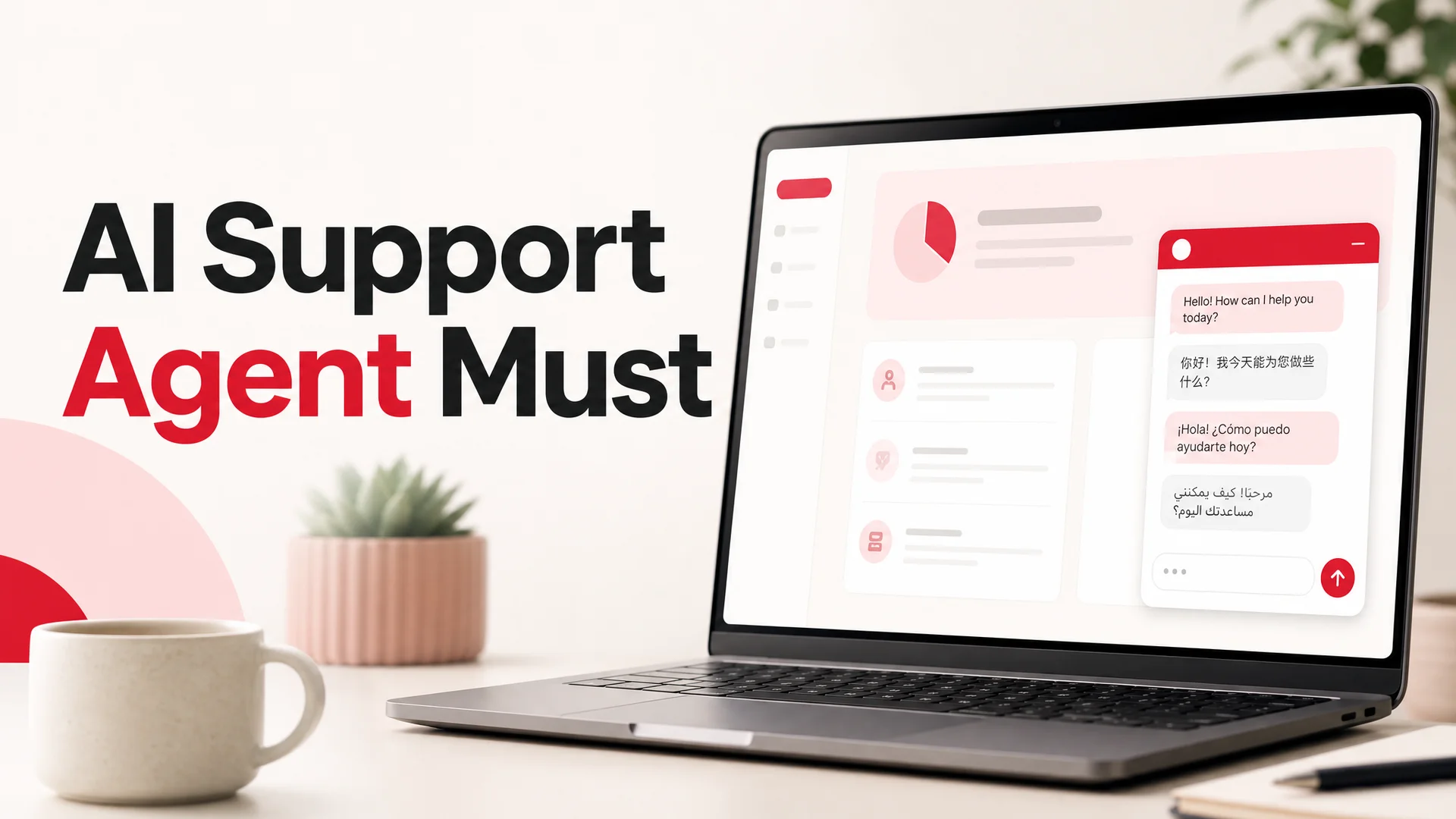
3. The multilingual agent. One agent, every language your customers write in. Removes the cost (and the hiring difficulty) of a multilingual support team. SaaS companies serving Europe and LATAM, e-commerce stores selling globally, and travel brands all benefit. Training data is just your existing English documentation - the agent translates contextually, and modern models are good enough that you no longer need to maintain parallel translated docs.
4. The product onboarding guide. This agent lives inside your application after signup and walks new users to their activation moment. Ask the user what they are trying to accomplish, then walk them through the exact features that get them there. The first 7 days are the most predictive window for SaaS retention, and an agent that helps users hit their "aha" moment in that window can shift week-1 retention noticeably. Train it on product documentation, your activation milestones, and screen recordings of common workflows.
5. The incident communicator. When something breaks, a status agent proactively answers anyone who shows up asking about it. Connect it to your status page or incident management tool, and during a real outage you'll see ticket volume drop by ~80% - because the people who would have flooded your inbox get an immediate, accurate answer instead. Pair it with a webhook so the agent goes silent the moment the incident closes.
6. The post-purchase handoff agent. Particularly relevant for higher-ticket purchases (SaaS, hardware, services). The moment a customer transacts, an agent reaches out via email or WhatsApp with personalized onboarding steps, learns what the customer wants to accomplish first, and routes the right resources. Reduces churn driven by post-purchase confusion and surfaces upsell opportunities organically.
Sales and Lead Generation Agent Ideas
Sales agents qualify visitors, capture leads, book demos, and handle objections in real time. The headline unlock is response speed: leads contacted within five minutes of expressing interest are roughly 100x more likely to convert than leads contacted within 30 minutes. An always-on agent is the only realistic way to hit that window 24/7 - a human SDR cannot, no matter how disciplined the team is.
7. The pricing-page qualifier. Triggers after about 25 seconds on the pricing page with something like "Trying to figure out which plan fits?" Asks three short qualifying questions - team size, primary use case, timeline - and either routes the visitor to the right plan or books a demo on the spot. Companies running this pattern routinely see 3x conversion vs. a static pricing page. The agent should be a fast, cheap model under the hood - DeepSeek V4 Flash or MiniMax M2 are ideal here because the cost-per-conversation is small enough that you can run it on every page view without flinching.
8. The contact-form replacement. Long contact forms convert badly. An agent that opens with "what brings you here today?" and naturally asks the same four or five qualifying questions in conversation form captures leads who would have bounced on the form. The asymmetry is real - visitors will type a paragraph in a chat box that they would never type into a form. The captured data ends up better, because people elaborate when they're talking, not when they're filling out fields.
9. The demo booker. Visitor clicks "book a demo," the agent drops a Calendly or HubSpot Meetings link directly in chat, and the meeting is on the calendar before any back-and-forth. Pair this with AI Actions in Berrydesk so the agent confirms the slot, sends the calendar invite, and adds the lead to your CRM in one motion.
10. The objection handler. Triggers when a visitor scrolls past pricing without clicking, or hovers over the "request a demo" button without committing. Opens with "anything stopping you from getting started?" and handles the three most common objections - too expensive, not sure if it fits my use case, need to check with the team - using specific language pulled directly from your sales playbook. This is the agent that closes the deals your form would have lost.
11. The cold-traffic qualifier. Embedded on landing pages from paid ads, outbound campaigns, and partnership traffic. Asks the visitor to confirm intent and qualify themselves before they reach a sales rep. Filters out tire-kickers and bumps SDR conversion rates by 40–50% because the reps who call back are talking to qualified pipeline, not anyone who happened to click an ad.
12. The win-back agent. Reaches out to dormant leads or churned customers via WhatsApp or email, opens a real conversation, and either re-engages them or extracts the honest reason they left. The reasons are often things you can fix - and the conversational format gets answers a survey never would.
Over 10,000 teams use Berrydesk's AI Actions to qualify leads and schedule meetings around the clock, with no per-seat fees and no annual contract trap.
E-commerce and Retail Agent Ideas
E-commerce has two specific pain points that AI agents are unusually good at attacking: cart abandonment (which costs the average online store 70% of would-be sales) and product discovery friction (the gap between a shopper knowing what they want and finding it in your catalog). A well-built agent can recover 20–30% of abandoned carts and lift average order value by 10–15%.
13. The product recommender. Behaves like a personal shopper. The visitor describes what they're looking for in plain English - "a navy waterproof jacket for fall hiking, under $200" - and the agent returns matching products with reasoning. Training data: your full product feed, customer reviews, and bestseller signals. Long-context models change the game here: with 1M+ tokens, the agent can hold your entire catalog in context, eliminating embedding pipelines and the brittleness that comes with them. Models like Qwen3.6 and Claude Opus 4.7 reason particularly well over structured catalog data.
14. The cart-recovery WhatsApp agent. When a customer abandons a cart, a WhatsApp agent sends a message offering help - not a discount, just a real conversation. WhatsApp open rates sit around 98% versus 20% for email, so the surface area to recover the sale is dramatically larger. Combine the conversation with a small, conditional discount code and recovery rates land in the 25–30% range.
15. The order-tracking agent. "Where is my order?" is the single highest-volume support ticket category for any e-commerce store. An agent that pulls real-time shipping data from your fulfillment system answers it in seconds and removes the ticket entirely. Easy to build, enormous reduction in inbox load, immediate ROI.
16. The size-and-fit advisor. Apparel-specific. Asks the shopper about height, usual size, and fit preference, then recommends the right size in the product they're viewing. Returns are the largest cost driver in apparel e-commerce, and a fit advisor typically reduces them by 15–25% - which often more than pays for the entire AI program by itself.
17. The loyalty assistant. Tells a customer their current points balance, what they can redeem, and what they need to spend to hit the next tier. Most loyalty programs are invisible because the customer never logs into the dashboard where the points live. Surfacing them in chat - at the moment of purchase - drives meaningful repeat purchase behavior.
18. The post-purchase upsell agent. A few days after delivery, the agent checks in via WhatsApp ("how's the new gear?") and surfaces a complementary product or accessory based on what was bought. Done with restraint, this lifts repeat purchase rate without feeling spammy.
Industry-Specific Agent Ideas
The biggest lane for freelancers and small agencies right now is building niche-specific agents for verticals where generic tools don't quite fit. Domain knowledge is the moat. A real estate agent who has worked in real estate for ten years and now builds AI agents for brokerages sells more confidently than a generalist with a slicker website.
Healthcare agent ideas
19. The symptom triage agent. Patient describes symptoms in their own words; the agent asks structured follow-ups grounded in clinical decision-support guidelines, then recommends booking an appointment, visiting urgent care, or calling 911. It does not diagnose. Training data: clinical decision-support protocols and your specialty's intake forms. Note: this requires HIPAA compliance and a Business Associate Agreement with whatever platform you build on. For regulated use cases, the open-weight Chinese frontier - GLM-5.1 (MIT), Qwen3.6-27B (Apache 2.0), Xiaomi MiMo-V2-Pro (MIT) - makes on-prem and air-gapped deployments genuinely viable.
20. The appointment booking and reminder agent. Patient texts to book; the agent finds an available slot in the EHR, confirms it, and sends reminders 48 hours and 2 hours out. Reduces no-show rates by 30–40%, and the cumulative revenue recovered from saved slots typically pays for the entire deployment within a month.
21. The benefits and coverage explainer. Patient asks "is this covered by my insurance?" The agent pulls the plan details and answers with specifics - copay, coinsurance, prior authorization requirements. Eliminates the front-desk bottleneck that every clinic has and frees the staff to do work that actually requires a human.
Real estate agent ideas
22. The property qualifier and tour booker. Visitor browses listings; the agent asks about budget, location preference, must-haves, and timeline, then books a tour with the agent who knows that area best. Brokerages running qualification agents report 3x higher lead conversion and 35% lower cost per qualified lead, mostly because the agents stop wasting time on tours that were never going to turn into deals.
23. The mortgage pre-qualification agent. Walks buyers through pre-qualification questions, runs a soft credit pull (with explicit consent), and tells them what they can realistically afford before they fall in love with a house outside their range. Saves heartbreak and saves the agent time.
Education agent ideas
24. The tutoring and homework agent. Student uploads a question; the agent walks them through how to solve it without simply handing over the answer. Train it on your curriculum and pedagogical style. Particularly effective for math, science, language learning, and standardized test prep. The 1M+ token context windows on Claude Opus 4.6 and Gemini 3.1 Pro let the agent hold an entire textbook in-context, so it can reference exactly the right chapter when the student is stuck.
25. The course advisor and enrollment agent. Prospective student asks "which program should I take?" The agent asks about goals, schedule, prior experience, and budget, then recommends the right course and books a discovery call with admissions. Cuts enrollment-team workload sharply and gives prospects an answer at the moment they're deciding.
Hospitality and travel agent ideas
26. The hotel concierge agent. Guest asks about WiFi, restaurant recommendations, late checkout, transportation, or laundry. The agent answers instantly via WhatsApp or an in-room QR code that drops them into a Berrydesk widget. Front-desk call volume typically drops by 60%, and guest satisfaction scores rise because the answer arrived in 5 seconds instead of 5 minutes.
27. The reservation and ordering agent. Customer messages on Instagram or WhatsApp to book a table, modify a reservation, or order delivery. The agent integrates with your POS, confirms in real time, and pushes any allergies or special requests directly to the kitchen.
Internal Operations and HR Agent Ideas
Internal-facing agents get less marketing attention than customer-facing ones, but they often deliver faster ROI because the audience is captive, the data is contained, and the success criteria are obvious - fewer questions hitting your HR or IT team this week than last week.
28. The HR and benefits agent. Employees ask about PTO accrual, benefits enrollment, payroll questions, and policy specifics. Eliminates the daily flood of repetitive HR questions that currently lives in DMs to your one HR business partner. Training data: employee handbook, benefits documentation, payroll FAQs. Deploy in Slack, Discord, or Microsoft Teams. Long-context models matter - when an agent can hold the entire 200-page employee handbook in context, it answers correctly the first time without any retrieval drama.
29. The IT helpdesk agent. Handles password resets, software access requests, VPN troubleshooting, MDM enrollment, and the long tail of common IT issues. Routes to a human for anything genuinely novel. IT ticket volume drops by 50–70% in the first month, and the IT team gets to actually work on infrastructure instead of resetting passwords.
30. The new-hire onboarding agent. Walks new employees through their first two weeks: forms to fill, people to meet, tools to set up, first projects to start. Standardizes onboarding without manager intervention and ensures every new hire gets the same quality experience regardless of how busy their manager happens to be that week. Pairs especially well with calendar and task management AI Actions.
31. The internal knowledge agent. Employees ask "where's the deck on Q2 strategy?" or "what's the refund policy for enterprise customers?" The agent searches across Notion, Google Drive, Confluence, and Slack history, and surfaces the right document. Cuts time-to-answer from 20 minutes (find the doc, read the relevant section) to 20 seconds. Training data: connect Notion, Drive, and YouTube - Berrydesk reads them natively. This is one of those agents that becomes load-bearing infrastructure within weeks of launch.
Creative and Niche Agent Ideas
The agents that go viral tend to be the unexpected ones. Here are five less obvious ideas with real audience pull.
32. The interactive storytelling agent. Reader picks a genre, a setting, and a tone; the agent generates a branching story they can shape with their own choices. Used by publishers, indie game developers, and creative writing programs. Native multimodal models like Gemini 3.1 Ultra and Kimi K2.6 (which accepts video input natively) open up additional surfaces - voice-driven stories, image-illustrated branches, audio narration baked in.
33. The wellness check-in agent. Asks users about mood, stress, and sleep daily. Tracks trends over time, suggests breathing exercises or grounding techniques when appropriate, and escalates to a human therapist when patterns indicate concern. Used by employee wellness programs and DTC mental health brands. The escalation path is non-negotiable - design it before you launch.
34. The recipe and meal-planning agent. "Here's what's in my fridge, what can I make in 20 minutes that's vegan and gluten-free?" The agent generates a recipe, accounts for the constraints, and remembers preferences across sessions. Sticky use case with real engagement - and a clean upsell path to grocery delivery integrations.
35. The brand-voice content coach. Trained on a company's existing content library, the agent helps marketing and content teams draft new posts in the established brand voice. Reduces time-to-publish by ~50% and keeps tone consistent across multiple writers. Particularly valuable for fast-growing companies hiring their second, third, and fourth content writers.
36. The live-event engagement agent. A conference, webinar, or community event uses an agent in their app, on Slack, or in Discord to run trivia, polls, and Q&A throughout the program. Increases attendee engagement during the event and gives organizers real-time signal on which sessions resonated.
Agent Business Ideas: How to Make Money Building AI Agents
A meaningful share of the most active AI agent builders today aren't startup founders - they're freelancers and small agencies serving local and mid-market businesses. The market is real, the demand is increasing, and the pricing has settled into a consistent band.
37. The local-business agent agency. Build agents for dentists, gyms, real estate brokers, salons, and local clinics in your area. Pricing has stabilized: $500–$2,000 per setup, plus $200–$500 per month maintenance. Fulfillment is fast - under two hours per agent on Berrydesk. The hard part is acquisition. Plan on 50–100 cold emails or door-knocks to land your first paying client. The second is much easier; the third sells itself when you have two case studies.
38. The white-label reseller. Build agents on the platform, brand them as your own product, and sell to clients without revealing the underlying tech. Higher margin than direct fulfillment because the customer is paying for your brand and account management, not an SaaS subscription they could find themselves. Requires more upfront positioning work, but compounds quickly.
39. The vertical template seller. Build a polished, productized agent template for one specific vertical - a real estate buyer qualifier, a restaurant reservation agent, a dental appointment booker - and sell it as a fixed-price package. $99–$499 per template, scales because each sale is the same product with light customization. The wedge here is depth: a generalist template loses to a specialist one every single time.
40. The model-routing consultancy. This is a 2026-specific opportunity. With the open-weight frontier (DeepSeek V4, GLM-5.1, MiniMax M2, Qwen3.6) collapsing inference costs and the closed frontier (Claude Opus 4.7, GPT-5.5, Gemini 3.1) handling the hardest cases, which model handles which conversation has become a real engineering decision. Companies running heavy support volumes save five-figure sums monthly by routing routine traffic to a cheap open model and reserving frontier models for escalations. If you understand both the cost curves and the support workflow, you can sell this expertise for $3,000–$10,000 per engagement.
Open-Weight vs. Closed Frontier: A 2026 Trade-off Worth Understanding
One thing to internalize before you pick an idea and start building: the model landscape isn't a single ladder anymore. There are two parallel frontiers, and they're each good at different things.
The closed frontier - GPT-5.5, Claude Opus 4.7, Gemini 3.1 - wins on raw reasoning, the longest sustained agentic runs, and the highest-stakes interactions. Claude Opus 4.7 hits 64.3% on SWE-bench Pro for complex coding work; Gemini 3.1 Pro leads GPQA Diamond at 94.3%. If your agent is taking high-value actions where being wrong is expensive (refunds, contract changes, medical guidance, trade execution), this is where you want to be.
The open-weight frontier - DeepSeek V4, GLM-5.1, Kimi K2.6, MiniMax M2.7, Qwen3.6, Xiaomi MiMo-V2 - wins on cost, throughput, and deployability. DeepSeek V4 Flash is $0.14 / $0.28 per million tokens. MiniMax M2 runs at roughly 8% the cost of Claude Sonnet at twice the speed. GLM-5.1 actually beats GPT-5.4 and Claude Opus 4.6 on SWE-Bench Pro despite being MIT-licensed. For high-volume support traffic where most conversations are answerable from documentation, the open frontier can cut your inference bill by 80–95% with negligible quality loss.
The right answer for almost every production agent is both. Use Berrydesk to route routine traffic to a fast, cheap open-weight model and escalate harder conversations to a frontier closed model. You don't have to pick a side.
Common Pitfalls That Quietly Kill Agent Projects
A few patterns show up consistently in agent deployments that don't make it to production. Worth flagging before you start.
Training on marketing copy instead of real data. The most common cause of bad agents. Marketing pages describe what your product aspires to be; real customer questions and product docs describe what it actually does. The agent is going to be talking to real customers, so train it on real material.
No clear escalation path. Every agent will hit edge cases. If you don't define upfront where they go - Slack alert, support inbox queue, live human chat handoff, callback request - the customer drops into a void and the project gets blamed for the gap.
Picking the wrong channel. A WhatsApp agent is useless if your customers email. A web widget is useless if your audience lives on Instagram DMs. Audit where your conversations actually happen before you pick a channel.
Setting it and forgetting it. Agents need maintenance. Customer questions evolve, your product changes, new edge cases emerge weekly. Plan to review the conversation logs every week for the first month, then monthly thereafter, and feed the lessons back into training data and instructions.
Over-scoping the first version. Teams that try to build the "complete" agent on day one tend to ship nothing. Teams that ship the FAQ agent on day one and iterate from there end up with a much better agent six months later - because they have actual usage data to learn from.
How to Pick the Right Idea to Start With
Choosing the right first agent matters more than choosing the perfect one. The framework most experienced builders use:
- Start with the question you answer most. Whatever your team types out manually most often is your highest-ROI first agent. For B2B SaaS that's usually some flavor of "how does this work?" For e-commerce it's almost always "where is my order?" Audit one week of inbox volume before you decide.
- Match the channel to your customers. Fight the temptation to deploy everywhere on day one. Pick the one channel your customers already use and ship there first.
- Train on real material. Real customer transcripts, real help-center analytics, real product docs. Marketing copy is for marketing.
- Define escalation before launch. Where do hard cases go? Decide on day zero, not after the first real customer hits an edge case.
- Pick the smallest scope that proves value. Ship the FAQ agent before the multi-step refund agent. Ship the contact-form replacement before the full SDR. Compounding learning beats grand designs every time.
How to Build Any of These on Berrydesk
Every idea above ships on Berrydesk in four steps:
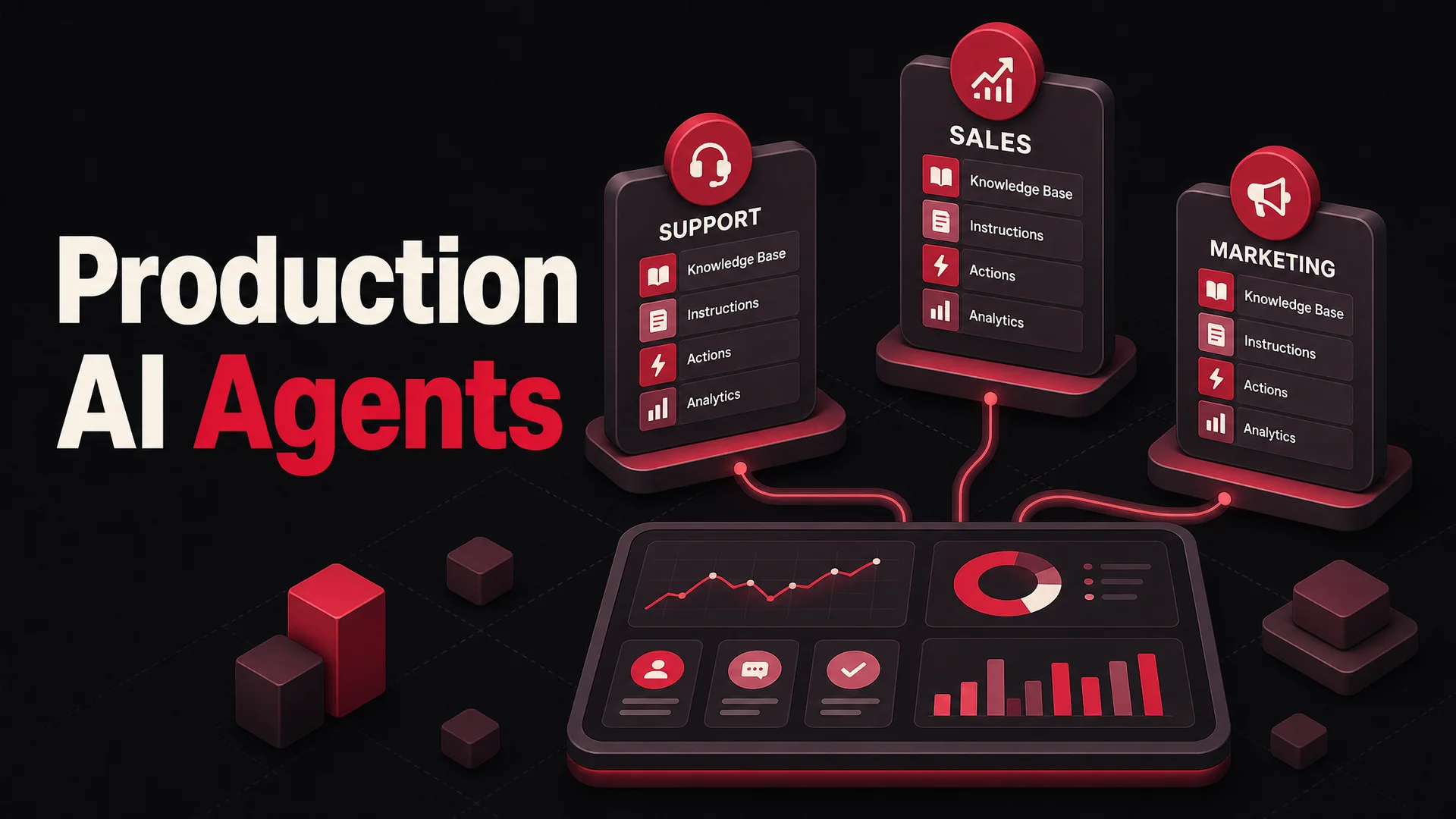
Pick a model. Choose from GPT, Claude, Gemini, DeepSeek, Kimi, GLM, Qwen, MiniMax, or others - and route between them per conversation if you want. Berrydesk doesn't lock you into one provider, which matters because the right answer in 2026 is usually a mix.
Train on your data. Add your website URL, help docs, product PDFs, FAQs, Notion workspace, Google Drive folders, or YouTube channels. Berrydesk reads everything natively and trains the agent on it. Most teams finish this step in five minutes.
Brand it and add AI Actions. Style the chat widget to match your brand - colors, copy, avatar, opening message. Then wire up AI Actions: bookings, payments, refunds, order lookups, calendar invites, CRM writes. This is what turns a chatbot into an agent that actually does things.
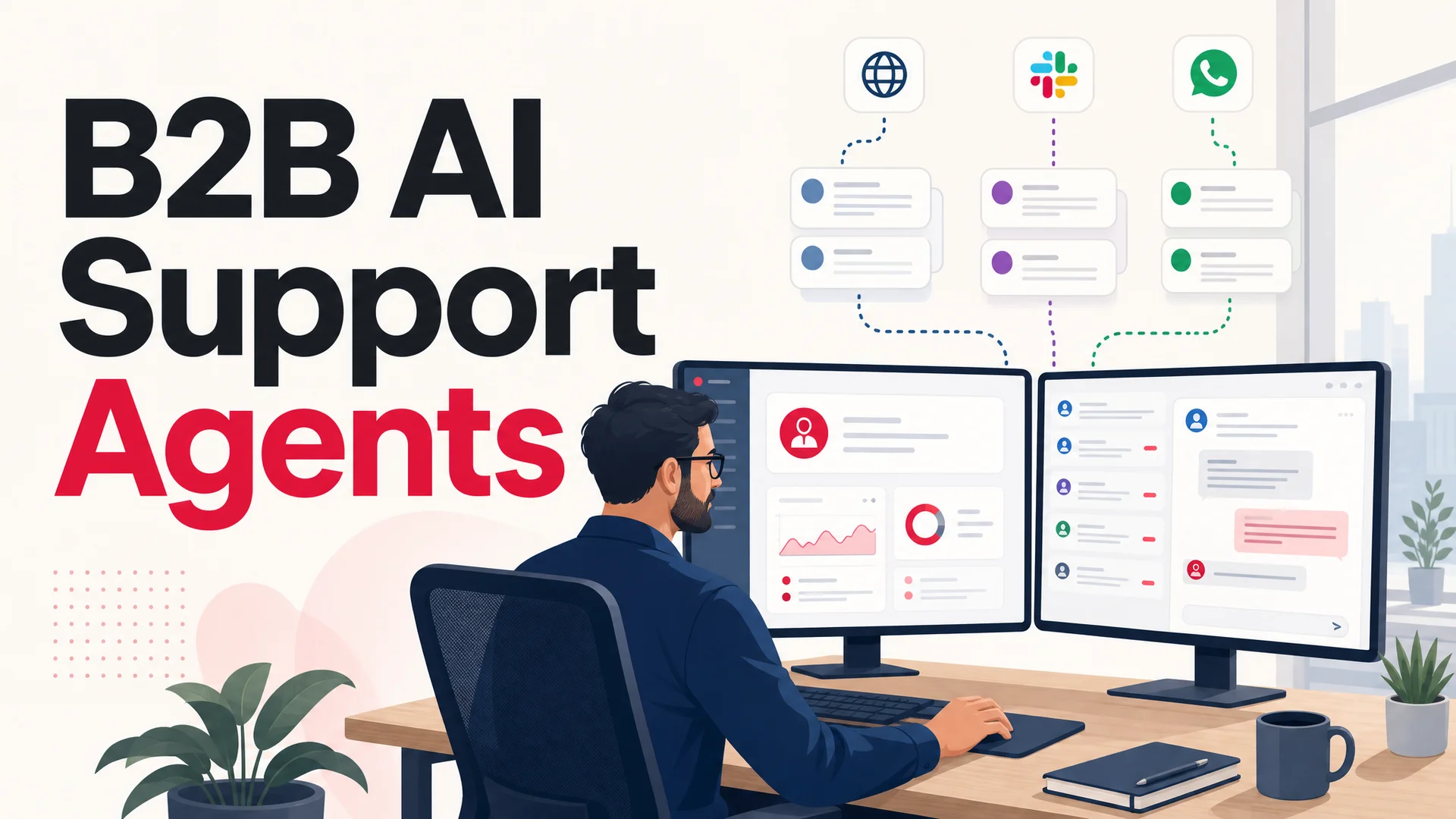
Deploy across channels. Embed on your website, connect to Slack, Discord, WhatsApp, Instagram, or Messenger. Same agent, every surface, one source of truth. Most teams ship their first working deployment in under an hour.
Ready to Ship Your First Agent?
The best agent idea is the one you can put live this week. Pick the use case that solves your team's biggest manual workload, train on the data you already have, deploy it on the channel your customers already use, and iterate from there. The teams that win with AI agents in 2026 are not the ones with the most ambitious roadmaps - they're the ones who ship something small, learn from real conversations, and keep going.
Berrydesk gives you everything to do that without writing a line of code: pick from any frontier model, train on your own knowledge sources, brand the experience, wire up AI Actions, and deploy to web, Slack, Discord, WhatsApp, and beyond. Build your first AI agent at berrydesk.com - free to start, no credit card required.
 Berrydesk
Launch your AI agent in minutes
- Pick any frontier model - Claude Opus 4.7, GPT-5.5, Gemini 3.1, DeepSeek V4, GLM-5.1
- Train on docs, websites, Notion, Drive, or YouTube and deploy across web, WhatsApp, Slack, Discord
Set up in minutes

Chirag Asarpota is the founder of Strawberry Labs, the team behind Berrydesk - the AI agent platform that helps businesses deploy intelligent customer support, sales and operations agents across web, WhatsApp, Slack, Instagram, Discord and more. Chirag writes about agentic AI, frontier model selection, retrieval and 1M-token context strategy, AI Actions, and the engineering it takes to ship production-grade conversational AI that customers actually trust.