Picture this. You are throwing a sixth-birthday party next weekend and the to-do list is starting to balloon. You open ChatGPT - or Claude, or Gemini, take your pick - and ask it to help you plan. In a few seconds you have a tidy outline: venue ideas, decoration themes, a timeline for the day, snack quantities for twelve restless kids, and a list of age-appropriate gifts.
Useful. Genuinely useful. But at some point you notice something. The chatbot has produced a plan. You still have to execute it. Someone - you - still has to open new tabs, compare cake bakeries, find a balloon arch on sale, place the order before the cutoff, RSVP a venue, and remember the juice boxes. The model is a brilliant advisor. It is not a doer.
Now imagine the same conversation, except this time the assistant looks at your shopping list and goes ahead. It checks your Google Calendar for conflicts, books a slot at a local play café for Saturday, orders ten cardboard cutouts and six juice cartons from your usual store, picks a Lego set within your budget, and drops a one-line summary in your inbox asking you to confirm the total before it hits "pay." That is the difference between a chatbot and an AI agent.
What is an AI agent?
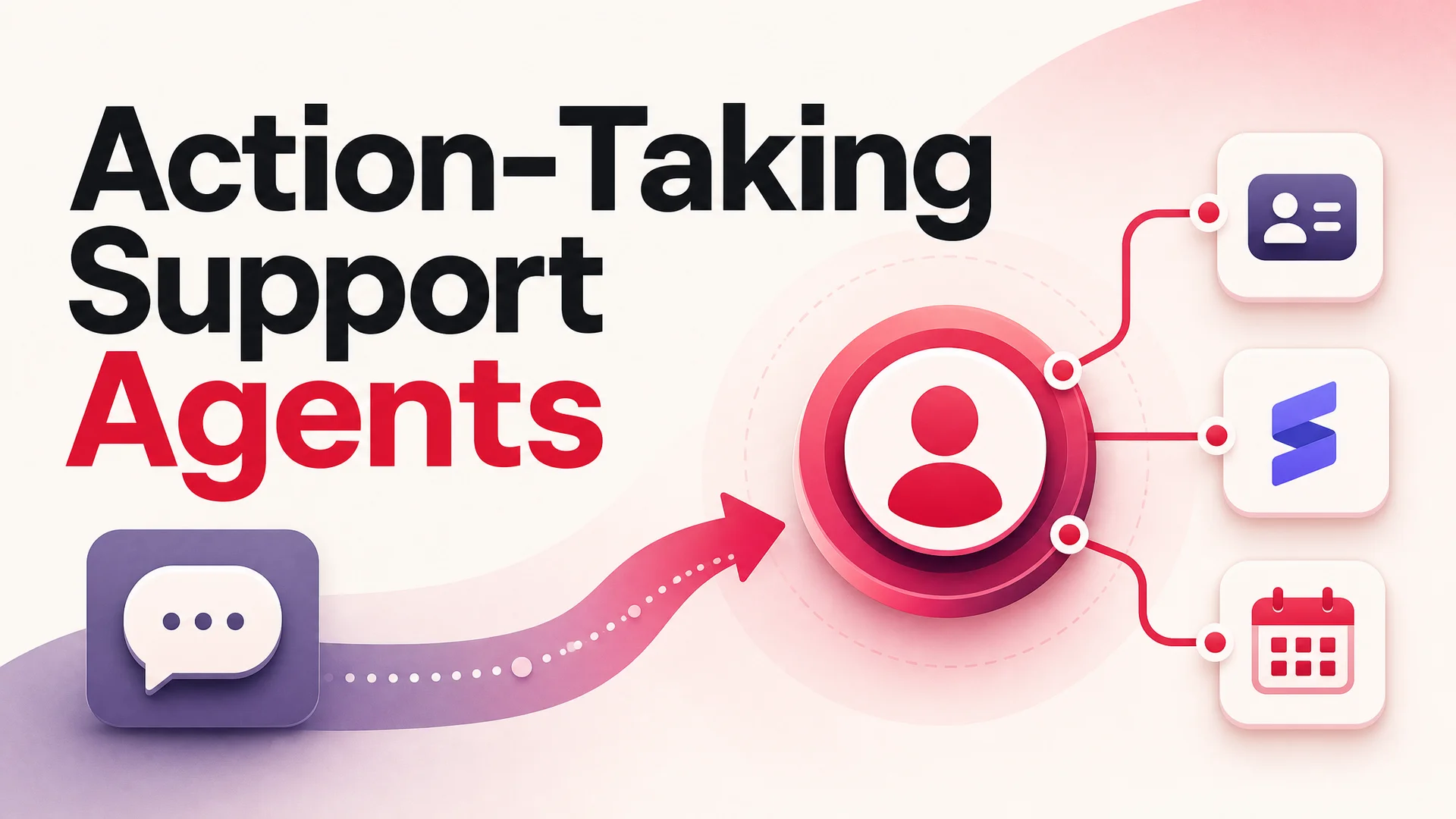
An AI agent is a program that uses a large language model as a brain, a set of tools as hands, and a goal as its compass. Where a chatbot replies, an agent acts. It does not stop at "here is what I would do." It plans the steps, calls the APIs, fills the forms, watches the results, adjusts when something fails, and keeps going until the goal is reached or it runs out of room.
In 2026, this distinction is no longer academic. The current generation of frontier models - Claude Opus 4.7, GPT-5.5 Pro with parallel reasoning, Gemini 3.1 Ultra with a 2M-token context window - are good enough at multi-step tool use that production agents are everywhere from B2B SaaS onboarding to ecommerce returns to enterprise IT helpdesks. Open-weight agentic models have caught up too. Moonshot's Kimi K2.6 can sustain twelve-hour autonomous coding sessions and orchestrate swarms of up to three hundred sub-agents. Z.ai's GLM-5.1 runs an eight-hour plan-execute-test-fix loop and scores 58.4 on SWE-Bench Pro - ahead of Claude Opus 4.6 on that benchmark, and from a model with an MIT license. The mechanics that make those feats possible are the same mechanics that let a customer-support agent file a refund, swap a shipping address, or upgrade a subscription without paging a human.
The shorthand: a chatbot writes the recipe; an agent cooks the meal.
How an AI agent is different from an AI chatbot
The cleanest way to draw the line is to look at where the loop closes.
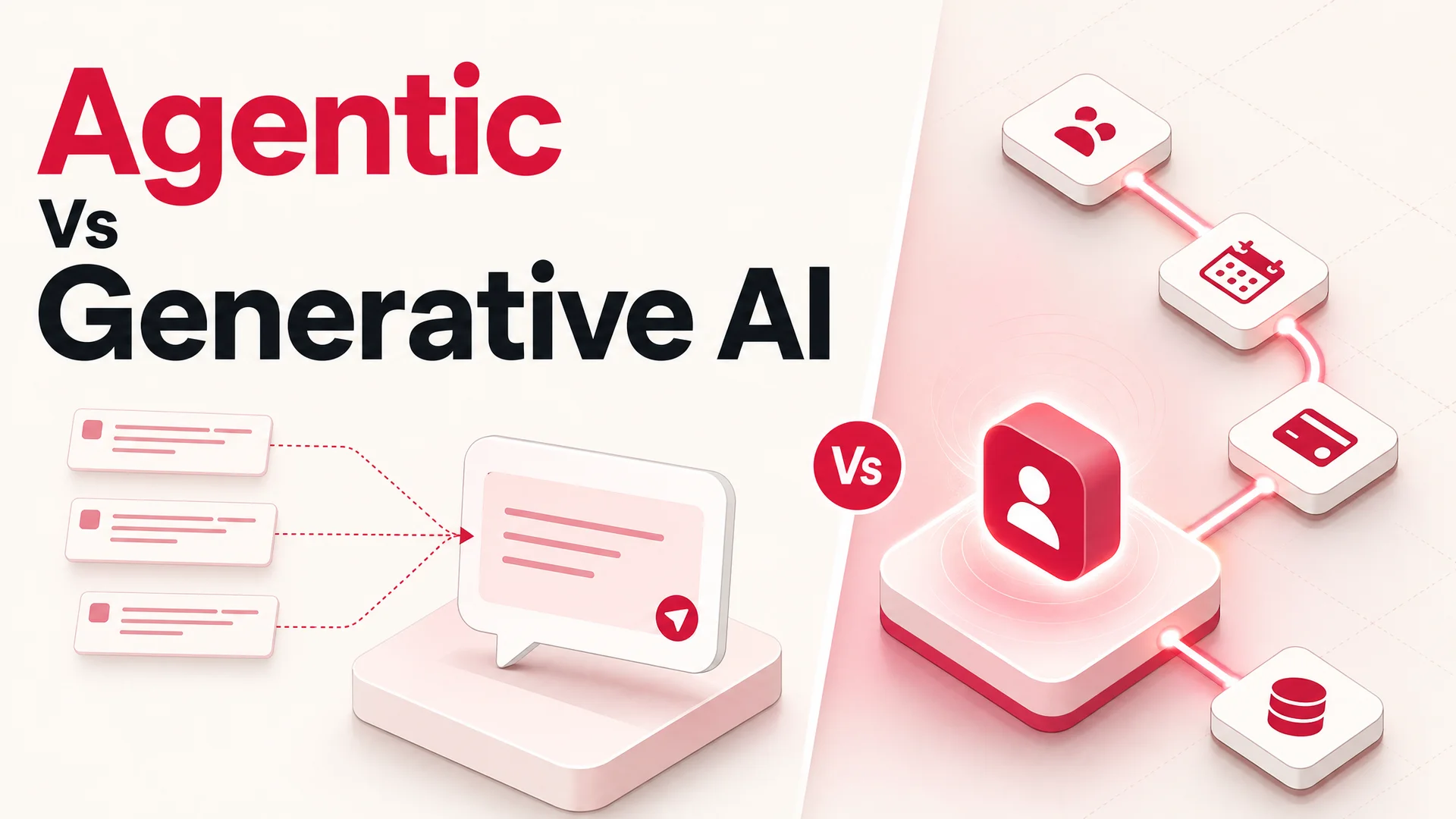
A chatbot is a request-response loop with one turn. You send a message, it sends a message back, and the cycle ends. The model has no hands. It can describe what should happen next, but you have to pick up the keyboard and make it happen.
An agent is a request-response loop wrapped inside a planning loop. You give it a goal. It writes a plan. It picks a tool. It calls the tool. It reads the result. It updates its plan. It picks the next tool. It repeats - sometimes for a few seconds, sometimes for hours - until the goal is met or it hits a stop condition you set. The user only steps in when the agent asks for confirmation or hits something it is not authorized to do.
In a customer-support context, the difference is concrete. A chatbot sees "I'd like to cancel my subscription and get a refund for last month" and produces three paragraphs explaining your refund policy. An agent sees the same message, looks up the customer, checks their billing history, confirms they qualify under your policy, issues the refund through Stripe, downgrades the plan, sends a confirmation email, and logs the whole thing as a resolved ticket. The human supervisor sees the ticket close on its own.
That is what changes the unit economics of support, and that is what teams are now building on Berrydesk.
How AI agents actually work
Under the hood, an agent has four moving parts: a model, a memory, a toolset, and a loop.
The model is the reasoning engine. In 2026 you have real choice here. For high-stakes flows where a wrong action costs you money - refunds, account changes, scheduling - teams reach for the strongest reasoners: Claude Opus 4.7 for sustained planning, GPT-5.5 Pro when parallel reasoning helps, Gemini 3.1 Pro when the conversation drags on and benefits from the larger context. For high-volume, lower-risk traffic - order status questions, simple FAQs, password resets - teams route to cheaper open-weight models like DeepSeek V4 Flash at $0.14 / $0.28 per million input/output tokens, MiniMax M2.7 at roughly 8% the price of Claude Sonnet at twice the speed, or Qwen3.6-27B running locally on a single GPU. The model picks itself based on the question, not the other way around.
Memory is what the agent remembers between steps and between conversations. Short-term memory is the conversation itself plus whatever it has learned during the current task. Long-term memory is the customer profile, the prior tickets, the policy documents, and the product knowledge base. The 1M-token context window now standard on Claude Opus 4.6, Sonnet 4.6, and the entire DeepSeek V4 family means you can fit an entire onboarding history, a full policy doc, and a complete product catalog in-context. RAG is no longer a hard requirement for most use cases - it is a tuning lever you reach for when you want to keep prompts cheap, not a load-bearing piece of architecture.
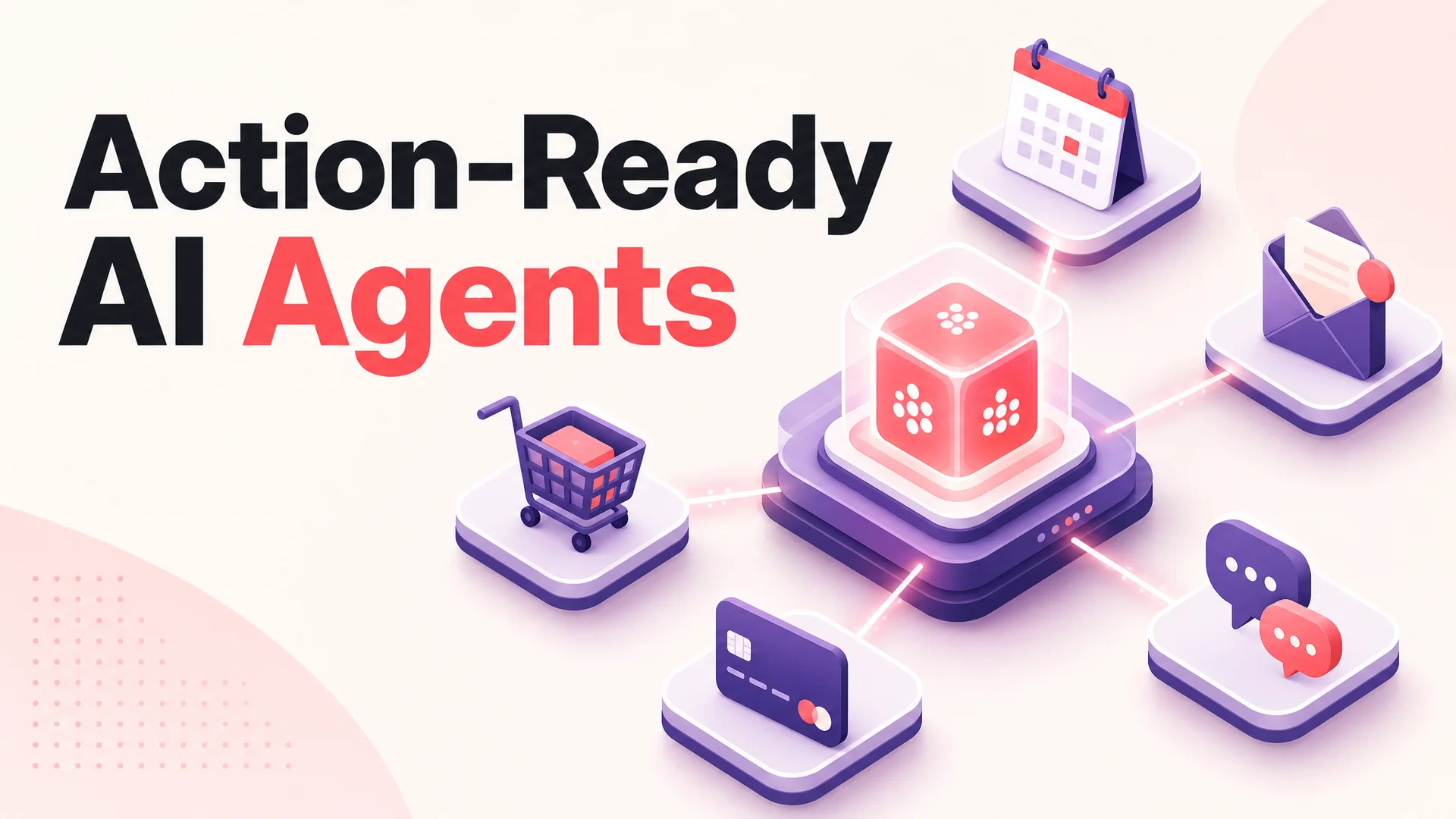
Tools are the agent's hands. A tool is anything the model can call: a SQL query, a Stripe API, a Calendly slot lookup, a Slack post, a CRM update, a webhook into your internal billing system. The richer the toolset, the more useful the agent. This is where Berrydesk's AI Actions live. You wire up the tools once - booking, refunds, order lookups, ticket escalation, inventory checks - and the agent decides at runtime which to call.
The loop is where it all comes together. The model receives the goal, picks a tool, calls it, observes the response, updates its plan, and decides whether to call another tool or hand back to the user. The agent self-prompts. It does not wait for a human to say "now look up the order." It works the problem until the work is done.
What makes the 2026 generation feel qualitatively different is reliability inside that loop. Earlier agents would lose the thread on step five or eight. Today's frontier and frontier-open models - Kimi K2.6, GLM-5.1, Claude Opus 4.7, Qwen3.6, MiMo-V2-Pro from Xiaomi - were post-trained specifically for long-horizon tool use. The result is that booking flows, refund flows, and multi-step diagnostics that used to be demoware are now production-ready.
What you can actually do with AI agents in 2026
The honest answer is: a lot more than you could two years ago. The dishonest answer is: anything. Treat the list below as a real menu, not a hype reel.
Customer support resolution, not deflection
The original promise of "AI for support" was deflection - keep tickets out of the human queue. Agents change the goal from deflection to resolution. A Berrydesk agent connected to your order management system, your billing provider, and your CRM can fully resolve order-status questions, address changes, refunds within policy, subscription upgrades, password resets, and shipping inquiries. For a mid-sized ecommerce brand handling five thousand tickets a week, this routinely takes the human-handled share from sixty percent down into the teens.
Booking and scheduling without the back-and-forth
If your business runs on appointments - clinics, salons, financial advisors, B2B sales teams - an AI Action wired to Calendly, HubSpot, or your own scheduling system replaces the four-message back-and-forth. The customer says "I need a follow-up next week sometime in the afternoon," the agent reads the calendar, proposes two slots, books the chosen one, and emails the confirmation. The human supervisor sees a calendar invite, not an inbox thread.
Email triage and reply drafting
Point an agent at a shared inbox and tell it the rules. Anything that looks like a refund request gets categorized, the customer record gets pulled, and a draft reply is queued for human approval. Anything that looks like a meeting request gets cross-referenced against your calendar and either booked or proposed back. Anything that is clearly spam gets archived. You read what is left.
Lead qualification and outbound
For sales teams, an agent can run the discovery layer. It enriches inbound leads from your form-fill data, scores them against your ICP, drafts the first outreach, schedules a discovery call when the lead replies positively, and hands a hot lead to a human SDR with the full context already summarized.
Operational research and reporting
Need a competitive scan, a regional market sizing, or a weekly performance digest? An agent can pull from your analytics, scrape public sources, summarize the patterns, and write the report. It will not replace a senior analyst, but it will save one a full afternoon every Friday.
Internal IT and HR helpdesk
The same architecture that resolves customer tickets resolves employee tickets. Password resets, license requests, equipment orders, PTO submissions, expense approvals - all are well-suited to agents because the rules are stable and the systems are APIs you already own.
Content production with a human in the loop
Agents write first drafts. Humans edit. The combination is faster than either alone. The trick is treating the agent as a junior writer who needs a tight brief, not as a finished product.
Financial and transactional workflows
Within carefully scoped permissions, agents can issue refunds, send invoices, reconcile payments, and negotiate within ranges you set. The two non-negotiables are clear authorization scopes and a complete audit log of every action. Berrydesk's AI Actions framework enforces both by default.
A general-purpose list, for completeness
- Automate repetitive tasks. Data entry, scheduling, recurring report generation, ticket triage.
- Manage email correspondence. Read, classify, draft replies, set up meetings, escalate.
- Conduct market and competitive research. Pull data, analyze, write up findings.
- Run customer service end-to-end. Resolve tickets, not just answer them.
- Personal assistant work. Reminders, to-do lists, context-aware recommendations.
- Execute financial transactions. Refunds, invoicing, purchase requests, scoped negotiation.
- Content creation drafts. Blog drafts, social copy, email templates, product descriptions.
- Lead generation and nurture. Score, enrich, sequence, hand off when warm.
- Process automation across tools. Tie together CRM, billing, comms, and analytics.
- Internal research and analysis. Synthesize internal docs, summarize meetings, build briefs.
Closed frontier versus open frontier: which model to pick
A question that comes up on every Berrydesk onboarding call: which model should the agent run on? The right answer in 2026 is "more than one."
The closed frontier - Claude Opus 4.7, GPT-5.5 Pro, Gemini 3.1 Ultra - is where you go when you cannot afford to be wrong. Opus 4.7 leads SWE-bench Pro at 64.3% for complex multi-step coding tasks; that same planning ability transfers to multi-step support flows. GPT-5.5 Pro's parallel reasoning helps when the agent has to consider several branches at once. Gemini 3.1 Pro tops GPQA Diamond at 94.3% and Ultra's 2M-token context is hard to beat when you need to keep a long history alive.
The open frontier is where the cost story lives. DeepSeek V4 Flash at $0.14 / $0.28 per million tokens makes routine support traffic effectively free at scale. MiniMax M2.7 hits 56.22% on SWE-Pro at roughly an eighth of Sonnet's cost. GLM-5.1 from Z.ai, MIT-licensed and trained entirely on Huawei Ascend chips, gives regulated-industry teams a credible on-prem story without sacrificing agentic capability. Alibaba's Qwen3.6-27B is dense, Apache-licensed, and beats some 397B-parameter MoE rivals on agentic coding benchmarks - meaning it runs on a single high-end GPU. Xiaomi's MiMo-V2-Pro, with weights released under MIT in April 2026, gives you a 1M-context reasoning-first model you can host yourself.
The pattern that works in production: route routine traffic - order status, basic FAQs, password resets - to a cheap open-weight model like DeepSeek V4 Flash or MiniMax M2.7. Reserve Claude Opus 4.7, GPT-5.5 Pro, or Gemini 3.1 Ultra for the harder cases where reasoning quality matters more than per-token cost. Berrydesk lets you wire this up at the agent level, so a single deployment can mix models without your end users ever noticing.
Common pitfalls when deploying AI agents
The teams that get this wrong tend to make the same mistakes. Worth naming them up front.
Giving the agent too much authority on day one. Start with read-only tools. Add write actions one at a time. Keep a human in the loop on anything financial until the failure rate is below your threshold. An agent that issues a refund when it should not have is more expensive than ten unanswered tickets.
Treating the knowledge base as a one-time import. Your docs change. Your policies change. If the agent is still quoting last quarter's return window, you have a problem. Berrydesk re-indexes connected sources - Notion, Drive, your website, YouTube transcripts - on a schedule, but you still need someone responsible for the source of truth.
Skipping the eval set. Every agent should have a test harness of fifty to two hundred real questions with expected outcomes, run on every prompt change and every model swap. Without it you are flying blind, and small regressions compound.
Picking one model and never revisiting. The model landscape now moves on a roughly monthly cadence. The right model for your agent in February is probably not the right model in May. Treat model choice as a tuning parameter, not a procurement decision.
Confusing fluency with correctness. The 2026 generation of models is extraordinarily fluent. They will write a confident, polite, well-structured wrong answer. Tools are the antidote: if the agent has to call your billing API to know an account balance, it cannot hallucinate one.
Build your AI agent on Berrydesk
An AI agent is only as good as the model behind it, the tools you give it, and the integrations that let it act on the world. Berrydesk is built around all three.
You pick the model - GPT-5.5, Claude Opus 4.7 or Sonnet 4.6, Gemini 3.1, DeepSeek V4, Kimi K2.6, GLM-5.1, Qwen3.6, MiniMax M2.7, or others - and switch any time. You train the agent on your docs, your website, Notion, Google Drive, or YouTube transcripts in a few clicks. You brand the chat widget so it feels like part of your product. You add AI Actions for booking, refunds, payments, lookups, and any internal API you care to expose. And you deploy to your website, Slack, Discord, WhatsApp, and the rest of the channels your customers actually use.
The result is an agent that does not just describe what should happen. It makes it happen.
Ready to try it? Spin up your first agent at berrydesk.com. It is free to start, and the first deployment usually takes less than an hour.
 Berrydesk
Launch your AI agent in minutes
- Train on your docs, site, Notion, and Drive
- Add AI Actions for booking, refunds, and payments
Set up in minutes

Chirag Asarpota is the founder of Strawberry Labs, the team behind Berrydesk - the AI agent platform that helps businesses deploy intelligent customer support, sales and operations agents across web, WhatsApp, Slack, Instagram, Discord and more. Chirag writes about agentic AI, frontier model selection, retrieval and 1M-token context strategy, AI Actions, and the engineering it takes to ship production-grade conversational AI that customers actually trust.