The "is AI hype real?" debate ended somewhere around the time Claude Opus 4.7 started clearing 64% on SWE-Bench Pro and DeepSeek V4 Flash dropped the price of a million output tokens to twenty-eight cents. The interesting question now is operational: where in your business does AI move the needle hardest?
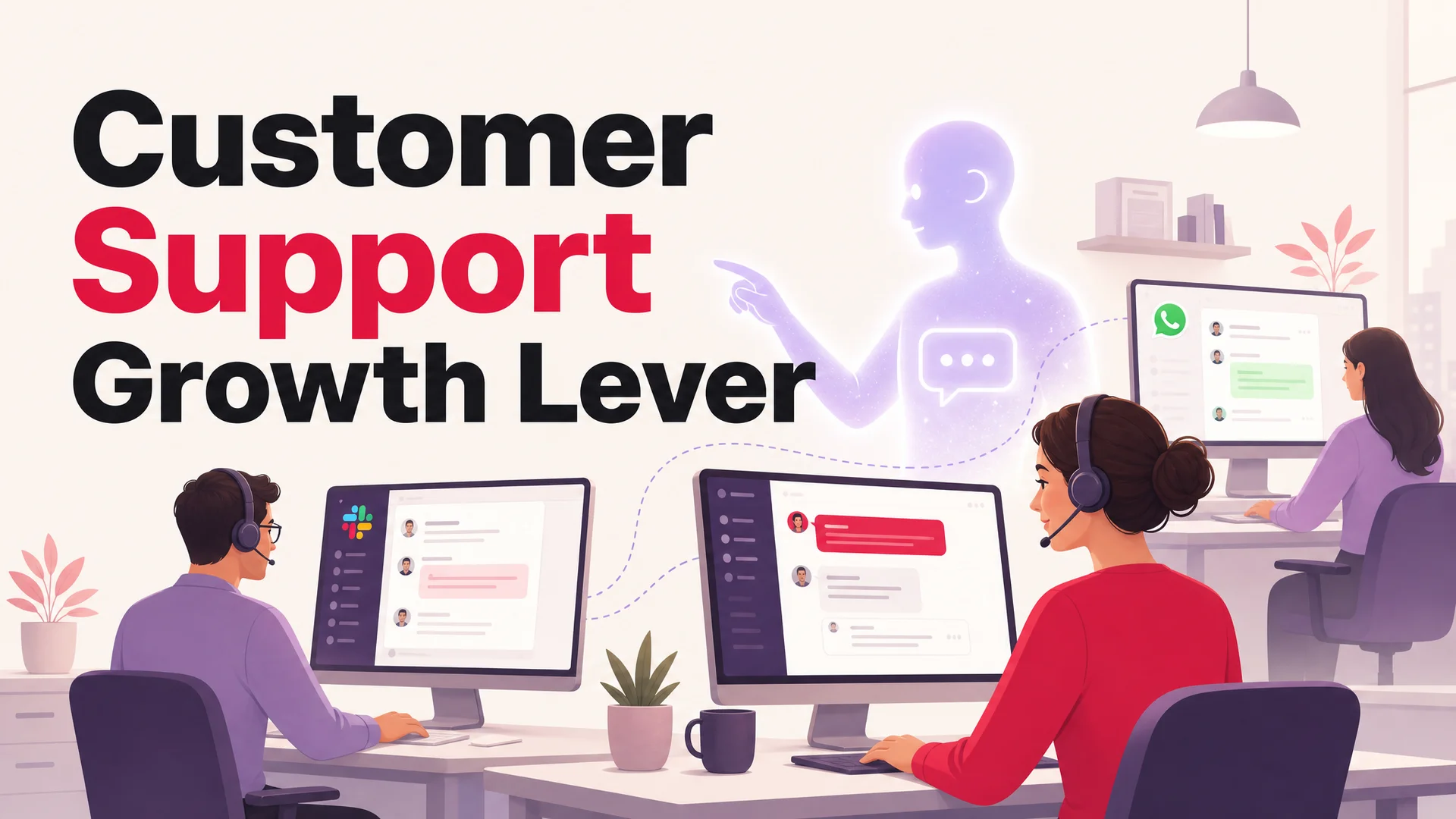
For most teams, the answer is the same. It's customer support. Support is where the cost of being slow, generic, or unavailable shows up directly in churn. It's also where AI's strengths - instant response, infinite parallelism, perfect recall over a 1M-token context - line up almost too neatly with what customers want. The same five questions, in fifty different phrasings, at every hour of the day, in every timezone you ship to. If your support team feels like it's bailing water out of a boat that keeps filling up, the question is no longer whether an AI agent should help - it's which agent, on which model, doing what.
Below are twelve concrete benefits that show up most often when a real support team - or a website - puts an AI agent to work in 2026. We'll skip the vague promises and stay close to what actually moves: cost per resolution, response time, agent capacity, and customer outcomes. We'll also touch on what the new generation of frontier and open-weight models - Claude Opus 4.7, GPT-5.5, Gemini 3.1, DeepSeek V4, GLM-5.1, Kimi K2.6, Qwen 3.6, MiniMax M2 - unlocks that wasn't possible even twelve months ago.
1. Coverage that doesn't sleep
It's 03:42 in São Paulo. A customer can't get past your checkout. They want to know if their card was charged twice. They are not going to wait until your London team logs on at 09:00 GMT.
An AI agent answers in five seconds, pulls the order from your billing system, confirms there was only one charge, and emails them a receipt. The customer goes to bed happy.
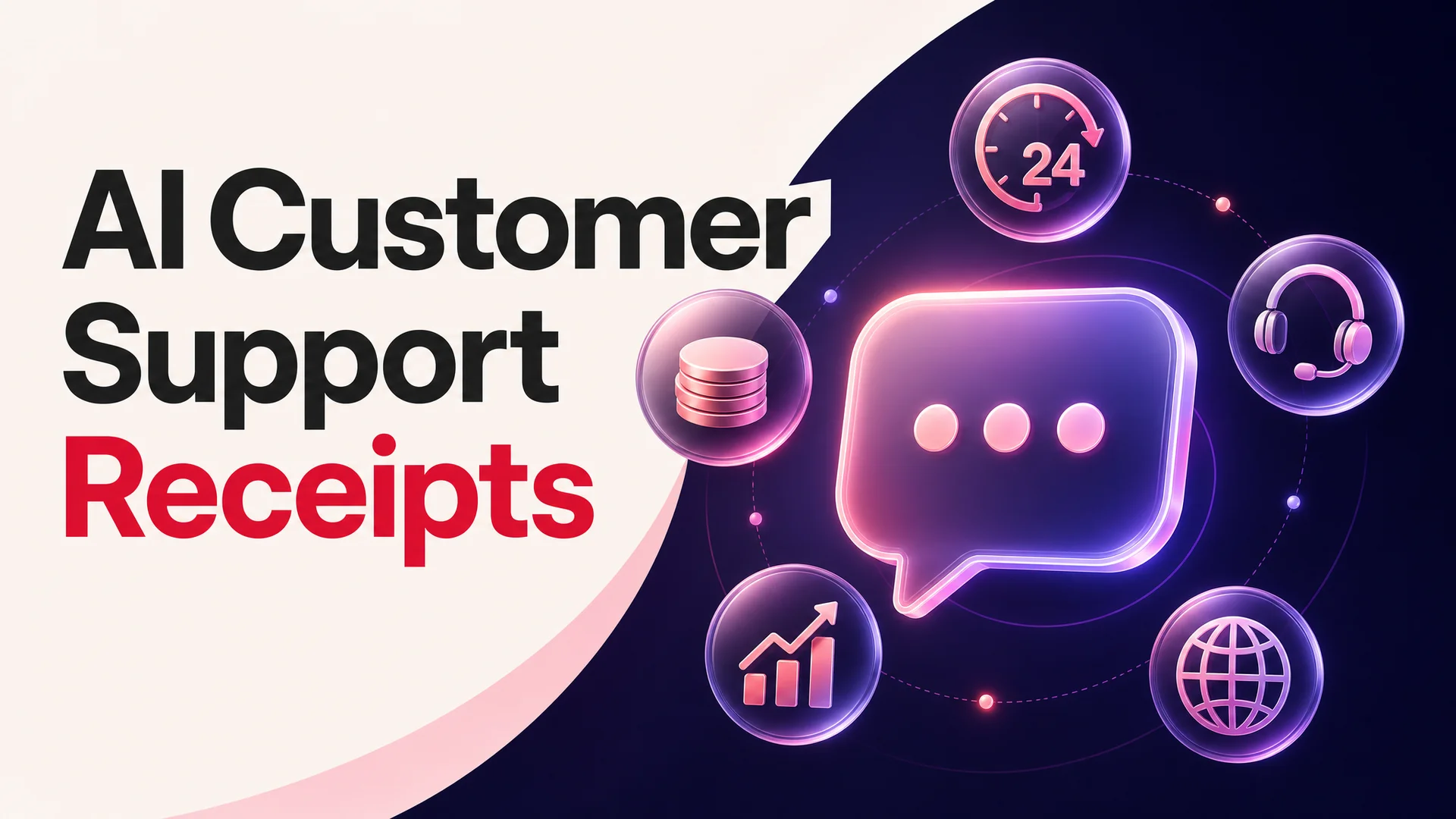
This isn't hypothetical. Most B2C and SaaS businesses ship to people whose waking hours don't overlap with the support roster. Roughly half of consumers now expect a business to be reachable around the clock, and an AI agent is the only way to meet that expectation without burning out a night shift or paying premium rates for a follow-the-sun BPO. For most SaaS and e-commerce businesses, off-hours volume is 30–50% of total tickets. Covering it with humans is expensive. Covering it with an AI agent is the default. Berrydesk agents inherit the uptime of whichever model they run on, so "always on" is the default, not a feature you have to engineer.
2. Sub-second responses, even at peak
Average human first-response time, across the industry, is still measured in hours. With models like Claude Opus 4.6, GPT-5.5, and DeepSeek V4 Flash, a Berrydesk agent typically responds in under a second - faster than a human can read the question, let alone type a reply. And it doesn't slow down when ten thousand people land on your site at once.
That parallelism is the part teams underestimate. A single Berrydesk agent can run thousands of concurrent conversations on the same infrastructure, with no queue, no "thanks for your patience," no degraded experience during a viral moment. Speed of response is consistently one of the strongest predictors of CSAT. When that variable goes from "hours" to "seconds" across your entire queue, the satisfaction lift compounds - and so does retention.
3. The cost math, honestly
Here is the part the hype usually skips: the actual unit economics.
A human-handled email ticket lands somewhere between $4 and $15 once you factor in salary, benefits, training, tooling, and overhead. A routine ticket - "where is my order," "how do I reset my password," "what's your refund policy" - handled by an AI agent on an open-weight frontier model lands closer to a fraction of a cent.
DeepSeek V4 Flash is priced at $0.14 per million input tokens and $0.28 per million output tokens. A typical support exchange is a few thousand tokens. Do the math and you'll see why even modest deflection rates pay back the entire deployment within weeks. MiniMax M2 sits at roughly 8% of Claude Sonnet's price at twice the speed, which means high-volume queues that used to be unthinkable on a frontier model are suddenly cheap.
The right pattern, in practice, is routing: send the easy 70% of traffic to a fast, cheap open-weight model like DeepSeek V4 Flash or MiniMax M2, and reserve Claude Opus 4.7 or GPT-5.5 Pro for the ambiguous escalations where reasoning quality changes the outcome. Most teams that adopt this pattern see total support costs drop 30–50% in the first quarter. That's before you account for the staffing math: one configured agent vs. a queue of trained reps who turn over every 18 months.
4. True concurrency
A senior support agent, on a great day, juggles maybe four chats at once before quality slips. An AI agent doesn't slip. It runs as many parallel conversations as your model provider's rate limits allow, and modern providers scale into the thousands of concurrent sessions per account.
The unlock here is twofold. First, average response time collapses from minutes to seconds, which itself drives measurable lifts in CSAT. Second, your human team stops drowning in the easy stuff. Most queues we see are dominated by short interactions - a question, a clarification, a confirmation, done in a handful of turns. When the agent handles those, your specialists get to focus on the messy 10% where empathy, judgment, and account context actually change the outcome.
5. Personalization that actually uses the data
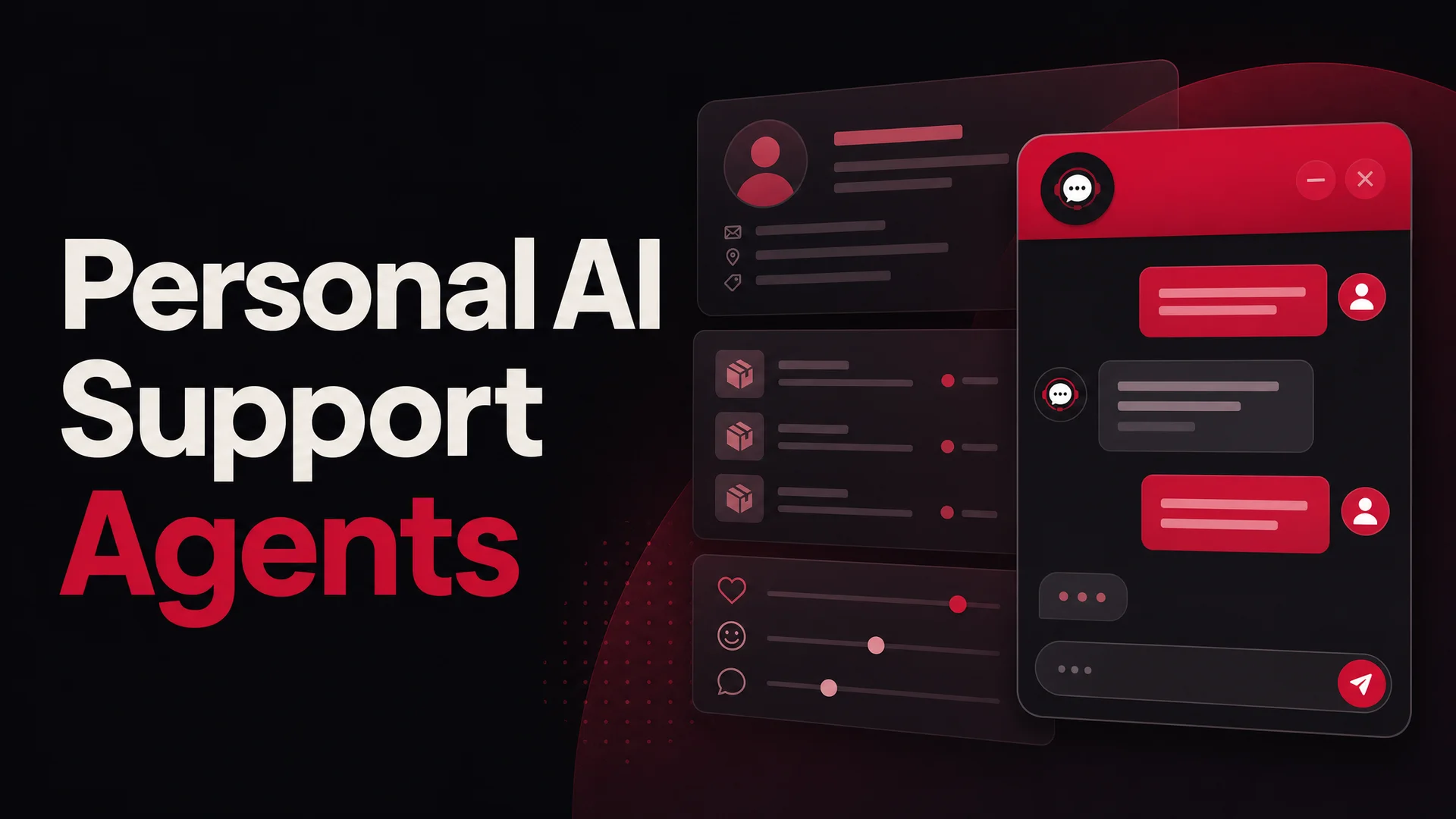
The cliché version of personalization is "Hi $FIRSTNAME." The 2026 version is an agent that has the customer's full order history, their last six tickets, their plan tier, and the docs page they were reading thirty seconds ago - all in the same context window. A barista who remembers your order is charming. A support agent who remembers every customer's order, plan, last conversation, and unresolved issue is a competitive advantage.
This is where the 1M-token context windows on Claude Opus 4.6, Sonnet 4.6, DeepSeek V4, and the 2M context on Gemini 3.1 Ultra change the conversation. You can now hold an entire customer's history, the relevant policy documents, and your full knowledge base in-context for a single turn. RAG goes from a hard architectural requirement to a tuning lever - useful, but no longer the only way to ground an answer.
The result is a level of personalization that older "chatbot" generations couldn't fake. The agent knows the customer is on the Pro plan, has a billing issue from last month that was refunded, and is asking a follow-up question - and it answers like a colleague who has actually read the ticket history. That feels less like marketing and more like a smart colleague who remembered. Customers notice.
6. Recommendations that close, not just suggest
A support conversation is the highest-intent moment a customer ever has with you. They've stopped browsing and started talking. An AI agent that can read purchase history and product data can suggest the right upgrade, the right replacement part, or the right add-on - in the moment, with context.
Crucially, this is no longer "show a banner." With AI Actions, the agent can quote, hold inventory, apply a discount, and complete the upsell inside the chat. The line between "support" and "sales" is no longer the bot's problem.
7. Lead capture without the form
Old-school lead gen: throw a form in front of someone, hope they fill it out, follow up tomorrow. The conversion math on that has gotten worse every year.
A conversational agent inverts the flow. It opens with a question relevant to where the visitor is on the site, captures intent in natural dialogue, and writes structured data straight into your CRM. With Berrydesk's AI Actions, the same conversation can also book a demo, send a quote, or kick off a payment - no human in the loop until the lead is qualified and warm.
What you hand sales is no longer a raw email address - it's a transcript, a qualification score, and the start of a relationship. For high-velocity B2B funnels, this often shows up as a 15–25% lift in MQL-to-SQL conversion, because the leads coming through are pre-screened.
8. Insight from every conversation, automatically
Every support ticket is a piece of voice-of-customer data. Most of it gets lost - too expensive to read, too unstructured to query. AI agents flip that. Conversations are summarized, tagged, clustered, and surfaced as themes: "37 customers this week hit a checkout error on Safari." "Refund requests are up 12% since the new pricing." Instead of running quarterly NPS surveys to guess at problems, you read the pulse of the product in real time.
Berrydesk's analytics roll up the top intents, deflection rates, escalation reasons, and the questions you don't have a good answer for yet. Product teams use that as a steady-state input to roadmap calls. Marketing uses it to spot positioning gaps. Support uses it to find the documentation holes that are driving avoidable tickets. It's the closest thing to a continuous, real-time voice-of-customer survey, and you don't have to send it.
9. Elastic capacity when the spike hits
Black Friday. A press hit. A product launch that ends up on Hacker News for six hours. The promo email that, against expectations, actually worked.
A human support team scales linearly with hiring. An AI agent scales with API capacity, which means you handle a 20× spike on Tuesday afternoon the same way you handle a quiet Sunday morning. No frantic recruiting, no "thanks for your patience, our queue is longer than usual" auto-replies, no churn from people who got frustrated and left. For seasonal businesses - retail, travel, tax software, anything with a predictable peak - this alone is often the ROI case.
10. A single, consistent brand voice - and fewer bad answers
Across a 30-person support team, you have 30 slightly different versions of how a refund policy gets explained, how a tone gets struck, how a compliment gets returned. That variability is mostly invisible to leadership and very visible to customers.
An AI agent speaks in exactly one voice - the voice you defined in the system prompt, refined against your style guide, and pinned in tests. The Monday-9am answer matches the Saturday-11pm answer. New hire onboarding doesn't degrade quality, because there is no new hire. The voice you ship is the voice every customer hears. This matters most for brands where tone is product: high-end consumer goods, fintech, healthcare, anywhere the texture of the conversation builds (or breaks) trust.
Humans also get tired. They forget the policy update from two weeks ago. They mix up two customers' details. They go off-script when they shouldn't. AI agents, properly grounded, don't have those failure modes. When you train your agent on your real documentation, real policies, and real product reference, every answer is anchored to the source material. You can wire the agent to refuse questions outside its scope, defer to a human on edge cases, and cite its sources so customers can verify.
11. One agent, every channel - and every language
Customers don't care that your help desk lives on a website. They want answers in Slack, in WhatsApp, in Discord, on the chat widget, in a Shopify storefront, sometimes via email. A Berrydesk agent deploys to all of those from one configuration. The brand voice is consistent, the knowledge base is the same, and the conversation history follows the customer across surfaces. You're not managing six bots - you're managing one agent that shows up in six places.
Multilingual coverage is no longer a premium feature either. Frontier models speak dozens of languages natively, with quality close to or matching a human translator. A Berrydesk agent can take a question in Portuguese, look up the answer in your English knowledge base, and reply in Portuguese - without you doing anything different. For routing routine traffic, DeepSeek V4 Flash at $0.14 / $0.28 per million tokens means you can serve a global audience without the cost calculus that used to kill the idea. For any business with even a modest international footprint, that single capability often justifies the deployment on its own.
12. Real actions, not just answers - plus privacy and security
The agentic shift is the part of 2026 that looks different from 2024. Models like Kimi K2.6, Claude Opus 4.7, Qwen3.6, and GLM-5.1 don't just answer - they take actions. With Berrydesk's AI Actions, that means an agent can:
- Look up an order and trigger a reship
- Process a refund through Stripe
- Book a meeting on your calendar
- Pull a customer's account state from your internal API
- Hand off cleanly to a human, with full context, when the situation calls for it
Kimi K2.6 can run 12-hour autonomous coding sessions and coordinate up to 4,000 steps; GLM-5.1 runs an 8-hour plan-execute-test-fix loop. The same reliability that lets them ship code lets them complete a refund flow without dropping a step. The agent stops being "a smarter FAQ" and starts being a tier-one rep that closes 70–80% of tickets without human involvement, end-to-end.
Regulated industries used to be the "we'd love to use AI but we can't send data out" segment. That's gone. MIT- and Apache-licensed open weights - GLM-5.1, Qwen3.6-27B, MiMo-V2-Pro - make on-prem and air-gapped deployments viable. PII redaction, role-based access, encryption in transit and at rest, and audit logs are now baseline. The compliance argument for keeping support fully manual is weaker every quarter.
Bonus: lower bounce rate, better SEO signal
For a website specifically, there's a quiet seventh-inning effect. Search engines have gotten more honest about engagement signals. Sessions where visitors scroll, click, and interact rank better than sessions that end in three seconds. A proactive agent - one that opens with a relevant question on the right page - keeps people on-site long enough to find what they came for. Bounce rate drops, average session duration rises, and the search ranking quietly follows. It's not an SEO hack; it's just the byproduct of a site that finally answers visitors instead of leaving them to fend for themselves.
What to watch out for
Three pitfalls worth flagging, because the hype skims past them:
Don't ship a single model for everything. A frontier-only deployment burns money on easy traffic. An open-weight-only deployment underperforms on hard traffic. The teams that win route - cheap and fast on the long tail, expensive and smart on the escalations.
Don't skip evaluation. An AI agent without an eval harness is a vibe. Capture conversations, label outcomes, run your prompt and model changes against a held-out set, and watch for regressions when you upgrade. The cost of a silent quality drop is high.
Don't treat AI Actions as a checkbox. Wiring booking, payments, refunds, and order lookups into the agent is where the deflection numbers actually move. Doing it well requires real auth, real idempotency, and real failure handling. The good news: with agentic models like Claude Opus 4.7 and Kimi K2.6, the model side is finally reliable enough that the engineering side becomes the gating factor - and that's a solvable problem.
How to start without overcommitting
A clean way in:
- Pick the model. Start with a strong default like Claude Sonnet 4.6 or GPT-5.5 for quality, or DeepSeek V4 Flash if cost is the priority. You can switch later.
- Train on your real content. Point Berrydesk at your help center, product docs, Notion workspace, Google Drive folder, and YouTube tutorials. The 1M-token context era means RAG is a tuning lever, not a hard requirement.
- Brand the widget. Match colors, voice, and tone so the agent reads as part of your product, not a bolted-on chatbot.
- Wire up two or three AI Actions. Order lookup, refund, and meeting-booking cover the majority of tier-one volume for most businesses.
- Deploy to your top channels. Website first, then Slack or WhatsApp depending on where your customers actually are.
Most teams are live in an afternoon, and reading their first batch of resolved-without-a-human conversations the next morning.
The outcome customers actually notice
Strip away the technology and the metric that matters is whether the customer walks away with their problem solved, fast, with no friction.
That is what every benefit above adds up to. Five-second responses at 3am. Personalized answers that feel like a colleague wrote them. Refunds processed in the same conversation where the question was asked. Consistent voice. No queue. No "let me transfer you to another department." The kind of experience customers used to associate only with the very best concierge brands, available now at the unit economics of an open-weight token.
AI support agents are no longer a bet on the future. They are a working line item on the P&L for serious support teams in 2026, and the gap between teams that have one and teams that don't is widening every quarter. The first version doesn't need to be perfect. Ship a small scope, measure deflection and CSAT, iterate on the prompt and the data, and expand from there. The compounding starts the moment you go live.
If you've been waiting for AI in support to feel "real" before you commit, the wait is over. Pick a model, point it at your knowledge, and put it on a channel - you can build a Berrydesk agent for free at berrydesk.com and have it live by the end of the afternoon.
 Berrydesk
Launch your AI agent in minutes
- Pick the model that fits - Claude Opus 4.7, GPT-5.5, DeepSeek V4, Gemini 3.1, or any other
- Train on your docs, sites, and Notion, then deploy to web, Slack, WhatsApp, and Discord
Set up in minutes

Chirag Asarpota is the founder of Strawberry Labs, the team behind Berrydesk - the AI agent platform that helps businesses deploy intelligent customer support, sales and operations agents across web, WhatsApp, Slack, Instagram, Discord and more. Chirag writes about agentic AI, frontier model selection, retrieval and 1M-token context strategy, AI Actions, and the engineering it takes to ship production-grade conversational AI that customers actually trust.