Customer support sits in an awkward spot inside most companies. It's funded like a cost center, staffed like an overflow valve, and measured like a call queue - even though it's the single function that talks to your customers more than any other.
That framing leaks into every decision. Tooling gets the leftover budget. Headcount lags ticket volume by a quarter. The team finds out about new features the same week customers do. Then leadership wonders why CSAT is flat and churn keeps creeping up in the wrong cohorts.
Support is not a complaints department. It's the live edge of your product. It's where positioning gets stress-tested in real conversations, where pricing pages either pay off or expose themselves, where churn either gets caught or quietly walks out the door. Done well, it bends retention, expansion, word of mouth, and even acquisition - because users who got rescued tell other users.
What changed in 2026 is that the cost of doing it well has collapsed. A single Berrydesk agent can hold an entire knowledge base in context with Gemini 3.1 Ultra's 2M-token window, route routine questions to DeepSeek V4 Flash at $0.14 per million input tokens, and reserve Claude Opus 4.7 - the SWE-bench Pro leader at 64.3% - for the complex, multi-step cases. The "should we invest in support" debate is over. The real question is what to actually do.
Here are fifteen moves that compound, ordered roughly from easy wins to deeper structural changes.
1. Build response recipes, not just canned replies
Most teams already have macros. Macros solve the typing problem; they don't solve the consistency problem. Two agents using the same macro can still produce wildly different conversations, because the macro is the body - not the opener, the framing, the escalation path, or the things you absolutely should not say.
Replace canned replies with internal "response recipes" for your top twenty issues. Each recipe should include a plain-language explanation of the underlying problem, a suggested reply structure (acknowledgement, root cause, fix or workaround, follow-up), internal notes on when to escalate, which team to loop in, and the phrasing landmines to avoid. New hires ramp faster. Senior agents stop reinventing the wheel. Most importantly, the same customer talking to three different reps over a month gets a coherent story instead of three different ones.
2. Collect feedback inside the conversation, not after it
The standard pattern is a survey email a day later asking "How did we do?" That gets you a 7% response rate from the people who already loved or hated the experience, and silence from everyone in the middle - which is most of your traffic.
Move the feedback surface inside the support flow itself. A thumbs reaction on a chat message. A two-tap rating right after a resolution. A "Was this helpful?" under every knowledge base article that ranks responses by ticket frequency. You'll catch friction the same hour it happens, and you'll see patterns weeks before the survey data would have surfaced them. In-context feedback is also dramatically less biased - you're asking about the moment, not the memory of the moment.
3. Run a public "known issues" log
Internal incident trackers are useful. Customer-visible ones are transformative. A lightweight status page or in-app banner that says "we know about this, here's where we are, here's the ETA" does three things at once: it cuts duplicate ticket volume sharply, it reassures users that you're not pretending the bug doesn't exist, and it gives your team a citation to point at instead of typing the same explanation forty times.
Keep the language human. "Stripe payments are failing for EU cards because of a webhook timeout - engineer is on it, ETA 30 minutes" beats "We are investigating a payment processor anomaly" every single time. Users do not punish honesty. They punish vagueness.
4. Audit the conversations that quietly died
Every support team measures the tickets they closed. Almost no team measures the ones the customer abandoned. A "Thanks, I'll figure it out" followed by silence is not a resolution - it's churn risk dressed up as politeness.
Once a month, sample fifteen conversations that ended without a clear fix. Read them in full. Look for the exact moment the conversation broke down: was the explanation too jargon-heavy, did the agent ask three questions in one message, did the customer ghost after a long wait, did the resolution depend on something only engineering could provide and the loop was never closed? You're not grading agents. You're identifying the structural reasons quiet failures happen, and most of them turn out to be process, not people.
5. Loop support agents into the product roadmap
Support agents hear what's broken before anyone else and learn what's shipping after almost everyone else. That asymmetry is silly. A frontline rep who knows what's coming next quarter answers customer questions completely differently - "we hear you, that's actually being addressed in the next release" lands ten times better than "I'll pass that along to the team."
Bring support into roadmap reviews. Not just the feature list, but the why behind each item, the edge cases the PM is worried about, and the language marketing is going to use externally. The payoff is twofold: support reps sound like insiders instead of intermediaries, and the roadmap itself gets sharper because the people closest to the user can flag, in real time, when a planned feature is solving the wrong problem.
6. Maintain a living glossary
Pricing calls a thing one name. The product team uses an internal codename. Marketing has a third version on the website. Support inherits all three and picks whichever felt most natural in the moment, which means the customer hears a fourth.
Fix this with a short, living glossary that defines every product noun, acronym, feature flag name, and process term. Keep it in a shared doc that anyone can edit. Pin definitions of things customers consistently misunderstand - billing cycles, plan tiers, "seats" vs "users" vs "agents" - and update it when product renames anything. Consistency in language compounds into consistency in experience, because your customer is not getting confused by your product as much as they're getting confused by your inconsistent vocabulary about your product.
7. Tier escalations by customer, not just by issue
Most escalation rules are built around the ticket: severity, category, SLA. That's necessary but insufficient. A login issue from a high-LTV enterprise customer in a renewal window is not the same ticket as a login issue from a free trial signup who hasn't opened the product yet, even if the underlying bug is identical.
Layer customer profile data onto your routing logic. Plan tier. Lifetime value. Days into a contract. Recent ticket history. A customer who has had three frustrating tickets in two weeks should not get the same first-touch experience as a happy customer reporting a typo. This isn't about treating people unequally - it's about being honest that your relationship with each customer has a different shape, and the support experience should reflect that. In Berrydesk you can pass these signals to your AI agent as conversation metadata and let it route or escalate accordingly.
8. Hold quarterly UX debriefs between support and product
Support tickets are full of UX gold, but most of it is locked inside individual conversations and never makes the trip to the product org. A quarterly UX debrief - ninety minutes, one slide per pattern, narrated by the people who actually fielded the tickets - fixes that.
Walk product through the recurring confusions. Show them the dropdown that nobody understands, the empty state that gets misread, the modal that triggers the same question every week. Don't ask for a redesign. Ask for the smallest possible change that would prevent the next thirty tickets. Most of these turn out to be one-line copy changes, a different default, or a tooltip - fixes that ship in a day and quietly remove tickets forever.
9. Train agents to read tone, not just text
What a customer says is half the signal. How they say it is the other half. A short message can be calm or seething; an apologetic one can be patient or about to churn. Agents who read tone well sound dramatically more human, even when the underlying answer is the same.
Train the team to spot frustration, sarcasm, urgency, and confusion as separate flavors that demand different responses. Frustration wants acknowledgement before solutions. Confusion wants a slower pace and more structure. Urgency wants the answer first and the explanation second. Skepticism wants options, not assertions. Modern AI agents - Claude Opus 4.7, GPT-5.5, Kimi K2.6 - pick up on these cues natively, which means you can also encode tone-based routing into your Berrydesk agent: if the user's first message is high-urgency, escalate immediately to a human; if it reads as exploratory, let the AI handle it end-to-end.
10. Build a "no contact needed" help layer
Every contacted ticket is a small UX failure somewhere upstream. Most of them shouldn't have needed a human at all - the user just couldn't find the answer fast enough on their own.
Build the help surfaces that make contact unnecessary. Inline tooltips on the fields people get stuck on. A search box in your help center that ranks results by ticket frequency rather than alphabet. Error messages that explain the fix instead of saying "something went wrong." A Berrydesk agent embedded directly in the product UI, trained on your docs and site, that can answer "how do I cancel my plan" without the user ever opening a new tab. Done well, this layer doesn't replace support - it deflects the easy stuff so support has time to do the hard stuff well.
11. Treat tickets as product intelligence
Tickets are the most honest qualitative data your company has. They're unprompted, unincentivized, and tied to real moments of friction. If your team is closing them and moving on, you are leaving the most valuable signal in the company on the floor.
Tag every ticket with a small set of pattern labels - "billing surprise," "onboarding confusion," "feature discoverability," "integration broke." Don't over-engineer the taxonomy; ten to fifteen tags is plenty. After a quarter, those tags become a heatmap of where your product, marketing, and pricing are quietly underperforming. Send the report to product and marketing every month. They'll either fix the source or, more interestingly, realize that the thing you're calling a support problem is actually a positioning problem.
12. Peer-review support replies the way you peer-review code
Engineering teams instinctively review each other's pull requests. Support teams almost never review each other's responses, even though those responses are the company speaking to its customers in writing.
Set up a lightweight peer review: one reply per agent per week, read by a teammate, with a few honest sentences of feedback. Was the tone right? Was anything left ambiguous? Could it have been half as long without losing meaning? Did the issue actually get closed, or did the agent leave a hanging thread? You don't need rubrics or scorecards. You need the small social pressure of knowing a colleague will read your work, which by itself raises the bar across the team without anyone needing to be a manager about it.
13. Make leaders shadow the queue every month
The fastest way for executives to lose touch with reality is to stop reading tickets. The fastest way to fix it is to put them back in the queue, briefly, on a regular cadence.
Once a month, have a product manager sit in on live chats. Have a marketer read transcripts for an hour. Have an engineer answer five tickets with an agent looking over their shoulder. None of this requires a permanent shift in responsibilities - what it requires is the periodic reminder that the words on the marketing site, the dropdown labels in the product, and the policies in the help center all land somewhere, on someone, who has feelings about it. Empathy is not a trait. It's a habit, and habits decay without practice.
14. Encode complex issues as decision trees
Some support issues genuinely have one answer. Many do not - the right reply depends on the customer's plan, their integration, their browser, their region, their billing status. Asking agents to memorize every fork is unrealistic, and asking them to improvise produces inconsistency.
Build decision trees for the messy, branching issues. Each tree starts with a question, walks through the forks, and ends with a specific action. Document them once, and the same logic that helps a new agent answer correctly is also the logic you can hand to your Berrydesk AI agent as a structured workflow. The cognitive load on humans drops, the answer quality goes up, and the same playbook now runs at machine scale on the AI side.
15. Stop treating AI as optional
Be blunt about this one. AI in customer support is no longer a "future-of-work" essay topic - it's a baseline. Companies that haven't deployed an AI agent on their support stack in 2026 aren't being cautious; they're being passed.
The reason is the underlying tech finally caught up to the marketing. The current generation of frontier models - GPT-5.5, Claude Opus 4.7, Gemini 3.1 Ultra - handle nuance, tone, multi-turn reasoning, and tool use at a level that was science fiction eighteen months ago. The open-weight frontier - DeepSeek V4, GLM-5.1, Kimi K2.6, Qwen 3.6, MiniMax M2.7, Xiaomi MiMo-V2-Pro - has collapsed the cost side. A reasonable Berrydesk deployment in 2026 routes routine traffic to a cheap, fast open model and reserves the closed frontier for hard escalations, often paying single-digit cents per resolved conversation end-to-end.
This is not about replacing your team. It's about removing the bottom 60% of repetitive interactions from human queues so your team has the bandwidth to do the hard, high-empathy work well. The "where is my order" tickets, the "how do I reset my password" tickets, the "do you support X integration" tickets - those should all be answered in seconds, at any hour, with full context, by an AI agent. Your human reps should be working on the cases where judgment, empathy, and creative problem-solving actually matter.
Why this is one of the highest-leverage upgrades you can make right now
The substance of what AI does for support, in concrete terms:
- It scales without queue. A single Berrydesk agent can handle thousands of concurrent conversations across web, Slack, Discord, and WhatsApp without breaking a sweat. There is no "support is closed" message at 2 a.m. anymore.
- It is genuinely consistent. Tone, accuracy, and adherence to policy don't drift across the day. There are no Friday-afternoon replies versus Monday-morning replies. The hundredth answer is as clean as the first.
- It carries context. With 1M-token context windows on Claude Sonnet 4.6 and DeepSeek V4, and 2M on Gemini 3.1 Ultra, the agent can hold the full conversation history, your knowledge base, and your policy docs in memory simultaneously. RAG becomes a tuning lever instead of an architectural mandate.
- It learns. You retrain on the conversations that went well, the documentation you just updated, the policies that just changed. The agent gets better the same week your product does, not a quarter later.
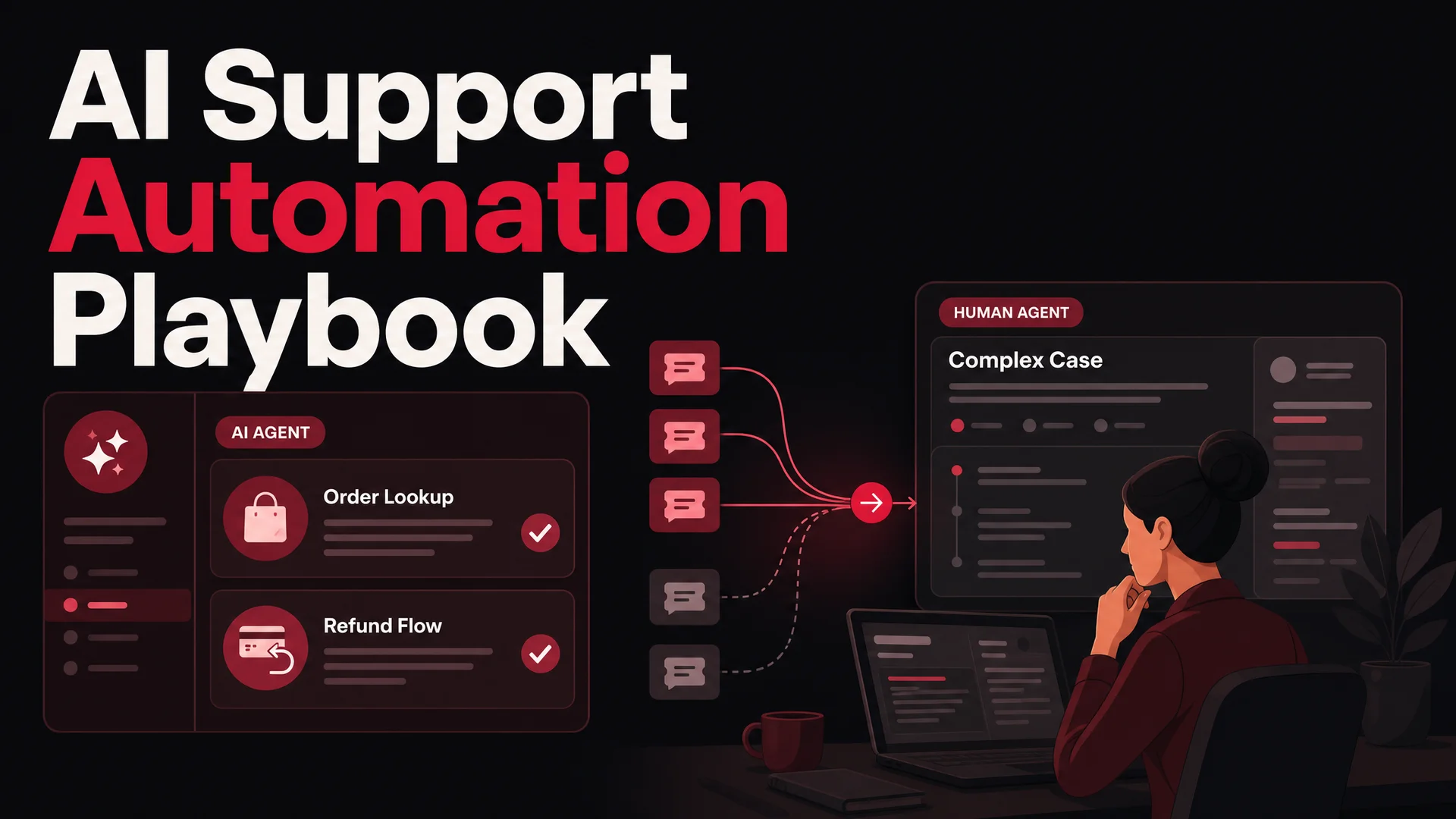
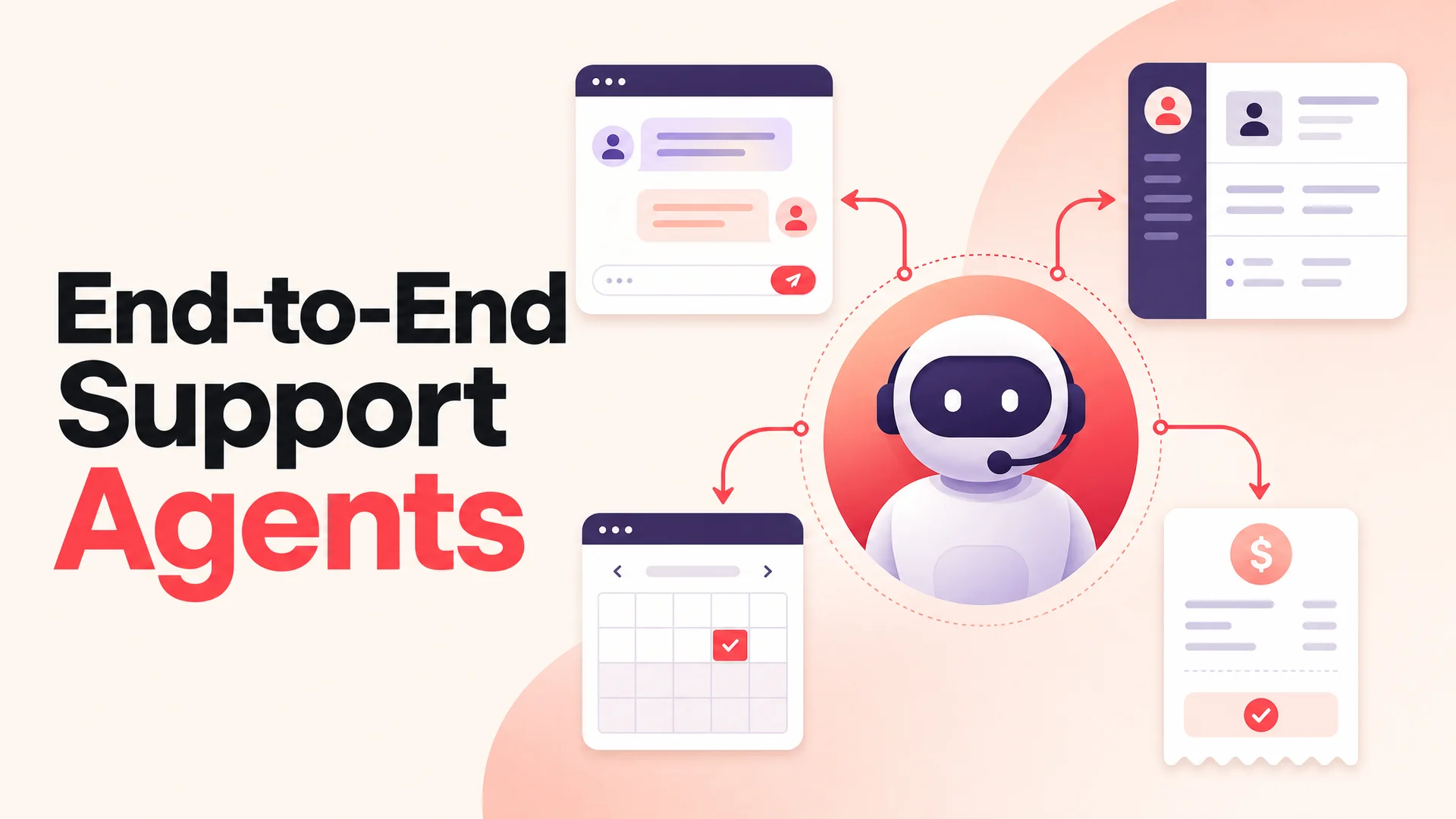
- It takes action. This is the part that moved in the last twelve months. Modern agentic models - Claude Opus 4.7, Kimi K2.6 with its 4,000-step coordinated task chains, GLM-5.1 with its 8-hour autonomous loops, Qwen3.6, MiMo-V2-Pro - handle multi-step tool use reliably. In Berrydesk that translates to AI Actions: looking up an order, processing a refund, rescheduling a booking, checking a payment status, kicking off an internal workflow. The agent isn't just talking; it's resolving.
What to watch out for
A few traps worth flagging before you ship.
The first is over-trusting a single model. Frontier models are excellent and expensive; open models are excellent and cheap, but each has its own strengths. A smart Berrydesk setup routes intent-classified traffic - easy FAQ to a fast cheap model, complex multi-step resolutions to a frontier reasoner, regulated or air-gapped workloads to a self-hosted MIT-licensed model like GLM-5.1 or Qwen3.6-27B. Do not commit your entire support stack to one provider's pricing curve.
The second is shipping AI without guardrails on its actions. An agent that can issue refunds is also an agent that can mistakenly issue refunds. Scope AI Actions tightly, log everything, and require human confirmation for anything irreversible above a threshold. Your AI should be able to look up an order without confirmation and process a $5,000 refund only with one.
The third is forgetting the handoff. The single biggest predictor of CSAT in AI-assisted support is not the AI's accuracy - it's the smoothness of the escalation when the AI hits its limit. The handoff to a human should carry full conversation context, the AI's best guess at what the user needs, and zero "please repeat yourself" friction. If your handoff feels like starting from scratch, your customers will hate the AI even when it was right.
Start small, then scale
You don't need to overhaul the support org overnight. Pick the ten questions you answer most. Train a Berrydesk agent on your docs, site, and Notion. Deploy it on the website and watch what happens for two weeks. Layer in AI Actions for the obvious flows - order lookup, booking, password reset. Move it into Slack, Discord, or WhatsApp once the web channel is solid. Each step is reversible and each step compounds.
Berrydesk is built for this on-ramp. Pick a model - GPT-5.5, Claude Opus 4.7, Gemini 3.1 Ultra, DeepSeek V4, Kimi K2.6, GLM-5.1, Qwen, MiniMax - train it on your knowledge sources, brand the widget to match your product, wire up AI Actions for the workflows that matter, and ship. No code, no model-ops team, no six-month rollout. Build your support agent for free at berrydesk.com and let the FAQs answer themselves while your team focuses on the conversations that actually need a human.
 Berrydesk
Launch a support agent that resolves, not just replies
- Train on your docs, site, Notion, and Drive in minutes
- Wire up bookings, refunds, and order lookups as AI Actions
Set up in minutes

Chirag Asarpota is the founder of Strawberry Labs, the team behind Berrydesk - the AI agent platform that helps businesses deploy intelligent customer support, sales and operations agents across web, WhatsApp, Slack, Instagram, Discord and more. Chirag writes about agentic AI, frontier model selection, retrieval and 1M-token context strategy, AI Actions, and the engineering it takes to ship production-grade conversational AI that customers actually trust.