Picture the moment a customer hits a wall. A subscription billed twice. A package routed to the wrong city. A coupon code that quietly stopped working between the cart page and checkout. They want resolution, but underneath that, they want to feel like the company on the other end of the chat actually knows who they are. Generic FAQ pages do not pass that test. Neither does a scripted bot that asks for an order number the customer has already typed twice.
This is where modern AI support agents have changed the game. Not the brittle, decision-tree chatbots of the early 2020s, but the new class of agents built on frontier reasoning models with million-token context windows, native tool use, and the ability to look at a returning customer and respond as if they have been the account manager all along. Personalization has shifted from a marketing buzzword to an operational lever - one that directly moves CSAT, retention, and LTV.
This article walks through how that actually works in 2026, what an AI agent has to do under the hood to feel personal, where the trade-offs sit, and how to think about deploying one without falling into the common traps. By the end, you should have a sharp mental model of what a "personalized AI support experience" really requires - and what to demand from any platform claiming to deliver it.
What an AI Support Agent Actually Is in 2026
An AI support agent is a software system that holds a conversation, takes actions on behalf of a customer, and grounds its answers in your company's documents, policies, and live business data. The category covers a wide spectrum, from thin wrappers around a single model up to fully agentic systems that plan multi-step workflows, call APIs, and verify their own output before answering.
The substrate has shifted dramatically. A chatbot in 2022 was usually a rules engine plus some intent classification, with a thin language model bolted on for paraphrasing. A support agent in 2026 sits on top of frontier LLMs - Claude Opus 4.7 (currently leading SWE-bench Pro at 64.3% for complex reasoning), GPT-5.5 with parallel reasoning chains, Gemini 3.1 Ultra with a 2M-token context window - and increasingly on open-weight frontier models like DeepSeek V4, Moonshot's Kimi K2.6, Z.ai's GLM-5.1, Alibaba's Qwen 3.6 family, and MiniMax M2.7. Open weights matter more than they look at first glance: DeepSeek V4 Flash runs at $0.14 per million input tokens, which means routine "where is my order" traffic can be resolved at fractions of a cent each while reserving the premium models for hard escalations.
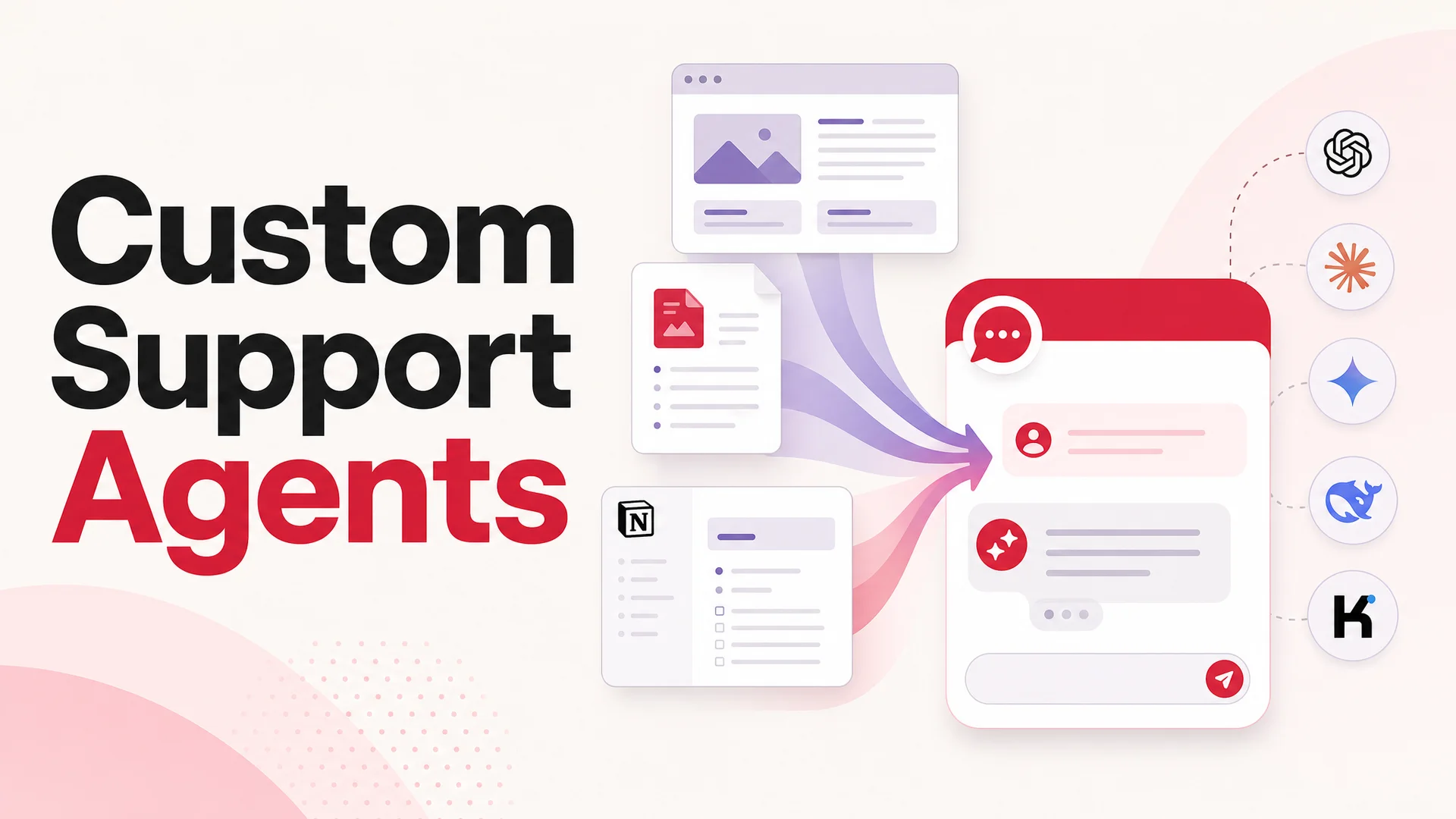
Berrydesk lets teams build on any of these - pick a model, train it on your docs, websites, Notion, Drive, or YouTube, brand the widget, wire up AI Actions for things like booking and refunds, and ship it to your site, Slack, Discord, WhatsApp, or wherever your customers live. The model is no longer the constraint. The personalization layer is.
Why Personalization Stopped Being Optional
For roughly fifteen years, consumers have been living inside personalized digital experiences. Streaming services that learn taste, marketplaces that surface the right product before you finish typing, social feeds that adapt to your dwell time. The ambient expectation is that any service worth using will remember who you are between sessions and tailor itself accordingly.
When that expectation hits a support channel that does not meet it, the friction is loud. A customer who has spent four years on your highest plan, opened thirty tickets, and has an open feature request does not want to be asked to "describe your issue and provide your account email." That interaction tells them you do not actually have your house in order - and worse, that you do not consider their history with you to be load-bearing.
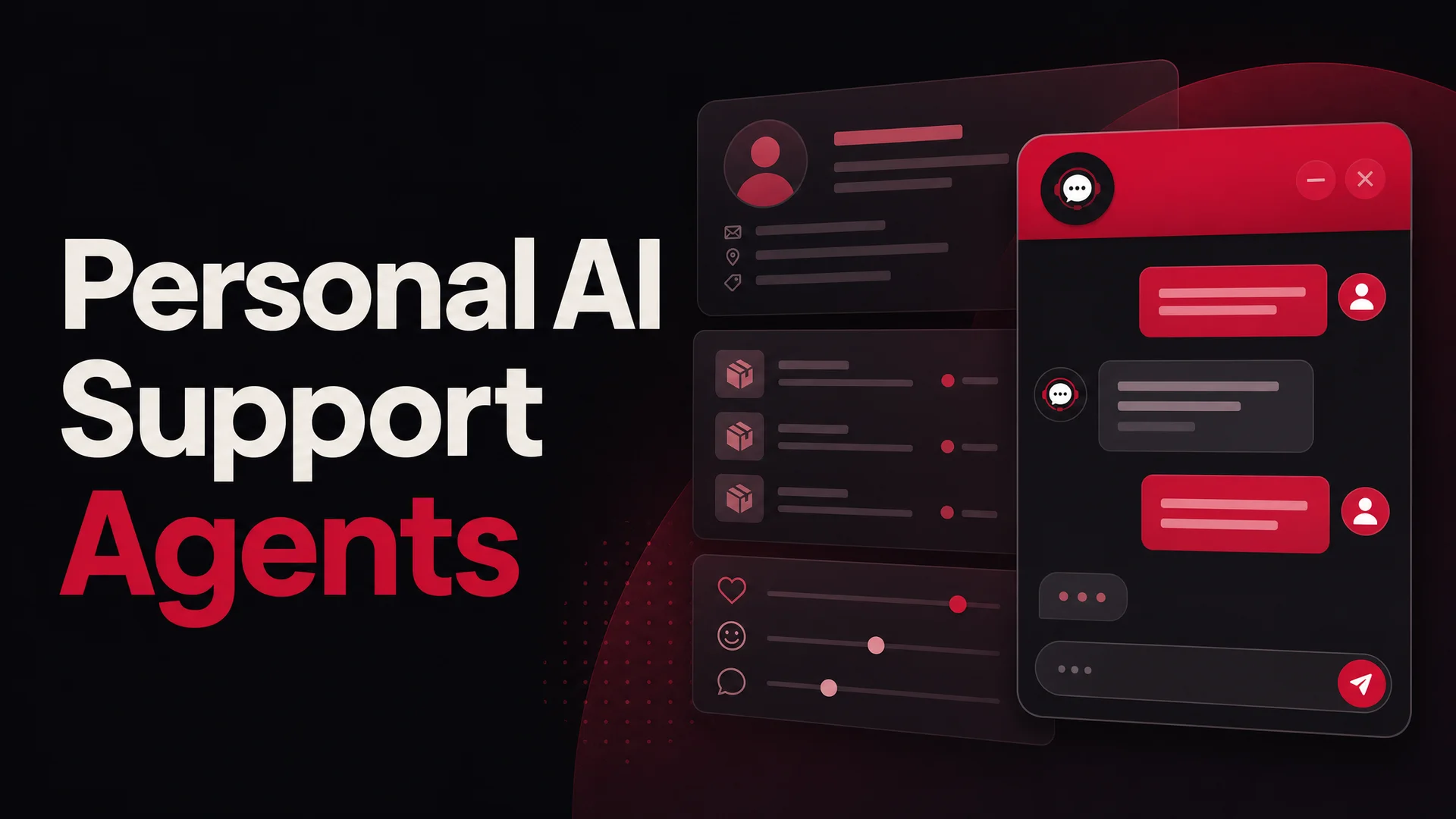
Personalized service flips this. When an agent opens a chat with context - "Hi Maria, I see your renewal is on the 14th and your last ticket was about webhook delays. Is this related?" - three things happen at once. The customer feels recognized, the time-to-resolution drops because half the discovery is already done, and the trust signal compounds across the relationship. Repeat-purchase rate, NPS, and renewal probability all move with that signal. Internal teams feel it too: when the agent surfaces context, human escalations arrive pre-summarized instead of as a cold open.
There is a brand layer beneath this as well. Companies known for personalized support - across industries from premium hospitality to B2B SaaS - get described as customer-centric in ways that competitors with bigger marketing budgets cannot buy. The category leaders in any vertical tend to be the ones whose support feels uncannily attentive, and that reputation is now downstream of how well their AI layer is wired up, not just how well-trained their human team is.
How a Modern AI Agent Personalizes a Conversation
Personalization in 2026 is not a single trick. It is the layered output of several mechanisms working in concert. Understanding the layers is the difference between buying a tool that genuinely personalizes and one that just looks personal in a demo.
Multi-source context ingestion
The agent has to know things - about your product, your policies, and the specific customer in front of it. Berrydesk pulls this from your knowledge base, your live website, structured systems like Notion and Google Drive, and even YouTube transcripts for video walkthroughs. On top of that static knowledge, customer-specific context flows in from your CRM, billing system, and order database via integrations or AI Actions. The result is an agent that can simultaneously reason about a refund policy, the customer's specific subscription tier, and the three previous tickets they opened last quarter.
Long context replacing brittle retrieval
For most of the last few years, retrieval-augmented generation was the only way to feed a model enough context to be useful - chunk the docs, embed them, search for the relevant snippets, stuff the top results into the prompt. RAG still has a place, but the calculus has changed. Claude Opus 4.6 and Sonnet 4.6 ship with a 1M-token context window at no surcharge, DeepSeek V4 Flash is 1M, and Gemini 3.1 Ultra is 2M. That is enough to hold an entire mid-sized knowledge base, the customer's full conversation history, and the relevant policy documents in-context at once. RAG becomes a tuning lever rather than a hard requirement, and the difference shows up in the answers - fewer "I could not find that in our documentation" misses on questions that span multiple sources.
Natural language understanding that picks up tone
The frontier of NLP has moved past parsing intent into modeling tone, urgency, and sentiment. Modern agents register frustration in a customer's phrasing and modulate accordingly - slowing down, acknowledging the friction explicitly, and routing to a human earlier when the signal calls for it. They handle code-switching across languages, recognize sarcasm and rhetorical questions, and can adapt formality to match the brand voice you trained on. This is not a single setting; it falls out of using a strong model and grounding it in enough examples of your own voice that it picks up the cadence.
Personalized recommendations and proactive nudges
Beyond answering questions, a well-built agent recommends. If a customer asks about a feature limit, it can flag the relevant plan upgrade - but only when the math actually supports it. If a returning customer is browsing accessories for a product they already own, the agent can surface the compatible options. The discipline here is restraint: the moment recommendations feel like upsell pressure rather than service, the trust signal flips. Good agents are tuned to recommend when it helps the customer, not when it helps the quota.
AI Actions - the difference between a chatbot and an agent
The biggest shift this year is the maturation of agentic tool use. Models like Claude Opus 4.7, Kimi K2.6 (which can run autonomous coding sessions for twelve hours and coordinate up to 300 sub-agents), GLM-5.1 (which runs an eight-hour plan-execute-test-fix loop), and Qwen 3.6 have made AI Actions reliable enough for production. That means an agent can actually book the demo, process the refund, change the shipping address, schedule the callback - not just describe how the customer can do those things themselves. Berrydesk's AI Actions framework wires this into bookings, payments, order lookups, and arbitrary internal APIs. When an agent can both understand and act, personalization stops being a cosmetic layer and becomes operational.
CRM and platform integration
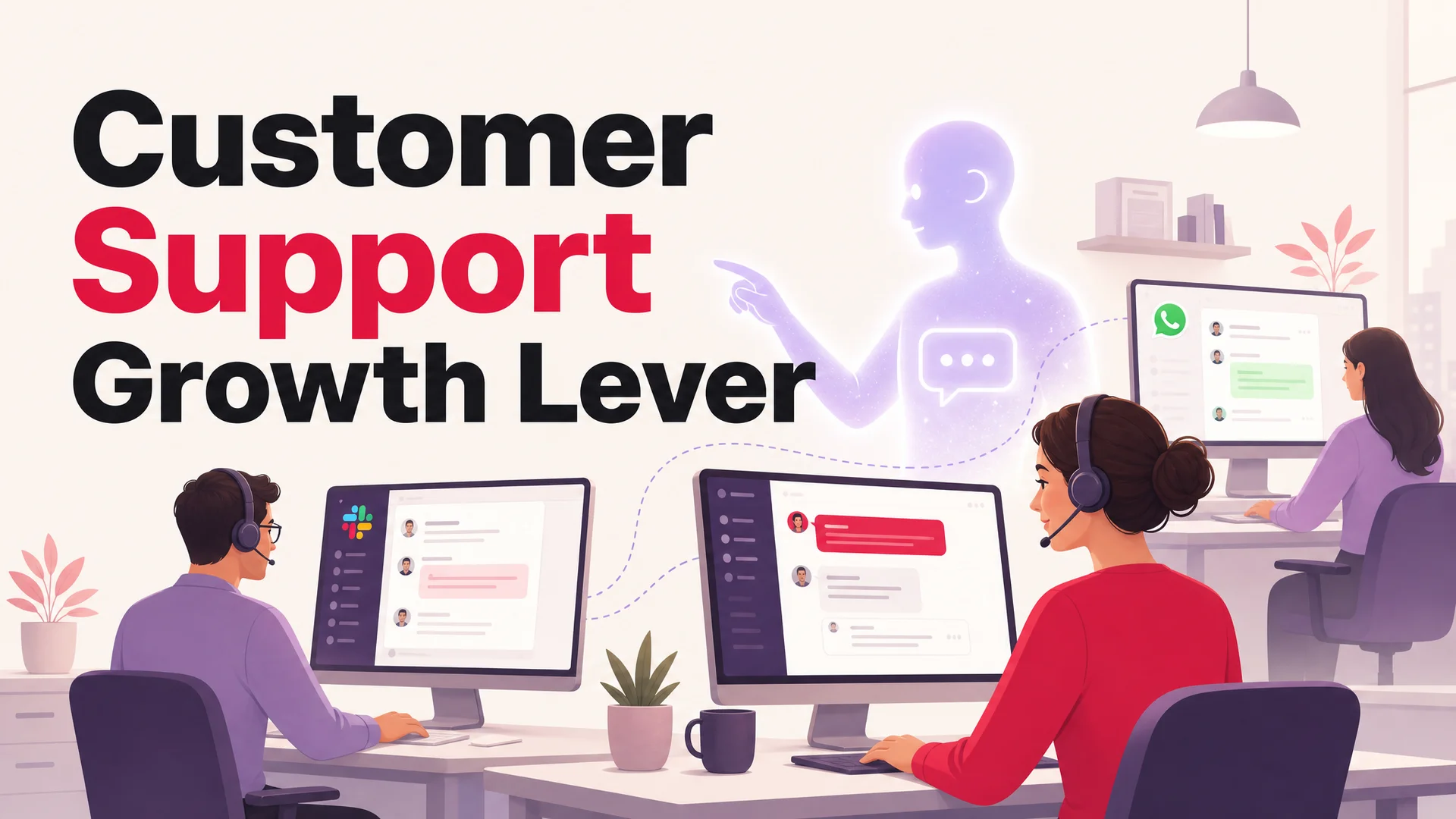
None of the above works in isolation. The agent needs a coherent view of the customer across every channel they use. A conversation that started on the website widget should pick up seamlessly when the customer DMs your Slack community, replies to a WhatsApp campaign, or opens a Discord ticket. Berrydesk deploys to all of those, and surfaces the same agent identity, knowledge, and conversation history in each - so personalization holds across the whole journey rather than resetting at every channel boundary.
The Real Benefits
Sharper experience, end to end
When the agent opens with context and resolves in turns instead of paragraphs, the experience tightens. Average handling times drop, deflection rates climb, and the proportion of conversations that need human escalation falls. The handoffs that do happen are pre-loaded with context, so the human picks up a warm conversation instead of a cold ticket.
True 24/7 coverage
Frontier-grade reasoning, instantly, at 3am, in eleven languages, on a public holiday. The economics of staffing a global support team for that kind of coverage have always been brutal. AI agents do not solve every escalation, but they can absorb the long tail of routine and semi-routine traffic that would otherwise either wait or never get answered.
Cost per resolution that finally pencils out
This is where the May 2026 model landscape matters most. A typical Berrydesk deployment can route the bulk of routine traffic to DeepSeek V4 Flash or MiniMax M2 - open-weight models priced at fractions of a cent per resolution - and reserve Claude Opus 4.7, GPT-5.5 Pro, or Gemini 3.1 Ultra for the genuinely hard escalations where the reasoning depth is worth the unit economics. MiniMax M2 ships at roughly 8% the price of Claude Sonnet at 2x the speed. The cost story has flipped: it is now cheaper to over-serve customers with AI than to under-serve them with thin human staffing.
Predictive engagement
Agents tuned on transactional and behavioral data can reach out before the customer files a ticket. Renewal nudges before lapse, proactive shipping updates when carrier APIs flag a delay, "we noticed you started this and stopped" prompts when a high-value flow is abandoned. Done well, these are net-helpful and warmly received. Done poorly, they read as surveillance - the difference is in calibration, not in the underlying technology.
What to Watch Out For
Hallucinations on the edge cases
Even frontier models invent confidently when the prompt drifts outside their training. A support agent that hallucinates a refund policy is worse than no agent at all. The mitigations are real but require discipline: ground every factual claim in retrievable source documents, design the system prompt to refuse out-of-scope questions cleanly, and instrument the conversation log to catch drift early.
Maintenance debt
A live agent is a moving target. Products change, policies change, models get deprecated, and the conversation patterns of your customer base shift. Plan for ongoing tuning the same way you plan for product updates - not as a launch event. Berrydesk surfaces conversation analytics and quality signals so the maintenance loop is observable instead of invisible.
Privacy and data residency
Handling customer data through any LLM stack means thinking carefully about where the data goes, how long it is retained, and which providers see it. The MIT- and Apache-licensed Chinese open-weight models (GLM-5.1, Qwen 3.6, MiMo-V2) have made on-prem and air-gapped deployments genuinely viable for regulated industries - which is a real escape hatch for teams that cannot send customer conversations to a third-party API at all.
The uncanny-valley risk
A bot that pretends too hard to be human, or oversteps into overly familiar territory, can read as creepy rather than helpful. The best agents identify themselves clearly as AI, hand off to humans without ego when the conversation calls for it, and avoid mimicking emotional intimacy they have not earned. Personalization is about being useful and recognized, not about pretending to be a friend.
Open Weights vs Closed Frontier - The Choice That Now Matters Most
A year ago this section would have been short. Today, the open-weight frontier is genuinely competitive on benchmarks, costs roughly an order of magnitude less, and lets you keep data in your own perimeter. GLM-5.1 scores 58.4 on SWE-Bench Pro - ahead of GPT-5.4 and Claude Opus 4.6 on that specific test. Qwen3.6-27B is a 27-billion-parameter dense model that reportedly beats some 397B MoE rivals on agentic coding benchmarks, and runs comfortably on a single high-end GPU.
The right answer for most support deployments is not "pick one." It is to route. Cheap, fast open models handle the long tail of straightforward queries. Frontier closed models handle the complex policy edge cases, the multi-step refund logic, the empathetic de-escalation. Berrydesk supports both ends of that spectrum natively, so the routing decision is a configuration, not a re-architecture.
Where This Is Heading
Three trend lines are converging. Context windows keep widening - the 2M tokens in Gemini 3.1 Ultra will look small in a year. Tool-use reliability keeps climbing, which is collapsing the gap between "describe the action" and "perform the action." And cost-per-token on open-weight frontier models keeps falling on a curve that does not show signs of flattening.
The practical consequence is that "personalized AI support" stops being a competitive differentiator and starts being table stakes. Companies whose support feels generic, scripted, or amnesiac in 2027 will look the way companies without mobile apps looked in 2016 - not actively broken, but visibly behind. The teams that get ahead of this curve are the ones starting now: assessing where the friction is in their current support journey, identifying the specific moments where personalization would change the outcome, and wiring up an AI agent to handle those moments first.
If you are at that starting point, Berrydesk is built to take you from zero to a deployed, branded, model-flexible support agent in an afternoon. Pick the model that fits your unit economics, train it on what your customers actually ask about, plug in the actions it needs to resolve their issues end-to-end, and put it in front of the channels they already use. The personalization layer is no longer a moonshot. It is a configuration.
 Berrydesk
Launch a personalized AI support agent in an afternoon
- Train on your docs, site, Notion, Google Drive, and YouTube - no engineering required
- Pick from GPT-5.5, Claude Opus 4.7, Gemini 3.1, DeepSeek V4, Kimi K2.6, GLM-5.1, and more
Set up in minutes

Chirag Asarpota is the founder of Strawberry Labs, the team behind Berrydesk - the AI agent platform that helps businesses deploy intelligent customer support, sales and operations agents across web, WhatsApp, Slack, Instagram, Discord and more. Chirag writes about agentic AI, frontier model selection, retrieval and 1M-token context strategy, AI Actions, and the engineering it takes to ship production-grade conversational AI that customers actually trust.