There is a quiet leak in most Instagram-native businesses, and it sits inside the inbox.
Every "is this still in stock?", every "do you ship to Singapore?", every "can I get a refund on order 4412?" that lands in your DMs after 6pm is either revenue you captured or revenue you forfeited. There is rarely a middle. The customer who messaged at 6:04pm and got a reply at 11:38am the next day has, in most categories, already bought from someone else.
Instagram in 2026 is no longer a top-of-funnel poster board. It is a primary commerce surface. People discover, evaluate, ask the awkward questions they will not ask on a product page, and check out - often without ever leaving the app. If your operation is still triaging that traffic with one social media manager, a saved-replies sheet, and goodwill, you are competing with brands whose Instagram inbox is run by a trained AI agent that never blinks.
This guide is for the operators trying to fix that. It walks through the Instagram chatbots and AI agents worth a serious look in 2026, what each one is actually good at, where each one falls down, and how the underlying model landscape - GPT-5.5, Claude Opus 4.7, Gemini 3.1, DeepSeek V4, Kimi K2.6, GLM-5.1, Qwen 3.6, MiniMax M2 - has rewritten the rules of what an Instagram bot can do this year.
No vendor-by-vendor word salad. Real differences, real trade-offs, and a recommendation at the end.
What "Instagram chatbot" even means in 2026
The phrase has done a lot of stretching in the past two years, and it now describes three very different products.
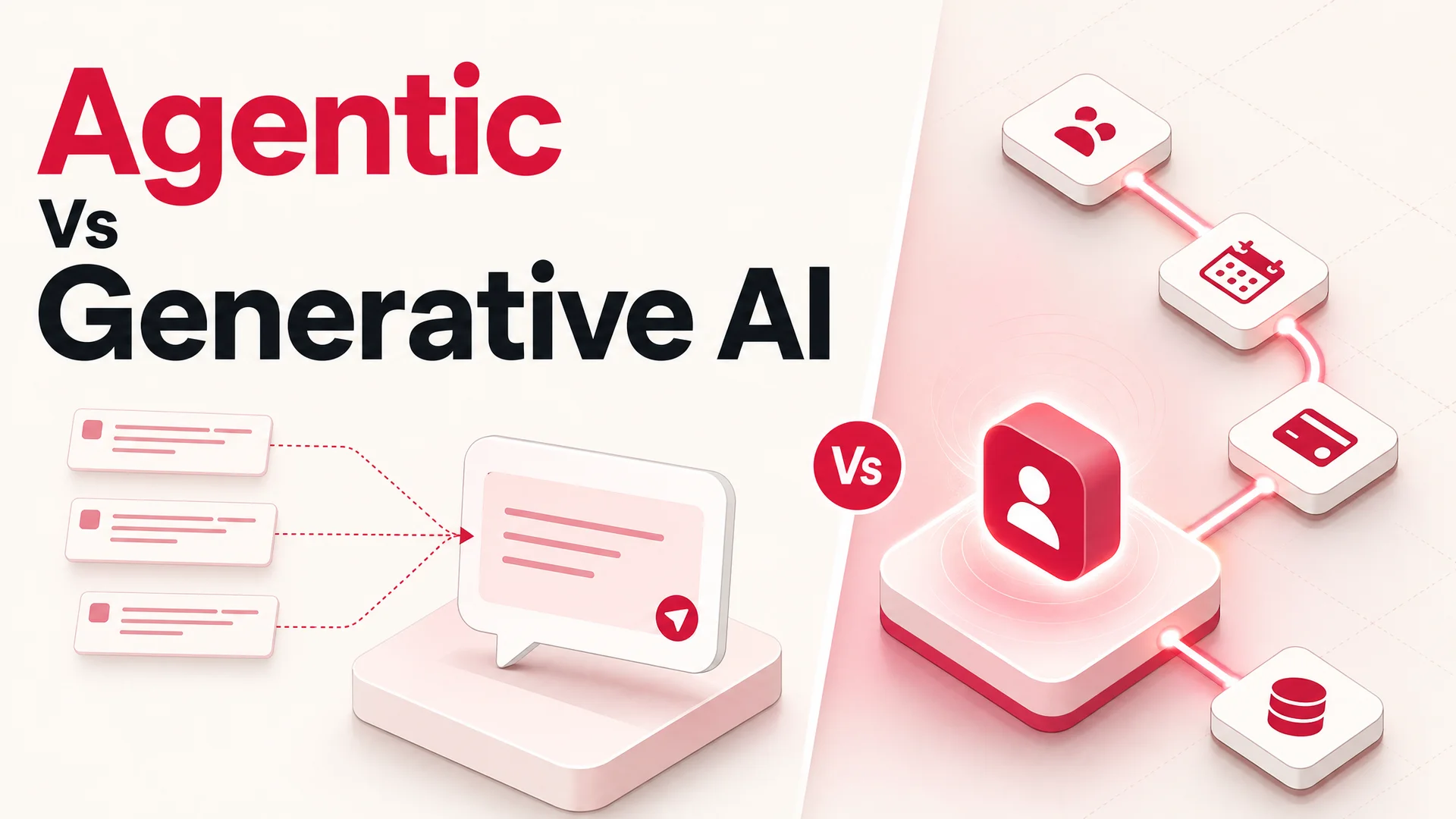
The first is the rule-based auto-responder. You build a flow in a visual editor: if the customer says X, send Y. These tools are great at giveaways, comment-to-DM funnels, and lead capture, and they are essentially marketing automation tools that happen to live in Instagram. They do not understand language; they match keywords.
The second is the shared inbox with AI assist. A human agent runs the conversation, and an AI suggests replies, drafts responses, summarizes threads, and routes tickets. This is what most "support platforms" mean when they say AI in 2026. The bot is a copilot, not the driver.
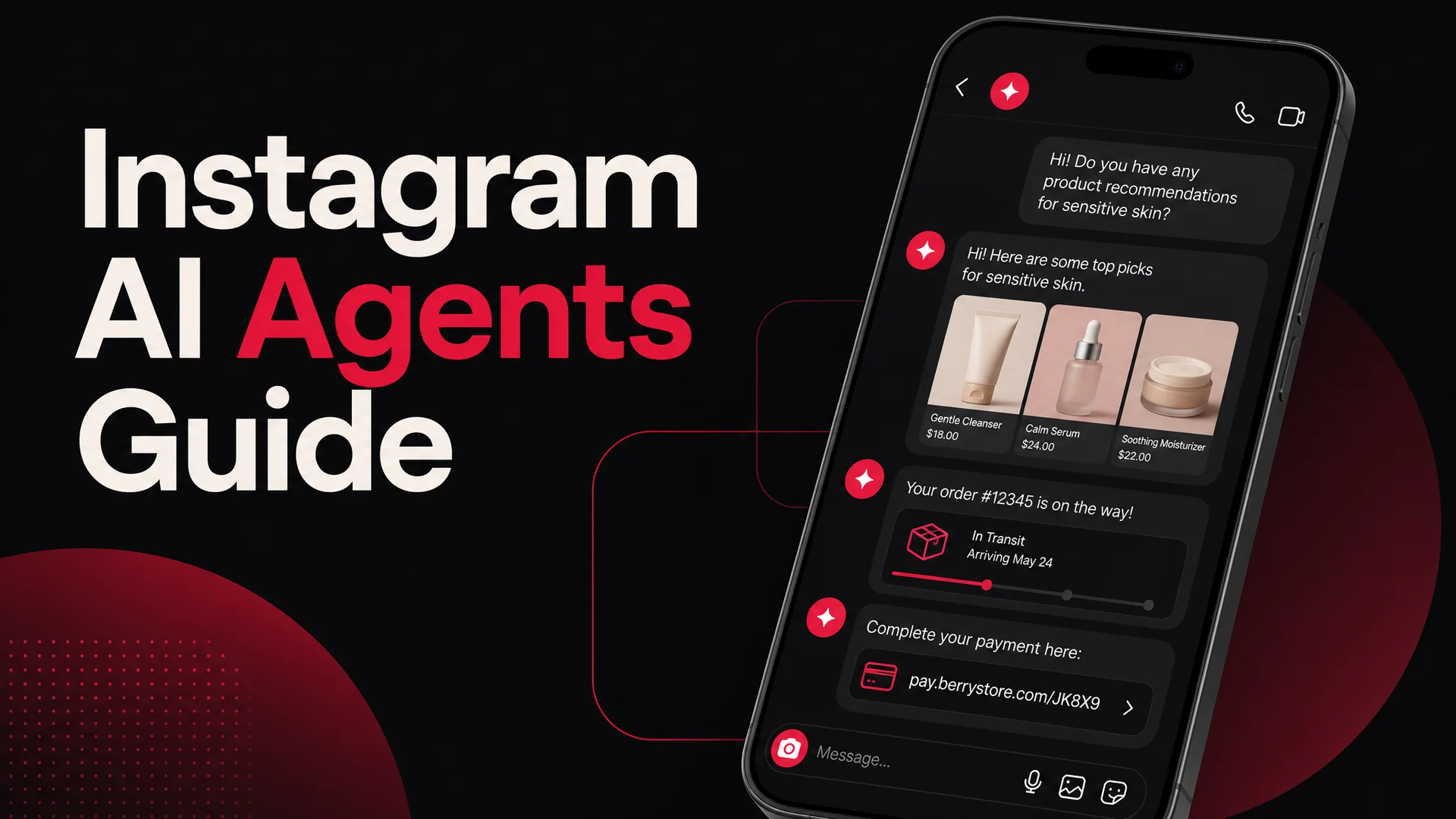
The third - and the category that has changed the most - is the trainable AI agent. You give it your catalog, your help center, your shipping policy, your refund rules, and a set of tools it is allowed to call (look up an order, issue a refund, create a booking, send a payment link). It then handles the conversation end to end, escalates only when it should, and works the same way on Instagram as it does on your website, WhatsApp, Slack, or Discord.
The reason agents have leapt forward this year is the underlying models. GPT-5.5 and GPT-5.5 Pro shipped in April with parallel reasoning. Claude Opus 4.7 leads SWE-bench Pro at 64.3%, which matters less for support tickets and more for the fact that the model can hold and execute a multi-step plan reliably. Gemini 3.1 Ultra brings a 2M-token context window, big enough to swallow your entire help center plus the customer's entire purchase history without breaking a sweat. And on the open-weight side, DeepSeek V4 Flash sits at $0.14 / $0.28 per million input/output tokens - which means a routine "where is my order?" exchange now costs less than a fraction of a cent to resolve.
When you are picking an Instagram bot in 2026, this is the real question: does the product give you a flowchart, an inbox copilot, or an actual agent that can reason about your business? Below, the five tools worth considering, in that order of seriousness.
1. Berrydesk
Most "Instagram chatbots" still treat the conversation as a decision tree. The customer types something, the tree picks a branch, the tree replies. It works until the customer types something the tree did not anticipate - which, on Instagram, is roughly every third message.
Berrydesk is built on the opposite assumption. It is a trainable AI agent first, and Instagram is one of the channels it deploys to. You point it at your knowledge sources - product docs, websites, Notion, Google Drive, YouTube transcripts - pick the model you want behind it, brand the chat surface, wire up the AI Actions you want it to perform, and ship it to Instagram, your website, WhatsApp, Slack, Discord, and more from the same configuration.
What makes Berrydesk different
-
Model choice, not model lock-in. You can run the agent on GPT-5.5 or GPT-5.5 Pro, Claude Opus 4.7, Gemini 3.1 Ultra, or open-weight frontier models like DeepSeek V4, Kimi K2.6, GLM-5.1, Qwen 3.6, and MiniMax M2. For a typical support workload, brands route the long tail of routine questions to a cheap, fast model - DeepSeek V4 Flash or MiniMax M2, both well under a cent per resolution - and reserve the heavyweight reasoning models for escalations, complex policy questions, and multi-step actions. You stop paying frontier prices for "what time do you open?".
-
It is trained on your business, not your industry. Generic Instagram bots ship with templates and "smart defaults". Berrydesk reads your actual product catalog, your actual return policy, the YouTube tutorial where your founder explains the warranty, and the Notion page where your ops team documented how chargebacks get handled. Nothing about the answers is invented; everything is grounded in what you uploaded.
-
It handles messy human input. A real Instagram message looks like "yo can i return the navy hoodie i got 3 wks ago its got a hole near the seam pls". A rule-based bot looks for "return" and serves the return FAQ. Berrydesk parses intent, recognizes the product, asks for the order number if it is not obvious, and starts the return - using AI Actions wired to your back end. Typos, abbreviations, voice notes turned into text - none of that breaks the flow.
-
AI Actions that actually do things. This is the line that separates 2026 agents from 2024 chatbots. Berrydesk can book appointments, take payments, look up orders, issue refunds, send re-order links, schedule callbacks, and create tickets in your help desk. The model is calling tools, not pasting links. Booking and payment flows can be completed inside the DM thread without ever sending the customer to a different surface.
-
Multilingual by default. If half of your DMs come from Brazil, the Gulf, or Southeast Asia, the agent does not need a different setup. Modern frontier models - particularly Gemini 3.1, Qwen 3.6, and Claude Opus 4.7 - handle dozens of languages natively, and Berrydesk passes the conversation through whichever model you have configured.
-
One agent, every channel. The chatbot you ship on Instagram is the same agent your customers will hit on your website, on WhatsApp, on Slack if you sell B2B, on Discord if you run a community, and in your support inbox. There is one knowledge base, one policy, one personality. Customers stop getting different answers depending on where they messaged you.
-
No-code where you want it, API where you need it. Setup is fast - pick a model, upload your sources, brand the widget, connect the channels. Once it is live, you can wire in custom actions through APIs and webhooks for the workflows that are unique to your business.
Who Berrydesk is best for
-
DTC and e-commerce brands that get most of their pre-sale and post-sale questions in DMs and want the agent to answer with real product data, real stock counts, and real order status - not generic "please email support" language.
-
Service businesses that sell appointments - clinics, studios, salons, agencies - and want the agent to actually book, reschedule, and take deposits inside the conversation.
-
Multilingual brands whose audience does not all speak the founder's language, and who do not want quality to fall apart the moment someone messages in Portuguese or Arabic.
-
Operators planning to grow. Because the same agent works across Instagram, WhatsApp, the website, and beyond, Berrydesk is something you set up once and extend, not a stack of point tools you try to reconcile every quarter.
If your DMs feed real revenue, the Instagram bot you want is one that understands your business well enough to close the loop. Build a Berrydesk agent for free.
2. ManyChat
ManyChat is the elder statesman of the visual-flow camp. If you have ever seen a "comment 'YES' below to get the link", that was almost certainly ManyChat. It is good at exactly that kind of work: comment-to-DM funnels, story reply automations, broadcast campaigns, and the marketing rituals that turn Instagram engagement into a list.
What ManyChat is good at
- Drag-and-drop flows. The visual editor is mature, fast, and well-documented. Marketers without engineering support can build something that runs.
- Instagram-native marketing primitives. Comment triggers, story-reply triggers, swipe-up automations, and CTA-driven flows are first-class citizens. If your strategy is "post a hook, drive comments, capture DMs", ManyChat is built for that exact loop.
- E-commerce add-ons. Shopify integration, abandoned-cart nudges, basic product recommendations, and post-purchase follow-up are all available as building blocks.
- Broadcasts. Mass messaging followers (within Instagram's 24-hour window rules) is straightforward.
Where ManyChat falls short in 2026
It is, fundamentally, a flow builder with AI bolted on. The "AI step" inside a flow can summarize input or rephrase a response, but the platform's center of gravity is still the deterministic tree. Once a customer goes off the rails of what you scripted - and they will - the flow either dead-ends, loops, or escalates. For pure marketing, that is fine. For real customer support, where every DM is potentially a different question with a different urgency, the flow paradigm has aged badly.
Best fit
Brands whose Instagram strategy is overwhelmingly top-of-funnel acquisition - giveaways, lead magnets, list-building - and who are happy to keep customer support handled elsewhere.
3. Botpress
Botpress is the developer's chatbot platform, and that is meant as praise. It is open-source at its core, gives you genuine control over how flows, NLU, and integrations are wired together, and now ships with hooks into the major LLMs so you can use modern reasoning where rule-based logic falls short.
What Botpress is good at
- Open-source flexibility. You can self-host, you can audit, you can fork. For teams in regulated industries or with strong opinions about data residency, that matters.
- Flow + NLU hybrid. Botpress lets you build deterministic flows for the moves you absolutely want pinned down (KYC steps, account changes) and lean on natural language understanding for everything else.
- Multi-channel deployment. Instagram, WhatsApp, websites, Slack, Telegram - the channel layer is broad.
- Custom integrations. Webhooks, APIs, and SDKs let you connect to whatever back end you have, including bespoke ERPs and warehouse systems.
The honest trade-off
Botpress rewards teams that have engineering capacity. The platform is powerful, but the abstractions assume you understand what an intent is, how to design a fallback strategy, and how to manage versioned flows in source control. A solo founder running a Shopify store will spend more time configuring than serving customers.
Best fit
Engineering-led teams - mid-market and up - who want a customizable, self-hostable foundation and have the people to invest in maintaining it. If your stack already includes a platform team and your support flows touch sensitive systems, Botpress earns a spot on the shortlist.
4. Freshchat
Freshchat is what happens when a traditional helpdesk vendor (Freshworks) catches up to the AI moment. It is, at heart, a multi-channel inbox with conversational AI bolted on top - and that lineage shows. The strength is the human-agent experience, the ticket lifecycle, and the analytics. Instagram is one channel among many.
What Freshchat is good at
- AI-to-human handoff that does not feel jarring. When the bot escalates, a real agent picks up the thread with the full context already attached.
- Reporting and analytics. Conversation volume, CSAT, first-response time, deflection rate - Freshchat treats these as first-class data, not afterthoughts. If you are answering to a head of CX who wants weekly numbers, this matters.
- Omnichannel, not just Instagram. The same inbox handles email, web, WhatsApp, and in-app chat, with shared customer history.
- Helpdesk-grade workflow. Routing rules, SLAs, queues, and team assignments are mature, because they have been mature for a decade.
Where Freshchat is not the strongest pick
The AI agent layer is competent but not category-leading in 2026. If the differentiator you want is "the bot itself is so good that it resolves 70% of tickets without a human", you will likely get there faster on a platform that started AI-first. Freshchat shines when the operating model is "AI handles tier-1, humans handle the rest, and we measure it all very carefully".
Best fit
Mid-market and enterprise support teams with an established human agent operation who want to layer Instagram and AI assist on top of a serious helpdesk, and who care more about the analytics and SLA story than about the raw ceiling of the AI itself.
5. UChat
UChat sits in the no-code/low-code Instagram-bot category alongside ManyChat, but with broader channel coverage and a heavier emphasis on customization. It has carved out a niche with operators who want voice and phone bots in addition to messaging.
What UChat is good at
- No-code flow builder with custom-script escape hatches. You can build the basic flows visually and drop into custom logic when something gets unusual.
- Channel breadth. Instagram, Facebook Messenger, WhatsApp, Telegram, and voice/phone bots all from one platform.
- API and webhook customization. You can integrate with your CRM, e-commerce backend, or scheduling tool with reasonable effort.
- Reasonable price ceiling for what it does. Compared to enterprise platforms, the cost of getting started is low.
The trade-off
Like ManyChat, UChat's worldview is flow-first. It has added AI, but the AI lives inside flows rather than running the conversation. For pure marketing automation across many channels - including voice - it is genuinely useful. For an Instagram experience that needs to reason about your knowledge base and execute multi-step actions, you will hit the ceiling.
Best fit
Multi-channel operators who want a single tool to run Instagram, WhatsApp, Telegram, and voice automations, and whose use cases lean more toward marketing flows and lead capture than deep support reasoning.
How to actually decide
A few patterns are worth naming, because they recur in every buying conversation about Instagram bots in 2026.
Decide whether you are buying an agent or a flow builder
If your goal is "comment-to-DM funnels and broadcast campaigns", you are buying a flow builder. ManyChat and UChat exist for exactly this. If your goal is "the bot understands my business and resolves real customer questions, including refunds, order lookups, bookings, and payments", you are buying an agent. Berrydesk and (with engineering investment) Botpress live in that camp. Buying the wrong category and trying to bend it into the other one is the most common, most expensive mistake.
Pick the model story you want
The cost difference between running every Instagram interaction on Claude Opus 4.7 and running it on a sensibly routed mix of DeepSeek V4 Flash for routine traffic and Claude Opus 4.7 only for escalations is roughly an order of magnitude on a per-conversation basis. A platform that locks you into one model - usually a closed frontier model - is making that decision for you. A platform that lets you choose, route, and switch models lets you tune the curve as your volume grows. This is one of the biggest reasons enterprise teams are migrating to model-flexible platforms in 2026.
Decide whether long context replaces RAG for you
Frontier models in 2026 ship with 1M-token context (Claude Opus 4.6 / Sonnet 4.6, DeepSeek V4, Kimi K2.6, MiMo-V2-Pro) and 2M-token context (Gemini 3.1 Ultra). For many small-to-mid catalogs, that is enough room to put the entire knowledge base, the customer's full conversation history, and the policy doc into context - without retrieval. Retrieval becomes a performance lever rather than a correctness requirement. If your help center is small and slow-moving, this changes the architecture.
Account for languages from day one
If your audience is global, a bot whose multilingual quality drops off after the top six languages is a liability. Modern open-weight models like Qwen 3.6 from Alibaba and the GLM-5.1 family from Z.ai handle Chinese, Korean, Japanese, Arabic, and most European languages without the quality cliff that older models showed. A platform that lets you route a Mandarin DM to Qwen and an English DM to Claude is not paranoia - it is just better service.
Plan for compliance early
Some industries - healthcare, finance, regulated retail - cannot send customer data to a closed-model API hosted by a third country. The MIT-licensed and Apache-licensed open-weight Chinese models (GLM-5.1, Qwen 3.6-27B, MiMo) and DeepSeek V4 have made on-prem and air-gapped deployments genuinely viable in 2026. If you are in a regulated category, the question to ask any vendor is not "do you support compliance?" - it is "can my Instagram agent run on a model whose weights I control?"
Common pitfalls when shipping an Instagram bot
A short list of the mistakes that make brands quietly turn the bot off three weeks after launching it.
- Letting the bot pretend to be human. Customers can tell. Tell them upfront that they are talking to an AI agent, give them an obvious path to a human, and trust is higher, not lower.
- Skipping the escalation criteria. Every agent should know which conversations to hand to a human - high-value orders, complaints with strong negative sentiment, anything mentioning legal, anything outside its trained scope. Define this on day one, not after a complaint screenshots up on Twitter.
- Training only on the help center. The help center is what you wish your customers asked. Your past DMs are what they actually ask. Train the agent on the real conversations and refund tickets, with names redacted, and quality jumps.
- Forgetting the inbox is regulated. Instagram's messaging policies have rules about response windows, opt-ins, and broadcast cadence. The bot is not a workaround for those rules; it is an enforcer. Pick a platform that respects them by default.
- Measuring deflection without measuring satisfaction. A bot that deflects 80% of tickets and tanks CSAT is not a win. Track resolution rate and sentiment, and resist the urge to optimize one in isolation.
Why an Instagram AI agent is a 2026 imperative, not a nice-to-have
The reason this shift is no longer optional comes down to where customer attention has actually moved.
Instagram is now the primary product-research surface for a generation of buyers - the place they go before Google, before your website, before Amazon. Forecasts continue to point to over 1.6 billion users by 2027. Around six in ten users say they discover new products on the platform, and around nine in ten follow at least one business account. That is not a marketing channel. That is a storefront.
What has changed in 2026 is that the bots customers interact with on that storefront are no longer toys. The same models that are writing production code, drafting legal briefs, and orchestrating multi-step research workflows are sitting behind support agents. Kimi K2.6 can run autonomous coding sessions for twelve hours, coordinating up to 300 sub-agents across 4,000 steps. GLM-5.1 runs an eight-hour autonomous plan-execute-test-fix loop. The reasoning capacity available to a customer support agent today is overkill for almost every DM you will receive - which is exactly the point. The bot is no longer the bottleneck. The bottleneck is whether you have given it the right information and the right tools.
The brands that figure this out first are not just answering DMs faster. They are turning the inbox into a closed-loop sales channel - discovery, question, recommendation, payment, fulfillment, follow-up - without the customer ever leaving the conversation.
The short answer
If you want a flow builder for Instagram marketing campaigns, ManyChat and UChat are reasonable picks.
If you have engineers and need a self-hostable, customizable platform, Botpress earns the look.
If you want a helpdesk-first omnichannel inbox with AI assist, Freshchat fits.
If what you actually want is an AI agent that knows your business, runs on the model you choose, takes real actions inside the conversation, and works the same way on Instagram, WhatsApp, your website, and every other channel your customers use - that is what Berrydesk is built for.
Pick a model, train it on your sources, brand the widget, wire up the actions, and ship to Instagram in an afternoon. Start building your Berrydesk agent for free →
 Berrydesk
Turn Instagram DMs into a closed-loop sales channel
- Train an AI agent on your catalog, FAQs, and policies in minutes
- Deploy the same agent to Instagram, WhatsApp, your website, Slack, and more
Set up in minutes

Chirag Asarpota is the founder of Strawberry Labs, the team behind Berrydesk - the AI agent platform that helps businesses deploy intelligent customer support, sales and operations agents across web, WhatsApp, Slack, Instagram, Discord and more. Chirag writes about agentic AI, frontier model selection, retrieval and 1M-token context strategy, AI Actions, and the engineering it takes to ship production-grade conversational AI that customers actually trust.