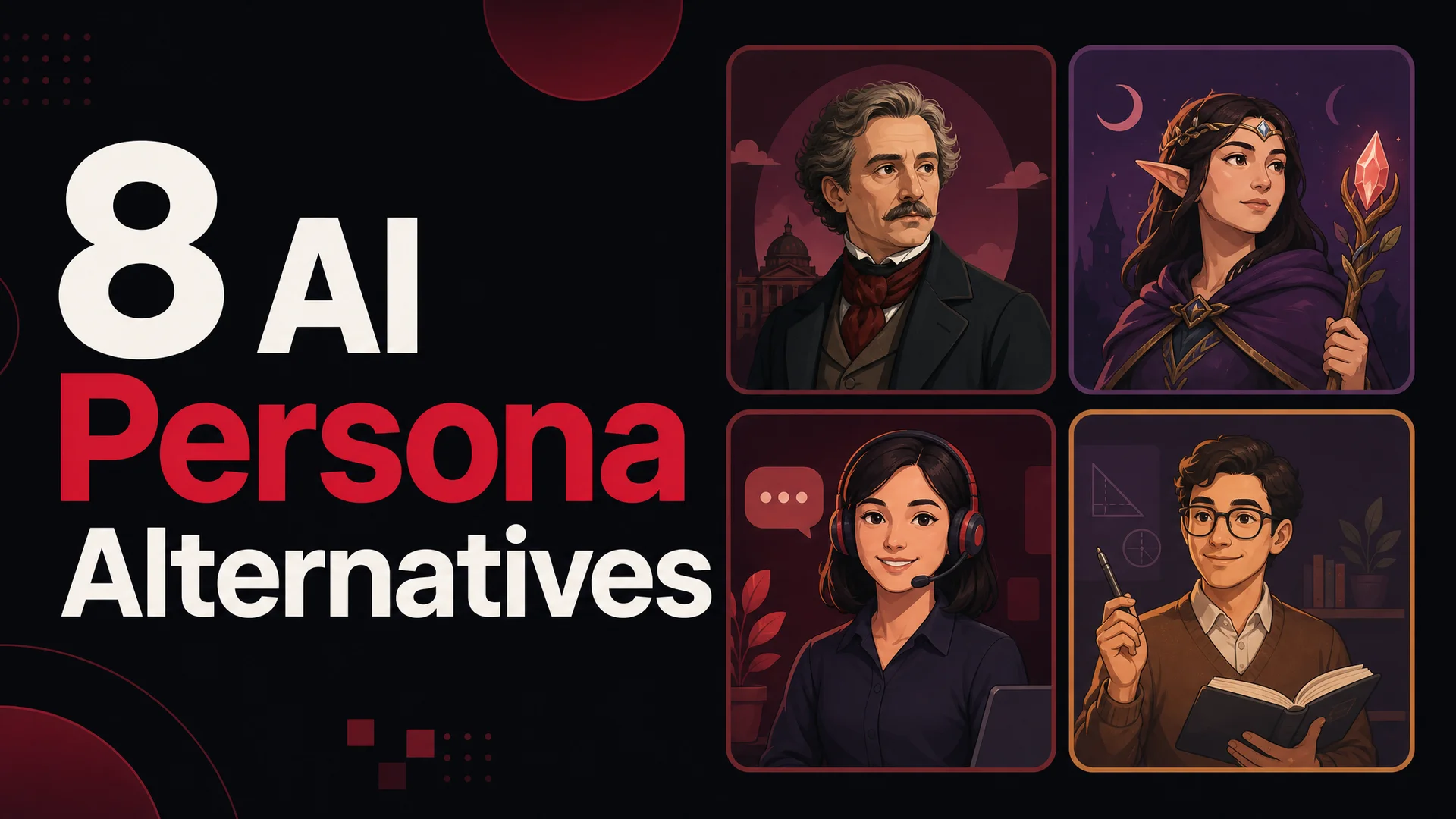
Character AI made conversational personas mainstream. Since launching, the platform has built a loyal audience around the idea of free-form chats with characters - historical figures, anime protagonists, fictional companions, and millions of community-made personas. It feels less filtered than the average assistant, more theatrical, and often genuinely fun.
But Character AI's strengths are also why people start hunting for alternatives. Its moderation is uneven - sometimes too permissive, sometimes too restrictive. The platform is a walled garden, so a persona you tune cannot be embedded on your website, hooked into your Slack workspace, or trained on your private documents. And as the AI landscape has moved through 2025 and into 2026, the underlying quality of any single closed app has become less important than the ability to choose the right model - GPT-5.5, Claude Opus 4.7, Gemini 3.1 Ultra, or one of the open-weight giants like DeepSeek V4 or Kimi K2.6 - for the persona you're building.
So whether you want a deeper companion experience, an unfiltered roleplay platform, a research-grade document agent, or a branded support persona for your business, the field has widened significantly. Below are eight Character AI alternatives in 2026, what each is good at, and how to pick.
1. Berrydesk
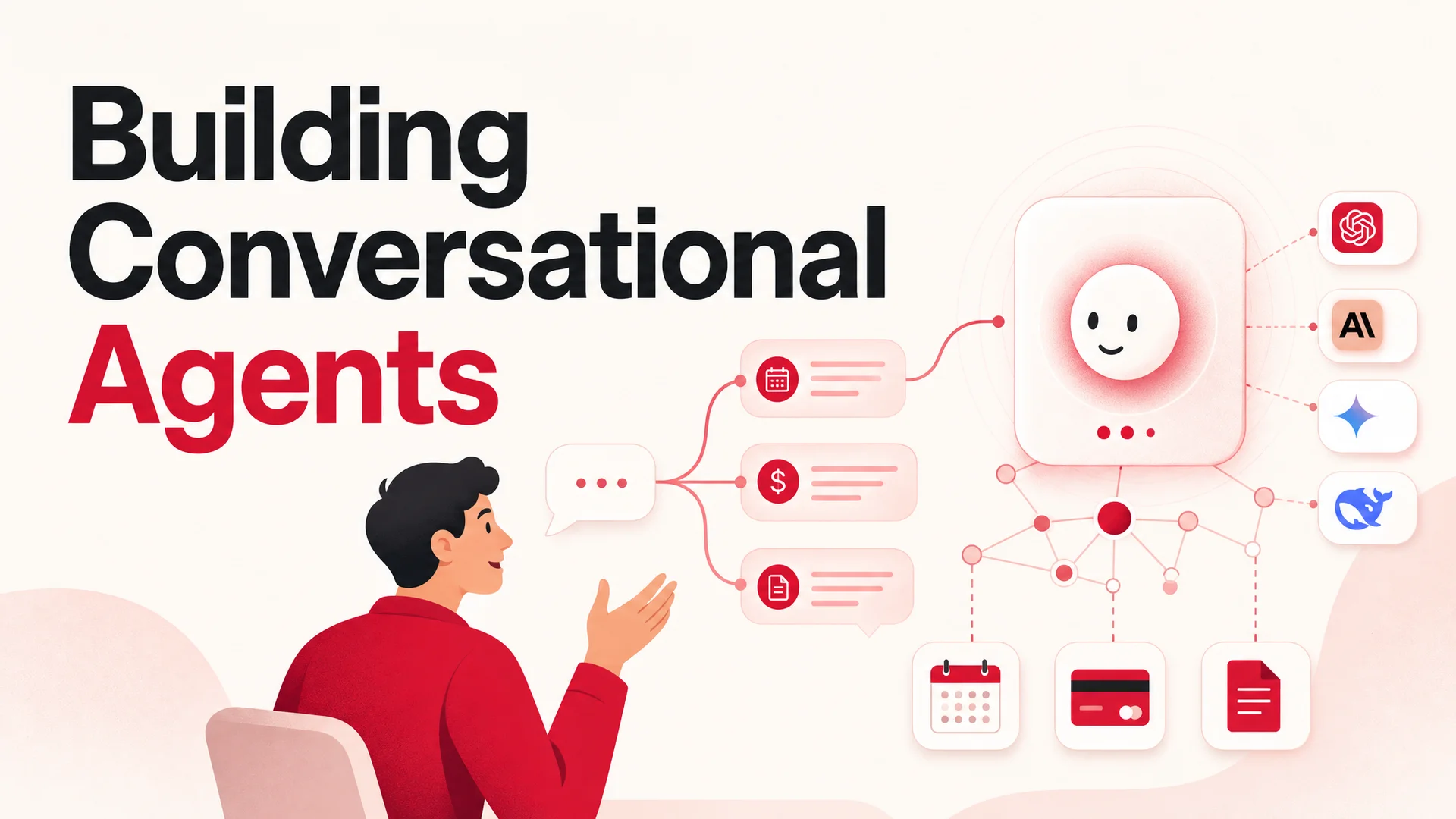
Berrydesk is the most flexible alternative if your goal is to build a real, deployable agent - not just a personality you chat with in a sandbox. It's an AI agent platform aimed at customer support, but the same primitives let you ship any custom persona: a tutor, a brand mascot, an interactive product guide, an internal employee assistant, or a public-facing character that lives on your site, in your community Discord, or inside WhatsApp.
The setup is fast. You sign up, pick the underlying model, point Berrydesk at your training material - docs, websites, Notion workspaces, Google Drive folders, even YouTube transcripts - and the agent is ready in minutes. There's no ML pipeline to run, no tokenization to think about, no hosting to provision.
Where Berrydesk pulls ahead of Character AI is in which model powers your persona. You're not locked into one frontier API. You can route to GPT-5.5 or GPT-5.5 Pro for parallel-reasoning quality, Claude Opus 4.7 for nuanced in-character writing (it currently leads SWE-bench Pro at 64.3%, but the same instruction-following capability translates beautifully to character work), Gemini 3.1 Ultra for natively multimodal personas that handle images, audio, and video across a 2M-token context, or shift cost-sensitive traffic to open-weight frontier models like DeepSeek V4 Flash, MiniMax M2, Moonshot's Kimi K2.6, Z.ai's GLM-5.1, or Alibaba's Qwen 3.6. DeepSeek V4 Flash, for example, runs at $0.14 per million input tokens and $0.28 per million output - meaning a persona that handles thousands of conversations a day costs cents, not dollars, to operate.
You also get behavior controls Character AI doesn't expose: system prompts you can tune sentence-by-sentence, persona voice and tone presets, retrieval grounding so the agent doesn't drift off-topic, and full control over the chat widget's branding, colors, fonts, and avatar.
The other thing Berrydesk does that Character AI doesn't is let your persona take action. Through AI Actions, your agent can book appointments, take payments, look up orders, file tickets, create CRM entries, or call any HTTP endpoint you point it at. That's the difference between a character your users chat with and a character your users get things done with.
When you're ready to ship, you can embed the chat widget on your website, expose the agent as an API, or deploy directly to Slack, Discord, WhatsApp, Messenger, and more. You can build your first Berrydesk agent for free and have a fully customized persona running before you finish your coffee.
2. Anima AI
Anima AI leans into the companion angle. It markets itself as a "virtual friend" - an AI you build, name, customize visually, and talk to over time. You shape its personality traits, conversational tone, and level of warmth versus banter, and the app surrounds the chat with gamified rituals: shared activities, role prompts, photo and audio exchanges, and progress nudges that bring you back daily.
The companionship framing is well-executed, especially for users who want something more emotional and ongoing than stateless chats with a frontier model. Where it falls short is depth and reach: Anima is a single closed app, it can't be embedded anywhere, and the most expressive features - voice replies, deeper memory, advanced personalities - sit behind a paywall. The free tier is enough to evaluate it, but anyone who sticks around tends to subscribe.
If your aim is "a digital friend who remembers me," Anima is one of the more polished choices. If your aim is "a persona I can put on my website or train on my own data," it's the wrong tool.
3. Kajiwoto AI
Kajiwoto sits squarely in the same category as Character AI - a community-driven platform for building and chatting with character bots. Users sculpt a persona's personality, backstory, voice, and dialogue style, then share their creations with the wider community. Half of Kajiwoto's value, like Character AI's, is the catalog of personas other users have already built.
Under the hood, Kajiwoto offers a choice between its in-house engine and an external model option, which gives creators a small lever over response quality. The free plan caps messages at around 200 characters, which is fine for casual back-and-forth but cramped for any kind of long-form roleplay.
Premium tiers unlock unlimited voice generation and looser content filtering, but they're not cheap - Kajiwoto Pro hovers around $25 a month, which is in the same range as a frontier-model API subscription that would give you far more raw capability. The free plan keeps things family-friendly; paid plans ease up but still apply moderation.
4. Converse AI
Converse AI is a different beast. It's less a persona app and more a document-grounded conversational layer: you upload or link source material - PDFs, handbooks, manuals, internal articles - and the chatbot lets you ask questions about it in natural language. Behind the scenes it does retrieval and grounded answering against the document set you provide.
It earns a spot on this list because Character AI users sometimes want a persona that's actually informed about something specific - a brand, a curriculum, a body of lore - and Converse AI's retrieval-first approach is closer to that than a free-form roleplay engine. Long-context frontier models in 2026 have softened the boundary further: Gemini 3.1 Ultra's 2M-token window and Claude Sonnet 4.6's 1M-token window can hold an entire knowledge base in-context, which means the line between "RAG product" and "smart character" is thinner than it used to be. RAG becomes a tuning lever rather than a hard requirement.
Converse AI doesn't allow explicit content and isn't designed for character chat, so don't reach for it if you want creative roleplay. It's best when you want a research-style assistant that talks like a person but stays anchored to source material.
5. Replika
Replika is the original "AI companion" app and remains one of the most psychologically thoughtful experiences in the category. Where Character AI lets you talk to thousands of distinct personas, Replika gives you one - yours - and the value compounds over time as the model picks up on your preferences, vocabulary, and history.
The product has expanded well beyond a text window. There's an AR mode that drops your Replika into your physical space through your phone camera, voice and video calling, shared in-app activities, and a journaling layer the AI participates in. After Replika tightened its content moderation a few years ago, it became firmly the "safe-feeling, emotional support" option, distinct from the more freewheeling roleplay apps.
If what drew you to Character AI was the loneliness-buster element - something that listens, remembers, and grows with you - Replika is the most considered alternative. If what drew you was variety and lore, you'll feel hemmed in by the single-companion structure.
6. Kuki AI
Kuki - formerly Mitsuku - has been around for two decades and is one of the most awarded chatbots in the lineage that runs back to early Loebner Prize winners. It's text-first, occasionally sassy, and carries the unmistakable feel of a system shaped by years of human feedback.
You can adjust Kuki's appearance and personality, talk to it in text or voice, and use it for a surprisingly wide range of things: an entertainment companion, a virtual host, or a customer-service-style guide on a brand site. It leans heavily on conversation rather than visuals, so if you want richly rendered characters or generated images, this is not where you'll find them.
The free version is family-friendly. Premium plans relax some filters but stay within tight limits. Kuki is best understood as a long-running curiosity and a decent conversation partner, not a frontier-model competitor - but for a particular type of user, that's the appeal.
7. Cleverbot
Cleverbot, originally Jabberwocky, is older still - it began in 1988 - and continues to operate on the principle of learning from accumulated human conversations. Modern Cleverbot has been folded together with newer techniques, but the personality remains: clever, occasionally non-sequitur, and shaped more by years of crowd-sourced dialogue than by any single model release.
The site offers small interactive features that are charming in their own way: a "Think about it" button that asks Cleverbot to reflect, a "Think for me" option that has it reply to its own answer, and a "Thoughts so far" view that exposes some of its working. It supports multiple languages, so it doubles as a low-stakes conversation partner for language practice.
Pricing is friendly, which makes it a fine pick if you want novelty without subscribing to anything heavy, and content moderation is on the strict side. As an alternative to Character AI's deep persona library Cleverbot is much narrower - but the experience has a flavor you can't quite replicate elsewhere.
8. Pygmalion AI
Pygmalion is the most community-driven option on this list. It's built around user-created characters and an open ecosystem, and it leans into roleplay use cases that other apps either filter aggressively or don't optimize for. If you've spent time on Character AI and felt limited by the filters, Pygmalion is one of the destinations more committed roleplaying users tend to gravitate toward.
It runs on open-weight language models that the community has fine-tuned for character work, which means quality is uneven across personas - some are genuinely great, some are noticeably rougher than what you'd get out of GPT-5.5 or Claude Opus 4.7. Newer Pygmalion versions handle long conversations more gracefully and apply lighter filtering than Character AI, though some level of moderation remains.
This is the alternative for people whose primary complaint about Character AI is "I want more control and less filtering." It is not the alternative for people who want a polished, branded, deployable agent.
Common pitfalls when switching from Character AI
A few things to watch for when you migrate.
The first is persona drift. Character AI has spent a lot of compute on keeping characters in voice across long sessions. Newer platforms running on raw frontier models can drift faster, so you'll want to invest in a strong system prompt, a few seed examples of the persona's voice, and - on platforms that support it - retrieval grounding from a small reference document. Long-context models in 2026 (Gemini 3.1 Ultra at 2M tokens, Claude Sonnet 4.6 and DeepSeek V4 at 1M) make this much easier, because you can keep the entire persona bible in-context indefinitely.
The second is cost creep. A single user chatting with a persona is cheap. Ten thousand users chatting with the same persona on GPT-5.5 Pro is not. This is where Berrydesk's model routing earns its keep: route routine conversation to DeepSeek V4 Flash, MiniMax M2, or Qwen3.6-27B for a fraction of a cent per turn, and reserve frontier models for the moments when nuance or hard reasoning actually matters. The pricing gap between open-weight frontier models and closed flagships is now wide enough that single-model deployments leave real money on the table.
The third is getting stuck on chat-only. Character AI is a closed loop - you talk, it talks back. Modern AI agents do more than that. The agentic-tool-use generation of models - Kimi K2.6 with its multi-hour autonomous sessions and 4,000 coordinated steps, GLM-5.1's eight-hour plan-execute-test-fix loop, Claude Opus 4.7, Qwen 3.6, and Xiaomi's MiMo-V2-Pro - make AI Actions reliable enough that your character can book a meeting, run a refund, or kick off a workflow mid-conversation. Once you've felt that, going back to chat-only feels limiting fast.
The fourth is deployment surface. If your persona only exists inside one app, you've capped its reach. Platforms that let you embed across web, Slack, Discord, WhatsApp, and an API - Berrydesk being the clearest example - give the same persona many more places to be useful, without forcing you to rebuild it from scratch for each channel.
So which Character AI alternative should you pick?
There isn't one right answer, and that's a feature of the 2026 landscape, not a bug.
If you want an AI persona you can brand, train, deploy, and have do things - for a business, a community, or a product - Berrydesk is the strongest pick. You get a choice of frontier and open-weight models, multi-channel deployment, AI Actions for real workflows, and a setup that takes minutes rather than weeks.
If what you want is an emotional companion that grows with you, Replika and Anima AI are the most polished. Replika leans toward warmth and continuity; Anima leans toward gamified daily interaction.
If you're after community-built characters and looser filtering for roleplay, Pygmalion and Kajiwoto are closest in spirit to Character AI itself, with different trade-offs around model quality and price.
If you want a clever conversation partner without much commitment, Kuki and Cleverbot still hold up - particularly if novelty matters more than depth.
And if your real need is to chat with a body of documents rather than with a persona, Converse AI is the right shape, although in 2026 most of that work is increasingly absorbed by long-context frontier models doing the same job inside a general agent.
The best alternative is the one that matches what you actually want to do with the AI. If that includes shipping something - to your customers, your community, or your team - start with Berrydesk and build it in an afternoon.
 Berrydesk
Build a branded AI agent your customers actually want to talk to
- Pick from GPT-5.5, Claude Opus 4.7, Gemini 3.1, DeepSeek V4, Kimi K2.6, and more
- Train on your docs, brand the widget, deploy in minutes
Set up in minutes

Chirag Asarpota is the founder of Strawberry Labs, the team behind Berrydesk - the AI agent platform that helps businesses deploy intelligent customer support, sales and operations agents across web, WhatsApp, Slack, Instagram, Discord and more. Chirag writes about agentic AI, frontier model selection, retrieval and 1M-token context strategy, AI Actions, and the engineering it takes to ship production-grade conversational AI that customers actually trust.