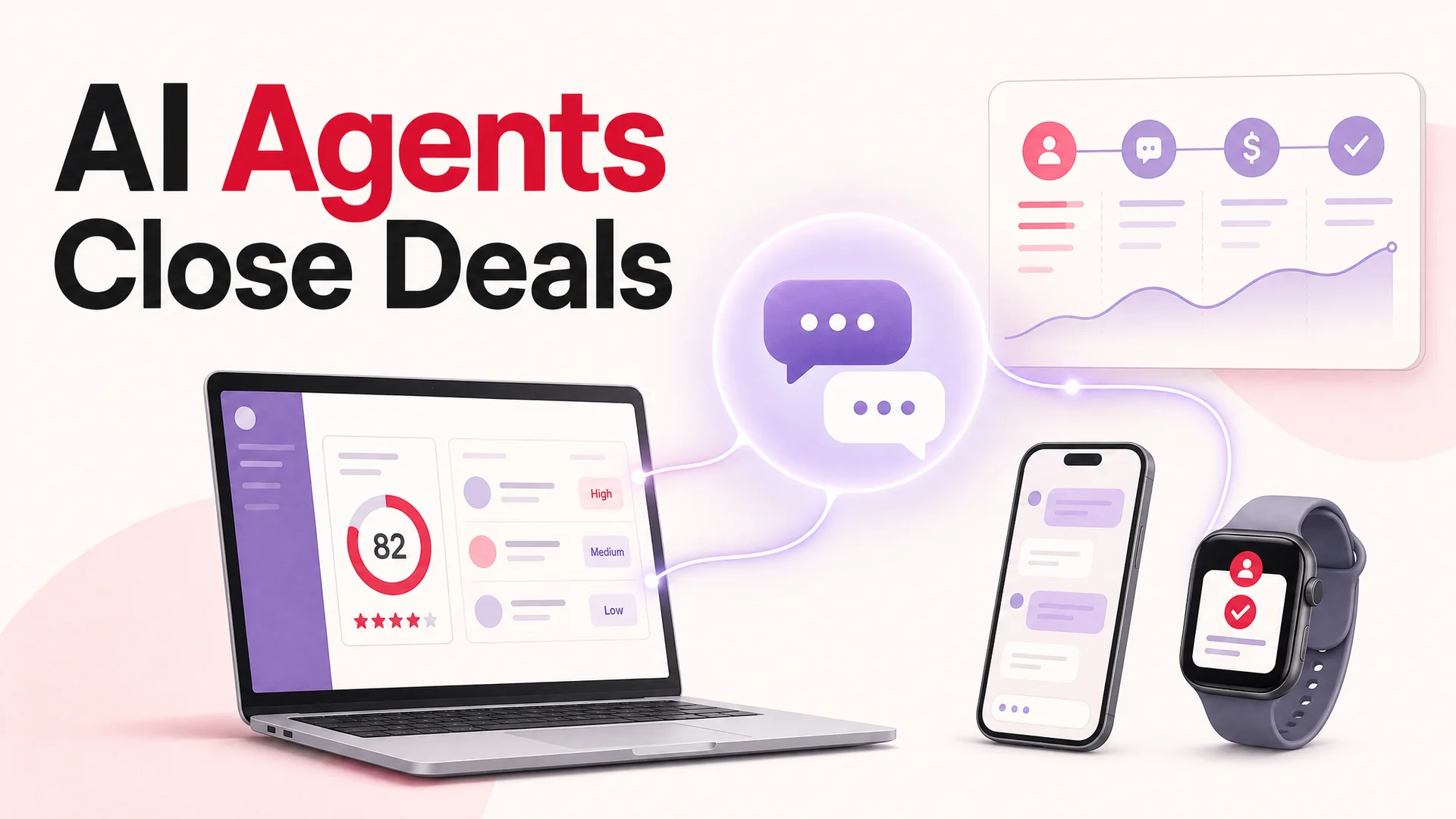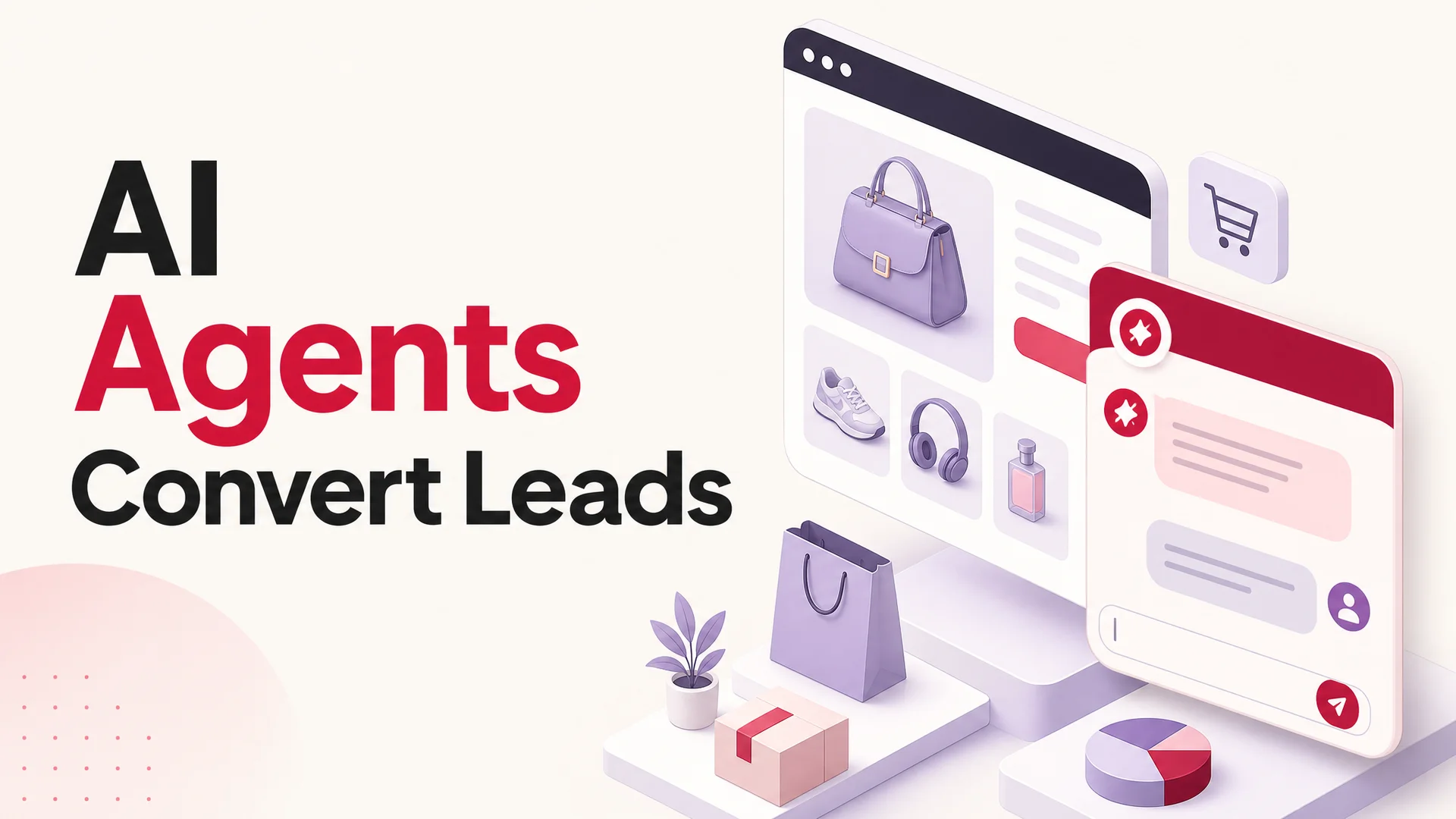
Pipeline still wins quarters, but the way you fill it has quietly changed. Web forms that drop 95% of visitors, BDRs grinding through dead lists, and intake calls that only happen between 9 and 5 in one timezone - all of that is now competing with AI agents that can hold a real conversation, pull live CRM context, and book a demo without a human in the loop. The 2026 model stack - Claude Opus 4.7, GPT-5.5 Pro, Gemini 3.1 Ultra, and open-weight frontier models like DeepSeek V4, Kimi K2.6, and GLM-5.1 - has pushed conversational AI past the "chatbot" caricature into something closer to a junior SDR that works every shift. The teams pulling ahead are not the ones with the loudest pop-ups. They are the ones using a conversational agent as the front door of their funnel and routing only the warm conversations to humans.
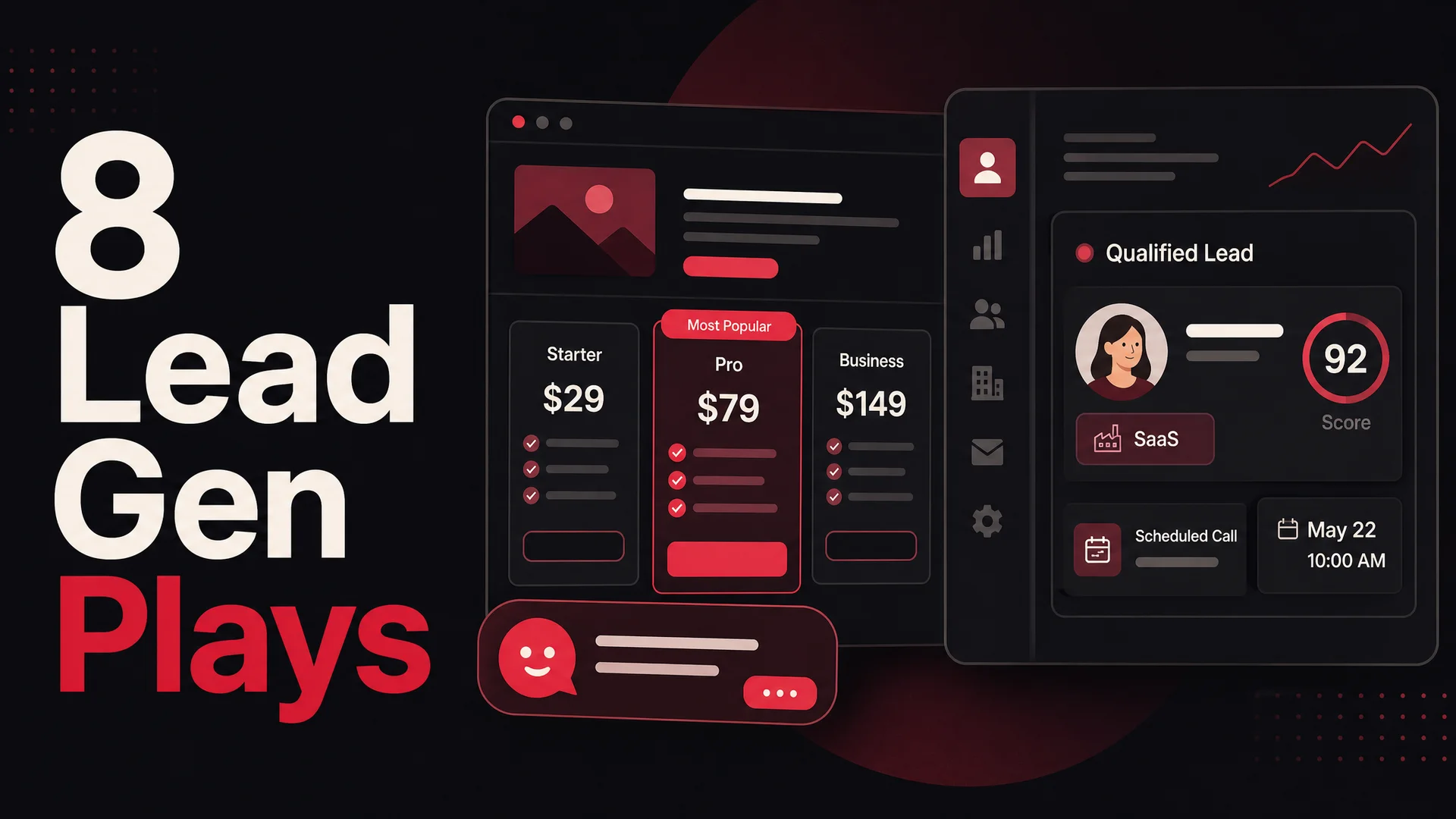
This guide walks through eight high-leverage ways to use a conversational AI agent for lead generation, what each one looks like under the hood, and what changed now that frontier and open-weight models can actually be trusted with a sales conversation.
1. Automated lead qualification that mirrors your real ICP
Qualification is where most lead funnels quietly leak revenue. A form captures an email and a job title. A BDR eyeballs the row, guesses, and either books a meeting or ignores it. Across hundreds of inbounds a week, the variance is enormous, and the criteria drift every time the team changes.
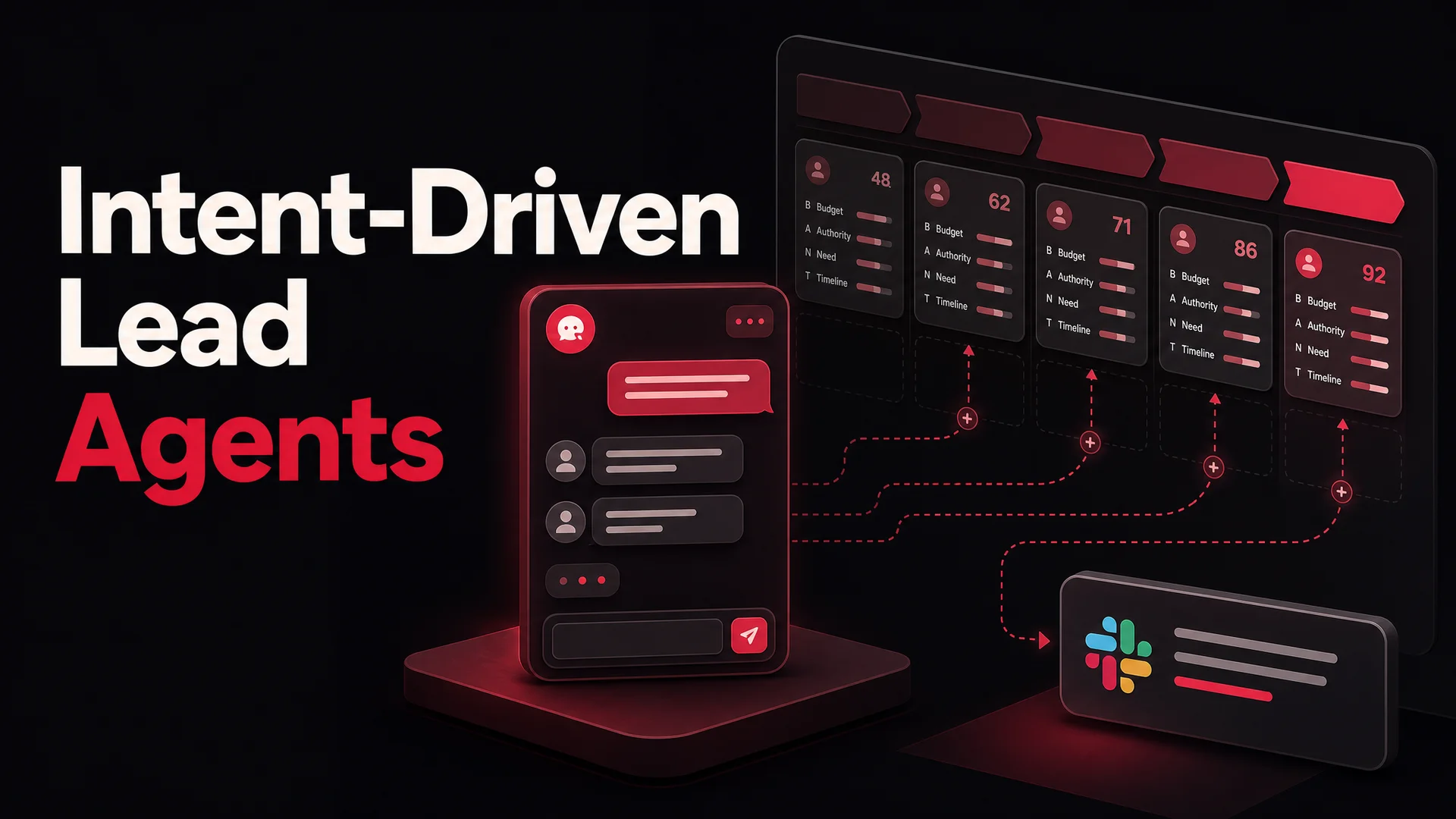
A conversational AI agent collapses that into something deterministic. The agent greets a visitor, holds a short, branching conversation, and gathers the dimensions that actually matter for your business - buying authority, current tooling, team size, urgency, regulatory constraints, budget bracket. With a frontier reasoning model like Claude Opus 4.7 or GPT-5.5 Pro, the conversation does not feel like a form interrogation; the agent picks the next question based on what the visitor just said, the same way a good SDR would. Behind the scenes, it scores the lead against your ICP rubric and pushes a structured payload - name, company, score, reasoning, transcript - into your CRM.
The practical effect: a director-level visitor on a 500-person fintech who needs a vendor in the next quarter shows up in your sales rep's queue tagged hot, with the qualifying transcript attached. A student doing research lands in a nurture list instead of burning a rep's morning. The team stops triaging and starts selling.
2. Capturing the data you would never get from a form
Forms collect what you ask for. Conversations collect what you didn't think to ask. That is the underrated reason conversational AI moves the lead-gen needle - the data you get back is richer, messier, and far more useful than a structured dropdown.
A well-trained agent will surface things a form cannot: which competitor the prospect is currently using and why they are unhappy, which feature triggered the visit, which integrations are blockers, whether the buying decision sits in IT, security, or the line of business. Because models with 1M-token context windows - Claude Sonnet 4.6, DeepSeek V4 Flash, Gemini 3.1 Pro - can hold your entire product catalog, pricing, and policy docs in working memory, the agent can ask follow-up questions that are actually grounded in your business rather than generic SDR scripts.
Human reps are still the right tool for nuanced discovery calls, but they cap out around a few dozen meaningful conversations a day, and quality varies with caffeine, mood, and pipeline pressure. An agent will run the same depth of intake at 2am on a Saturday as it does at 11am on a Tuesday. Over a quarter, that consistency turns into a clean dataset you can actually use to retune messaging, reprioritize features, and identify under-served segments. The conversation is the research instrument; the data is a strategic byproduct.
3. Surfacing the right information at the right moment
The flip side of data capture is information delivery. Most prospects do not abandon because they were unconvinced - they abandon because they could not get a specific question answered fast enough and moved on. A conversational AI agent closes that gap by acting as an always-on, fully-briefed product expert.
When a visitor lands on a pricing page, the agent can offer to explain the difference between tiers in the language of the visitor's stack. When they read a security overview, the agent can pull SOC 2 details, list sub-processors, or surface the exact section of your DPA that addresses EU data residency. When a comparison page is the last thing they viewed, the agent can speak honestly to the trade-offs against the competitor they are evaluating. Because frontier models are now reliable enough to follow grounded sources without hallucinating, you can safely connect the agent to your knowledge base, Notion workspace, Google Drive, and product documentation rather than maintaining a brittle script tree.
The proactive side matters as much as the reactive side. After a prospect downloads a whitepaper, the agent can offer the matching customer story two days later when they revisit. After a sales call, it can post the proposal, the security questionnaire response, and the redline of the MSA into the same chat thread the prospect already trusts. Information moves with the buyer rather than waiting for the next handoff, which is where deals usually stall.
4. Off-loading the repetitive plumbing of lead handling
Look at any SDR's calendar and a depressing share of it is plumbing - copying email addresses into the CRM, scheduling intro calls, sending follow-up emails, qualifying out tire-kickers, sending the pricing PDF for the tenth time today. None of that work compounds. All of it is exactly what an agentic AI is good at.
Models built for tool use - Claude Opus 4.7, Kimi K2.6, GLM-5.1, Qwen 3.6, MiMo-V2-Pro - have made AI Actions reliable enough to actually run in production. With Berrydesk's AI Actions layer, the same agent that holds the conversation can call your calendar, your CRM, your billing system, and your knowledge base inline. A visitor says "Tuesday afternoon works" and the agent books a real slot on the rep's calendar with a confirmation email and a Zoom link. A returning prospect asks for an updated quote and the agent generates it from your pricing logic. A trial signup hits a payment step and the agent processes it without bouncing the user to a separate flow.
The math here is simple: if your reps spend 40% of their week on repetitive steps and the agent can absorb most of that work, you have effectively grown the team without hiring. The reps that remain spend their time on the conversations that actually need a human - competitive deals, complex procurement, strategic accounts.
5. Capturing leads that arrive outside your business hours
A meaningful slice of inbound traffic - often 30 to 50% - arrives outside the hours your sales team works. Sunday research sessions, late-night decision-makers in Asia browsing a US-headquartered SaaS, executives shopping for tools after their kids are in bed. With a human-only funnel, that traffic sees a contact form and silence. With a conversational AI agent, it sees a real conversation.
This is the cheapest source of pipeline most companies are leaving on the floor. The visitor is already there, already curious, already has their card or their boss's email two clicks away. An agent that engages them in that moment captures the question, the use case, and the contact details, and either books a meeting for the appropriate timezone or hands off a fully-qualified lead at the start of the next business day. By the time the rep logs in, half the discovery work is done.
The cost story has improved sharply. Open-weight models like DeepSeek V4 Flash run at $0.14 per million input tokens and $0.28 per million output tokens - fractions of a cent per resolved conversation. A typical Berrydesk deployment can route routine after-hours qualification through DeepSeek V4 or MiniMax M2 (priced at roughly 8% of Claude Sonnet at twice the speed) and reserve Claude Opus 4.7 or GPT-5.5 Pro for the high-stakes Fortune 500 visitor. You stop having to choose between coverage and unit economics.
6. Segmenting leads in real time as the conversation unfolds
Generic outbound is one of the lowest-converting motions in B2B. The cure is segmentation, but segmentation has historically been a downstream cleanup job - someone exports leads, runs them through enrichment tools, and bucket them into campaigns weeks later. By that point, the prospect's interest has cooled.
A conversational agent does the segmentation in real time, while the conversation is still warm. It can ask explicitly - "Are you on Shopify, or a custom storefront?" - and tag the lead accordingly. It can also infer: a visitor who keeps asking about HIPAA gets tagged healthcare; a visitor who drills into multi-region deployment gets tagged enterprise; a visitor who asks how the free tier compares to the paid one is probably SMB and price-sensitive. Because models like Gemini 3.1 Pro and Claude Opus 4.7 are reliably good at instruction-following with structured output, you can specify the segmentation schema in your system prompt and get clean tags back on every conversation.
The downstream payoff is sharper outreach. Healthcare leads get the HIPAA-focused case study and a call with a rep who knows the regulatory landscape. SMB leads get a self-serve onboarding flow rather than a 45-minute discovery call. Enterprise leads get routed to the named-account team. The agent also avoids the worst kind of marketing miss - the wrong message to the wrong segment - because it knows enough about the lead to not pitch the high-touch implementation tier to a solo founder testing the free plan.
7. Re-engaging leads who went quiet
Most pipelines have a graveyard of leads who showed real interest, never closed, and now sit in the CRM as a ghost row. Reps rarely have time to revive them - there is always a fresher opportunity. This is exactly the work that benefits most from being handed off to an AI agent.
When a dormant lead returns to your site, the agent can recognize them, recall the prior conversation (long-context models can hold the entire transcript history without summarization loss), and open with something specific: "Last time we spoke, pricing was the main blocker - we changed how the Growth tier is structured in March, would it be useful to walk through it?" When the lead's behavior signals renewed intent - re-reading the pricing page, downloading a comparison guide, hitting the integrations doc - the agent can ping them in-channel without waiting for a marketing campaign to schedule the touch.
For accounts that have stayed cold for months, the agent can run a low-friction check-in: a single, contextual message tied to a real change on your end ("we just shipped the SAML integration you were asking about"). That kind of relevant outreach converts dramatically better than the canned "just circling back" email, and it costs you almost nothing to run because the agent only fires when a real signal warrants it.
8. Routing routine traffic to cheap models, hard cases to frontier models
This one did not exist as a meaningful play even a year ago, and it is now one of the highest-leverage decisions you make when designing a lead-gen agent. Not every conversation deserves the same model. A returning visitor asking about pricing tiers does not need 64.3% SWE-Bench-Pro reasoning power; a CTO at a regulated bank asking detailed questions about your data handling absolutely does.
The 2026 stack makes routing trivial. Open-weight frontier models - DeepSeek V4 Flash, MiniMax M2.7, Qwen 3.6-27B, GLM-5.1, MiMo-V2-Pro - handle the long tail of routine conversation at cents-on-the-dollar pricing, with 1M context windows and strong agentic tool use. Closed frontier models - Claude Opus 4.7 (leading SWE-Bench Pro at 64.3% for complex reasoning), GPT-5.5 Pro with parallel reasoning, Gemini 3.1 Ultra with 2M-token context - handle the high-stakes conversations where a wrong answer costs you the deal.
In Berrydesk, this is a configuration choice rather than an infrastructure project. You pick the default model for routine qualification, set escalation triggers (enterprise-tier email domains, deal size signals, regulatory keywords, frustration markers), and the agent transparently re-routes mid-conversation if needed. The economics work out cleanly: most companies see the bulk of their traffic served by the cheap tier, with the expensive tier reserved for the conversations that actually move revenue. MIT and Apache-licensed Chinese open weights - GLM-5.1, Qwen 3.6-27B, MiMo - also unlock on-prem and air-gapped deploys for regulated industries that previously had no path to AI lead gen at all.
What to watch out for
Three failure modes show up repeatedly when teams roll out conversational AI for lead gen, and all of them are avoidable.
Treating the agent like a script tree. The old generation of chatbots failed because they tried to anticipate every branch of every conversation. Frontier models do not need that. Give the agent a clear objective, a grounded knowledge source, and tool access - then let the model handle the dialogue. Over-scripting the conversation produces the same robotic UX users have already learned to bounce off of.
Skipping the handoff design. The agent does not close the deal - it qualifies and books. If the handoff to a human rep is sloppy (no transcript, no context, no priority signal), the lead will repeat themselves on the call and the rep will resent the agent. Spend as much time on what gets passed to the rep as on the conversation itself.
Locking yourself to one model. The model landscape is moving every few weeks. Picking a platform that lets you swap between GPT, Claude, Gemini, DeepSeek, Kimi, GLM, Qwen, MiniMax - and route between them per-conversation - is the difference between a lead-gen system that gets cheaper and smarter every quarter and one that ages out the moment the next frontier release lands.
Long context vs RAG: a quick note for builders
A live debate in 2026 is whether the new 1M–2M-token context windows kill RAG outright. The honest answer for lead-gen agents: not entirely, but the calculus has shifted. With Claude Opus 4.6/Sonnet 4.6 shipping 1M context at no surcharge, DeepSeek V4 at 1M, and Gemini 3.1 Ultra at 2M, you can fit an entire small-to-mid-size product knowledge base directly into the prompt and let the model attend to whatever the conversation needs. RAG becomes a tuning lever - useful when your knowledge base is genuinely huge or when you need fine-grained citation and access control - rather than the load-bearing architecture every project starts with. For most lead-gen use cases, long context plus a few well-scoped tool calls beats a complex retrieval pipeline.
Make the front door of your funnel a real conversation
Every visitor that lands on your site is a conversation you are either having or losing. The teams winning in 2026 have stopped treating that conversation as a form-fill at the bottom of a landing page. They treat it as the entire top of funnel - qualified by an agent, segmented in real time, booked into the right rep's calendar, and re-engaged when interest comes back, with frontier-quality reasoning on the conversations that matter and pennies-per-resolution open-weight models on the rest.
Berrydesk is built for exactly this. Pick from GPT-5.5, Claude Opus 4.7, Gemini 3.1 Ultra, DeepSeek V4, Kimi K2.6, GLM-5.1, Qwen 3.6, MiniMax M2, or others; train the agent on your docs, website, Notion, Drive, or YouTube; brand the widget; wire up AI Actions for booking and payments; and deploy to your site, Slack, Discord, or WhatsApp in minutes. Your next quarter of pipeline can start working tonight.
 Berrydesk
Turn your website into a 24/7 lead gen engine
- Qualify, segment, and book leads while your reps sleep
- Pick from GPT-5.5, Claude Opus 4.7, Gemini 3.1, DeepSeek V4, Kimi K2.6 and more
Set up in minutes

Chirag Asarpota is the founder of Strawberry Labs, the team behind Berrydesk - the AI agent platform that helps businesses deploy intelligent customer support, sales and operations agents across web, WhatsApp, Slack, Instagram, Discord and more. Chirag writes about agentic AI, frontier model selection, retrieval and 1M-token context strategy, AI Actions, and the engineering it takes to ship production-grade conversational AI that customers actually trust.