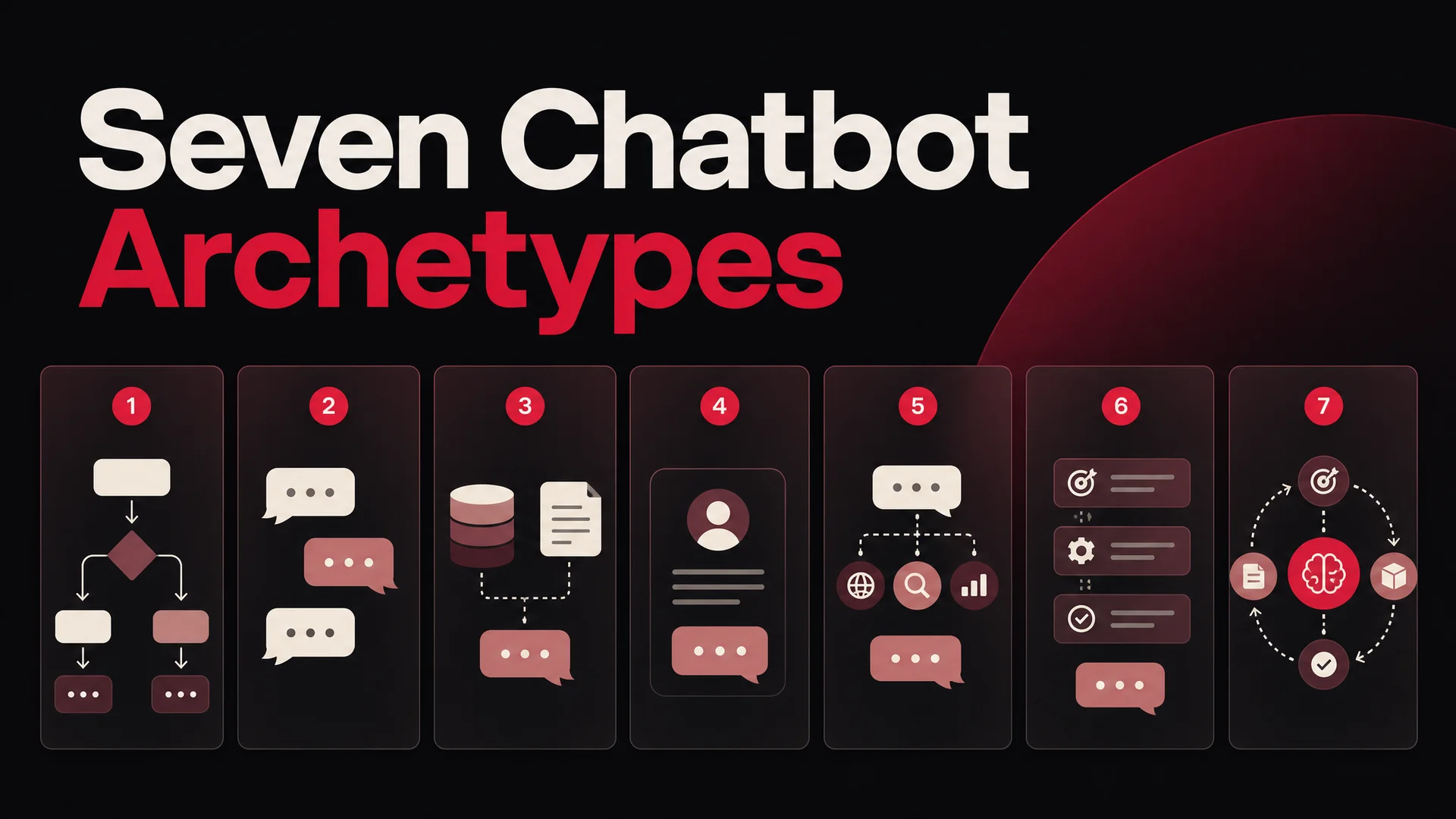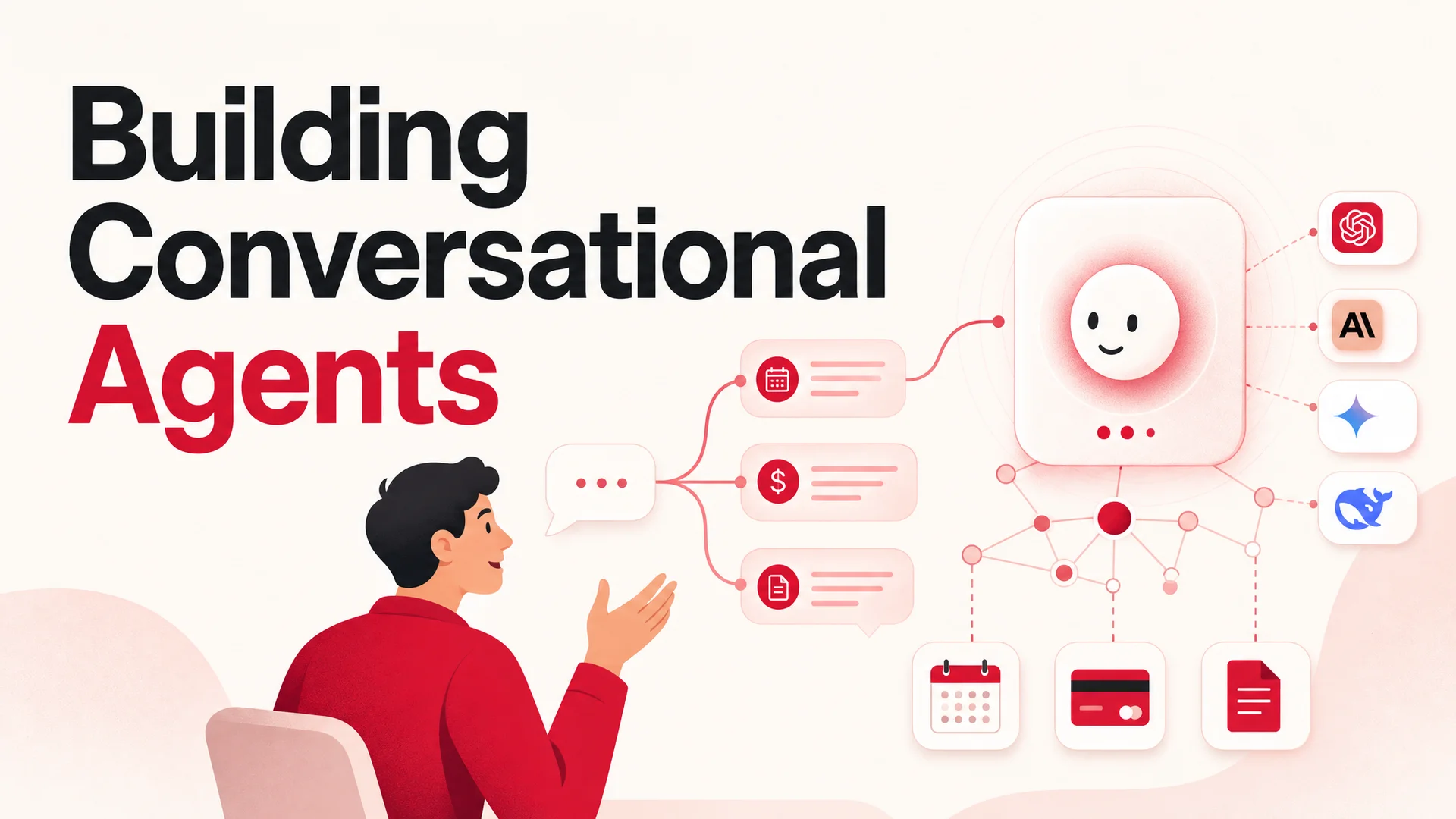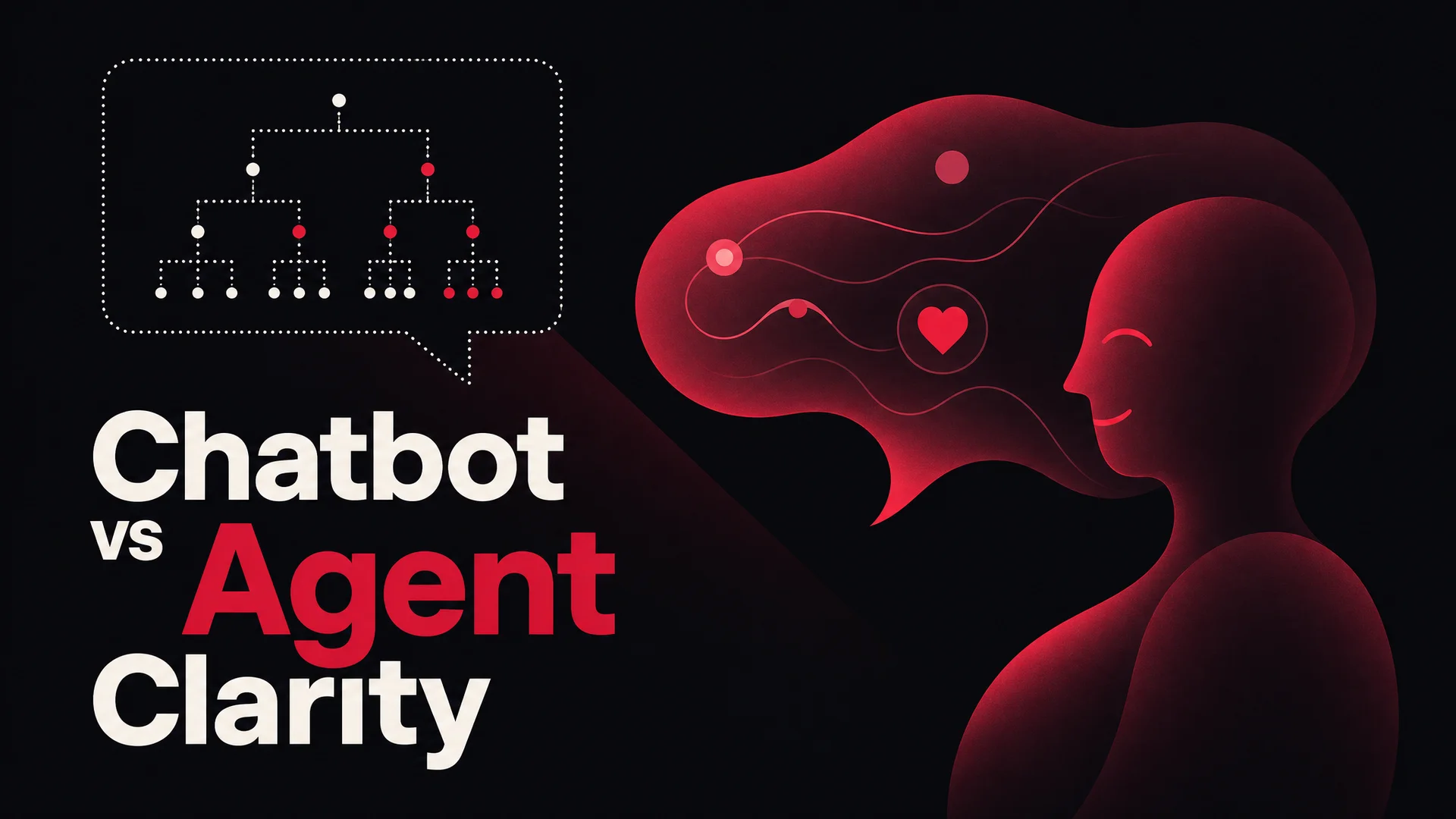
A recent Gartner analysis put the resolution rate for generative AI support agents at roughly 75% of inbound customer interactions - a number that has shifted from "interesting demo" to "central to the staffing model" for most support orgs. The platforms below are the ones we see midmarket and enterprise teams actually shortlist in 2026, with notes on what each is best at, where it falls short, and how the new wave of frontier and open-weight models changes the picture.
This is the working version of the buyer's guide we wish existed when we were evaluating tools ourselves. No buzzwords, no "synergize your CX stack" - just what you need to make a call.
What "conversational bot" means in 2026
The term has drifted. Five years ago a "conversational bot" meant a decision-tree script with a friendly typing indicator. Today it means a software agent built on a large language model that can hold context across a long thread, reason about intent, retrieve information from your knowledge base, and - increasingly - call tools to actually get things done on the customer's behalf.
The split worth keeping in mind:
- Conversational chat layer. Understands natural-language input, references prior turns, handles spelling errors, switches languages mid-conversation, summarizes when needed.
- Knowledge layer. Either retrieval-augmented generation against your help center and product docs, or - newly viable in 2026 - long-context loading where a 1M–2M-token window holds the whole knowledge base in memory.
- Action layer. The agent triggers real workflows: lookup an order, refund a charge, reschedule a booking, escalate to a human with full context preloaded. This is the layer that separates "smart FAQ" from "actual deflection."
Modern conversational bots show up wherever your customers already are: your website widget, in-app, WhatsApp, Slack, Discord, Messenger, voice. They handle product questions, qualify and route leads, walk users through onboarding, take payments, run NPS surveys, and triage support tickets before a human ever sees them.
The shift from keyword matching to intent and context is the part that matters operationally. Ask a 2021-era bot "how much does it cost?" and it would search for the word "cost" in its FAQ. Ask a 2026-era agent the same question mid-conversation and it knows you've been comparing two specific plans, knows your team size from earlier in the thread, and answers with the right tier and the right billing cycle.
What changed in the model layer this year
The April 2026 model wave reset what these systems can do. Claude Opus 4.7 leads SWE-bench Pro at 64.3% on complex coding work, which translates to dramatically better tool-use reliability for AI Actions. Gemini 3.1 Ultra runs on a 2M-token context window across text, image, audio, and video. Open-weight challengers - DeepSeek V4 Flash at $0.14/$0.28 per million input/output tokens, MiniMax M2 at roughly 8% of Claude Sonnet's price, GLM-5.1 from Z.ai under MIT license - have collapsed the unit economics of AI support. A typical deployment now routes routine "where is my order" traffic to V4 Flash or M2 at fractions of a cent per resolution, and reserves Opus 4.7 or GPT-5.5 for the small slice of escalations that actually need frontier reasoning.
The numbers buyers actually care about
Public benchmarks across vendors and analyst studies in 2025–2026 land in roughly the same range:
- Response time drops 40–50% inside the first quarter after launch, mostly from front-line deflection.
- Ticket volume to human agents falls 30–40% on routine categories (status, returns, password, billing basics).
- CSAT moves up modestly - usually 5–15 points - when handoffs to humans carry full context instead of restarting the conversation.
Numbers above that range usually mean the team also tightened its self-serve content and intake forms at the same time. Numbers below it usually mean the agent is answering but not acting - no AI Actions wired up, so customers still have to wait for a human to do anything beyond confirm a fact.
The 12 platforms worth a look in 2026
1. Berrydesk
Berrydesk is built specifically for teams that want a production support agent live in days rather than quarters. The four-step setup - pick a model, train on your sources, brand the widget, deploy - is opinionated by design: most platforms ask you to assemble the pipeline yourself, and most teams underestimate how much glue work that turns into.
Key features
- Choice of frontier and open-weight models: GPT-5.5 and GPT-5.5 Pro, Claude Opus 4.7 and Sonnet 4.6, Gemini 3.1 Ultra and Pro, DeepSeek V4, Moonshot Kimi K2.6, Z.ai GLM-5.1, Alibaba Qwen 3.6, MiniMax M2, and others. Routing rules let you send routine traffic to a cheap open-weight model and escalations to a frontier model.
- Training on docs, websites, Notion, Google Drive, and YouTube - pull from wherever your knowledge actually lives instead of duplicating it.
- Branded chat widget with full theming, custom domain, and configurable persona.
- AI Actions for booking, payments, order lookups, refunds, and any custom workflow you can describe with an API.
- Multi-channel deployment: website, Slack, Discord, WhatsApp, and more from a single agent definition.
- Long-context support for the 1M-token Sonnet 4.6 and DeepSeek V4 windows, plus Gemini 3.1's 2M.
- Real-time analytics on resolution rate, escalation reasons, and topic trends.
- Strong defaults around data residency, PII handling, and audit logging.
Pros
- Fast to ship - the four-step flow gets a working agent live the same day.
- Model neutrality means you're not locked into one vendor's roadmap or pricing.
- Open-weight options keep cost-per-resolution genuinely low at scale.
- AI Actions move the platform from "answers questions" to "completes work."
- Active model support - new frontier and open-weight releases are added on a short cycle.
Cons
- The breadth of model options means there's a real choice to make on day one. Most teams default to Claude Sonnet 4.6 plus a cheap open-weight fallback and tune from there.
- Deep customizations beyond the visual builder require some technical fluency, same as any platform of this class.
Best for
- SaaS, ecommerce, and services companies that want production-grade AI support without standing up an in-house ML team.
- Regulated industries that care about being able to deploy on top of an MIT-licensed open-weight model (GLM-5.1, Qwen3.6-27B, MiMo-V2-Pro) for on-prem or air-gapped use cases.
- Global brands that need WhatsApp and Slack alongside the website widget.
2. REVE Chat
REVE Chat bundles a conversational agent with live chat, video chat, and a co-browsing tool. It sits between a pure chatbot and a full contact center suite - which is either exactly what you need or more product than you want, depending on where you're starting from.
Key features
- LLM-backed conversational layer with a visual flow builder for structured paths.
- Omnichannel coverage across website, mobile app, WhatsApp, Facebook, and Instagram.
- Workflow actions for handoffs, ticket creation, and CRM updates.
- Multilingual support out of the box.
- Reporting dashboards for agent performance and bot deflection.
Best for
Mid-market support teams that want chatbot, live chat, and video conferencing under one contract and don't already have a help desk in place.
3. Intercom
Intercom's Fin agent is one of the more mature offerings in this category, and Intercom's pricing model - per resolution - is the one most other vendors now benchmark against. If your team is already inside the Intercom inbox, the case for Fin is straightforward.
Key features
- Fin AI agent with strong knowledge-base ingestion and an opinionated escalation flow.
- Tight integration with the rest of Intercom: inbox, help center, product tours, surveys.
- Multi-channel (web, in-app, WhatsApp, email).
- Workflow builder for hand-offs, conditional logic, and tagging.
- Analytics tied to the Intercom data model.
Best for
Teams already standardized on Intercom's broader customer communication suite, where the switching cost of moving conversations elsewhere outweighs the appeal of a more model-flexible platform.
4. Chatfuel
Chatfuel made its name on Messenger bots and remains the strongest pick for businesses whose customer base lives on Meta's social platforms. The product is narrower than the rest of this list, but it does that narrow thing well.
Key features
- Visual flow builder geared toward Messenger and Instagram.
- LLM-backed natural-language understanding for off-script messages.
- Lead capture and qualification flows tied directly to Meta ad campaigns.
- Built-in analytics for funnels and message performance.
- A/B testing on copy and conversational paths.
Best for
Direct-to-consumer brands and creators whose top channels are Instagram DM, Facebook Messenger, and Meta ad-driven traffic.
5. Tidio
Tidio targets the small and mid-sized e-commerce end of the market with a combined live-chat plus AI agent product (Lyro) and a generous free tier. It's not the most powerful platform on this list, but it's one of the easiest to get something running on by Friday.
Key features
- Drag-and-drop bot builder with a large library of pre-built templates.
- Live chat and AI agent in the same inbox so handoffs are clean.
- Native integrations with Shopify, WooCommerce, BigCommerce, and the major email platforms.
- Real-time visitor monitoring with proactive triggers.
- Multilingual support across the customer-facing widget.
Best for
Small to mid-sized e-commerce stores that want a single tool covering chat, basic AI deflection, and email follow-up.
6. SalesLoft (formerly Drift)
After the Drift acquisition, the chat product sits inside SalesLoft's broader revenue platform. The lens here is unmistakably sales-led: the bot is a pipeline tool first and a support tool second.
Key features
- Conversation routing tied to account-based marketing playbooks.
- Lead scoring and meeting booking baked into the chat experience.
- Integrations with the major CRMs (Salesforce, HubSpot) and marketing automation tools.
- Custom playbooks segmented by traffic source, account tier, and intent signals.
- Reporting tied to pipeline influence and revenue attribution.
Best for
B2B sales orgs where the chat widget exists primarily to convert high-intent traffic into qualified meetings, not to deflect support tickets.
7. Jasper
Jasper started as a marketing copy tool and has expanded into conversational experiences for marketing teams. The differentiator is brand voice - Jasper's training tools for tone, style, and prohibited language are noticeably more developed than most competitors'.
Key features
- Brand voice training that propagates across long-form copy and conversational responses.
- Channel coverage across web, social, and select messaging surfaces.
- Integration with the marketing stack (CMS, social schedulers, analytics).
- Performance reporting that ties conversations back to campaign attribution.
- Voice command support for hands-free authoring.
Best for
Marketing teams that want their conversational presence - on the website, in social DMs, in campaign landing pages - to sound consistent with the rest of their content.
8. Landbot
Landbot's calling card is the visual flow editor: it's the platform that gives non-developers the most control over the shape of a conversation, with a heavy emphasis on rich media (images, videos, embedded forms) inside the chat itself.
Key features
- No-code drag-and-drop conversation designer.
- Rich-media blocks for images, embedded videos, calculators, and inline forms.
- Multi-channel deploy across web, WhatsApp, and Messenger.
- CRM and webhook integrations for downstream actions.
- Analytics on conversation completion and form fill rates.
Best for
Marketing and ops teams that want to build interactive conversational landing pages, surveys, and lead-gen flows without engineering involvement.
9. LivePerson
LivePerson is the enterprise option in the room. Pricing is bespoke, deployments are long, and the product is heavy - but for organizations measured in tens of millions of conversations a year, it's one of the few platforms with a track record at that scale.
Key features
- LLM-powered agents with deep configuration on intent models and routing rules.
- Omnichannel messaging across web, app, SMS, social, and voice.
- Industry-specific accelerator packs (telco, financial services, retail).
- Advanced analytics including conversational topic mining and agent-assist scoring.
- Mature escalation tooling for blended bot-and-human staffing models.
Best for
Large enterprises with global support footprints, complex compliance requirements, and the internal capacity to run a real implementation program.
10. Zendesk Answer Bot
Zendesk's AI agent is the natural pick if your team is already running on Zendesk Suite. It pulls from your existing macros and help center, slots into your ticket fields and triggers, and reports inside the dashboards your team already reads.
Key features
- Native integration with Zendesk's ticketing, knowledge base, and routing.
- Multilingual coverage across the supported help center languages.
- Custom workflows and conditional logic for handoffs.
- Real-time analytics inside the existing Zendesk reporting layer.
- Tight identity and SSO story for teams already on Zendesk's enterprise tier.
Best for
Companies already invested in Zendesk Suite where the cost of moving conversations to another platform outweighs the appeal of a more model-flexible tool.
11. HubSpot Conversations
HubSpot's chatbot lives inside the HubSpot CRM and inherits all of its routing, contact records, and reporting. For teams already running HubSpot for marketing or sales, it's the path of least resistance.
Key features
- Native two-way sync with the HubSpot contact and deal model.
- Meeting scheduling, lead qualification, and form-fill flows out of the box.
- Custom chatbot flows tied to lifecycle stage and lead score.
- Analytics rolled up into the HubSpot reporting dashboards.
- Multi-channel deploy across web, Messenger, and WhatsApp.
Best for
Small and mid-sized teams running HubSpot as their CRM and marketing system of record, where the chatbot is mostly a top-of-funnel tool.
12. VoiceSpin
VoiceSpin combines text-based conversational agents with voice bots for inbound and outbound calls - which makes it one of the few options on this list that crosses the chat-to-voice line in a single product.
Key features
- Conversational AI for chat plus voice bots for phone.
- Custom knowledge base ingestion.
- Multi-channel deploy across web, messaging, and voice.
- Contextual handoffs to live agents, including phone transfers.
- CRM integrations and back-end system connectors for action workflows.
Best for
Mid-market and enterprise teams whose customers still rely heavily on phone - utilities, insurance, healthcare, classic financial services - and who want a single platform handling both chat and voice.
How to actually pick one
Most of the long shortlists you'll find online ignore the boring part: the platform you choose will live in your stack for years and will get judged on the bottom three of these five questions, not the top one.
Does it solve the specific problem you have right now?
Map your top five ticket categories from the last quarter. If two of them are "where is my order" and "I want to change my plan," your platform absolutely needs an AI Actions layer, not just a Q&A bot. If your top categories are pre-sales education, a knowledge-only agent might be enough. Don't pay for capability you won't activate, and don't pick a platform whose ceiling is below where your traffic actually lives.
Does it fit the channels your customers actually use?
Pull your channel mix from the last 90 days. If 40% of conversations come through WhatsApp, a platform that treats WhatsApp as a paid add-on is going to bleed budget. If your customers live in Slack and Discord communities, check that the platform supports those natively rather than through a brittle Zapier hop.
Will it integrate with the rest of your stack without engineering tears?
The list of integrations on a marketing site is not the same as the list of integrations that work in production. The questions to ask: does it write back to your CRM, can it read from your order system in real time (not via nightly sync), can it create and update tickets in your help desk, and does it support webhooks or a proper API for the integrations the vendor hasn't built. For regulated environments, ask about audit logs, SSO, SCIM, and data residency before the demo, not after.
What does it actually cost at your projected volume in year two?
Most pricing pages quote a per-seat or per-conversation rate that is fine at small volume and painful at scale. Build a real model: expected conversations per month in year two, expected resolution rate, average tokens per resolution, your routing strategy across cheap and frontier models. The platforms that look most expensive on the marketing page can come out cheapest in practice if they let you route routine traffic to DeepSeek V4 Flash at $0.14/$0.28 per million tokens or MiniMax M2 at roughly 8% of Claude Sonnet's price. The reverse is also true: a flat-rate platform that runs everything on a frontier model can quietly add a six-figure line item once volume ramps.
Is the vendor going to be around - and shipping - in three years?
Look at release cadence over the last 12 months: how quickly did they add support for Claude Opus 4.7, GPT-5.5, Gemini 3.1, the major open-weight April 2026 releases? A platform that took six months to add a new frontier model will take six months to add the next one. Talk to two or three reference customers at your size, ideally cold ones from LinkedIn rather than the names the vendor hands you.
Common pitfalls worth avoiding
A few traps we see teams fall into during evaluations:
Optimizing for the demo, not the production load. The demo agent is trained on a clean, curated knowledge base. Your production agent will be trained on the help center your team has been promising to clean up for two years. Test on real, messy content before signing.
Ignoring the human-in-the-loop story. The hardest part of running a conversational bot in production is what happens at the escalation. If the handoff dumps the customer back to "Hi, how can I help?" you've made the experience worse, not better. Demand a real demonstration of how context moves from agent to human.
Locking into a single model vendor. April 2026 produced four major frontier model releases and roughly a dozen meaningful open-weight ones. Any platform that treats its model choice as immovable infrastructure is locking you into whoever is on top this quarter. Model neutrality is the most underpriced feature on the list.
Treating long-context as a substitute for real retrieval. A 1M-token window means you can fit a whole knowledge base in-context. That doesn't always mean you should - relevance still matters, and a focused retrieval against the right 30 chunks usually outperforms loading 800,000 tokens of mixed-quality content. Long context is a powerful tuning lever, not a replacement for thinking about what the model sees.
Underestimating the ongoing tuning work. A conversational bot is not a "set it and forget it" product. The agents that perform well in year two are the ones whose owners review escalation transcripts weekly and feed the gaps back into training content and AI Actions. Budget for that as an ongoing role, not a one-time launch project.
The bottom line
The platforms on this list span a wide range - from $20-a-month e-commerce add-ons to seven-figure enterprise contracts. The right answer depends on your traffic mix, your existing stack, and how aggressive you want to be about routing across the new generation of cheap, open-weight models that landed in April 2026.
If you want to skip the months of scoping and have a working agent live this week - model-flexible, action-capable, deployable to your website and Slack and WhatsApp from a single setup - that's exactly what Berrydesk is built for. Pick a model, point it at your docs, brand the widget, and ship. You can always switch models or add channels later. The cost of trying it is genuinely zero.
 Berrydesk
Launch your AI agent in minutes
- Pick from 9+ frontier models - GPT-5.5, Claude Opus 4.7, Gemini 3.1, DeepSeek V4, Kimi K2.6, GLM-5.1, Qwen3.6, MiniMax M2
- Train on your docs, websites, Notion, Drive, or YouTube - then ship to web, Slack, WhatsApp, and Discord
Set up in minutes

Chirag Asarpota is the founder of Strawberry Labs, the team behind Berrydesk - the AI agent platform that helps businesses deploy intelligent customer support, sales and operations agents across web, WhatsApp, Slack, Instagram, Discord and more. Chirag writes about agentic AI, frontier model selection, retrieval and 1M-token context strategy, AI Actions, and the engineering it takes to ship production-grade conversational AI that customers actually trust.