Every minute, somewhere on the internet, a customer is typing a real question into ChatGPT and treating the reply as gospel. Some of those replies are correct. A meaningful share are not. If you are running a support team in 2026, the question is not "is ChatGPT smart" - clearly it is - but "how often is it wrong, where does it fail, and what do I do about it before that wrongness ends up in a customer's inbox."
This post pulls together the latest accuracy data on GPT-5.5, compares it to the rest of the 2026 frontier, and lays out the practical playbook for getting trustworthy answers out of any large model. The headline: GPT-5.5 is the most accurate ChatGPT ever shipped, hallucinations are down sharply, and yet the gap between "general-purpose chatbot" and "AI you can put in front of paying customers" is wider than the marketing suggests.
How accurate is GPT-5.5, in plain numbers
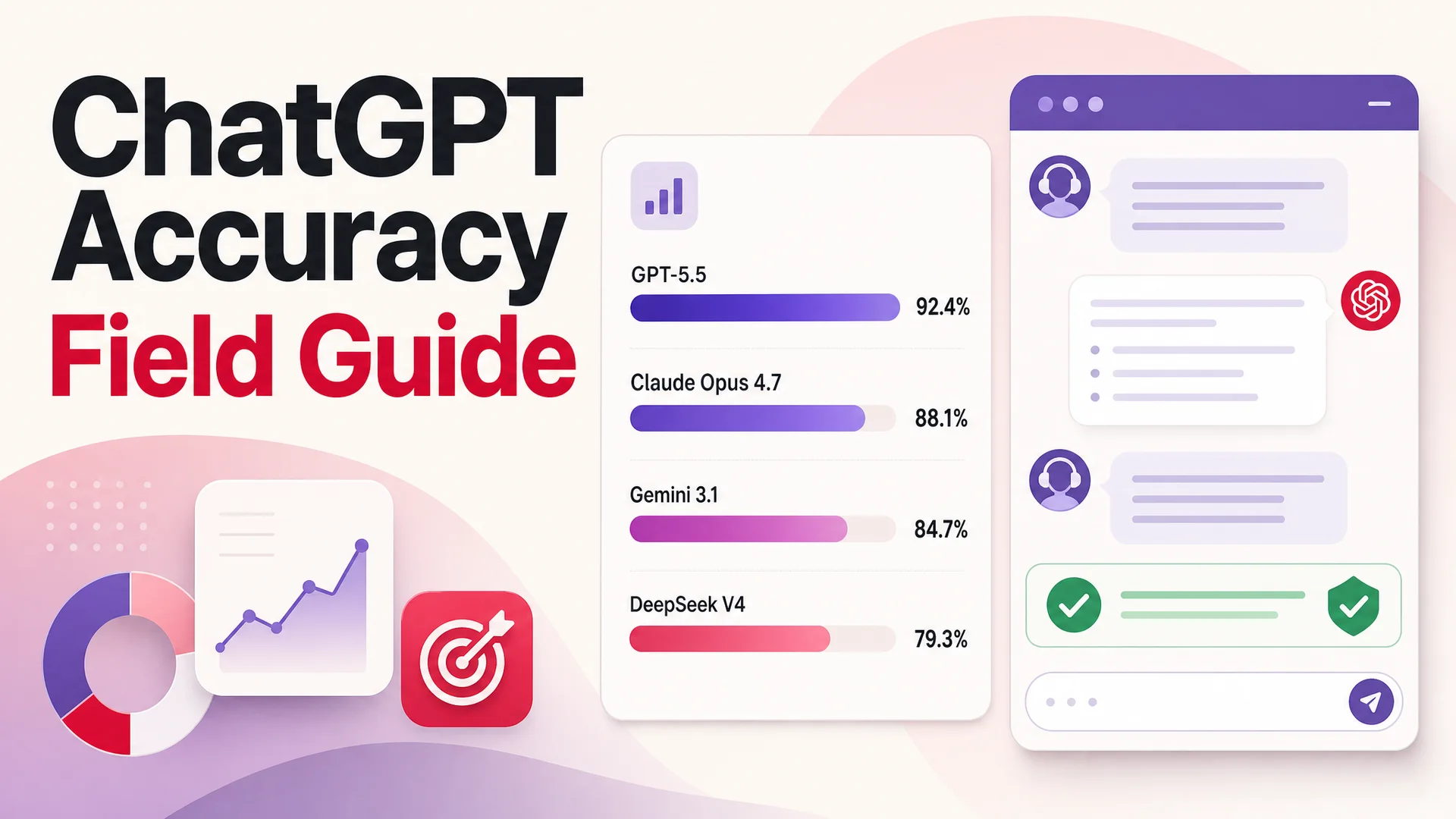
OpenAI released GPT-5.5 and GPT-5.5 Pro in April 2026, and the headline accuracy gains are real. Compared to the GPT-5 line, the new model makes roughly half as many factual errors on open-domain questions and produces meaningfully fewer fabricated citations. Across the standard academic and reasoning benchmarks it sits in a near-tie with Claude Opus 4.7 and Gemini 3.1 Ultra at the very top of the table, with each of the three trading blows depending on the test.
A quick read of what that means in practice:
- On hard graduate-level science and reasoning, GPT-5.5 is competitive but no longer the outright leader - Gemini 3.1 Pro now leads GPQA Diamond at 94.3%, and Claude Opus 4.7 leads SWE-bench Pro at 64.3% for complex coding tasks.
- On long-document comprehension, GPT-5.5 is excellent but the context-window crown moved elsewhere. Gemini 3.1 Ultra ships a 2M-token window natively. Claude Opus 4.6 and Sonnet 4.6 expanded to 1M tokens at no surcharge. Open-weight models like DeepSeek V4 also hold 1M context.
- On hallucination rates for high-stakes prompts (medical, legal, financial), GPT-5.5's "Thinking" mode brings the rate down to the low single-digit percentages - a real improvement, but not zero.
The honest summary: if you ask GPT-5.5 ten well-formed factual questions, expect one or two answers to contain something wrong, misleading, or out of date. The error rate climbs for niche or specialized topics and drops for well-documented general knowledge.
Where GPT-5.5 stands against the rest of the 2026 frontier
It is no longer a one-horse race, and that matters for anyone choosing a model to power customer-facing experiences.
Closed frontier
- OpenAI GPT-5.5 / GPT-5.5 Pro - strong general reasoning, good instruction-following, parallel-reasoning Pro variant for the hardest cases.
- Anthropic Claude Opus 4.7 - best-in-class on complex coding (64.3 SWE-bench Pro) and notable for being more willing to say "I don't know" rather than confabulate. The 1M-context Sonnet 4.6 is the workhorse.
- Google Gemini 3.1 Ultra / Pro - 2M-token context, native multimodal across text, image, audio, and video. Pro leads GPQA Diamond at 94.3%.
Open-weight frontier
This is the part of the landscape that did not exist in any serious form a year ago and that quietly changes the economics of running an AI support agent.
- DeepSeek V4 (April 2026) - V4 Pro is a 1.6T-param MoE with 49B active. V4 Flash is a leaner 284B / 13B active variant, also 1M context, priced at $0.14 per million input tokens and $0.28 per million output tokens. That is roughly an order of magnitude cheaper than the closed frontier for comparable accuracy on routine tickets.
- Moonshot Kimi K2.6 - agentic-first 1T-param MoE. Twelve-hour autonomous coding sessions, swarms of up to 300 sub-agents, native video input, 58.6 on SWE-bench Pro. Open weights.
- Z.ai GLM-5.1 - 754B-param MoE, MIT-licensed, 58.4 on SWE-bench Pro - beats GPT-5.4 and Claude Opus 4.6 on that benchmark and runs an 8-hour autonomous plan-execute-test-fix loop. Trained entirely on Huawei Ascend chips.
- Alibaba Qwen 3.6 family - Qwen3.6-27B (Apache 2.0, dense, beats much larger MoE rivals on agentic coding), plus an open MoE 35B-A3B and proprietary Plus and Max-Preview tiers.
- MiniMax M2 / M2.7 - 230B total / 10B active MoE, open-weight, ~8% the price of Claude Sonnet at 2x speed. M2.7 hits 56.22% on SWE-Pro.
- Xiaomi MiMo-V2-Pro - over 1T total / 42B active, 1M context, weights open-sourced under MIT in April 2026.
For a support team, the practical impact is that you no longer have to pick a single model and live with its accuracy curve. You can route routine "where's my order" traffic to a cheap open-weight model and reserve frontier closed models for genuinely hard escalations. Berrydesk supports model selection per agent, so you can mix and match as you see fit.
Does GPT-5.5 still hallucinate
Yes - less, but yes.
Hallucinations have not disappeared in 2026. They have changed character. Earlier ChatGPT versions would invent fake academic citations roughly a third of the time when asked. GPT-5.5 with Thinking mode pushes that down to the low single digits on the same kinds of prompts. Where it still trips:
- Recency. Anything more recent than the model's training cutoff is at risk unless web search is wired in.
- Specificity. "What is the SLA for plan tier B at company X" is exactly the kind of question a base model has no business answering, but it often will.
- False confidence. GPT-5.5 is better than its predecessors at expressing uncertainty, but it still occasionally states a guess in the same calm tone it uses for facts.
- Long, multi-turn conversations. As context fills up with chat history, attention drifts and earlier facts get rewritten. This matters less with 1M-token windows but does not disappear entirely.
For a customer support context, the danger is not the obvious hallucination ("our return window is 17,000 days") that any human agent catches in review. The danger is the plausible one - a refund policy that is almost right, a feature gating rule that used to be true, a pricing tier that exists at a competitor but not yours. Those are the answers that get past QA and end up in a screenshot on social.
How accurate is "accurate enough" for customer support
Benchmark percentages do not translate cleanly to customer experience. A chatbot that is 87% accurate on academic trivia might be 99% accurate on your top 50 support intents and 40% accurate on policy questions you never trained it on. The shape of accuracy matters more than the average.
For a support agent, the bar most teams should aim for is not "matches GPT-5.5 on MMLU." It is:
- Zero confident wrong answers about your own product. This is non-negotiable. A grounded agent should say "let me get a teammate" before it invents a refund policy.
- Verifiable citations. Every factual claim about your business should be linkable back to a source document the customer can read.
- Graceful handoff on out-of-scope. The agent should know its lane and step out cleanly.
- Consistency across channels. The same question on the website widget, in Slack, and over WhatsApp should produce the same answer.
A general-purpose ChatGPT cannot give you any of those four reliably, because it does not know what your business knows.
Why grounding beats raw model intelligence for support
The most reliable way to make a support agent accurate is not to throw a smarter model at the problem. It is to make sure the model is answering from your sources, not its training data. Two techniques do most of the work.
Retrieval-augmented generation
RAG - retrieval-augmented generation - pulls relevant chunks from your knowledge base at query time and feeds them to the model as context. The model then generates an answer constrained to that context. Done well, this collapses the hallucination rate on product-specific questions by an order of magnitude, because the model has the right facts in front of it instead of guessing from training memory.
The trade-off is engineering complexity. Chunking, embedding, retrieval quality, re-ranking, and prompt assembly are all tuning surfaces. A bad RAG pipeline can be worse than no RAG at all, because the model dutifully answers from irrelevant retrieved chunks.
Long context as an alternative
The arrival of 1M-token context windows in Claude Sonnet 4.6, GPT-5.5, DeepSeek V4, and the 2M-token window in Gemini 3.1 Ultra changes the calculus. For knowledge bases that fit comfortably in-context (most company support docs do), you can simply paste the whole thing in and skip the retrieval step. This is faster to set up, easier to debug, and removes the failure mode of bad retrieval.
The trade-off is cost per query - long contexts are not free even at 2026 prices - and the soft attention degradation that still exists at the far end of long contexts.
In practice, the right answer for most support deployments is hybrid: use long context for the always-relevant policy and product material, and use retrieval for the long tail of niche docs and historical conversations. Berrydesk handles this hybrid approach automatically when you connect docs, websites, Notion, Google Drive, or YouTube as training sources.
Practical ways to get better answers out of any model
If you are using ChatGPT directly - or building on top of any frontier model - here is what actually moves the accuracy needle.
Give it your sources
The single highest-leverage change is to stop asking the model to recall facts and start asking it to read facts. Paste the relevant document. Upload the PDF. Connect the knowledge base. Whatever the channel, get the right text into the model's working memory and tell it to answer from that. Every modern frontier model - GPT-5.5, Claude Opus 4.7, Gemini 3.1, Kimi K2.6 - is dramatically better at "answer from this passage" than at "recall this fact."
Turn on web search for anything time-sensitive
GPT-5.5 Thinking mode runs multiple web searches as part of its reasoning. Claude and Gemini have similar capabilities. For any question about current events, recent product changes, or pricing, web search closes the recency gap that training cutoffs leave open. The trade-off is that the model is now at the mercy of whatever it finds - and the open web is full of confidently wrong content. For business use, a curated, internal knowledge source beats web search every time.
Use the reasoning modes for hard questions
GPT-5.5 Pro's parallel reasoning, Claude Opus 4.7's extended thinking, and the agentic loops in Kimi K2.6 and GLM-5.1 all trade latency for accuracy. For high-stakes answers - medical, legal, financial, anything with material consequences - that trade is worth making. For "what time does the store open," it is overkill.
Be specific in your prompt
Vague questions get vague (and wrong) answers. The single biggest user-side accuracy improvement is also the simplest: state the context, the constraint, and the format you want. "Summarize this 10-K's revenue trends for a non-finance audience in 200 words" produces a better answer than "summarize this."
Verify anything that matters
Even at 95%+ accuracy, the residual error rate matters when the answer feeds a real decision. Treat the model like a sharp but unreliable analyst: useful for first drafts and quick reads, not a primary source. Anything that ends up in front of a customer or a regulator gets a human or a verification pass.
What this means if you are building a support agent
The lesson from the 2026 accuracy data is not "GPT-5.5 is good enough, ship it." It is more useful than that.
- Pick the right model for the job. Routine support traffic does not need a frontier model. DeepSeek V4 Flash at $0.14 per million input tokens handles the bulk of "where's my order" volume at a fraction of the cost. Reserve Claude Opus 4.7 or GPT-5.5 Pro for the hard escalations where reasoning quality pays off.
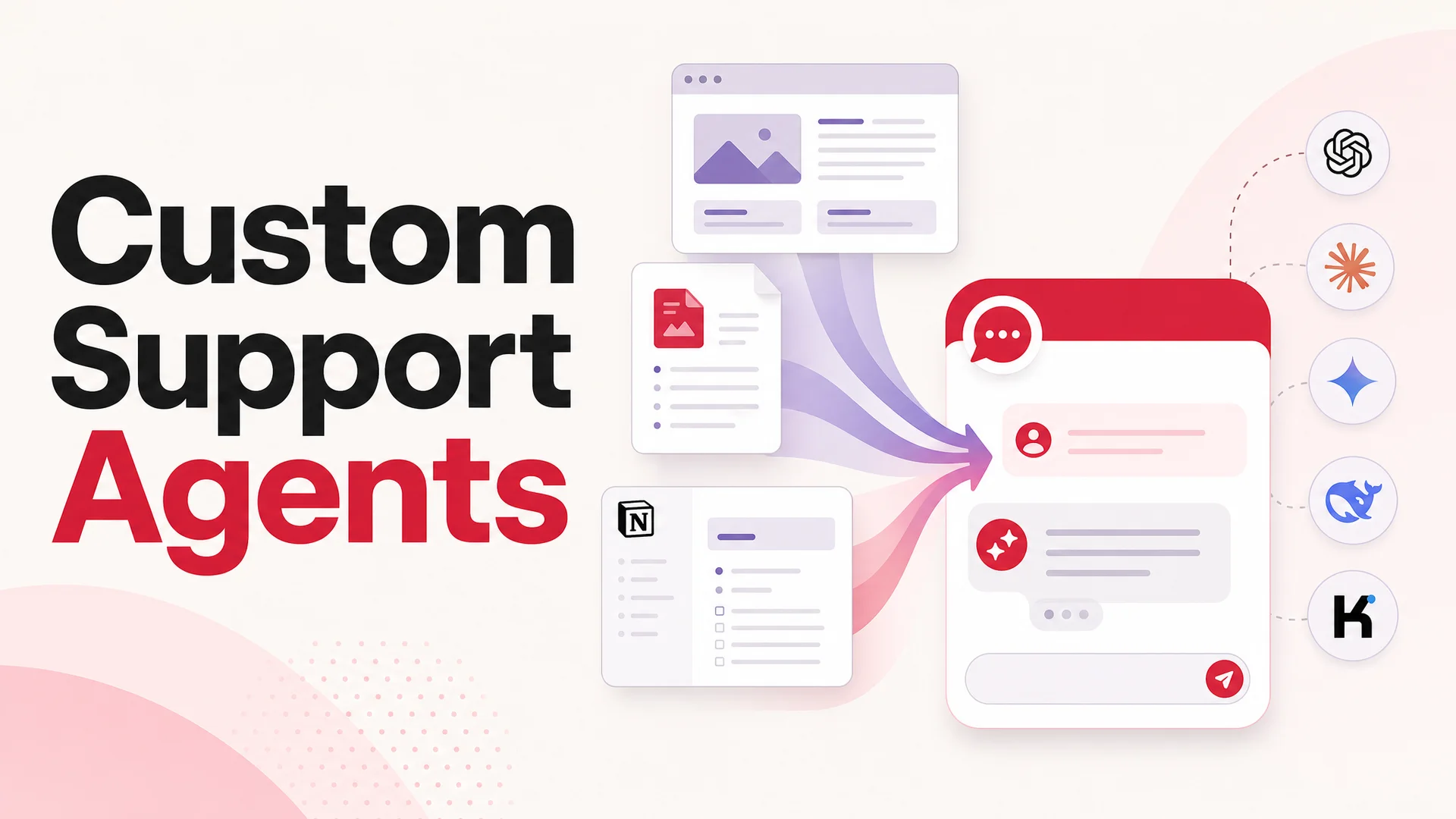
- Ground every answer. A support agent should never answer about your product from model memory. Connect the docs, the help center, the policy PDFs, the Notion workspace, the relevant YouTube tutorials. The accuracy gain dwarfs anything you get from picking a smarter base model.
- Build escalation in. The agent should know what it does not know and route those questions to a human cleanly. GPT-5.5 is much better than older models at saying "I'm not sure" - design your prompts and tools to reward that behavior, not punish it.
- Measure accuracy on your traffic, not benchmarks. MMLU Pro tells you nothing about whether the agent answers your top 100 intents correctly. Sample real conversations, score them, and track the trendline over time.
- Use AI Actions for transactional answers. When the customer asks "what's my order status," the right move is not to reason about it - it is to look it up. Berrydesk's AI Actions let your agent call your APIs to fetch real-time data, book appointments, process payments, and trigger workflows. The agent reports facts from your systems instead of guessing.
Common pitfalls to avoid
A few mistakes show up over and over in support deployments, and they have very little to do with which model you picked.
- Treating accuracy as a launch metric. Accuracy drifts. Docs change, products change, policies change. An agent that was 96% accurate at launch decays to 80% in a quarter if no one is updating the sources.
- Ignoring the long tail. Top-intent accuracy is easy. The hard accuracy work lives in the questions that come up once a week - billing edge cases, regional policy variations, integration-specific quirks. These are exactly the questions where hallucination is most damaging.
- Skipping eval entirely. "Customers haven't complained" is not an evaluation framework. Build a small golden set of representative tickets, run it on every model or prompt change, and watch the regression rate.
- Over-rotating on the newest model. Frontier models ship monthly in 2026. Each one is exciting. Most of them do not move your particular accuracy needle. Switch when you have evidence it helps your traffic, not when the leaderboard says so.
A more honest answer to "is ChatGPT accurate"
ChatGPT in its 2026 form is impressively accurate as a general-purpose tool. It is also wrong often enough that you should not put a raw ChatGPT-style chatbot in front of customers without grounding, guardrails, and an escalation path. The right architecture for a support agent in 2026 is not "use the smartest model." It is "give a competent model the right context, route the easy stuff to a cheap model, reserve the frontier for hard cases, and verify the high-stakes outputs."
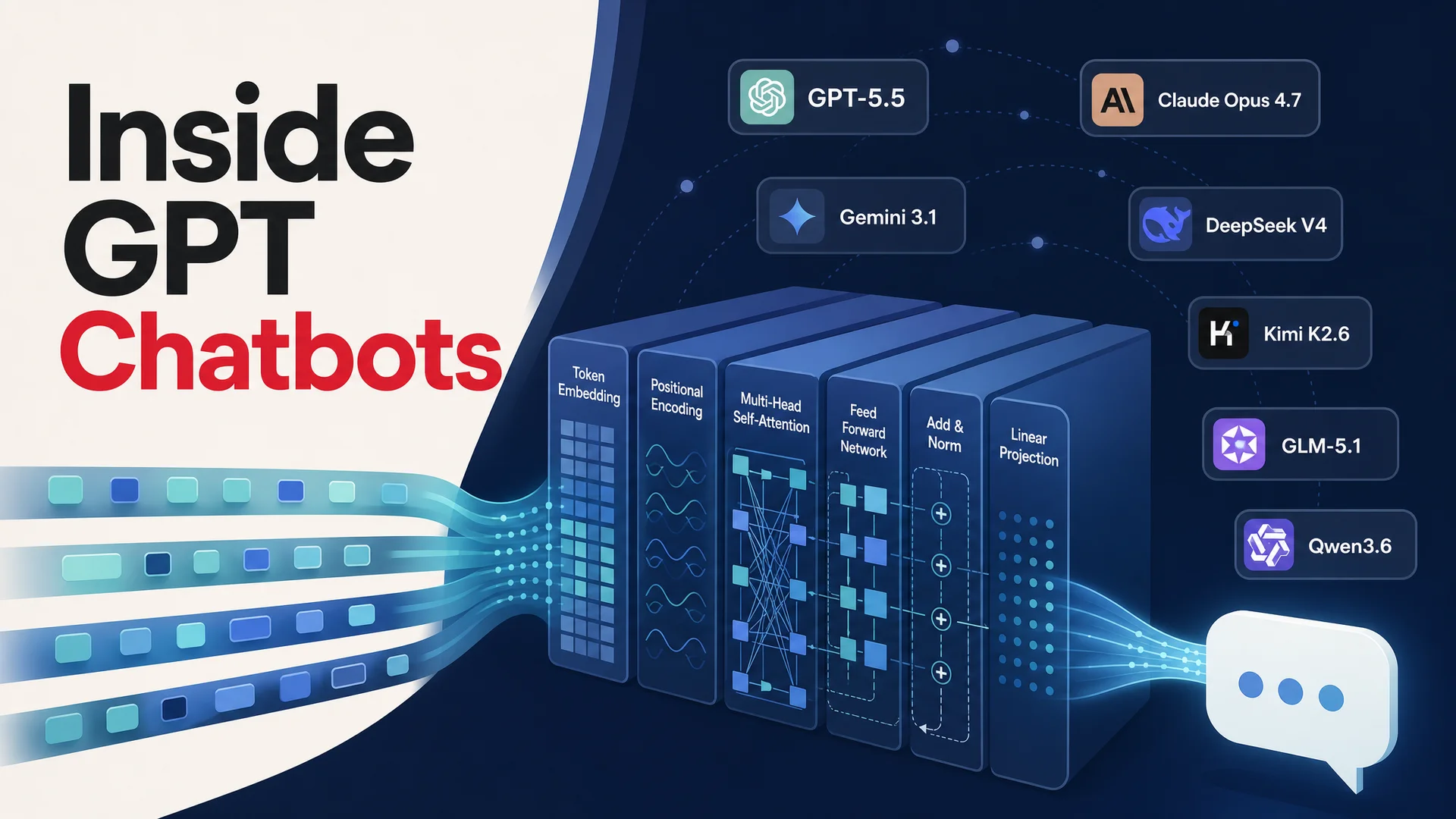
This is exactly what Berrydesk is built to do. Pick the model - GPT-5.5, Claude Opus 4.7, Gemini 3.1, DeepSeek V4, Kimi K2.6, GLM-5.1, Qwen, MiniMax, or others - train it on your docs, websites, Notion, Drive, or YouTube content, brand the chat widget, wire up AI Actions for the transactional asks, and deploy to your website, Slack, Discord, or WhatsApp. The accuracy you get is the accuracy of your sources, not the accuracy of an internet-trained generalist.
If you want to see what a grounded, multi-model support agent looks like running on your own data, you can build one in a few minutes at berrydesk.com. No credit card to start, and you keep control of every source the agent learns from.
 Berrydesk
Stop guessing whether your AI is right
- Train Berrydesk on your docs, Notion, Drive, and YouTube - answers your team can stand behind
- Route hard questions to GPT-5.5 or Claude Opus 4.7, easy ones to DeepSeek V4 - slash cost without losing accuracy
Set up in minutes

Chirag Asarpota is the founder of Strawberry Labs, the team behind Berrydesk - the AI agent platform that helps businesses deploy intelligent customer support, sales and operations agents across web, WhatsApp, Slack, Instagram, Discord and more. Chirag writes about agentic AI, frontier model selection, retrieval and 1M-token context strategy, AI Actions, and the engineering it takes to ship production-grade conversational AI that customers actually trust.