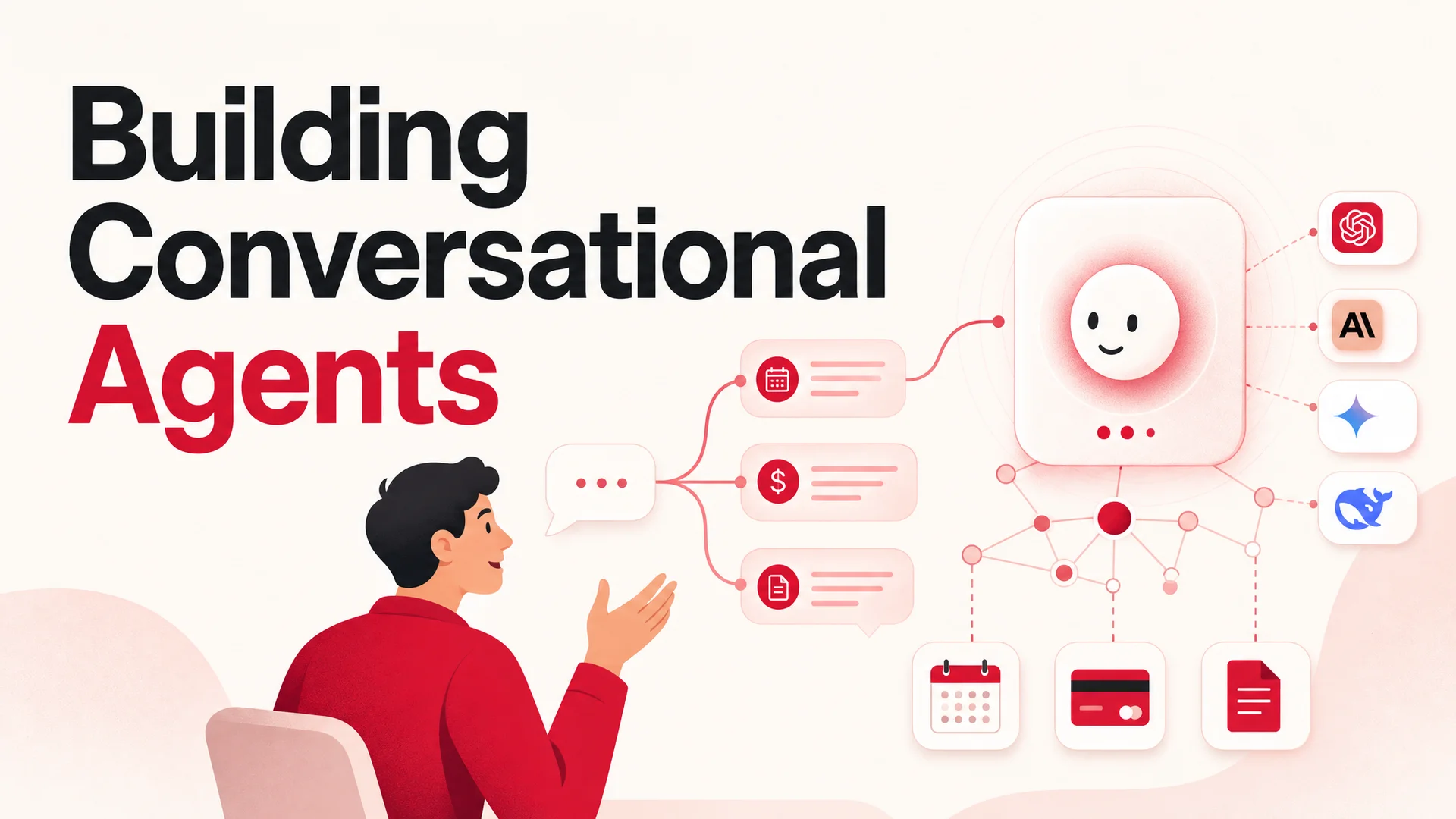
The frontier of AI moves fast enough that the framework you picked last quarter may already be misaligned with the model you want to run this quarter. Headlines fixate on model launches - GPT-5.5, Claude Opus 4.7, Gemini 3.1, DeepSeek V4 - but the harder, less-glamorous question for most teams is: what is the agent actually built on, and will that scaffolding still make sense after the next release cycle?
That scaffolding is the agent framework. It is the layer that turns a model's raw token output into something that can browse a knowledge base, hit your billing API, hand off to a human, and remember what happened yesterday. In 2026, the difference between a working production support agent and an impressive demo is almost entirely a framework decision.
This post is a hands-on review of the agent frameworks that matter right now, the trade-offs they impose, and the kinds of teams each one fits. By the end you should be able to look at your own situation - a support queue, a sales-ops automation, a research assistant, a multi-channel concierge - and have a defensible point of view about what to build on.
What an agent framework actually does
An agent framework is not a model and not a chatbot. It is the surrounding system that decides what the model sees, what it can do, what happens when it makes a mistake, and how memory persists across turns. Think of it less as a brain and more as the spinal cord and motor system that gives a brain something to act through.
A modern framework usually orchestrates a handful of moving parts:
- Perception layer. Anything that turns the outside world into tokens the model can read - retrieval over your docs, web search, voice transcripts, screenshots, structured API payloads. With Gemini 3.1 Ultra now offering a 2M-token window and both Claude Opus 4.6 and DeepSeek V4 sitting at 1M tokens, this layer is shifting away from aggressive chunking toward "fit more, retrieve smarter."
- Reasoning loop. The control logic that decides when to think, when to call a tool, and when to stop. This is where parallel-reasoning models like GPT-5.5 Pro or long-horizon planners like Kimi K2.6 actually earn their keep.
- Tool-use surface. A typed interface to the systems the agent can act on - your CRM, payments, booking calendar, refund engine, internal search. The tool layer is where reliability is won or lost.
- Memory. Both inside the conversation (what was said two turns ago) and across conversations (what we know about this customer). With million-token windows now table stakes, the interesting design question has become which memory belongs in-context versus in a vector or relational store.
- Coordination. How a single agent decomposes work, hands off to specialists, or supervises sub-agents. Kimi K2.6 swarms of up to 300 sub-agents over 4,000 coordinated steps are the headline-grabbing extreme; most production deployments live closer to two or three coordinated roles.
- Observability. Traces, evals, replay, and the unglamorous machinery that lets you debug a flaky tool call at 2am.
The frameworks worth your time package these concerns into something you can ship without writing the orchestration from scratch every time.
Why use a framework instead of rolling your own
It is genuinely tempting to skip the abstraction. A loop, a system prompt, a function-calling schema, and a couple of API keys can get you a "working" agent in a long afternoon. The reason most teams regret that decision three months in: the things a framework gives you are exactly the things you do not realise you need until production traffic hits.
- Speed to a real prototype. A framework collapses the "wire everything together" phase from weeks to a day or two. That matters when you are still figuring out whether your product even needs an agent or just a better FAQ search.
- Multi-model flexibility. The model leaderboard is reshuffling every few weeks. A framework worth using lets you swap GPT-5.5 for Claude Opus 4.7 for DeepSeek V4 Flash without rewriting your tool definitions, retries, or memory logic.
- Patterns for the failure modes that bite you in prod. Tool-call retries, partial output recovery, hallucinated function arguments, infinite-loop guards, escalation paths. Frameworks have opinions on these because their authors have already been burned.
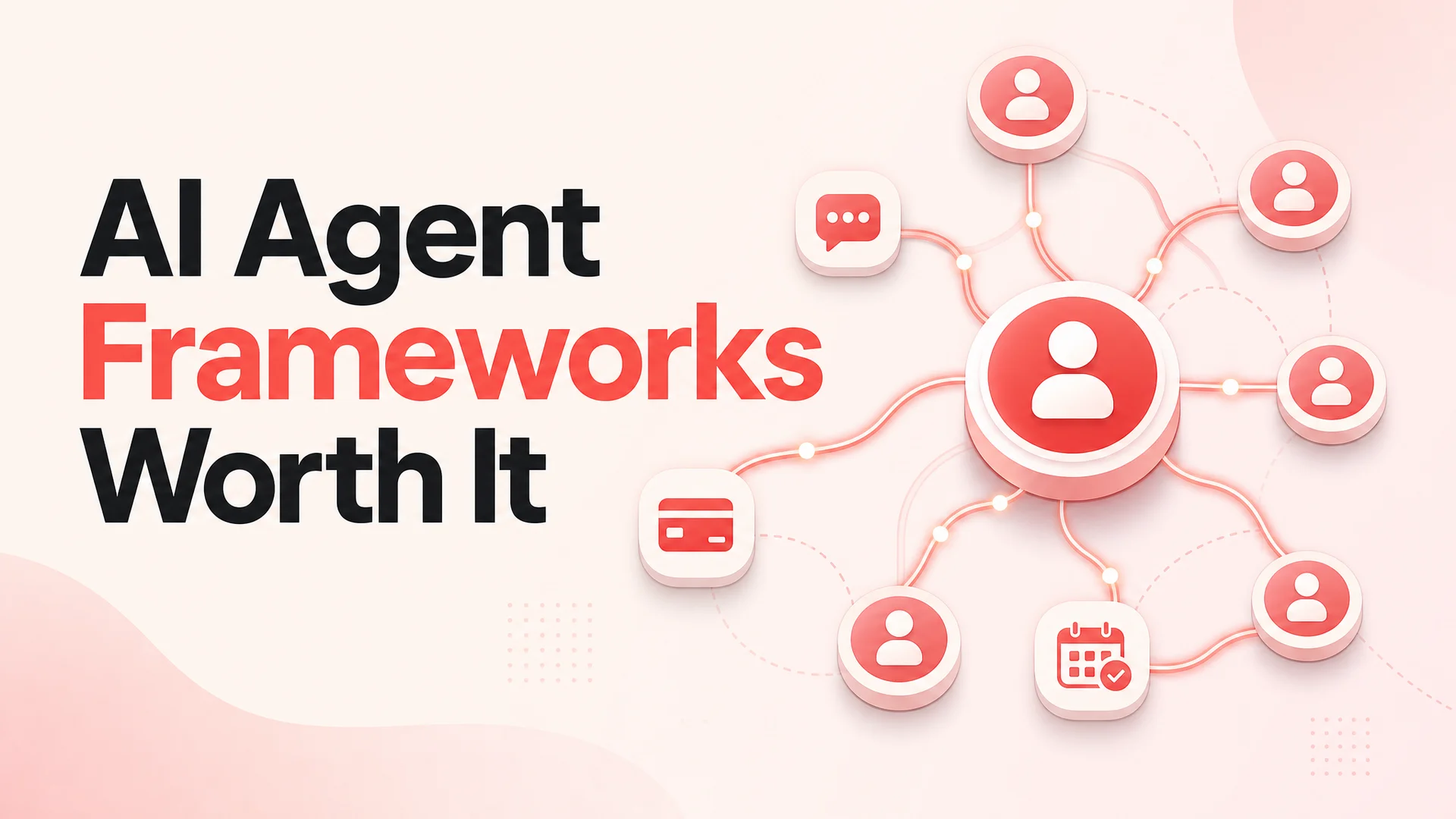
- Multi-agent coordination as a primitive. Once one agent works, you almost always want a second one - a triage agent in front of a specialist, a verifier behind an actor, a supervisor over a swarm. Building this from scratch is a tax most teams will pay twice.
- Ecosystem. Pre-built connectors, evals, observability hooks, community recipes. You are mostly buying everyone else's lessons learned.
The trade is real: you inherit the framework's opinions, you pay an abstraction tax in flexibility, and you take on a dependency that may pivot. The question is not whether to take the trade but which framework's worldview matches yours.
The frameworks worth your attention in 2026
What follows is not "every framework that exists." It is the short list that actually shows up in real production deployments - including ours, at Berrydesk - with honest notes on where each one shines and where it struggles.
1. Berrydesk
Berrydesk is our take on what an agent framework should look like when the goal is a deployable customer-support agent, not a science project. Instead of giving you primitives to assemble, it gives you a four-step path: pick a model, train it on your knowledge sources, brand the widget, wire up AI Actions, and ship.
Key features:
- Model picker spanning the 2026 frontier - GPT-5.5 and 5.5 Pro, Claude Opus 4.7 and Sonnet 4.6 (1M context, no surcharge), Gemini 3.1 Ultra and Pro, DeepSeek V4 Pro and Flash, Kimi K2.6, GLM-5.1, Qwen3.6, MiniMax M2, and more - chosen per agent rather than locked at the platform level.
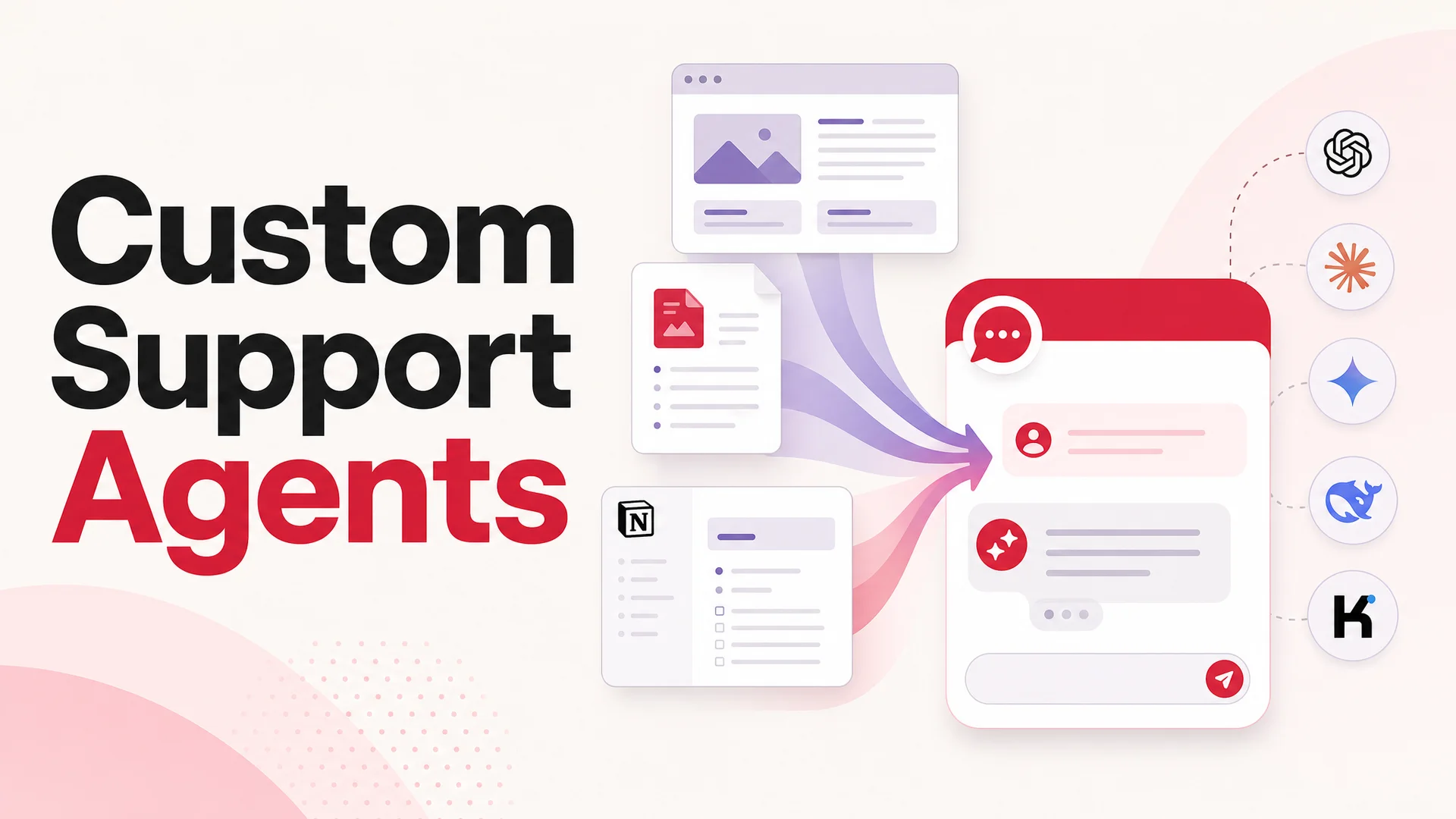
- Training on docs, websites, Notion, Google Drive, and YouTube transcripts, with re-ingestion on a schedule so the agent stays current.
- AI Actions for bookings, refunds, payments, order lookups, and arbitrary internal API calls, built on the agentic tool-use models that became reliable in 2026 rather than glued onto an older base.
- Branded chat widget plus deployment to Slack, Discord, WhatsApp, and other channels from the same agent.
- Routing logic so routine traffic goes to a cheap open-weight model (DeepSeek V4 Flash at $0.14 / $0.28 per million tokens, or MiniMax M2 at roughly 8% of Claude Sonnet's price) and complex escalations go to a frontier closed model.
Strengths: Fastest path from "we should look into AI support" to a live, branded agent answering real tickets. Multi-model is a first-class citizen, so you do not have to re-platform when the leaderboard shifts. Deep AI Action library means the agent can resolve, not just deflect.
Weaknesses: If you are building something that is not customer-facing - an internal research swarm, a data pipeline agent, a coding sub-agent - you will want a more general-purpose framework underneath.
Where it fits: A SaaS company that wants to absorb tier-one support volume without hiring; an e-commerce brand that wants WhatsApp-driven order help; a fintech that needs an agent to handle KYC questions, dispute lookups, and human handoff. Anywhere the agent talks to customers and is expected to actually do something.
2. LangChain
LangChain is still the lingua franca of LLM application development. The framework has matured significantly over the last 18 months - what used to be a sprawling experimental kit is now a more disciplined runtime, particularly with LangGraph for stateful agent flows.
Key features: A deep library of integrations across model providers, vector stores, retrievers, and tool wrappers; LangGraph for explicit state machines; LangSmith for tracing and evals; native support for the long-context behavior of Claude Opus 4.6, Gemini 3.1, and DeepSeek V4.
Strengths: The community is enormous, which means almost any tool, vector DB, or model has a community-maintained integration. Excellent for prototyping when you do not yet know the shape of the final agent. LangGraph in particular is a credible answer to "how do I express agent control flow without writing a state machine from scratch."
Weaknesses: The abstraction tax is real. The same flexibility that makes prototyping easy can make production debugging painful - stack traces through several layers of wrapper classes are a known frustration. Performance has improved, but for high-throughput, latency-sensitive support traffic you will want to benchmark hard.
Where it fits: A team building a complex internal assistant - a research analyst, a deep code search agent, a multi-source enterprise Q&A bot - that needs to compose dozens of tools and providers. Less obviously the right fit for a focused, single-purpose customer agent.
3. CrewAI
CrewAI leans into the role-playing-agents metaphor. You declare a "crew" - researcher, writer, critic, manager - and the framework handles the coordination between them.
Key features: Role-based agent definitions, declarative task specs, a manager pattern that delegates work across the crew, growing support for the agentic tool-use models that benchmark well on multi-step coordination (Kimi K2.6, GLM-5.1, Qwen3.6).
Strengths: The mental model is intuitive. If you can describe a problem as "we need a team of three people to do this," you can prototype a crew quickly. Particularly nice for content workflows, research pipelines, and ops tasks where the work naturally splits along role lines.
Weaknesses: The role-playing metaphor is also the limit. When the actual work does not split cleanly along human-team lines, forcing it into roles adds overhead instead of removing it. Production observability is improving but is not at the level of LangChain or AutoGen.
Where it fits: Marketing ops, content production, internal research, RFP responses - workflows where you can write the brief as if you were assigning it to a small team, and where output quality matters more than per-request latency.
4. Microsoft Semantic Kernel
Semantic Kernel is Microsoft's "drop AI into the application you already have" framework. The pitch has stayed consistent: an SDK that an existing C#, Python, or Java codebase can adopt without rewriting itself around an AI runtime.
Key features: Plugin model that exposes existing methods as agent tools with light annotation; native planners; first-class support for Azure-hosted models alongside the OpenAI, Anthropic, and Google APIs; enterprise hooks for identity, policy, and audit.
Strengths: If your shop already runs on the Microsoft stack, the integration story is exceptional - auth, secrets, telemetry, and deployment all line up with what your platform team already runs. The plugin model also encourages you to write tools that are reusable outside the agent, which ages well.
Weaknesses: The C# experience remains the most polished; Python and Java are good but lag. The framework is opinionated about enterprise patterns in ways that can feel heavy if you are a small team trying to ship a single agent fast.
Where it fits: Enterprises adding AI capabilities to existing line-of-business applications - a CRM agent inside Dynamics, an internal HR assistant on top of SharePoint, a finance copilot wired into existing service buses.
5. Microsoft AutoGen
AutoGen is Microsoft Research's framework for multi-agent conversational systems. Where Semantic Kernel is "embed AI in an app," AutoGen is "build a system where agents and humans talk to each other to get something done."
Key features: Conversable agent abstraction, group chat patterns, configurable human-in-the-loop, native support for autonomous loops that match how Kimi K2.6 and GLM-5.1 are designed to operate (8–12 hour plan-execute-verify-fix cycles), strong tool-use ergonomics.
Strengths: Genuinely good at expressing the "agents argue with each other until they converge" pattern. Robust failure handling. The pivot toward a more disciplined async-first runtime in the last year has made longer autonomous runs significantly more stable.
Weaknesses: Steeper learning curve. The flexibility means that two AutoGen codebases can look completely different, which makes onboarding new engineers slower than something more opinionated.
Where it fits: Long-running autonomous workflows where multiple agents need to negotiate - an automated SRE that diagnoses, proposes a fix, and writes a postmortem; a research assistant that runs overnight and produces a report; a code-modernization agent that plans, edits, tests, and iterates on a real repo.
6. LangFlow
LangFlow is the visual, drag-and-drop layer over a LangChain-style runtime. You build agents on a canvas, wire components together, and deploy.
Key features: Node-based visual editor, growing template library, one-click deploy of flows as APIs, increasingly slick support for swapping models and retrievers without code edits.
Strengths: Cuts the "explain the architecture to a non-engineer" tax dramatically. Useful for technical teams that want a shared canvas with PMs and ops; useful for solo operators who do not want to think in Python.
Weaknesses: Visual builders always hit a complexity ceiling. Once your flow needs serious branching, custom retries, or tightly typed tool schemas, you will end up dropping into code anyway. Performance and observability still trail code-first frameworks.
Where it fits: Internal automations, prototypes, and demos where speed of iteration and cross-functional collaboration matter more than fine-grained control.
7. Agentic open-stack assemblies (DSPy, smolagents, Strands, and friends)
Worth grouping together: the lightweight, code-first frameworks that have emerged as a deliberate counter-reaction to the heavier, configuration-rich tools above. Stanford's DSPy, Hugging Face's smolagents, and AWS's Strands are the leading examples. They start from the assumption that frontier 2026 models are good enough that you do not need a giant abstraction layer - you need a small, sharp one.
Key features: Minimal core, programmatic prompt and tool definitions, optimization-first ergonomics (DSPy in particular treats the prompt as something to be compiled and tuned), strong fit with the agentic open-weight models - Qwen3.6-27B, MiniMax M2, MiMo-V2-Pro - that you might be running yourself on commodity GPUs.
Strengths: Tiny surface area. Easy to read top to bottom in an afternoon. Plays well with self-hosted open-weight stacks, which matters as DeepSeek V4, GLM-5.1 (MIT-licensed), and Qwen3.6-27B (Apache 2.0) make on-prem and air-gapped deployments genuinely viable for regulated industries.
Weaknesses: You are buying simplicity by giving up batteries-included integrations. Multi-agent orchestration is rougher. Less hand-holding around evals, traces, and policy enforcement.
Where it fits: Research teams, open-source-first shops, and regulated environments running their own models. Also a good fit when you know exactly what you want and the bigger frameworks feel like ceremony.
How to choose between them
Most framework comparison posts end with a feature matrix. That matrix is rarely how the decision actually plays out. The decision usually breaks down into three honest questions.
What is the agent for?
A customer-facing support agent has a fundamentally different brief from an internal research swarm. Support agents are evaluated on resolution rate, latency, tone, and the rate of clean human handoffs. Research swarms are evaluated on the quality of an artifact produced overnight. The constraints that matter - sub-second time-to-first-token, branded UI, omnichannel deployment, payment-grade tool reliability - are the constraints that a focused product like Berrydesk optimizes for. The constraints that matter for a multi-hour autonomous research run - long-horizon stability, agent-to-agent debate, large tool surface - are what frameworks like AutoGen optimize for.
What is your model strategy?
If you plan to live on a single closed-frontier model, almost any framework works. If you plan to do what most cost-conscious teams now do - route most traffic to an open-weight model and reserve the frontier for hard cases - your framework needs to make multi-model trivial. DeepSeek V4 Flash at $0.14 / $0.28 per million tokens, MiniMax M2 at roughly 8% of Claude Sonnet's price, and Qwen3.6-27B running locally are all dramatically cheaper than the closed frontier; the question is whether your framework lets you exploit that without rewrites.
How much abstraction can you afford?
Heavy frameworks accelerate the first 80% and then add friction in the last 20%. Light frameworks make you write more glue but leave you in control. There is no universal right answer - there is just an answer that matches the team you have. Two engineers shipping a single agent should optimize differently from a platform team supporting twenty internal agents.
Pitfalls to watch for
A few common ways framework choices go wrong, even when the framework itself is fine:
- Locking in to one model's quirks. It is tempting to write prompts and tool schemas that exploit a specific model's behavior. Then that model gets deprecated, the new model behaves differently, and you discover your "framework" is really a prompt collection wedded to a vendor.
- Skipping evals because the demo looks good. Frontier 2026 models are charming. They will cheerfully convince you that the agent works, three turns into a happy-path conversation, while quietly failing on the long tail. Your framework's eval story matters more than its demo experience.
- Premature multi-agent. Multiple agents are fashionable, especially after the headlines about Kimi K2.6 swarms. Most production problems are still solved better by one well-instrumented agent than by three that argue with each other. Add agents when a single one is provably insufficient, not before.
- Underestimating the tool layer. The model is rarely the bottleneck in 2026. The bottleneck is whether your booking API returns clean errors, whether your refund tool is idempotent, whether your knowledge base is actually current. No framework will save a brittle integration layer.
- Confusing context window for memory. A 1M-token window is amazing, but stuffing everything into it on every turn is slow and expensive. The frameworks that win in production let you decide what belongs in-context, what belongs in a retriever, and what belongs in structured state.
Open-weight vs. closed-frontier - a quick word
This shift deserves more than a footnote. The 2026 open-weight wave - DeepSeek V4, Kimi K2.6, GLM-5.1, Qwen3.6, MiniMax M2, MiMo-V2-Pro - has fundamentally changed the unit economics of running an agent. GLM-5.1 scores 58.4 on SWE-Bench Pro, beating GPT-5.4 and Claude Opus 4.6 on that benchmark, and ships under MIT. Qwen3.6-27B is small enough to self-host and beats much larger MoE rivals on agentic coding tasks. DeepSeek V4 Flash is priced at a tenth of what flagship closed models cost.
For customer support, the practical implication is straightforward. Routine "where is my order," "what is your return policy," "reset my password" traffic should go to a cheap open-weight model. Hard cases - ambiguous policy edge cases, multi-step refunds with judgment calls, sensitive escalations - should go to Claude Opus 4.7, GPT-5.5 Pro, or Gemini 3.1 Ultra. The framework you pick should make this routing a configuration choice, not a re-architecture.
This is exactly why Berrydesk treats the model picker as per-agent rather than per-platform. A US e-commerce brand might run their main FAQ agent on DeepSeek V4 Flash, their VIP-tier concierge on Claude Opus 4.7, and their EU-regulated finance helpline on a self-hosted GLM-5.1 deployment - all from the same dashboard.
Wrapping up
Agent frameworks are the most under-discussed, most consequential decision in any AI rollout. The model gets the headline; the framework decides whether the project ships.
If your goal is a customer-support agent that resolves real tickets, lives on your brand, and routes intelligently between cheap open-weight models and the closed frontier, Berrydesk was built for exactly that and you can have one running today. If your goal is something more exotic - long-horizon autonomous research, internal multi-agent simulations, deeply embedded line-of-business AI - one of the more general frameworks above is probably the right starting point.
Either way, the answer is no longer "wait for the tooling to mature." The tooling is mature. The question is which opinionated stack matches the problem in front of you.
Ready to skip the framework debate for support specifically? Spin up a branded Berrydesk agent for free - pick a model, point it at your docs, and watch it answer real questions in minutes.
 Berrydesk
Skip the framework rabbit hole. Launch a support agent that actually ships.
- Pick from GPT-5.5, Claude Opus 4.7, Gemini 3.1, DeepSeek V4, Kimi K2.6, GLM-5.1, Qwen3.6, MiniMax M2 - no rebuilds when models change.
- Train on docs, websites, Notion, Drive, and YouTube. Add AI Actions for bookings and refunds. Ship to web, Slack, Discord, and WhatsApp.
Set up in minutes

Chirag Asarpota is the founder of Strawberry Labs, the team behind Berrydesk - the AI agent platform that helps businesses deploy intelligent customer support, sales and operations agents across web, WhatsApp, Slack, Instagram, Discord and more. Chirag writes about agentic AI, frontier model selection, retrieval and 1M-token context strategy, AI Actions, and the engineering it takes to ship production-grade conversational AI that customers actually trust.