Pick any general-purpose assistant on the market today - GPT-5.5, Claude Opus 4.7, Gemini 3.1 Ultra, DeepSeek V4, Kimi K2.6 - and start pushing it. Choose a niche topic, ask a layered question, then keep nudging with follow-ups that demand specifics. At some point, almost without warning, the conversation tilts.
The model produces an answer that is not just slightly off, but confidently, articulately wrong. The grammar is clean. The structure looks reasonable. The citations, if there are any, may even reference real-sounding sources. And yet the substance is fabricated - a feature, an API endpoint, a refund policy, or a clinical detail that simply does not exist in the world.
That does not make these models useless. They are still the most powerful general-purpose problem-solvers ever shipped, and the gap between a 2024-era chatbot and a 2026 agentic system like Claude Opus 4.7 or Kimi K2.6 is enormous. But this failure mode - known as AI hallucination - is the single biggest reason serious teams hesitate to put a raw LLM in front of paying customers.
A hallucination is an LLM output that looks legitimate, sounds authoritative, and turns out to be untrue. It is not a bug in the traditional sense. It is a structural property of how these models generate language. And in the context of customer support, where every wrong answer can become a refund request, a churn event, or a compliance incident, it is a problem you have to engineer around rather than wish away.
This post walks through what hallucination actually is at a mechanical level, why it shows up even in frontier 2026 models, and the concrete practices that drive it close to zero in a production support deployment.
What AI Hallucination Actually Is
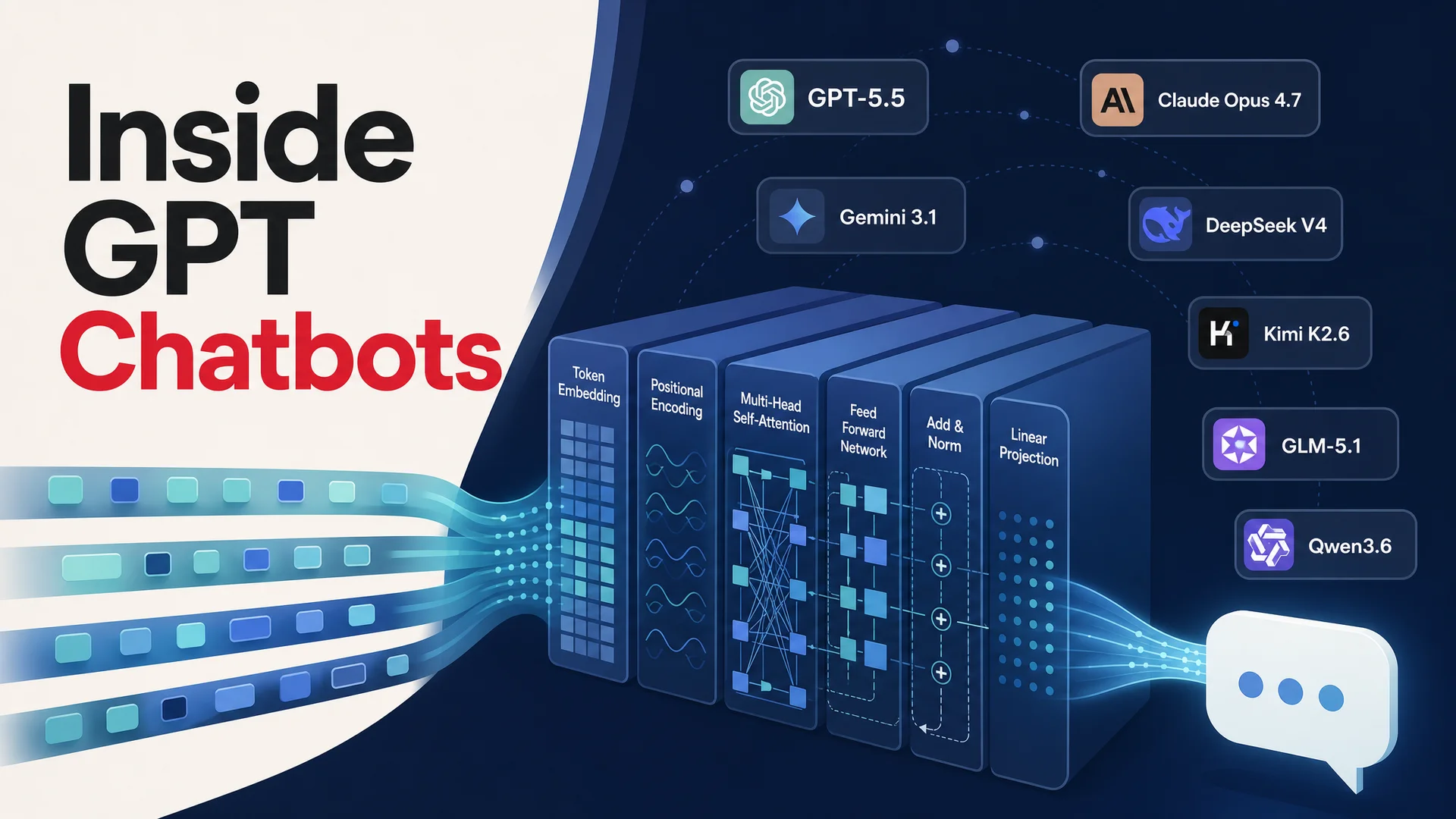
To get at hallucination you have to look past the chat window and into the math. Modern conversational systems - whether they are routed to GPT-5.5 Pro, Claude Sonnet 4.6, Gemini 3.1 Pro, or an open-weight model like DeepSeek V4 Flash - are all built on the same foundation: large language models, or LLMs.
LLMs do not "know" things. That phrasing is a metaphor we use because the output sounds knowledgeable, but the underlying machinery is different. An LLM is a probabilistic model trained to predict what token is most likely to come next given everything it has seen so far. It has no internal database of facts, no concept of truth versus falsehood, and no mechanism for saying "I am not sure." It just chooses the most plausible continuation of a sequence.
When you ask a frontier model "what is your return policy?" it is not retrieving a stored fact. It is generating the most statistically likely answer to that question given the patterns in its training data and any context you have provided in the prompt. If your actual return policy was anywhere in its training set or its current context window, the answer will likely match. If it was not, the model will still produce something - a plausible-sounding policy assembled from the millions of return policies it has seen elsewhere on the internet.
That is hallucination. Not a glitch, not a bug, but the same generation process that produces correct answers, applied to a question where the model has no grounding. The output is generated the same way; the only thing that changes is whether reality happens to line up with the model's prediction.
This framing matters because it tells you what hallucinations are not. They are not "errors" the model could simply check and correct. They are not signs that the model is broken. They are the predictable consequence of asking a prediction engine to act like a knowledge base. The fix, then, is not to demand that the model "stop hallucinating" - it is to redesign the system so the model is doing prediction over a body of reliable, grounded information you control.
Why Hallucinations Still Happen in 2026 Models
The frontier has moved a long way. Claude Opus 4.7 leads SWE-bench Pro at 64.3% on complex coding. Gemini 3.1 Pro tops GPQA Diamond at 94.3%. Open-weight models like Z.ai's GLM-5.1 and Moonshot's Kimi K2.6 are running multi-hour autonomous engineering sessions. With that kind of capability, you might expect hallucination to be a solved problem. It is not. It is rarer, more subtle, and more domain-shifted, but the underlying causes are the same as they were in the GPT-3.5 era.
1. There is no internal model of "true"
This is still the root cause. Even the best 2026 models are sequence predictors. They have gotten dramatically better at calibrating their own confidence and at refusing questions when their training distribution is thin, but they cannot truly verify their own claims. A model that has learned to say "I am not sure" only does so when its training rewarded that behavior; it does not actually introspect.
2. Training data has gaps and a knowledge cutoff
Even a 2T-parameter MoE like DeepSeek V4 Pro is trained on a finite snapshot of the world. Your product launched last week. Your pricing changed last quarter. Your warranty terms differ by region. None of that lives inside the model's weights. When asked, the model does what it always does - it predicts a plausible answer - and the answer reflects whatever similar policies it absorbed during training, not your actual rules.
3. The prompt itself is ambiguous
A user types "can I get a refund on my last order?" The model has no order ID, no purchase date, no SKU, no policy document attached. To produce a fluent answer it has to fill the gaps with assumptions. The more ambiguous the input, the more the model has to invent context, and invented context is fertile ground for confident fabrication.
4. Models are tuned to sound confident
Post-training and RLHF have historically rewarded clear, decisive, helpful-sounding responses. That is great when the model is right and dangerous when it is wrong. The fluent confidence of a 2026 model is part of what makes it pleasant to use, and also part of what makes its hallucinations so persuasive. A wrong answer in clean prose is harder to spot than a wrong answer that hedges and stumbles.
5. Multi-step reasoning compounds errors
Agentic models like Kimi K2.6, GLM-5.1, and Claude Opus 4.7 can run multi-hour plans across hundreds of steps. That capability is transformative for support automation - refunds, bookings, escalations, order edits - but it also means a single hallucinated assumption at step three can propagate through to step thirty. Each step looks locally reasonable; the final outcome is wrong because the chain was anchored to a fabrication.
6. Bias and noise in training data
Public web data is messy. It contains contradictions, outdated information, marketing copy presented as fact, and outright misinformation. Models internalize all of it, weighted by frequency. When a frequent-but-wrong pattern outweighs a rare-but-correct one, the model leans toward the wrong answer with the same confidence it brings to everything else.
The lesson is not that models are unreliable in general. It is that the reliability of any given answer depends entirely on whether the model is operating inside or outside its zone of grounding. Outside that zone - in your product specifics, your policies, your customer's order history - the raw model is essentially guessing. The job of a serious support platform is to keep the model inside the zone.
How to Engineer Hallucinations Out of a Support Agent
Here is the honest version: you cannot make an LLM stop hallucinating. You can make a system built around an LLM hallucinate so rarely that the residual rate is comparable to or lower than a human agent's error rate. That is what production support agents in 2026 actually do, and it is what Berrydesk is built to make easy.
The strategies below are listed roughly in order of how much they move the needle. Most production deployments use several of them together.
1. Ground every answer in your own knowledge
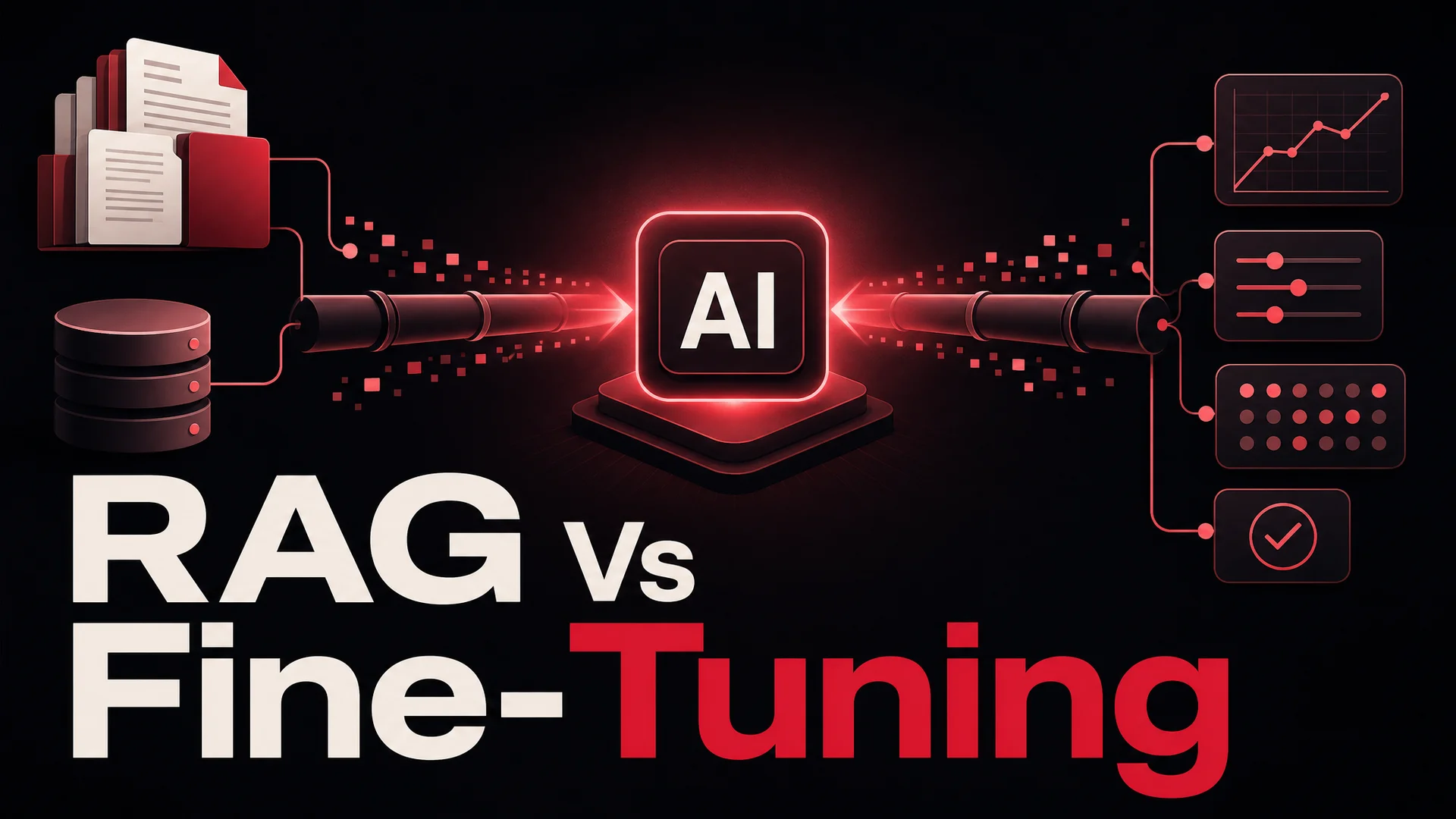
This is the single most important lever. Instead of asking the model "what is the return policy?" and hoping its training data was right, you give the model your actual return policy as part of the prompt and ask it to answer using only that text. This is the core idea behind retrieval-augmented generation, or RAG, and it is also why long-context models matter so much in 2026.
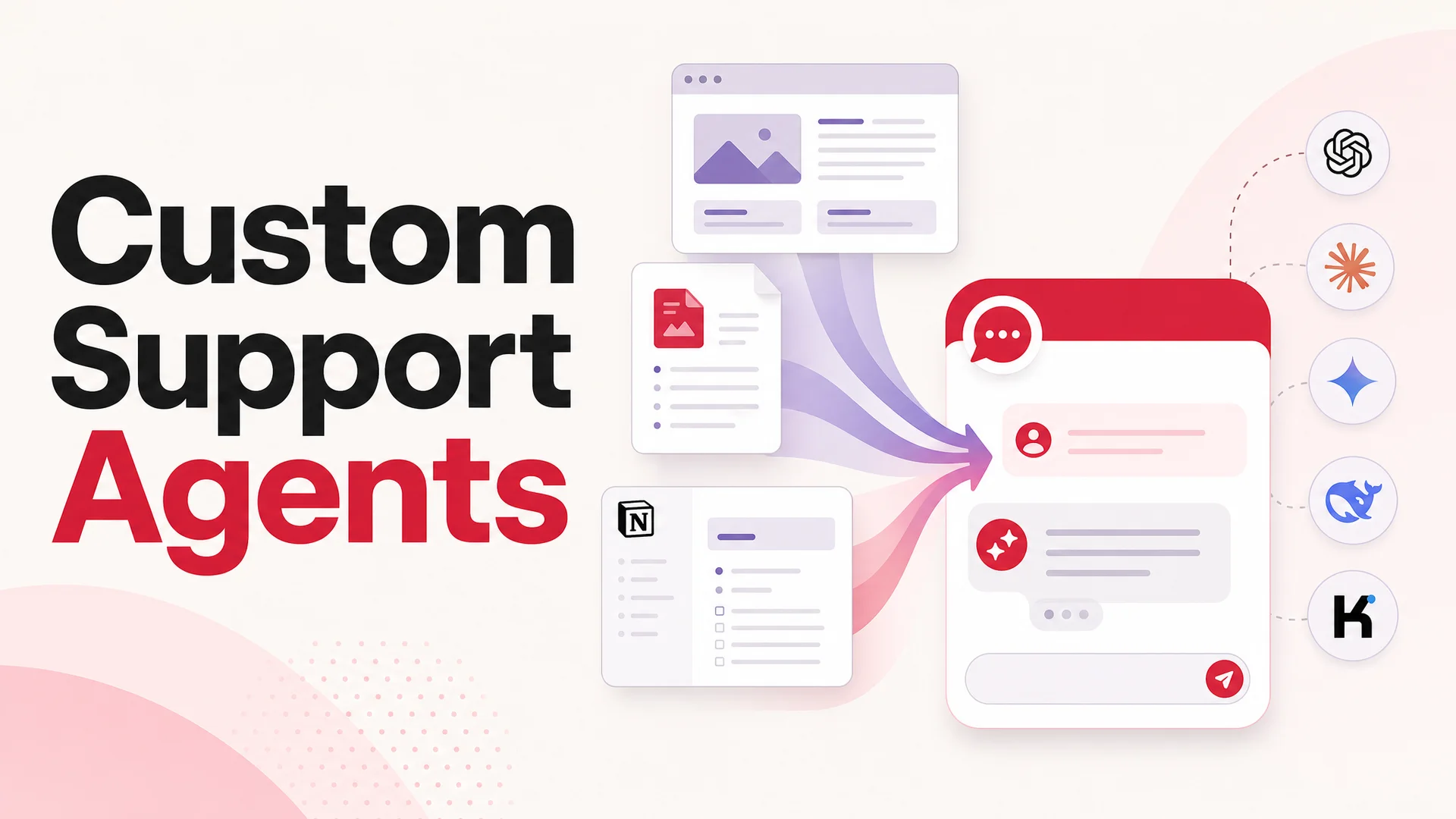
Berrydesk lets you train your agent on docs, websites, Notion, Google Drive, and YouTube, and the platform handles retrieval, chunking, ranking, and citation under the hood. With models like Claude Opus 4.6, Sonnet 4.6, DeepSeek V4 Flash, and Kimi K2.6 now offering 1M-token context windows - and Gemini 3.1 Ultra at 2M - you can also keep entire policy documents and recent conversation history resident in-context, which makes RAG a tuning lever rather than a hard dependency. For a mid-sized SaaS or e-commerce store, that often means the model literally has your full help center in front of it before it generates a single token.
2. Choose the right model for the right job
A common 2026 pattern is model routing. Your tier-one questions - order status, password resets, shipping windows, FAQ lookups - do not need a frontier reasoning model. Routing them to DeepSeek V4 Flash at $0.14 / $0.28 per million input/output tokens, or to MiniMax M2 at roughly 8% the price of Claude Sonnet at 2x the speed, drops your unit economics dramatically. Reserve Claude Opus 4.7, GPT-5.5 Pro, or Gemini 3.1 Ultra for the harder cases - multi-step refunds, ambiguous policy questions, escalations that touch payment or compliance.
Berrydesk gives you that whole menu - GPT, Claude, Gemini, DeepSeek, Kimi, GLM, Qwen, MiniMax, and others - without forcing a vendor commitment. The right model on the right query is a hallucination defense in itself: the smaller, faster models do less reasoning and therefore have fewer chances to invent things, while the frontier models bring stronger calibration and tool-use behavior to the cases that actually need it.
3. Wire the agent to live data through Actions
A support agent that "knows" your shipping policy in general but does not know whether a specific order has shipped is going to hallucinate the answer to "where is my order?" The fix is to give the model a tool that looks up the real order. In 2026, agentic tool use has matured to the point where this is reliable, not aspirational. Models like Kimi K2.6, GLM-5.1, Claude Opus 4.7, Qwen3.6, and Xiaomi's MiMo-V2-Pro are explicitly designed for long-horizon tool sequences.
Berrydesk's AI Actions cover the patterns that matter for support: order lookups, refund issuance, appointment booking, payment flows, account updates, ticket creation. When the model needs a fact, it calls the tool. When it needs to act, it calls the tool. The model never has to invent an order number or a refund amount, because it never has to. That is hallucination reduction by removing the opportunity to hallucinate.
4. Write specific, structured prompts
Vague prompts force the model to guess. Specific prompts narrow the prediction space. A system prompt that says "answer customer questions about our product" is several orders of magnitude more hallucination-prone than one that says "you are a support agent for Acme Co. Use only the documents provided in context. If the answer is not in the documents, say you do not know and offer to escalate. Never invent SKUs, prices, dates, or policies."
Berrydesk exposes prompt and persona controls so you can codify those guardrails once and have them apply to every conversation. Combined with structured workflows for common flows - returns, billing changes, technical troubleshooting - the agent has fewer chances to wander.
5. Keep humans in the loop where it matters
No matter how good your grounding is, some questions deserve a human. Compliance-sensitive industries, high-value transactions, edge cases the agent has never seen - these are exactly where you want a confident-sounding but unverified answer to never reach the customer. The right pattern is a confidence threshold: if the model's grounded answer is uncertain, or if the conversation crosses a defined topic boundary, hand it off.
Berrydesk's escalation flow lets the agent open a ticket, pull in a human teammate over Slack or your existing helpdesk, and hand back the conversation with full context. The human picks up where the agent left off. This is how you get the cost curve of automation without the failure mode of an unsupervised AI making promises your business cannot keep.
6. Fine-tune or specialize for your domain
Generic models are excellent generalists and uneven specialists. In regulated or jargon-heavy domains - healthcare, legal, finance, industrial - a model that has seen a lot of your domain's language will hallucinate less, because the patterns it is predicting from are closer to your reality. In 2026, the open-weight frontier makes this much easier than it used to be. Permissively-licensed models like GLM-5.1 (MIT), Qwen3.6-27B (Apache 2.0), and Xiaomi MiMo-V2-Pro (MIT) can be fine-tuned and even deployed on-premise or air-gapped for industries where data residency rules out hosted APIs.
For most teams, fine-tuning is overkill. Strong RAG plus a frontier model gets you 95% of the way. But the option exists, and Berrydesk's model-agnostic architecture means you can move from a hosted API to a private deployment without rebuilding your agent.
7. Monitor, test, and close the loop
Hallucinations are not static. As products change, policies update, and new edge cases appear in the support queue, the surface area for wrong answers shifts. A working production system needs continuous evaluation: replaying real conversations against the agent, flagging low-confidence answers, and surfacing the cases where customers ended up escalating or leaving negative feedback.
Berrydesk's analytics layer ties conversation outcomes back to model choice, retrieved sources, and Action calls. That gives you a tight feedback loop - when a particular policy question keeps producing hedged answers, you know the underlying source needs updating. Hallucination rate becomes a metric you can watch, not a vibe you have to trust.
What to Watch Out For
A few common pitfalls show up over and over in support deployments and are worth flagging explicitly.
Confusing fluency with correctness. A polished 2026 model writes beautifully even when it is wrong. Do not use "the answer sounds reasonable" as a quality signal. Use citations, source attribution, and tool-call traces.
Treating long context as a substitute for retrieval quality. A 2M-token window does not mean you should dump every document you have into every prompt. Models still attend more strongly to recent and well-positioned context, and noisy context can drag accuracy down. Curate.
Forgetting freshness. Even a perfectly grounded agent will hallucinate if the documents it is grounded on are out of date. Automate re-syncs from your sources of truth - your help center, your Notion workspace, your product database - rather than treating ingestion as a one-time setup step.
Chasing the cheapest model everywhere. Routing tier-three questions to a tiny model to save money is a false economy if it doubles your hallucination rate on the cases that matter most. Cost optimization should follow accuracy benchmarking, not the other way around.
Skipping evaluations until something breaks. It is much cheaper to catch a regression in a weekly eval set than in a tweet from an angry customer. Build the eval harness on day one, even if it starts with twenty hand-written test conversations.
Open-Weight vs Closed Frontier: A Quick Trade-off
Most teams reading this are choosing, implicitly or explicitly, between routing all traffic to a single closed-frontier model and assembling a routed mix that includes open-weight options. A few practical points to weigh:
- Cost. Open-weight MoE models like DeepSeek V4 Flash and MiniMax M2 are often an order of magnitude cheaper than the closed frontier on per-token economics. For high-volume support, that is the difference between an agent that pays for itself and one that does not.
- Capability ceiling. On the hardest reasoning, the closed frontier - Claude Opus 4.7, GPT-5.5 Pro, Gemini 3.1 Ultra - still leads, and that gap matters for genuinely complex escalations.
- Deployment flexibility. MIT- and Apache-licensed open weights (GLM-5.1, Qwen3.6-27B, MiMo) make on-prem and air-gapped deployments tractable, which can be load-bearing for healthcare, finance, and government.
- Stability. Hosted closed models change behavior more often than they change names, while open weights you self-host change only when you decide to roll forward. Both are fine; they have different failure modes.
The right answer for most teams is "both." Berrydesk is built around that assumption rather than around a single model bet.
The Bottom Line
AI hallucination is not a phase the technology will outgrow. It is a structural feature of how language models generate text, and even the best 2026 models - Claude Opus 4.7, GPT-5.5 Pro, Gemini 3.1 Ultra, DeepSeek V4, Kimi K2.6, GLM-5.1 - exhibit it. The teams putting these models successfully in front of customers are not the ones waiting for hallucinations to disappear. They are the ones building systems that route around the failure mode: grounding answers in real data, wiring agents to live tools, picking the right model for each job, and keeping a human escalation path open for the cases where confidence is not enough.
That is what Berrydesk is for. Pick from the full menu of frontier and open-weight models, train your agent on the documents and sources your business actually runs on, ship AI Actions that touch real systems instead of guessing about them, and deploy to your website, Slack, Discord, WhatsApp, and beyond - all in a few steps. You bring the knowledge and the policies; the platform handles the grounding, the routing, the tool calls, and the analytics that keep your hallucination rate trending down over time.
If you are ready to put a support agent in front of customers without worrying about it inventing your refund policy, start building on Berrydesk - your agent can be live in minutes, not months.
 Berrydesk
Launch a support agent that stays grounded in your data
- Pick from GPT-5.5, Claude Opus 4.7, Gemini 3.1, DeepSeek V4, Kimi K2.6, GLM-5.1, and more - Berrydesk grounds every answer in your sources.
- Train on docs, sites, Notion, Drive, and YouTube, then deploy to your site, Slack, Discord, or WhatsApp in minutes.
Set up in minutes

Chirag Asarpota is the founder of Strawberry Labs, the team behind Berrydesk - the AI agent platform that helps businesses deploy intelligent customer support, sales and operations agents across web, WhatsApp, Slack, Instagram, Discord and more. Chirag writes about agentic AI, frontier model selection, retrieval and 1M-token context strategy, AI Actions, and the engineering it takes to ship production-grade conversational AI that customers actually trust.