For a long time, world-class customer support was something only big companies could afford. You needed a hiring pipeline, a quality team, a workforce-management lead, a support-ops engineer, and a budget that scaled with every new market and time zone. Small businesses were stuck choosing between under-staffed inboxes, slow email queues, and a frustrated founder answering DMs at midnight. For a small business, every saved hour is real money and every missed message is a real customer.
That gap is closing fast. The frontier of AI in 2026 - Claude Opus 4.7, GPT-5.5, Gemini 3.1, and a wave of open-weight models like DeepSeek V4, Kimi K2.6, GLM-5.1, Qwen3.6, and MiniMax M2 - has dropped the price of high-quality conversational support so dramatically that a five-person company can now run a support experience that feels like it came out of a 200-person org. Model prices have fallen by an order of magnitude in the last six months, context windows have stretched to a million tokens, and tool-using agents can now book appointments, take payments, and look up orders without breaking. An AI support agent is no longer a "nice to have" for a small business; in many categories, it is the single highest-leverage system you can put in place this quarter.
This guide walks through what an AI support agent actually is in 2026, where it pays off for small businesses, how to launch one without an engineering team, ten concrete deployments to copy, and the pitfalls to avoid along the way.
What an AI support agent really is in 2026
An AI support agent is a conversational system trained on your business - its policies, products, prices, FAQs, refund rules, hours, return windows, shipping carriers, integrations, and tone of voice - that talks to your customers in real time across the channels they already use. Unlike the script-driven chatbots of a decade ago, today's agents are built on top of large language models with reasoning, memory, and tool use baked in.
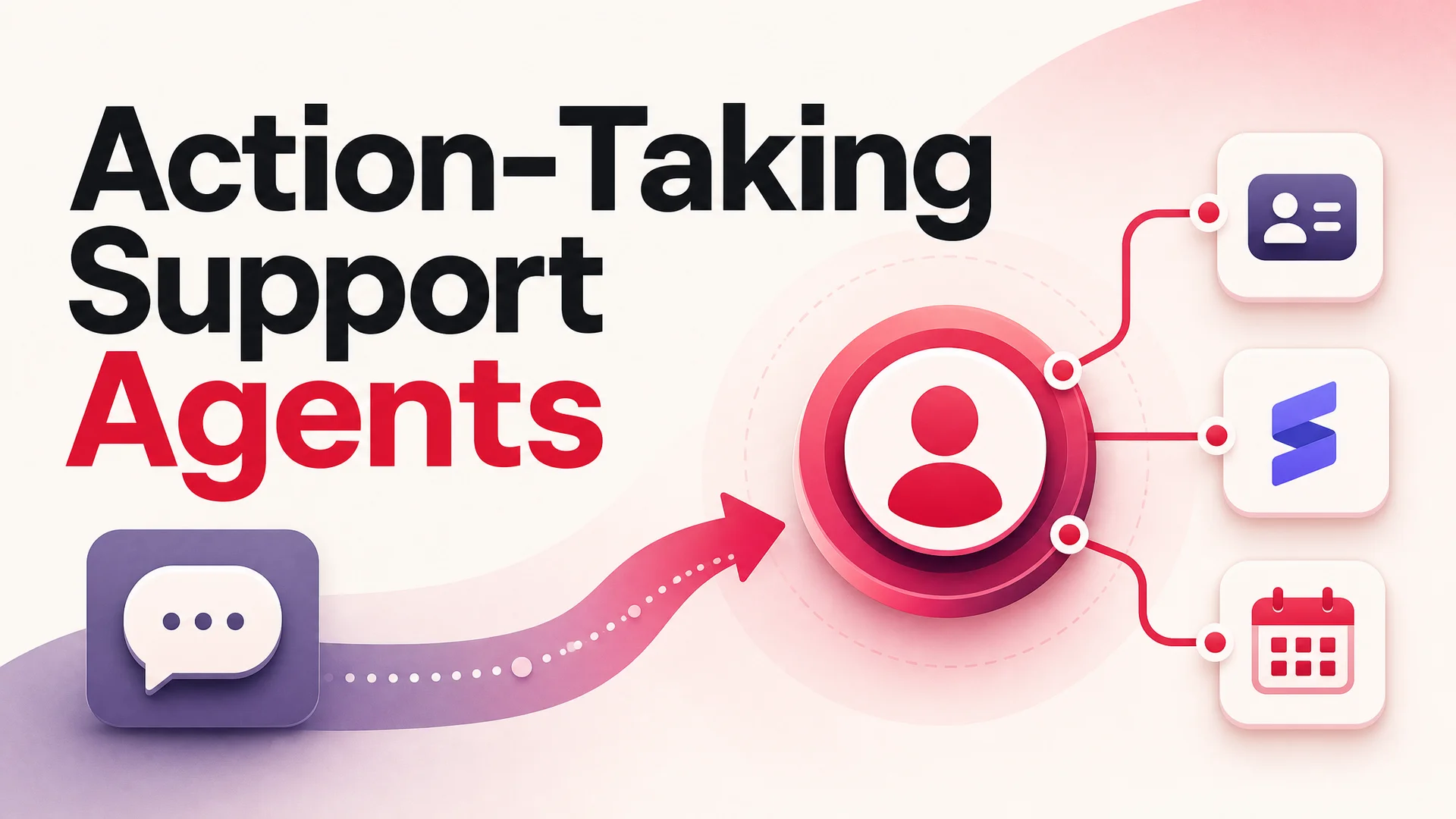
The shift from "chatbot" to "agent" is the important part. Older systems matched keywords and recited canned responses. A modern agent on a platform like Berrydesk reads the customer's actual sentence, holds the entire conversation in context, decides whether the question needs a knowledge-base lookup or a database query, calls the right action - checking an order, processing a refund, booking a slot - and only then composes a reply. When it cannot answer, it escalates to a human with a clean handoff.
The shift in 2026 is also that "the model" is no longer one fixed thing. Berrydesk lets you choose between frontier closed models - GPT-5.5 and GPT-5.5 Pro, Claude Opus 4.7 and Sonnet 4.6, Gemini 3.1 Ultra and Pro - and the new wave of open-weight frontier models like DeepSeek V4, Moonshot Kimi K2.6, Z.ai's GLM-5.1, Alibaba's Qwen 3.6 family, MiniMax M2.7, and Xiaomi MiMo-V2-Pro. For most small businesses, the right answer is to route the routine 80% of traffic to a cheap, fast open-weight model and reserve a frontier model for the genuinely hard escalations.
Two technical changes underwrite all of this. First, frontier models like Claude Opus 4.6 and Sonnet 4.6 ship with a 1M-token context window at no extra charge, and Gemini 3.1 Ultra reaches 2M tokens. That is enough to fit your entire knowledge base, your last 100 conversations with a customer, and your refund policy in a single prompt. Second, agentic models - Kimi K2.6, GLM-5.1, Claude Opus 4.7, Qwen3.6, MiMo-V2-Pro - have made tool use reliable enough that "AI Actions" like booking, refunds, and payments are production-grade rather than demoware.
Six places AI support agents earn their keep for small businesses
Plenty of vendors will sell you a chatbot for the sake of selling you one. The honest test is whether it pays for itself in saved labor or recovered revenue inside a quarter. Here are the six patterns where it consistently does for small businesses.
1. Real 24/7 coverage without hiring across time zones
The first and most obvious benefit is coverage. A small business almost never has the headcount to staff support around the clock, which means most of your inbound traffic at 11 p.m., on weekends, and during holidays goes unanswered. That is precisely when a high-intent buyer is on your site.
A 12-person home goods boutique selling internationally cannot staff a support team across every time zone. An AI agent trained on the product catalog, sizing charts, and shipping policies handles overnight questions about whether a piece is in stock, whether it ships to Germany, and what the return window looks like. The owner wakes up to a clean inbox with only the genuine edge cases flagged for review, instead of 40 unanswered messages and a queue of frustrated customers.
The unlock here is straightforward: the agent does not need to be brilliant, it needs to be correct on the 30 questions that make up 70% of inbound. Once it is, you have effectively added a second shift without adding payroll. Coverage is no longer expensive either. Routine questions can be routed to DeepSeek V4 Flash at roughly $0.14 per million input tokens and $0.28 per million output tokens, which works out to fractions of a cent per resolution. You reserve Claude Opus 4.7 or GPT-5.5 for the hard, ambiguous escalations where quality matters more than cost.
2. Instant responses that convert in the moment
Speed is a feature people quietly underestimate. There is a meaningful difference between a customer getting an answer in two seconds versus two hours. The two-hour response often arrives after the customer has already bought from someone else, abandoned the cart, or simply lost the thread of why they were considering you in the first place.
A modern AI support agent answers in under a second for most queries. That instantaneous response keeps the buying intent alive. For a clothing brand, that might mean answering "does this sweater run small?" the moment the question is in the customer's head, not three hours after they have tabbed away. For a SaaS tool, it might mean explaining the difference between two plans while the prospect is still on the pricing page. The agent acts as the on-call salesperson you cannot afford to keep on payroll.
3. Per-resolution economics that actually work
A common worry is that running a support agent will burn through API credits. In 2026 that fear is mostly outdated. DeepSeek V4 Flash is priced at roughly $0.14 per million input tokens and $0.28 per million output tokens; MiniMax M2 lands at around 8% of the cost of Claude Sonnet at twice the speed. A typical support resolution - a few thousand tokens of context plus a short response - lands at a fraction of a cent.
That gives a small business a real choice. You can default to a low-cost open-weight model for the bulk of conversations, and only let the agent escalate to Claude Opus 4.7 or GPT-5.5 Pro for messages that include words like "cancel," "refund," or "manager." The math works out to a few dollars a day for hundreds of conversations, which is less than a single hour of human labor. Whether the agent handles 50 conversations or 50,000 in a day, your costs scale linearly with token usage rather than stepwise with headcount. You stop dreading viral moments and start preparing for them.
4. Sales lift from personalized recommendations and smart hand-offs
The line between support and sales has been thinning for a while, and AI agents finally erase it cleanly. A customer asking "do you have something similar but cheaper?" or "which plan should I pick if I'm a freelancer?" is a high-intent prospect, and a well-configured agent can recommend products from your catalog, surface the right plan, apply a relevant promo, and walk them through checkout - all in the same thread.
E-commerce stores have promised personalized recommendations for a decade and mostly delivered "you might also like." An agent with a 1M-token context window can ingest the customer's order history, their current cart, and the live catalog, and have an actual conversation about what would suit them. It is closer to a knowledgeable shop assistant than a recommendation widget. For a small store, the practical version is more modest and still valuable: the agent remembers what the customer bought last time, knows which sizes ran small in that line, and can answer a question like "I'm between the M and the L, which should I order?" with reference to that customer's actual purchase pattern.
For a real estate agency or a boutique B2B service business, lead capture stops happening only on weekdays. With AI Actions wired up, the agent can check live availability in your calendar, hold the slot, and confirm by email - the same flow a human SDR would run, only faster.
5. Bookings, payments, and order changes - handled in chat
This is the category that moved from demoware to production in the last twelve months. Agentic models like Kimi K2.6, GLM-5.1, Claude Opus 4.7, Qwen 3.6, and MiMo-V2-Pro are built to call tools reliably across long sequences of steps. GLM-5.1 runs an eight-hour autonomous plan-execute-test-fix loop; Kimi K2.6 supports twelve-hour autonomous coding sessions with up to 4,000 coordinated steps. You do not need that depth for support, but the underlying reliability is what makes a payment flow safe to ship.
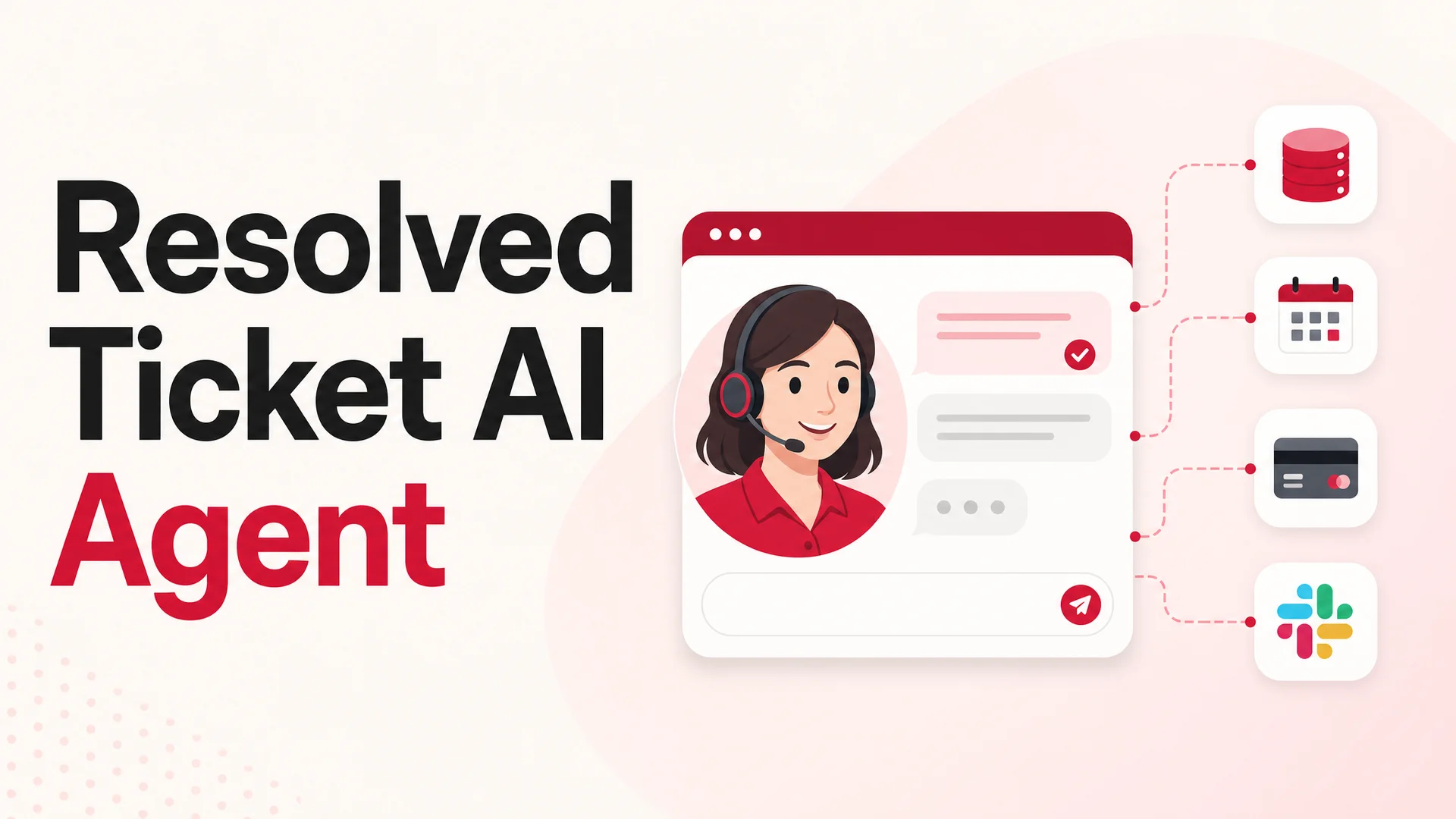
With AI Actions on Berrydesk, the agent can do real work, not just talk: pull up a customer's order from Shopify, check inventory, generate a discount code, book a fitting consultation in your calendar, take a payment for a deposit. For a wedding photographer with two staff, that translates to an agent that qualifies the lead, shares packages, books a discovery call, and takes a deposit, all without you ever touching the inbox. For a salon, it means real bookings inside the chat, not "tap here to open the booking widget." For a small e-commerce store, it means the agent can look up an order, change the shipping address, and issue a partial refund - within policy, with an audit trail, and without a human in the loop.
6. A free voice-of-customer and analytics layer
Every conversation an AI agent has is a labeled, structured data point about your customers. You stop guessing what people are confused about and start seeing it. After a week of live traffic, patterns surface: a misleading line on the pricing page, a feature people keep asking for that you don't have, a competitor that keeps getting mentioned, a delivery window people consistently misunderstand.
A meal-kit startup using Berrydesk might notice that 30% of late-evening conversations include the phrase "vegetarian." That is product feedback, marketing copy, and merchandising guidance bundled into one signal. A B2B SaaS might learn that prospects keep asking whether the tool integrates with Linear before they ask about pricing - that's a homepage hierarchy fix, not a support ticket. For a small business without a research team, this is the cheapest customer research available.
You can also look at what the agent gets wrong. Each unresolved conversation is a gap in your knowledge base or a missing AI Action, and fixing those gaps is a tighter feedback loop than any traditional QA process.
Bonus: consistency and the end of "bad day" service
Even the best human agents have off days. They get tired, distracted, or under-trained on the new release. Customers feel that variance: one rep is wonderful, another is terse, a third gives slightly wrong information. A small business has fewer agents and therefore feels this more acutely - a single rough interaction can move your reviews. A well-tuned AI support agent is consistent by construction. It uses the same tone, knows the same policies, and applies the same logic to the 1st conversation of the day and the 1,001st. That doesn't mean it should sound robotic - Berrydesk lets you brand the personality, the avatar, and the voice - but it does mean every customer gets the same quality bar.
What actually changed under the hood in 2026
If you tried a chatbot two or three years ago and it disappointed you, the technology underneath has fundamentally changed. A few of the shifts worth understanding before you write off the category:
- Reasoning is real now. GPT-5.5 Pro runs parallel reasoning paths, Claude Opus 4.7 leads SWE-bench Pro at 64.3%, and Gemini 3.1 Pro tops GPQA Diamond at 94.3%. These models think through problems instead of pattern-matching, which means they handle the messy, ambiguous questions small-business customers actually ask.
- Long context kills the RAG ceiling. With 1M–2M-token windows on Claude, Gemini, and DeepSeek V4, the agent can hold your entire knowledge base in working memory. Retrieval-augmented generation becomes a tuning lever for cost rather than a workaround for stupidity.
- Open-weight models collapsed pricing. DeepSeek V4 Flash, GLM-5.1 (MIT license), Qwen3.6-27B (Apache 2.0), Kimi K2.6, MiniMax M2, and Xiaomi MiMo-V2 mean you no longer need to pay frontier prices for routine traffic. A typical Berrydesk deployment routes easy questions to a cheap open-weight model and reserves the closed frontier for hard cases.
- Tool use crossed the reliability threshold. Bookings, refunds, order lookups, and payment flows used to be flaky demoware. With Kimi K2.6 running 12-hour autonomous sessions and GLM-5.1 doing 8-hour plan-execute-test-fix loops, the same underlying agentic skill is now stable enough for a refund flow.
How to launch in eight steps without an engineering team
The implementation pattern below is the one that actually ships, in roughly this order. None of it requires custom development.
1. Define the job. Write down the top ten questions your team answers every week and the top three actions you wish customers could complete without a human. That list is your scope for v1. Resist the urge to make it broader.
2. Pick a primary model. For most small businesses, start with Claude Sonnet 4.6 or Gemini 3.1 Pro for quality, and configure DeepSeek V4 Flash or MiniMax M2 as the cheap default for high-volume routine traffic. If you operate in a regulated industry or want on-prem options, the MIT-licensed open-weight models - GLM-5.1, Qwen3.6-27B, and MiMo - give you a path to deploy without sending data to a third party.
3. Choose a platform. A no-code platform like Berrydesk handles the model routing, the knowledge ingestion, the widget, and the integrations so you can focus on content and policy. The four-step launch - pick a model, train, brand, deploy - is designed so a non-technical owner can ship a working agent in an afternoon.
4. Build the knowledge base. Connect your help docs, your website, your Notion workspace, your Google Drive folder, and any relevant YouTube videos. The agent will index all of it. Be ruthless about removing outdated documents - if your refund policy from 2023 is in the index alongside the current one, the agent will quote whichever it finds first.
5. Write the persona and guardrails. A short, specific system prompt beats a long, vague one. Tell the agent who it is, what tone to use, what it must never do (offer discounts, make promises about delivery dates, discuss legal matters), and how to escalate. This is also where you set the brand voice.
6. Wire up AI Actions. Decide which actions the agent can take on its own and which require human approval. Common starters: check order status, look up tracking, book or reschedule appointments, take a deposit, submit a refund request for review.
7. Test against real conversations. Take 50 real past tickets and run them through the agent. Score the responses. The failures you find here are the failures you will not have to apologize for in production.
8. Deploy and watch. Launch on your website, then add Slack, Discord, WhatsApp, or wherever your customers actually are. For the first two weeks, read every transcript daily. After that, weekly. Tune the knowledge base and the prompt as you go.
Ten ways small businesses are actually using AI agents right now
The list below is deliberately specific. Generic "AI for everything" framing is what makes these projects fail; concrete jobs are what make them ship.
Virtual stylist for an apparel boutique. The agent asks about fit preferences, recent purchases, and the occasion, then recommends two or three pieces with sizing notes. Tied into the cart, it can hold items while the customer thinks.
Multilingual concierge for a small tour operator. Frontier models in 2026 are genuinely good across most major languages, which means a single agent can serve customers in English, Spanish, French, German, Japanese, and Mandarin without separate workflows. For a small inbound tourism business, this expands addressable market without expanding payroll.
Custom-piece guide for a jeweler. The agent walks the customer through metal, stone, setting, and engraving choices, captures a brief, and books a video consultation with the maker. The handoff to the human is loaded with context, so the consultation starts where the conversation ended.
Order-taker for a neighborhood restaurant. The agent handles takeout orders by chat or text, confirms allergens, calculates the total, and pushes the order to the kitchen system. During a Friday dinner rush, it cuts the phone-bound staff load in half.
Between-session coach for a personal training studio. The agent answers form questions, suggests substitutes when a client is traveling, and nudges them toward the next session. It is not a replacement for the trainer; it is the in-between glue that keeps clients engaged and renewing.
Intake assistant for a small law firm. The agent collects the basics - the type of matter, the timeline, conflict-check information - and books a paid consultation. Sensitive information is captured into a secure intake record, not parked in the chat transcript.
Buyer-property matcher for a boutique brokerage. The agent learns a buyer's preferences across price, neighborhood, square footage, and features, then surfaces matching listings as they come on market. When a buyer is ready to tour, it books the showing directly.
Event-planning helper for a party supply shop. The agent suggests themes, builds a shopping list against the customer's budget, and bundles the order. For larger events, it can recommend partner vendors and venues and capture a referral.
Quote engine for a local insurance agency. The agent gathers the inputs needed for a basic quote, returns a range, and books a call with a licensed agent for binding. It removes the friction of the first form-fill, which is where most online insurance leads die.
Homework helper for an online tutoring service. The agent answers questions, walks through worked examples, and flags the topics where a student is repeatedly stuck for the human tutor to address in the next session.
Common pitfalls when small businesses roll one out
The failures with small-business AI agents are predictable, and almost all of them are content and process problems rather than model problems.
Thin training material. If your knowledge base is three pages and your refund policy lives in a Slack thread, the agent will hallucinate. Spend the first week getting your help docs, FAQs, and policies into a clean source - Berrydesk ingests docs, websites, Notion, Google Drive, and YouTube, so this work pays off everywhere.
Stale knowledge. If your refund policy changes and the agent's index does not, the agent will confidently quote the old one. Build a habit of re-indexing whenever a policy or product changes, and put a single owner on it.
Over-promising with AI Actions. Letting the agent issue refunds without limits is how a single bad actor drains your float. Set per-action limits, require human approval above a threshold, and log everything.
The "always escalate" trap. The opposite mistake. If the agent escalates every conversation that mentions money, returns, or a complaint, you have built a more expensive ticket form. Tune the escalation policy to specific intents, not specific words.
No human escalation path at all. An AI agent should know when it doesn't know. Without a clean handoff to a human, edge cases rot in unresolved threads and customers churn quietly.
Picking one model for everything. This is a 2024 mindset. In 2026 you route - fast, cheap models for FAQs and intent classification, frontier models for nuanced escalations and tricky multi-step actions.
Tone drift. A model swap can change how the agent sounds. When you change the underlying model - say, from Sonnet 4.6 to GPT-5.5 - re-run a sample of past conversations and check that the brand voice is still intact.
Ignoring the transcripts. The transcripts are the single most valuable artifact the agent produces. Read them. The first 200 conversations will teach you more about your customers than a year of analytics.
Privacy and compliance. If you handle health, financial, or legal data, the open-weight, MIT- and Apache-licensed models - GLM-5.1, Qwen3.6-27B, MiMo - make on-prem and air-gapped deploys realistic for the first time. For most small businesses, a vendor with clear data handling policies is enough; for regulated ones, owning the weights is the safer path.
Open-weight vs closed frontier: a quick framing
A short version of the trade-off for small businesses, since this question comes up constantly.
Closed frontier models - GPT-5.5, Claude Opus 4.7, Gemini 3.1 Ultra - give you the best ceiling on quality, especially for nuanced, multi-step reasoning and the hardest edge cases. They are the right choice for low-volume, high-stakes interactions: a complex complaint, a high-value sales lead, a legal intake.
Open-weight frontier models - DeepSeek V4, Kimi K2.6, GLM-5.1, Qwen 3.6, MiniMax M2.7, MiMo-V2-Pro - give you radically better cost-per-resolution, full control over deployment, and competitive quality for the bulk of routine traffic. GLM-5.1 scores 58.4 on SWE-Bench Pro, ahead of GPT-5.4 and Claude Opus 4.6 on that benchmark; that is not a model you have to apologize for using.
The practical answer for almost every small business is to use both, routed by intent. Berrydesk's model routing handles this without you having to glue it together yourself.
Where this is going
A few things are reasonably safe to predict over the next twelve to eighteen months. Voice support agents will become standard, not exotic. Long-context will keep growing, and RAG will increasingly be a cost optimization rather than an accuracy requirement. Tool-use will get more reliable, which means AI Actions for refunds, scheduling, and changes will move from "approved by a human" to "audited after the fact" for routine cases. Open-weight models will keep closing the gap with closed frontier on raw quality while staying an order of magnitude cheaper.
What will not change is the underlying logic for a small business. The agents that earn their keep are the ones aimed at a specific job, trained on accurate content, given clear escalation paths, and watched closely in the first weeks of life. The technology around that loop is getting better faster than most teams can adopt it; the loop itself is the same as it ever was.
The unfair advantage small businesses have in 2026 is that the same models powering enterprise support are available to a two-person founding team for the price of a few coffees a month. If you have been treating support as a cost center to minimize, this is the moment to flip it into a growth lever.
Ready to put this to work? Berrydesk gives you a four-step path: pick a model from the frontier closed and open-weight options, train it on your knowledge sources, brand the widget to match your site, wire up AI Actions, and deploy across your website, Slack, Discord, WhatsApp, and beyond. You can have a working agent live before the end of the day.
 Berrydesk
Launch your branded AI support agent in minutes
- Pick from 9+ frontier models - GPT-5.5, Claude Opus 4.7, Gemini 3.1, DeepSeek V4, Kimi K2.6 and more
- Train on docs, sites, Notion, Drive, or YouTube and deploy to web, Slack, WhatsApp, and Discord
Set up in minutes

Chirag Asarpota is the founder of Strawberry Labs, the team behind Berrydesk - the AI agent platform that helps businesses deploy intelligent customer support, sales and operations agents across web, WhatsApp, Slack, Instagram, Discord and more. Chirag writes about agentic AI, frontier model selection, retrieval and 1M-token context strategy, AI Actions, and the engineering it takes to ship production-grade conversational AI that customers actually trust.