Pipeline is the lifeblood of a growth-stage company, and the way most teams build it has not aged well. Cold outbound, gated PDFs, and a contact form at the bottom of the pricing page all assume the buyer is willing to wait. They are not. By the time a sales rep reads the form submission the next morning, the prospect has already opened three tabs from competitors and made up their mind about who to talk to first.
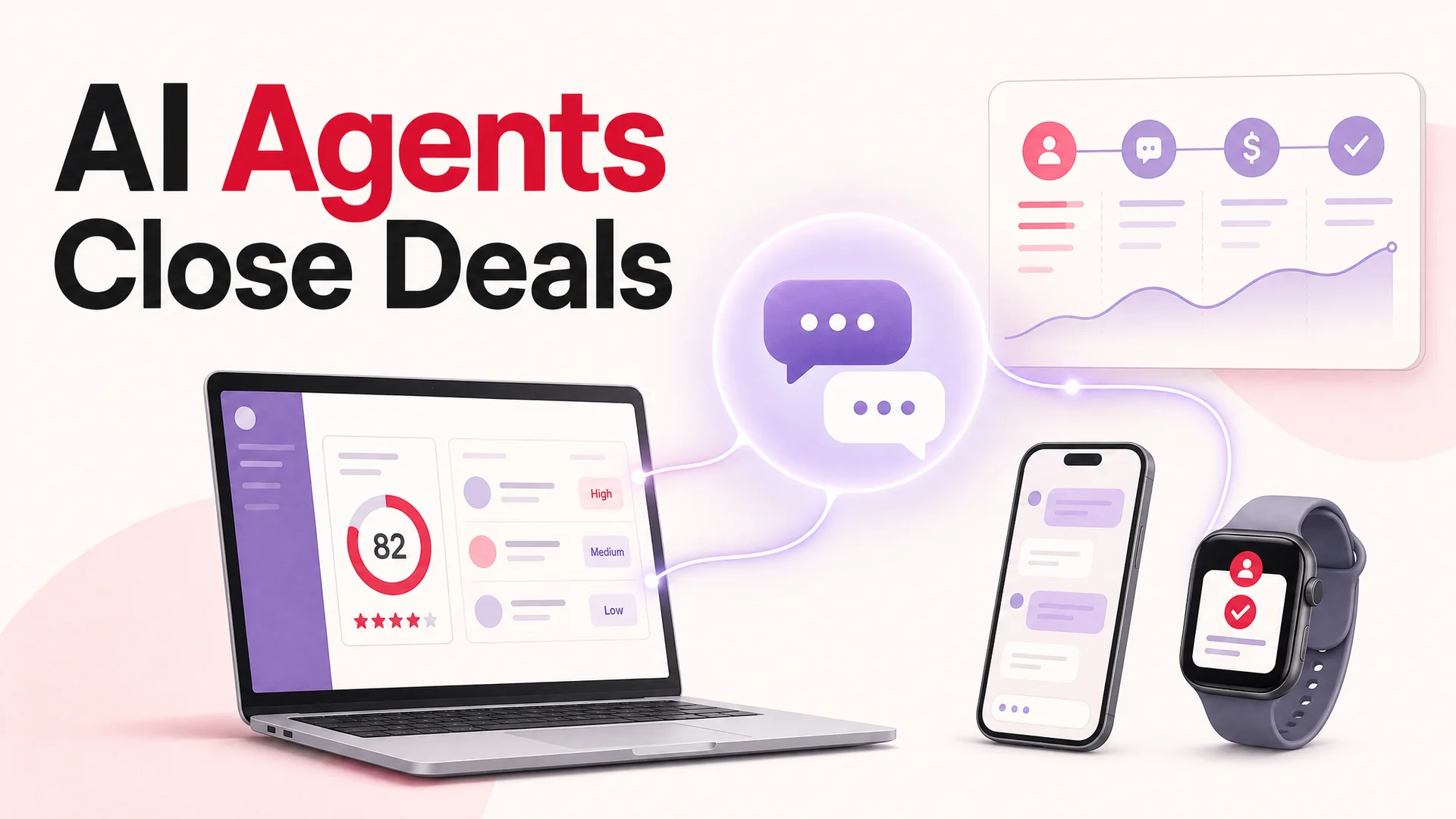
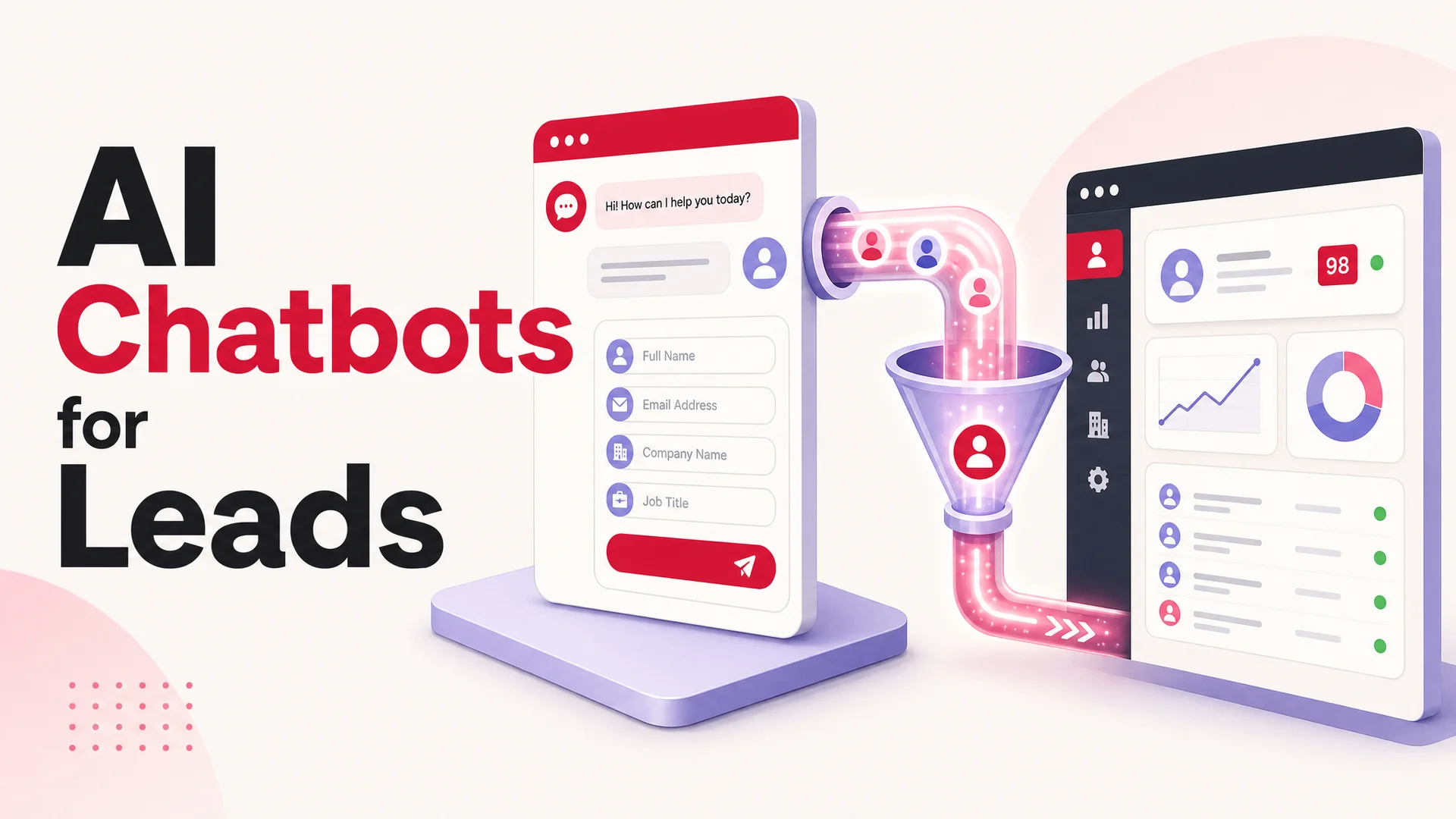
This is the gap conversational AI now fills. A modern lead-generation agent meets a visitor on the page they actually landed on, asks the same qualifying questions a junior SDR would ask, books a meeting if the fit is real, and hands off the transcript so the sales rep can pick up mid-conversation rather than starting from scratch. The same widget can answer support questions for the rest of the traffic, which means you stop paying twice - once for a sales chatbot, once for a support one.
The economics in 2026 are fundamentally different from when this category took shape. Open-weight frontier models from DeepSeek, Z.ai, Moonshot, MiniMax, Alibaba, and Xiaomi have collapsed the cost of running a production agent to fractions of a cent per resolution. At the same time, Claude Opus 4.7, GPT-5.5 Pro, and Gemini 3.1 Ultra have pushed the ceiling of what a single conversation can reason about - Gemini 3.1 Ultra alone holds a 2M-token context, enough for an entire knowledge base plus a year of past chats. The right platform lets you mix the two: route the easy stuff to cheap models, reserve the frontier for hard, high-value conversations.
Picking the right tool, however, is harder than the marketing pages suggest. Most platforms look identical in a five-minute demo. Below is a closer read of five of the strongest options for lead generation specifically, with the trade-offs that only show up after you ship.
1. Berrydesk
Berrydesk is built around the idea that an AI support agent and an AI sales agent are the same animal - both qualify intent, both pull from the same product knowledge, both need to take actions like booking meetings or starting a checkout. Rather than make you stitch two products together, Berrydesk gives you one agent you can point at lead-gen, support, or both, and a four-step setup that gets you live the same afternoon you sign up.
The model story is where Berrydesk differs from the older crop of chatbot tools. Most platforms still default to a single OpenAI model behind the scenes. Berrydesk lets you pick from GPT-5.5 and GPT-5.5 Pro, Claude Opus 4.7 and Sonnet 4.6, Gemini 3.1 Ultra and Pro, DeepSeek V4 Pro and V4 Flash, Moonshot Kimi K2.6, Z.ai's GLM-5.1, the Qwen 3.6 family, MiniMax M2.7, and others. For lead generation that flexibility is not a vanity feature - it is the difference between paying $0.14 per million input tokens for a routine "what's your pricing?" exchange on DeepSeek V4 Flash and burning frontier-model dollars on the same conversation. You can hand the cheap traffic to an open-weight model and only escalate the genuinely complex objection-handling moments to Claude Opus 4.7 or GPT-5.5 Pro.
Training the agent does not require a data team. Upload your product docs, point it at your marketing site, sync from Notion or Google Drive, or pull transcripts from YouTube product walkthroughs. With 1M-token context windows now standard across Claude Sonnet 4.6, DeepSeek V4, and Kimi K2.6, the agent can hold your entire knowledge base in working memory - RAG becomes a tuning lever you reach for when you want it, not a hard architectural requirement.
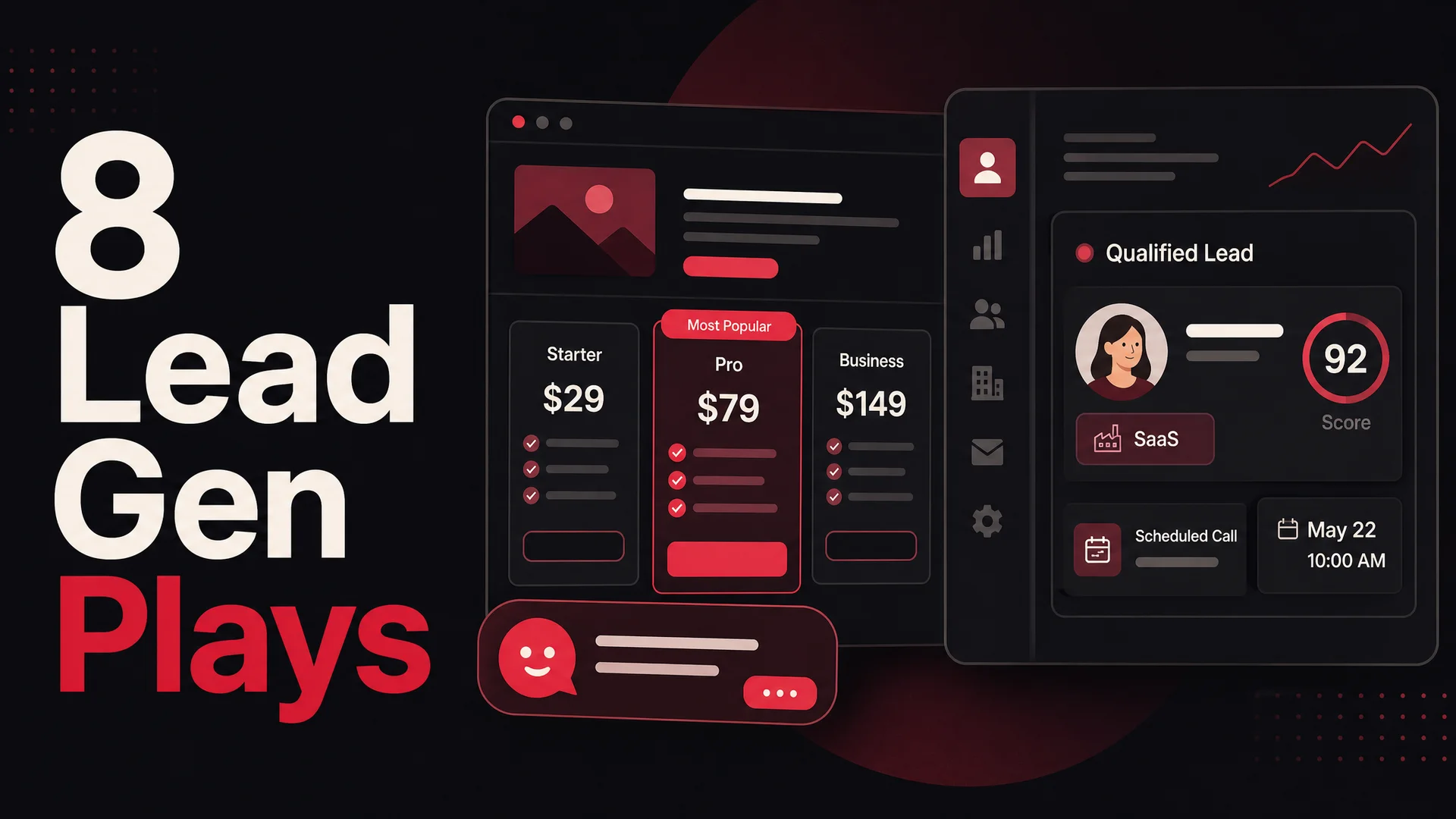
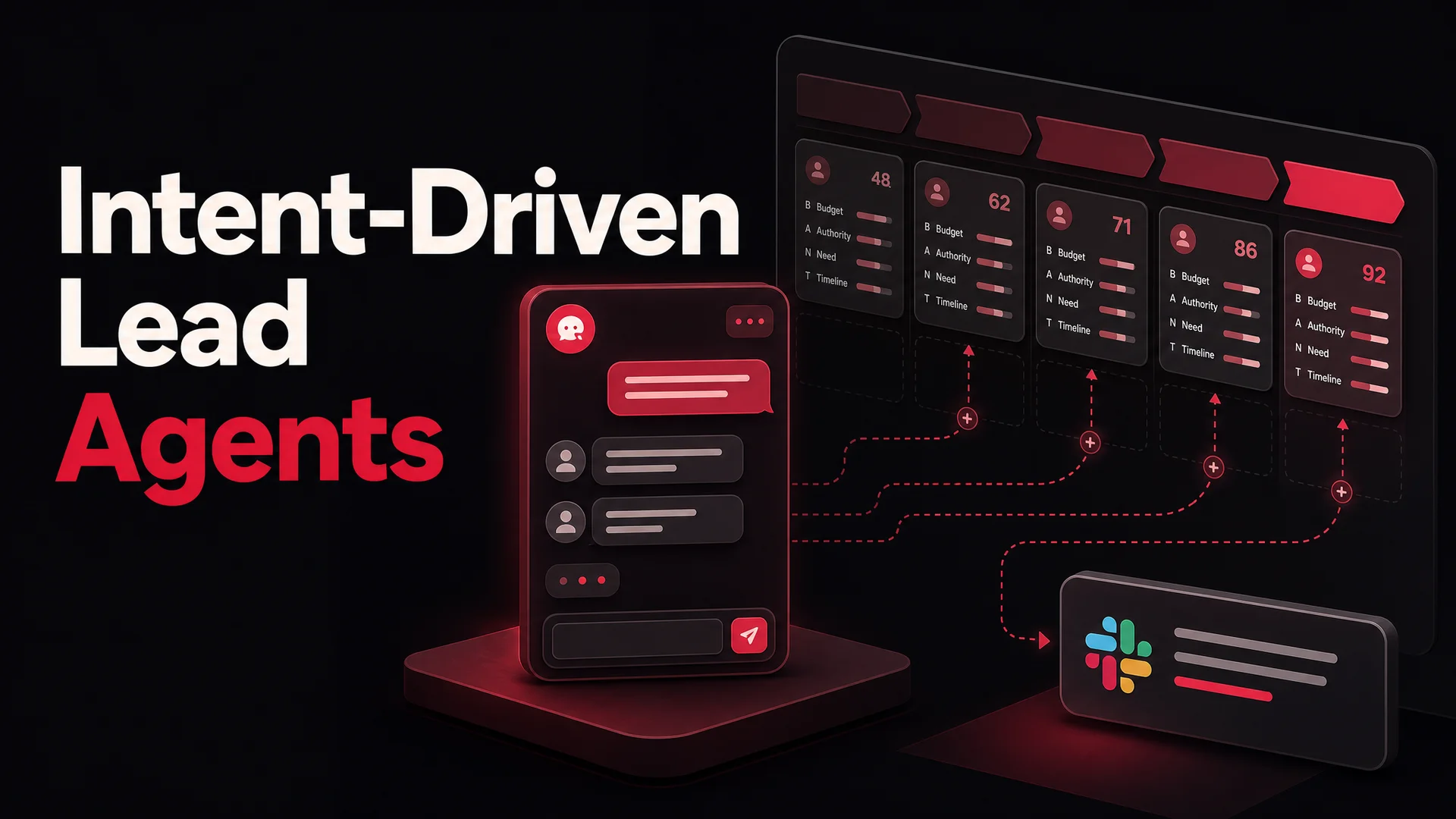
For lead generation specifically, the qualification logic is just plain English. You describe your ideal customer profile - company size, industry, use case, budget signal - and Berrydesk turns that into a conversation, not a form. The agent decides which questions to ask in which order based on what the visitor has already said, instead of marching through a fixed script. When the criteria are met, AI Actions take over: it can book a meeting on the rep's calendar, create a CRM record, send an email, or kick off a Stripe payment link if the buyer is ready to self-serve. These are real tool calls executed by agentic models like Kimi K2.6, GLM-5.1, and Claude Opus 4.7, not the brittle "if-then" trees that gave older chatbots a bad name.
Why Berrydesk?
The four-step launch - pick a model, train on your sources, brand the widget, add AI Actions - means a non-technical marketer can ship a lead-gen agent in an afternoon. There is no "implementation week" and no consultant invoice waiting at the end of it.
Multi-model support means you can route by intent. Cheap conversations go to DeepSeek V4 Flash or MiniMax M2.7 at roughly 8% the cost of a closed-frontier model. Hard conversations - pricing pushback, technical depth questions, custom-quote sizing - escalate to Claude Opus 4.7 or GPT-5.5 Pro automatically.
Deploy anywhere your buyers actually are. The same agent runs on your website, in Slack, in Discord, in WhatsApp, and across other channels, with one source of truth for the knowledge base and one inbox for the transcripts.
AI Actions turn the agent from a question-asker into a closer. Booking, payment links, CRM writes, and refund flows are first-class tool calls, not bolt-ons. Because the underlying models - Kimi K2.6 with its 12-hour autonomous coding sessions, GLM-5.1 with its 8-hour plan-execute-test-fix loops, Claude Opus 4.7 with a 64.3% on SWE-bench Pro - are now reliable at multi-step tool use, these flows actually finish without dropping the ball.
Branding goes deeper than a color picker. Custom domain, logo, voice, refusal language, and proactive prompts all map to your brand, so the agent feels like a member of your team rather than a generic third-party widget.
Granular analytics show conversation length, qualification rate, drop-off points, and which model handled which segment of traffic. That last bit matters because it lets you tune the routing - if Sonnet 4.6 is qualifying as well as Opus 4.7 at a quarter of the cost, you move the line.
Multilingual coverage spans 80+ languages, which matters more than it used to. The 2026 open-weight Chinese models in particular - Qwen 3.6, GLM-5.1, MiMo-V2-Pro - are unusually strong on non-English traffic, and Berrydesk lets you bias toward them when the visitor's locale calls for it.
GDPR-aligned data handling, with the option to deploy against MIT- or Apache-licensed open weights - GLM-5.1, Qwen3.6-27B, MiMo - for regulated industries that need on-prem or air-gapped operation.
Pricing
A free plan is available so you can ship a working lead-gen agent before you ever talk to billing. Paid tiers scale with message volume and feature surface, and because you can choose cheaper models for the bulk of traffic, the effective cost per qualified lead is materially lower than per-seat tools that charge regardless of how the model is used.
2. Intercom
Intercom is the long-standing customer engagement platform that bundles live chat, help desk, marketing automation, and an AI agent - Fin - under a single roof. For teams that want one vendor to cover support and lead generation together, it is still one of the more obvious starting points, and Fin has been pushed hard in the last year as Intercom repositioned around the AI agent rather than the inbox.
The lead-gen flow looks much like Berrydesk's on the surface. Fin can engage visitors in real time, ask qualifying questions, route hot leads to a human rep, and book meetings without leaving the conversation. The deeper Intercom story is the data layer beneath it - every conversation feeds back into a customer profile that other Intercom surfaces (in-product messages, email campaigns, reports) can act on.
Why Intercom?
The chatbot builder is mature and supports complex conversation flows, branching logic, and conditional routing. Teams that have already built a workflow library in Intercom rarely want to rebuild it elsewhere.
Fin can autonomously handle both support deflection and lead qualification in the same conversation, which reduces handoffs.
Behavioral analytics are deep - visitor journeys, intent signals, segmentation - and tie back into the rest of the Intercom suite.
Hundreds of integrations including Salesforce, HubSpot, Slack, and most major marketing platforms.
Key concerns
Pricing is the headline issue. Per-seat costs stack on top of per-resolution AI fees, and the resolution metric is defined liberally enough that costs can outrun the value of the leads being captured, especially for top-of-funnel traffic where most conversations never turn into pipeline.
The feature surface is genuinely vast, which is a strength for a 200-person CX org and a tax on a five-person growth team that wanted a simple chatbot.
Configuration takes real time. Workflow design, integration mapping, and Fin tuning are not one-afternoon jobs - expect a project, not a setup wizard.
Model choice is opaque. You take what Intercom routes you to, with limited control over whether a conversation runs on a frontier model or something cheaper.
Pricing
Plans start in the $39/seat/month range, with AI usage charged separately per resolution. Realistic monthly bills for a sales-and-support deployment land well above the headline number.
3. Instabot
Instabot is a more focused chatbot platform aimed squarely at lead capture and customer service for small and mid-sized businesses. Its visual builder is its calling card - drag, drop, configure - and the learning curve is short enough that a marketing manager can build something useful on day one.
The platform pulls in modern NLU under the hood so conversations feel less like menu-button bots and more like real exchanges, and the analytics layer gives reasonable visibility into where leads drop off. For a team that needs a single self-contained widget on a single site, Instabot covers the basics without much fuss.
Why Instabot?
The visual builder is genuinely approachable. Non-technical users can ship a lead-gen flow without writing code or sitting through a certification course.
Analytics are detailed enough to support iterative tuning of the qualification flow.
Customization options cover the visual essentials - colors, icons, placement - so the widget can be made to feel native to the site.
A built-in handoff to live agents catches the cases the bot cannot resolve cleanly, which is important for high-ticket sales conversations where a human close is the goal.
Key concerns
Language coverage is thin compared to platforms designed for global traffic. If your buyers span EMEA and APAC, you will feel it.
Native integrations are limited. Zapier and similar bridges fill gaps, but adding another middleware layer also adds latency and another vendor to manage.
There is no free plan or trial, which makes due-diligence harder than it should be in 2026.
The base plan is priced like a more capable platform, so feature-for-dollar Instabot is not the most generous option in the comparison.
Pricing
Starts at $49/month.
4. Landbot
Landbot has been around since 2017 and built a loyal following on the strength of its conversation design. The interface treats a chatbot like a flowchart you assemble visually, which appeals to people who think in branching logic and resent text-only configuration.
For lead generation specifically, Landbot ships templates that get you from blank canvas to live qualifier in a couple of hours. The conversation feel is a touch more "scripted experience" than "AI agent" - closer to a polished form than a free-form conversation - which is either a feature or a limitation depending on how much creative latitude you want to give the model.
Why Landbot?
Fast time-to-first-bot. The templated lead-gen flows are well-designed and work out of the box.
Solid integrations with WhatsApp, Google Sheets, Airtable, Slack, and Zapier, which covers most of the obvious places a marketer wants leads to land.
The drag-and-drop builder is one of the better ones in the category - opinionated, visually clean, and forgiving of revision.
Key concerns
Costs scale quickly when you move past the entry tier. Volume-based pricing is the catch on plans that look attractive at first glance.
Analytics feel like an afterthought. Surface-level metrics are present, but deeper diagnostics - conversation pathing, intent clustering, model-by-model cost breakdowns - are weaker than competitors at similar price points.
Customization covers the basics but misses some of the more advanced lead-routing controls a serious sales team will want - for example, granular conditional routing based on enriched firmographic data.
The platform's flowchart-first model is great until you want the agent to deviate from the script. Genuinely free-form, model-driven conversation is not its strong suit.
Pricing
Starts at $40/month.
5. Botsonic
Botsonic shows up on most "best chatbot" lists because it is fast to set up, cheap to start, and reasonably effective on simple flows. It does not try to be the most feature-rich option in the category - it tries to be the easiest, and largely succeeds.
The setup loop is straightforward: upload your product data, write a prompt that explains how the agent should qualify visitors and what criteria matter, customize the appearance, and ship. CRM integrations cover the obvious ones, so leads can be pushed into the funnel without a manual export.
Why Botsonic?
Fast to set up. A working lead-gen widget can be live in well under an hour.
Budget-friendly entry pricing, with a free tier for evaluation.
Backed by mainstream model providers, which keeps response quality reasonable on routine queries.
Key concerns
Quality drops on nuanced or multi-turn conversations. For top-of-funnel "give me your email" capture this is fine; for actual qualification of complex deals it shows.
Several features that more serious lead-gen workflows depend on - sophisticated routing rules, tight CRM hooks, granular analytics, multi-model routing - are missing or underdeveloped.
Limited model flexibility means you do not get to take advantage of the 2026 cost story. Open-weight options like DeepSeek V4 Flash and MiniMax M2.7 that could halve your per-conversation costs are not first-class choices.
Pricing
A free plan is available, and paid tiers begin around $49/month.
What to actually look for in 2026
The platforms above are reasonable starting points, but the deciding factors have shifted. A few worth weighting more heavily than you might have a year ago:
Model flexibility matters more than model brand. A platform that locks you to a single provider was acceptable when there was a clear quality leader. In 2026 there is not - Claude Opus 4.7 leads SWE-bench Pro at 64.3%, Gemini 3.1 Pro leads GPQA Diamond at 94.3%, Kimi K2.6 hits 58.6 on SWE-bench Pro at a fraction of the cost, GLM-5.1 (754B-param MoE, MIT-licensed) edges out GPT-5.4 and Claude Opus 4.6 on the same benchmark, and DeepSeek V4 Flash will run a routine support conversation for pennies. The right answer is "all of the above, routed by the situation," and only a multi-model platform gives you that lever.
Long context changes the architecture. With 1M tokens standard across Claude Sonnet 4.6, DeepSeek V4, and Kimi K2.6, and 2M on Gemini 3.1 Ultra, you can hold the entire product knowledge base, the visitor's full conversation history, and your qualification policy in a single prompt. RAG becomes a way to make queries cheaper, not a way to make them possible. Platforms that still treat retrieval as the only path will feel dated quickly.
AI Actions decide whether the agent ships pipeline. A chatbot that can ask qualifying questions is table stakes. A chatbot that can book the meeting, write the CRM record, send the contract, and start the payment without a human in the loop is a different product entirely. The agentic models that make this reliable - Kimi K2.6's swarms of up to 300 sub-agents and 4,000 coordinated steps, GLM-5.1's 8-hour autonomous loops, Claude Opus 4.7's tool-use reliability - are recent enough that older platforms have not yet caught up.
Open weights are a procurement lever. For regulated industries or buyers who insist on on-prem, the MIT/Apache-licensed Chinese open weights - GLM-5.1, Qwen3.6-27B, MiMo-V2-Pro - make the conversation possible at all. A platform that supports them, in addition to the closed frontier models, lets you sell into accounts you would otherwise have to walk away from.
Common pitfalls
A few patterns that tend to sink lead-gen chatbot projects regardless of platform:
Building a form-replacement instead of a conversation. If the agent is just collecting fields in order, you have not gained anything over a well-designed form. The point is adaptive questioning that responds to what the visitor has actually said.
Over-qualifying. A 12-question gauntlet to "qualify" a visitor will tank conversion. Two or three well-placed questions, with the agent reading intent signals from the rest of the conversation, almost always outperforms.
Treating the chatbot as separate from support. The same visitor who asked a pre-sales question on Tuesday is the customer asking a support question on Friday. One agent, one knowledge base, one transcript history is a real advantage - and it is the model Berrydesk is built around.
Ignoring cost-per-resolution. A platform that runs every conversation through GPT-5.5 Pro will look great in a demo and devastating on the invoice. Multi-model routing - frontier when needed, open-weight by default - is how the unit economics actually work.
Skipping the analytics loop. The platforms that win on lead-gen are not the ones with the slickest builder; they are the ones whose teams iterated on the qualification flow weekly based on real conversation data. Pick a platform that gives you that visibility, and then actually use it.
Pick a tool that pays for itself
Lead-gen chatbots stopped being a novelty several years ago. In 2026 the question is not whether to deploy one - it is which platform gives you the most pipeline per dollar, and which one you can ship in an afternoon rather than a quarter.
If you want a single agent that handles both lead capture and customer support, lets you mix frontier and open-weight models for the right cost-quality trade-off, brands cleanly to your company, and ships meaningful AI Actions out of the box, start a free Berrydesk agent and have it qualifying leads on your site by the end of the day.
 Berrydesk
Turn website traffic into qualified pipeline
- Launch a branded lead-gen agent in four steps - no code needed.
- Route routine chats to cheap open-weight models, escalations to Claude or GPT-5.5.
Set up in minutes

Chirag Asarpota is the founder of Strawberry Labs, the team behind Berrydesk - the AI agent platform that helps businesses deploy intelligent customer support, sales and operations agents across web, WhatsApp, Slack, Instagram, Discord and more. Chirag writes about agentic AI, frontier model selection, retrieval and 1M-token context strategy, AI Actions, and the engineering it takes to ship production-grade conversational AI that customers actually trust.