If you sell anything, customers will eventually want to talk to you. They will praise a release you spent a quarter on. They will ask why their order is late. They will report a bug at 11pm on a Sunday. They will wonder, politely or not, what is going on with the new pricing page.
Customer communication is no longer a side function bolted onto a product - it is the spine that connects sales pipelines, marketing programs, and post-purchase loyalty. Every reply, every nudge, every refund handled cleanly is a small bet on whether the buyer comes back, recommends you, or churns silently. The companies that get this right treat communication as a product, not a cost center.
The conversations are constant, the topics are unpredictable, and the channel they show up on is whatever channel the customer happened to be in when the thought hit them. Some will email. Some will tap the bubble in the corner of your site. Some will reply to the marketing DM you sent on Instagram three weeks ago. Some will message your number on WhatsApp because that is where they live.
There is no single best tool, because the best tool depends on the shape of your business. A B2B SaaS team with a 30-second SLA on demo requests needs something different from a Shopify brand running flash sales over Instagram DMs. A regulated fintech with on-prem requirements needs something different from a creator selling courses out of a Notion site.
This guide walks through the strongest customer messaging and communication platforms available today, what each is genuinely good at, and where to draw the line if your team has specific constraints around budget, channels, or compliance.
TL;DR - the shortlist at a glance
AI-first agent platforms
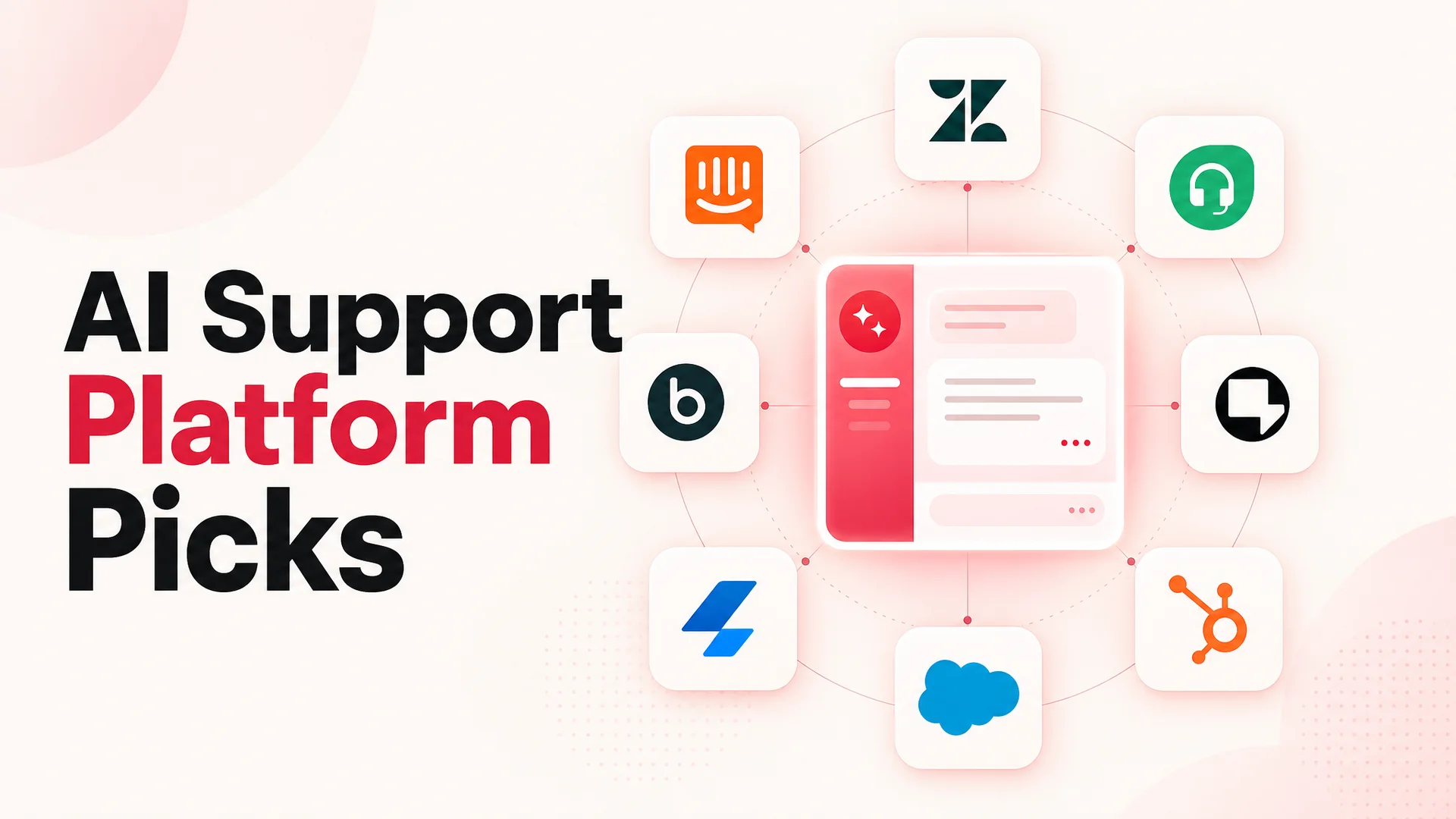
- Berrydesk - multi-model AI agents (GPT-5.5, Claude Opus 4.7, Gemini 3.1, DeepSeek V4, Kimi K2.6, GLM-5.1, Qwen 3.6, MiniMax M2). Trains on docs, sites, Notion, Drive, YouTube. AI Actions for bookings and payments. Deploys to web, Slack, Discord, WhatsApp, Instagram. Free plan, paid tiers from $40/mo, no per-seat fees.
Full-service support platforms
- Intercom - strong omnichannel inbox plus Fin AI; pricier as you scale, best when in-app messaging is core.
- Zendesk - the workhorse ticketing system for mid-market and enterprise; deep customization and the largest app marketplace.
- Salesforce Service Cloud - deep CRM integration and a 360-degree customer record.
- Freshdesk / Freshdesk Messaging - friendly UI and automation, priced for smaller teams; serious omnichannel for mid-market.
Sales and conversational marketing
- Drift - turning chat into pipeline for B2B revenue teams.
Specialized tools
- Tidio - straightforward live chat, bots, and Lyro AI for SMBs.
- Sprout Social - best for brands whose customer conversations live mostly on social.
- ManyChat - high-volume automation on Messenger, Instagram, WhatsApp, and SMS for ecommerce and creators.
- Hiver - turns Gmail into a shared support inbox with chat and WhatsApp layered in.
- ChatBot.com - no-code, flow-first chatbot builder with a defined scope.
- LiveAgent - all-in-one inbox with built-in call center features.
- Qualaroo - micro-surveys that fire on user behavior.
- SurveyMonkey - survey design and analytics at every scale.
- Uniqode - digital business cards and QR-driven contact sharing.
The rest of this article walks each in depth and adds the 2026 context - particularly around AI models - that should shape which tool you reach for.
1. Berrydesk - best for AI support agents that talk and take real actions
Berrydesk is built for teams that want a branded AI support agent live on their website and across the messaging channels their customers already use, without a six-month implementation project. It scales from a five-person seed-stage startup to a multi-region enterprise, because the same agent that answers FAQs at the small end can be wired into Stripe, your booking system, and an internal ticketing flow at the large end.
Where most tools in this list started as ticketing systems and bolted AI on later, Berrydesk started from the model layer and worked outward. The result is a platform where the AI is not a feature - it is the primary interface between your customer and your business.
Who it is for
Teams that get the most value from it tend to share three traits: they have a steady stream of repetitive questions, they want a single agent across web and social, and they want the agent to actually resolve tickets - not just route them. Software companies use it to deflect onboarding questions and qualify trial users. Ecommerce brands use it to answer order-status questions, process returns, and recover abandoned carts. Services businesses use it to book consultations and qualify leads before a human picks up the thread.
A model layer that does not lock you in
The May 2026 model landscape is the most fragmented it has ever been, and Berrydesk leans into that. You can route conversations to GPT-5.5 or GPT-5.5 Pro for OpenAI's latest parallel reasoning, to Claude Opus 4.7 (which leads SWE-bench Pro at 64.3%) for the strongest agentic and tool-use reliability, or to Gemini 3.1 Ultra when you need the 2M-token context to load an entire help center plus a long conversation history without RAG.
For high-volume, cost-sensitive traffic, you can route to open-weight frontier models - DeepSeek V4 Flash at $0.14 / $0.28 per million input/output tokens, MiniMax M2 at roughly 8% of the price of Claude Sonnet at twice the speed, or GLM-5.1 and Qwen3.6 for agentic tasks where MIT or Apache licensing matters. The cost difference between these tiers can be 50x, and routing them intelligently is where margin lives.
The 1M-token context windows now standard on Claude Sonnet 4.6, DeepSeek V4, and Kimi K2.6 also change the economics of training. You no longer have to chunk and embed your entire knowledge base just to answer a single question. The agent can hold your full product documentation, customer history, and policy files in-context - turning RAG from a hard requirement into a tuning lever you reach for only when you need it.
Channels in one place
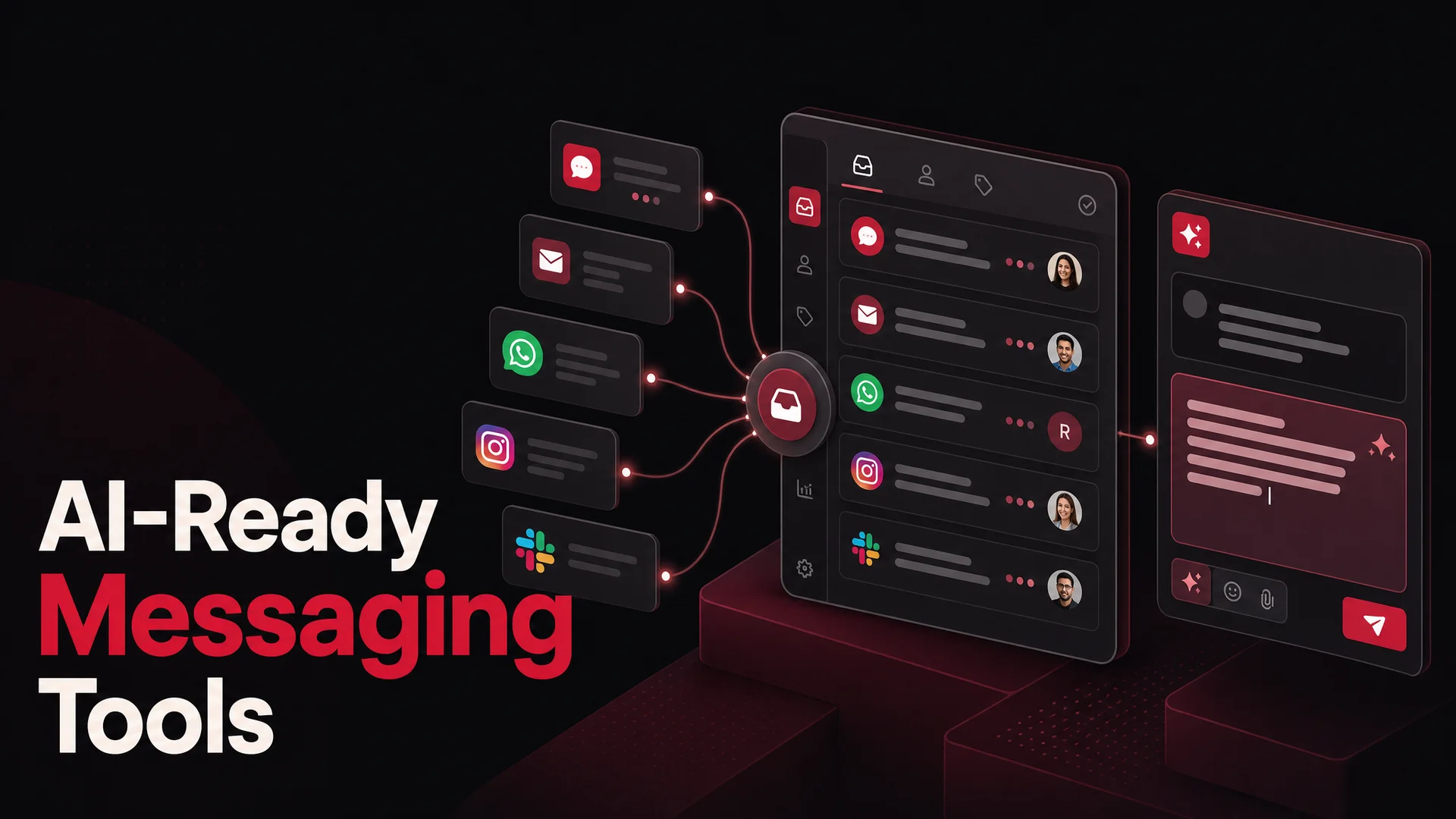
Beyond your website widget, Berrydesk pushes the same agent to WhatsApp (including WhatsApp Business), Instagram DMs and Facebook Messenger, Slack and Discord (for community and internal support), email, and a public API for anywhere else. Conversations flow into a single inbox. The agent has the same memory and the same knowledge base regardless of which surface the customer used.
AI Actions that close the loop
The thing that turns Berrydesk from a chat widget into an actual support team is AI Actions. The agent is not just answering - it is doing.
- Bookings. When someone asks for a demo or a consultation, the agent checks your calendar, offers slots, and confirms.
- Payments. A customer ready to upgrade can be handed a Stripe link generated mid-conversation, with the right plan and seat count already filled in.
- Order operations. Lookups, status checks, refunds within policy, and shipping updates run as tool calls against your backend.
- Internal handoffs. When the agent does need a human, it summarizes the thread, attaches relevant context, and assigns to the right queue.
Agentic models like Claude Opus 4.7, Kimi K2.6, and GLM-5.1 have made these flows reliable enough for production in 2026 in a way they were not even a year ago.
Pricing
- Free - $0/month forever. Public models, capped messages, ideal for testing.
- Hobby - from $40/month. Frontier models, AI Actions, integrations, training on unlimited links.
- Standard - for growing teams that need more message volume, more agents, and more team seats.
- Pro - for higher-traffic deployments with advanced analytics and priority routing.
There are no per-seat charges, which makes Berrydesk particularly economical for teams where many people need access to the dashboard without each of them being a "licensed agent." Try it free at berrydesk.com.
2. Intercom - best for in-app, lifecycle messaging at SaaS scale
Intercom is the platform that defined "conversational" for B2B software. Its core product - a unified inbox combining live chat, email, and in-app messaging - is well-built, mature, and deeply customizable. It remains the strongest choice when in-app messaging and lifecycle automation are central to how your product onboards, educates, and retains customers.
Who it is for
SaaS companies, fintechs, and digital products where the customer experience happens inside an app, not on a marketing site. Teams running formal onboarding tours, contextual upsell prompts, and milestone-based outreach get the most out of Intercom because those flows are first-class citizens.
Standout features
The platform's modern story leans heavily on its AI assistant Fin, which can resolve a meaningful share of incoming conversations on its own and hand off the rest to a human with full context. Resolution Bot covers the obvious cases - FAQs, scheduling, account lookups - while behavior-based targeting lets product and marketing teams run lifecycle campaigns from the same backbone. Product tours guide users through onboarding or new features without engineering work. Behavior-based triggers send messages keyed to specific user actions - "send this after the user creates their third project but before they invite a teammate."
The downside is cost. Intercom's pricing scales aggressively with seats, message volume, and add-ons; for a small team it can be the most expensive line item in their stack. The platform also has a learning curve. Expect a starter plan in the ~$74/month range, mid-tier plans around $169–$499/month, and custom pricing for scale deployments.
3. Zendesk - best for enterprise-scale support operations
Zendesk is the workhorse of customer support. If you have ever worked at a company with more than fifty support agents, you have almost certainly touched a Zendesk tab. Its strength is breadth: ticketing, omnichannel routing, knowledge base, voice, and a deep marketplace of apps that plug into nearly anything.
Who it is for
Mid-market and enterprise teams running large support orgs, often globally, with strict SLAs, complex workflows, and stakeholders who care about reporting. Companies whose buying committee includes procurement, security, and compliance tend to land here.
Standout features
In 2026, Zendesk's AI investments have caught up with the rest of the market. The platform now offers AI-powered ticket triage, suggested responses powered by frontier models, and automated knowledge base suggestions that surface gaps based on conversations agents are still resolving manually. Skills-based routing pushes conversations to the right specialist. Macros and automations cut the time for repetitive responses. The Answer Bot deflects FAQs by surfacing help-center articles. Reporting is the strongest in the category - if your VP of CX wants weekly dashboards on first-response time by region by tier, Zendesk has done it before.
The trade-off is the same one Zendesk has always had. The platform is enormous, and most customers pay for surface area they do not use. Smaller teams in particular often find the configuration overhead heavier than the value they extract.
Zendesk plans start around $55/agent/month for the Team tier and rise through Growth, Professional, and Enterprise - typically reaching $115–$169/agent/month for the larger configurations. Voice, AI add-ons, and advanced sandboxes are billed separately.
4. Salesforce Service Cloud - best for Salesforce-native enterprises
Salesforce Service Cloud is the support layer of the Salesforce ecosystem. If your sales and revenue teams already live in Salesforce, Service Cloud's main argument is the seamless 360-degree view: every email, call, chat, ticket, opportunity, and renewal lives on the same customer record, accessible to whichever team needs it.
The Einstein AI features have evolved meaningfully since their original release. Einstein Bots can now run agentic workflows that string multiple actions together - verify a customer, look up an order, issue a partial refund, schedule a callback - instead of the rigid decision trees they used to ship as. For organizations already standardized on Salesforce, this is the natural place to extend automation rather than wiring up a parallel AI stack.
The catch is the same one that has always applied. Configuration is slow, expert implementation is expensive, and the full power of the platform only shows up after a meaningful integration project. Service Cloud licenses start at roughly $25/user/month for Essentials and rise through Professional ($75), Enterprise ($150), and Unlimited ($300+). Most real deployments add Service Cloud Voice, Einstein add-ons, and platform fees on top.
5. Freshdesk and Freshdesk Messaging - best for omnichannel support with built-in automation
Freshdesk is Freshworks' answer to Zendesk, and for a long stretch of the market it is the better answer. The UI is friendlier, the pricing is gentler, and the automation works without requiring a power user to maintain it. For teams of one to twenty agents, Freshdesk often delivers 80% of Zendesk's capability at half the cognitive overhead.
Like every other helpdesk in 2026, Freshdesk now has a meaningful AI layer. Freddy AI can summarize tickets, draft responses, suggest knowledge base articles, and triage incoming conversations. Freshdesk Messaging - the chat side of the suite - adds website and in-app chat, WhatsApp, Facebook Messenger, Instagram DMs, Apple Business Chat, and email all funneling into a single agent workspace. AI bots handle deflection on common questions. Proactive messaging fires based on user behavior - for example, prompting a customer who has been on the pricing page for two minutes.
The Growth and Pro tiers are the sweet spot for most buyers. Free plan for small teams; paid plans start at $15/agent/month (Growth), $49/agent/month (Pro), and $79/agent/month (Enterprise), all billed annually.
6. Drift - best for conversational marketing and sales pipelines
Drift treats every site visitor as a potential pipeline conversation. It is less about deflecting tickets and more about turning anonymous traffic into qualified meetings, which is a different job than support.
Drift is a strong pick for B2B SaaS, high-ticket services, and any company where a single closed-won deal pays back the platform many times over. If your sales motion depends on fast response to inbound interest, on routing the right prospect to the right rep, and on collapsing the gap between "I'm interested" and "I'm on the calendar," Drift is built for that exact loop.
The center of gravity is the website widget and the AI playbooks behind it, but Drift extends naturally into outbound email sequencing, account-based campaigns, and meeting scheduling. It plugs into Salesforce, HubSpot, Marketo, and the rest of the standard B2B stack. Lead qualification is the headline feature: AI playbooks ask the right questions, score the visitor against your ICP, and only escalate the ones worth a rep's time. Booking is the second: prospects pick a slot directly inside the chat without ever opening a separate scheduling tool.
7. Tidio - best for combining live chat, bots, and Lyro AI on a budget
Tidio is the natural pick for small businesses that want live chat, a chatbot, and a friendly AI layer in one tool, without the price tag or complexity of an enterprise platform. It is opinionated about being easy to set up - most stores can install it, customize the widget, and have a basic bot live within an hour.
Small to mid-size ecommerce stores, agencies, and service businesses are the sweet spot. Shopify and WordPress shops are particularly well-served - the integrations are deep and the setup is fast. Channels: website live chat, Instagram DMs, Facebook Messenger, WhatsApp, and email, all in a single shared inbox.
Lyro is Tidio's AI agent layer; it can deflect a meaningful share of routine questions automatically, with handoff to live agents when it cannot. Live typing preview shows what visitors are writing before they hit send - useful for prepping a reply. Proactive messages trigger on behavior like cart abandonment.
Free plan available; paid tiers start at $19/month for chat, $39/month for email, and $99/month for the automation tier with bot flows and lead routing.
8. Sprout Social - best for social-first customer conversations
Sprout Social is a social media management platform that happens to do customer messaging well, rather than a messaging platform that bolts on social. That distinction shapes how it feels to use.
Brands with serious investment in organic and paid social - consumer goods, media companies, anyone whose audience reaches out on Twitter/X, Instagram, LinkedIn, or Facebook before they think to email - are the right fit. If you have a social team that handles a lot of the customer conversation today, putting them in Sprout means support and social monitoring share the same desk.
Sprout's Smart Inbox aggregates direct messages, mentions, and comments across Facebook Messenger, Instagram DMs, Twitter/X DMs, LinkedIn Messaging, and WhatsApp Business. It also pulls in public comments and brand mentions, so your team can spot a complaint forming on a public post before it becomes a thread that other customers chime in on. Automated replies cover off-hours and basic FAQs. Tagging and reporting let you spot patterns - for example, a sudden spike in messages tagged "shipping delay" pointing to a logistics issue.
9. ManyChat - best for high-volume automation on social and SMS
ManyChat is purpose-built for one thing: running automated conversational flows on social and messaging channels at scale, especially for ecommerce and creators. It is not pretending to be a help desk.
Ecommerce brands running Click-to-Messenger ads, creators running giveaways, course sellers handling enrollment questions, restaurants taking reservations through DMs - if your traffic source is Meta and your job is to convert chat into purchases, ManyChat is built for that motion. Native support across Facebook Messenger, Instagram DMs, WhatsApp, and SMS.
Flow Builder is the heart of it: a visual canvas for designing conversation trees with quick replies, buttons, carousels, and conditional logic. Click-to-Messenger ads turn paid social traffic directly into bot conversations. Abandoned cart recovery and post-purchase upsells run as automated sequences. Integrations with Shopify, WooCommerce, Klaviyo, and Mailchimp let it pull product and customer data into the conversation.
10. Hiver - best for teams who want messaging to feel like email
Hiver leans into a counter-trend: instead of asking your team to learn a new shared inbox, it makes Gmail itself the support workspace. It then layers chat, WhatsApp, and voice into the same surface.
Small to mid-size businesses, agencies, and operations-heavy teams whose support staff already live in Google Workspace are the right audience. If your team's instinct is to answer customer questions from their inbox and a separate help-desk tool keeps getting bypassed, Hiver matches the workflow people already have rather than fighting it.
Email is the anchor - every customer email becomes a Hiver thread with assignment, status, and SLAs without leaving Gmail. From there, Hiver adds website live chat, WhatsApp, and voice, all routed into the same shared inbox. Email assignment and collision detection prevent two reps from replying to the same customer. SLA tracking and analytics give you the support metrics you would expect from a dedicated help desk.
11. ChatBot.com - best for no-code, flow-based chatbots
ChatBot.com is a focused product: a visual builder for conversational flows that you can deploy to your site, Messenger, WhatsApp, and a few other channels. It is the right pick if you want a chatbot specifically, not a full messaging platform.
Small to mid-size businesses and agencies who want to spin up a chatbot for a defined use case - lead capture, FAQ deflection, appointment booking - without writing code or running a model deployment. Agencies building bots for clients use it because the flows are easy to template and hand off.
The drag-and-drop builder is genuinely good - you can see the whole flow as a graph and reason about edge cases before publishing. Pre-built templates cover common patterns. NLP models route freeform input to the right branch. The trade-off compared to a platform like Berrydesk is that ChatBot.com is flow-first rather than knowledge-first. If you want an agent that ingests your docs and reasons across them, this is not it.
12. LiveAgent - best for consolidated stacks that need built-in voice
LiveAgent positions itself as the all-in-one help desk: ticketing, live chat, an inbound and outbound call center, and social media inboxes, all in a single tool. For teams that want to consolidate a sprawling support stack into one platform - particularly if voice is a meaningful channel - it is one of the most complete options at its price point.
The unified inbox is the centerpiece. Tickets from every channel land in the same queue, ordered and prioritized however you like, and any agent can pick up any conversation regardless of where it originated. The built-in call center is unusual at this price tier; most competitors require a separate vendor like Aircall or Twilio to layer on voice.
Where LiveAgent shows its age is the UI, which feels more functional than polished, and the AI features, which lag the leaders in this list. Free plan with limited features, Small at $9/agent/month, Medium at $29/agent/month, and Large at $49/agent/month.
13. Qualaroo - best for behavioral micro-surveys
Qualaroo is not a support tool in the traditional sense - it is a feedback platform that fires contextual micro-surveys, called Nudges, at specific moments in the user journey. Where a survey tool like SurveyMonkey is built around explicit research, Qualaroo is built around implicit behavioral cues: the user lingered on the pricing page, the user just finished onboarding, the user is about to abandon checkout.
The platform pairs well with whatever support tool you have already chosen. Sentiment analysis on open-text responses, powered by modern language models, surfaces themes faster than manual coding ever could. Branching survey logic and a library of pre-built templates mean you can launch a meaningful Nudge in an afternoon. Free Starter plan, Essentials from $19.99/month, Business from $49.99/month, Enterprise from $149.99/month.
14. SurveyMonkey - the default for explicit feedback
SurveyMonkey remains the default tool for most companies that need to run a survey. It is generic, broad, and deeply familiar - the kind of platform where a marketing manager, a researcher, and an HR lead can all build what they need without involving a vendor or a dev team.
Modern SurveyMonkey leans on AI for question writing, sentiment analysis on open responses, and benchmark comparisons against industry datasets. None of these are revolutionary - every survey vendor in 2026 has some version of them - but SurveyMonkey's are mature and well-integrated.
A limited Basic plan is free; paid plans for individuals start at $32/user/month (annual) and rise through Premier and Enterprise tiers.
15. Uniqode - for the first touchpoint before any inbox
Uniqode is a slightly different category - it is a digital business card and QR code platform rather than a support tool. It earns a place on this list because customer communication does not start at the ticket inbox; it starts when a sales rep, an event attendee, or a partner saves your contact information for the first time.
Uniqode replaces the printed business card with a QR code that resolves to a digital profile, complete with branded design, click tracking, and an auto-sync into your CRM. For sales-led teams that meet customers in person at conferences, retail floors, or field operations, the analytics around who scanned which card and when are surprisingly useful.
Plans start around $5/user/month for digital cards; Pro at roughly $15/user/month adds analytics and CRM integrations.
How to choose the right tool
The "best" tool is the one that fits your team's specific shape - channels, traffic mix, technical depth, and how aggressive you want to be with AI. A few practical filters that matter more than any feature comparison.
Start with where your customers actually are
A platform that excels at WhatsApp is wasted on a B2B SaaS company whose buyers live in Slack. A polished web widget is wasted on a field services company whose customers call. Map the top three channels of your real conversations before reading any pricing page.
Decide how much you want AI to do
This is the biggest fork in the road in 2026. Some teams want AI to assist agents - suggested replies, summaries, smart routing - while keeping a human as the front line. Others want AI to be the front line, deflecting 60–80% of conversations and only routing the rest to humans. The first strategy points you toward Intercom, Zendesk, or Freshdesk. The second points you toward Berrydesk or a similar AI-first platform.
The economics of the second strategy have changed dramatically in the last year. Open-weight models like DeepSeek V4 Flash, MiniMax M2, and Qwen 3.6-27B make it realistic to run high-volume support deflection at a fraction of a cent per resolution - pricing that simply was not available eighteen months ago.
Match the tool to your team size
If you are early - under 20 people, building your first AI support agent - pick something that gets you live this week, not this quarter. Berrydesk, Tidio, and ChatBot.com are all reasonable starting points depending on whether you want a knowledge-first agent (Berrydesk), a budget all-rounder (Tidio), or a deterministic flow (ChatBot.com).
If you are mid-market with a real support team, the question is whether you want messaging-first (Berrydesk, Intercom, Freshdesk), social-first (Sprout, ManyChat), or sales-first (Drift). Those are different shapes of platform; the wrong fit will quietly underperform for a long time before anyone diagnoses it.
If you are enterprise, the shortlist narrows fast. Zendesk and Freshdesk are the safe picks for traditional support organizations. Berrydesk and Intercom are the strong picks when AI agents and product-led messaging are core to your strategy and you want model flexibility. Salesforce Service Cloud is the natural fit when the rest of your data already lives in Salesforce.
Consider compliance and data residency
Regulated industries - healthcare, finance, legal, government - are where the open-weight model story really shines. MIT-licensed releases like Z.ai's GLM-5.1 and Alibaba's Qwen 3.6-27B make on-prem and air-gapped deployments viable in a way they were not when every frontier model lived behind a US-based API. If your buyer is in one of these sectors, ask any tool you evaluate exactly which models it supports, where they run, and what the audit trail looks like.
Think about the agentic ceiling
Every tool on this list can answer a question. Fewer of them can take an action - issue a refund, change a subscription, book an appointment, push a record into a CRM - without an engineer involved. As models like Claude Opus 4.7, Kimi K2.6, and GLM-5.1 push agentic tool use from "demoware" into reliable production behavior, the value of the tools that expose this cleanly grows fast. AI Actions in Berrydesk, Einstein flows in Salesforce, and the new agentic features in Intercom and Zendesk are all leaning hard in this direction.
Common pitfalls to avoid
A few traps to keep in mind, because they tend to bite teams six months in rather than on day one.
Buying for the demo, not the deployment. Every vendor has a polished sales motion. Insist on a pilot using your own content, your own ticket history, and your own users before signing a multi-year deal.
Channel coverage is not the only thing that matters. Most of these tools list the same channels. What differs is the depth of the integration on each one - for example, ManyChat's Instagram support is meaningfully deeper than most general-purpose platforms, and Zendesk's voice channel is far more mature than the others. Map your top three channels, then evaluate depth on those, not breadth across all twelve.
AI is a model layer, not a feature. In 2026, most platforms claim "AI agents." The real questions are: which model is doing the reasoning, can you switch models, can the agent call your tools, and how reliably does it handle multi-step actions. The gap between Claude Opus 4.7 or Kimi K2.6 driving a tool-using agent versus a 2024-era bot stuck in a flow chart is enormous, and not every vendor has caught up.
Long-context changes the game for knowledge ingestion. Models with 1M–2M token windows - Gemini 3.1 Ultra, Claude Opus 4.6/Sonnet 4.6, DeepSeek V4, Kimi K2.6 - let an agent hold an entire help center, full conversation history, and policy documents in context simultaneously. RAG becomes a tuning lever rather than a hard requirement, and the answer quality on edge-case questions improves noticeably.
Open-weight models matter for regulated industries. GLM-5.1 is MIT-licensed. Qwen3.6-27B is Apache 2.0. Xiaomi MiMo-V2-Pro is open under MIT. For teams with strict on-prem or air-gapped requirements, these options went from "interesting" to "production-ready" in early 2026.
Underestimating training and content debt. AI agents are only as good as the documents they read. Teams that skip the cleanup of stale help-center articles get an agent that confidently quotes the wrong refund policy. Plan for a content audit before launch, not after.
Locking in a single model. Closed-model exclusivity was reasonable in 2023. In 2026, the cost gap between frontier closed and open-weight frontier is so wide that single-model deployments leave money on the table. Whichever tool you choose, make sure you can route or switch.
Ignoring the seat math. Per-seat pricing compounds quietly. Two extra seats a quarter for two years is often a five-figure bill nobody planned for. If your team grows, the gap between per-seat and flat-fee tools widens fast.
Treating analytics as optional. Conversation analytics is where the next quarter's roadmap lives. Without them, you cannot tell which agent flow is leaking, which page generates the most confusion, or which intent your AI is silently failing on.
Total cost of ownership runs deeper than the seat price. Implementation, training the agent, building integrations, ongoing model costs, and the support staff time to maintain content all add up. A platform with a higher seat price and lower model cost can end up cheaper than the reverse if your volume is high.
The shape of customer communication in 2026
Across this entire list, the through-line is the same: communication tools are converging into platforms where humans and AI agents share an inbox, and the line between them is increasingly invisible to the customer. The teams that win in 2026 are not the ones with the best ticketing system or the best chat widget - they are the ones who design that hybrid carefully, route traffic intelligently across model tiers, and treat every conversation as both a service moment and a data signal.
If you are starting from scratch, build around an AI-first foundation and add helpdesk depth as you grow. If you already have a helpdesk in place, the highest-leverage upgrade you can make right now is layering an AI agent on top of it, hooked into the same knowledge base, with clear escalation rules.
The platform you land on will shape how customers experience your brand for the next several years. Worth taking the extra week to choose well.
If you want to see what an AI support agent that actually closes the loop looks like - branded to your company, trained on your docs, deployed across your channels, and capable of taking real actions inside your stack - start building one for free at berrydesk.com.
 Berrydesk
Launch your AI agent in minutes
- Pick from GPT-5.5, Claude Opus 4.7, Gemini 3.1, DeepSeek V4, and more
- Train on docs, websites, Notion, and Drive - deploy to web, WhatsApp, Slack, Discord, and Instagram
Set up in minutes

Chirag Asarpota is the founder of Strawberry Labs, the team behind Berrydesk - the AI agent platform that helps businesses deploy intelligent customer support, sales and operations agents across web, WhatsApp, Slack, Instagram, Discord and more. Chirag writes about agentic AI, frontier model selection, retrieval and 1M-token context strategy, AI Actions, and the engineering it takes to ship production-grade conversational AI that customers actually trust.