When ChatGPT shipped in late 2022, it was a research preview most people expected to be a curiosity. Three and a half years later, it is one of the most-used software products ever made, and it has dragged an entire generation of business tools - customer support included - into a different shape. The interesting story in 2026 is no longer "ChatGPT exists." It is how broad its everyday use has become, what users are actually doing inside it, and how a once GPT-only world has become a routed, multi-model one where Claude Opus 4.7, Gemini 3.1 Ultra, and open-weight frontier models like DeepSeek V4 and GLM-5.1 sit side-by-side with the OpenAI stack.
This post pulls together where ChatGPT adoption stands now, the use cases that have stuck, the tradeoffs teams are running into, and what all of it means if you are deciding how to deploy an AI agent for your own customers.
What ChatGPT Is in 2026
ChatGPT is OpenAI's consumer and enterprise interface to its GPT family of large language models. The current default for paying users is GPT-5.5, with GPT-5.5 Pro available for parallel-reasoning-heavy work like deep research and complex coding. Both shipped in April 2026 and replaced the GPT-5.x line that defined most of 2025. Underneath the chat UI sits a stack that now includes long-context reasoning, file and image understanding, voice mode, persistent memory, agentic tool use, and a growing set of "actions" that let the model book, buy, and execute on a user's behalf rather than just talk.
The product is delivered in tiers. There is still a free plan with daily limits on the most capable model, a low-cost ChatGPT Go plan for casual users who hit those limits, ChatGPT Plus at $20 a month for full access to advanced models and agentic features, and ChatGPT Pro at $200 a month for power users who lean on the parallel-reasoning Pro variants and longer compute budgets. On top of that sit Team, Business, Enterprise, and Edu plans, which add admin controls, data isolation, and fine-tuning options.
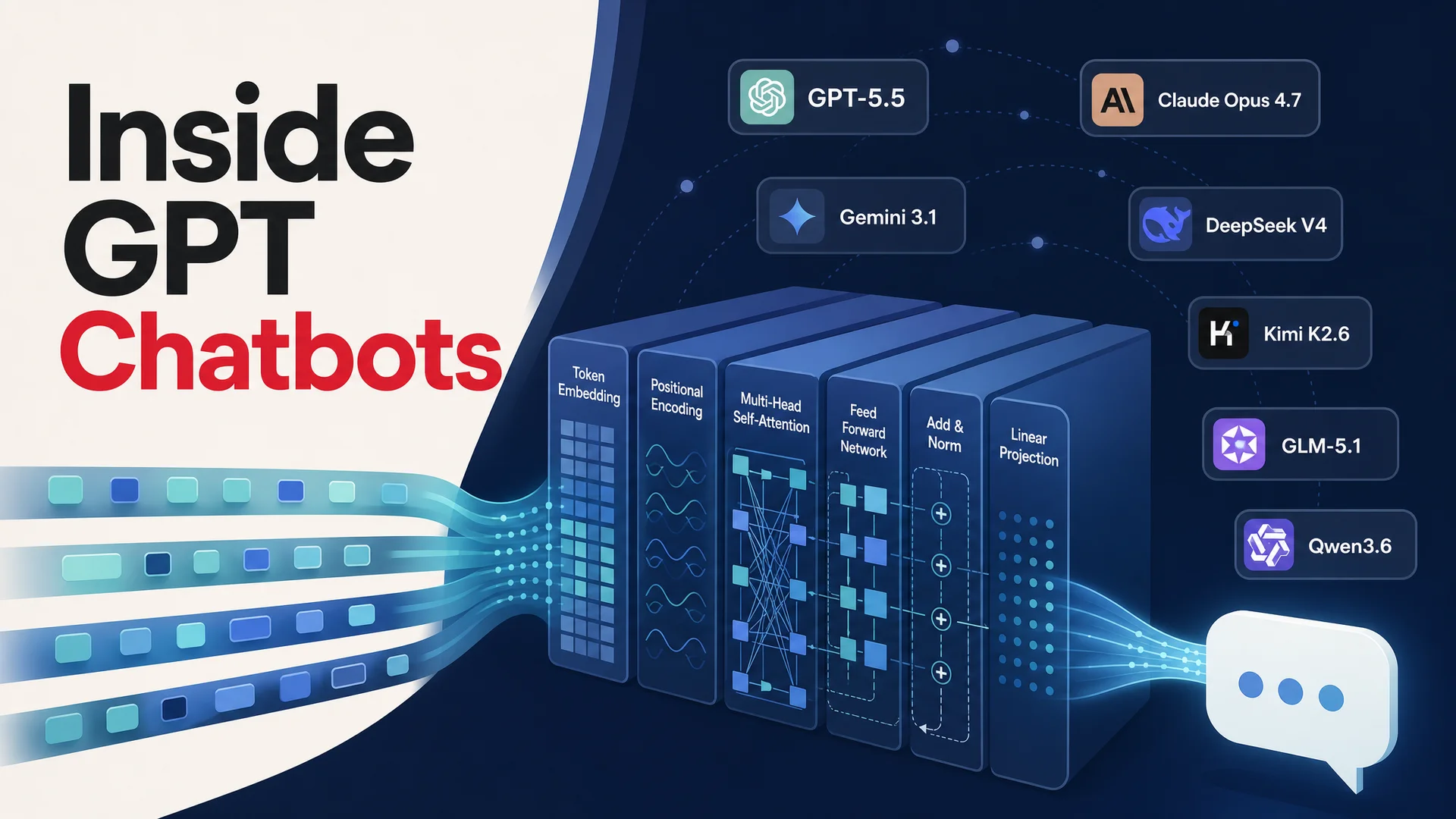
What is worth flagging up front is that "ChatGPT" and "the best model for your business" are no longer synonyms. ChatGPT is a product. GPT-5.5 is a model. And as of 2026 the field around it is crowded enough that even OpenAI's biggest customers run multi-model architectures - using Claude Opus 4.7 for the hardest agentic coding tasks, Gemini 3.1 Ultra for 2M-token document work, and open-weight models like DeepSeek V4 Flash, MiniMax M2, and Z.ai's GLM-5.1 for the long tail of cheaper, high-volume traffic. That is the lens we will keep coming back to in this post.
How Big ChatGPT Actually Got
The early adoption numbers are now famous, but they are worth restating because they set the baseline for everything that followed.
The fastest consumer launch on record. ChatGPT crossed a million users in five days. By January 2023, two months in, it had passed 100 million monthly active users. TikTok needed nine months to clear that bar; Instagram took two and a half years. No mainstream product had ever ramped that fast.
A second growth wave in 2025. A lot of teams expected ChatGPT to plateau as the novelty wore off. Instead the curve steepened. Weekly active users grew from roughly 300 million in December 2024 to 400 million by February 2025, half a billion by April, 700 million by mid-year, and over 800 million by September. By the end of 2025 OpenAI was reporting numbers approaching 900 million weekly actives, with that line crossed in early 2026.
Daily engagement that looks like utility, not entertainment. ChatGPT now processes more than a billion queries a day, with around 122 million daily active users at the start of 2026. Average session length sits in the 12–14 minute range. That is a long time to stare at a chat box, and it points to the product being used as a working tool rather than a feed.
Mobile dominance. ChatGPT was the most downloaded app of 2025 worldwide, ahead of TikTok and Instagram, with roughly 770 million combined installs across the App Store and Google Play. Monthly downloads peaked at 73.4 million in December 2025 as gift-shopping and homework-help traffic collided.
Paid users. Across Plus, Pro, Business, Team, and Enterprise, OpenAI is in the neighborhood of 50 million paying subscribers. Plus carries the bulk of consumer revenue. The $200/month Pro tier, launched in December 2024, captured close to 6% of consumer subscriptions in its first month and has stayed sticky among researchers, engineers, and high-volume writers.
Revenue. OpenAI's ChatGPT-related revenue reached roughly $8 billion in 2025, more than double the prior year, with monthly run-rate ending the year around $1 billion. For context, total OpenAI revenue was $1 billion in 2023 and $3.7 billion in 2024 - so ChatGPT alone is now several times the size of the entire company two years earlier.
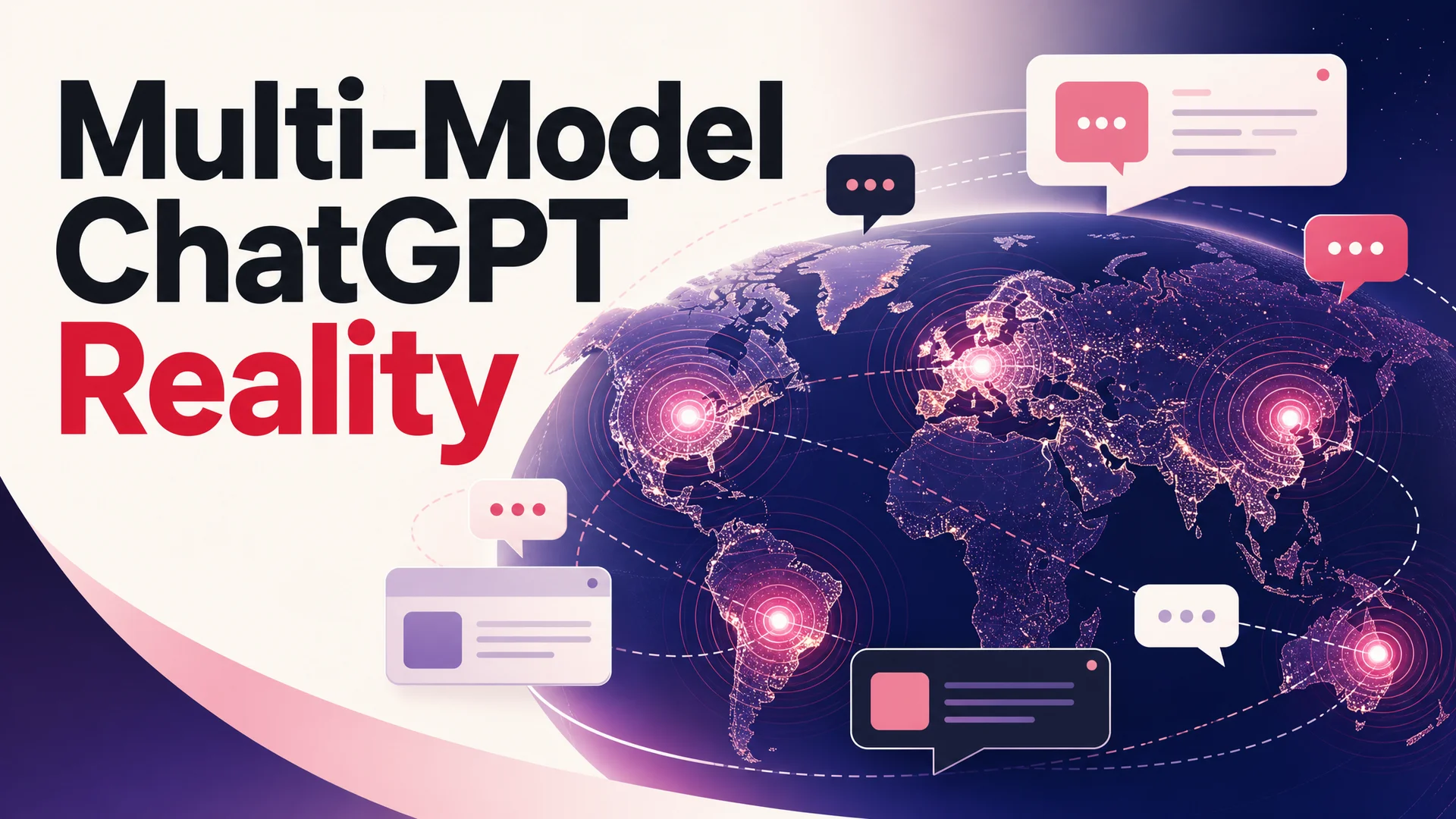
Geography and language. ChatGPT is reachable in 195 countries and supports more than 95 languages. The United States is still the largest single market with around 77 million monthly active users, roughly 19% of global traffic. India crossed 100 million weekly active users in early 2025 and has been the fastest-growing major market since. Brazil, Canada, and the UK round out the top five.
Enterprise penetration. Around 92% of Fortune 500 companies use ChatGPT in some form, whether through formal Enterprise contracts, departmental Team seats, or sanctioned individual Plus accounts. OpenAI passes 1.5 million enterprise customer organizations across Enterprise, Team, and Edu.
Demographics. The user base skews slightly male - roughly 55/45 - but that gap has closed meaningfully over 2025 as ChatGPT has spread out of early-adopter engineering circles into education, healthcare, and creative work. About 53% of users are 18 to 34. In the US, 34% of adults now report having used ChatGPT at least once, almost double the share from mid-2023.
The shape of those numbers matters more than the individual figures. ChatGPT is not a niche productivity tool any more. It is closer to email or search in terms of reach, and that changes what your customers expect when they hit your support widget. They have already had a fluent conversation with an AI today. If your bot makes them rephrase their question three times, they will notice.
What People Actually Do With ChatGPT
OpenAI's own usage research tells a story that surprised a lot of B2B observers: about 73% of ChatGPT activity is non-work - personal questions, learning, writing help, life admin. The remaining work-related slice is still huge given the scale, and it is where most enterprise value creation is happening. The use cases below are the ones that have stuck across the consumer and business sides.
Customer service and support
This is the biggest enterprise use case, and the one Berrydesk lives in. Support is a near-perfect fit for LLMs: the questions are repetitive, the answers exist in documentation somewhere, and the value of replying in 30 seconds at 3 a.m. is enormous. A modern support agent can take a vague customer message, work out what they actually need, pull the right answer out of your knowledge base, ask clarifying questions, and - if you let it - go and execute the next step, like rebooking a flight or refunding an order.
What changed in 2026 is that you no longer have to pick one model for this. A typical Berrydesk deployment routes routine "where is my order" and "how do I reset my password" queries to a cheap, fast open-weight model - DeepSeek V4 Flash, for instance, runs at $0.14 per million input tokens and $0.28 per million output tokens, fractions of a cent per resolution. Hard escalations that need careful reasoning over policy, multi-step actions, or nuanced tone get routed to Claude Opus 4.7 or GPT-5.5 Pro. The result is dramatically lower unit costs without a quality cliff.
Content creation and marketing
ChatGPT is the default first-draft tool for a large slice of marketing and content teams. Writers use it to outline posts, draft headlines, pull together social copy, repackage one piece of content into ten formats, and break out of blank-page paralysis. The honest read on quality is that frontier-model first drafts are now consistently better than mediocre human first drafts, but they still need an editor for voice, accuracy, and any claim that touches reality. Teams that use it well treat it as an extremely fast research and drafting partner, not a publishing engine.
Translation and multilingual work
For any company operating across borders, ChatGPT and its peers have effectively erased the latency in producing usable, idiomatic translations across the major world languages. With Gemini 3.1 Ultra carrying a 2M-token context window and natively handling text, image, audio, and video, you can also feed it whole videos or call recordings and get summarized, translated transcripts back. For support specifically, this means a single English-language agent can serve Brazilian, Indian, and German customers in their own language without you maintaining separate localized scripts.
Data analysis and insight
ChatGPT's code-execution and analysis features, plus comparable capabilities in Claude and Gemini, have made ad-hoc data analysis available to anyone who can describe what they want in plain English. Marketers paste in a CSV of campaign results and get a chart and a recommendation back. Operations teams pull a slack of CSVs and ask for the anomaly. This is not going to replace a real data team for serious work, but it has eaten an enormous amount of "I just need a quick number" workload that used to bottleneck on the analyst queue.
Creative writing and ideation
Novelists, screenwriters, game designers, and game masters all use it as a brainstorming partner. The output is rarely shipped as-is, but the value is in the volume of ideas - generating fifteen possible character names, twelve possible opening lines, or eight ways a scene could go in the time it used to take to think of one.
Research and learning
OpenAI's usage research found general research and learning to be the single most common use case across the user base. People treat ChatGPT as a first-pass tutor for whatever they are trying to understand - a tax form, a medical term, a piece of legal language, a programming concept they keep tripping over. For paying users, the deep-research feature on GPT-5.5 Pro produces long, citation-heavy reports in minutes that would have taken a contractor a week.
Personal assistants and embedded chatbots
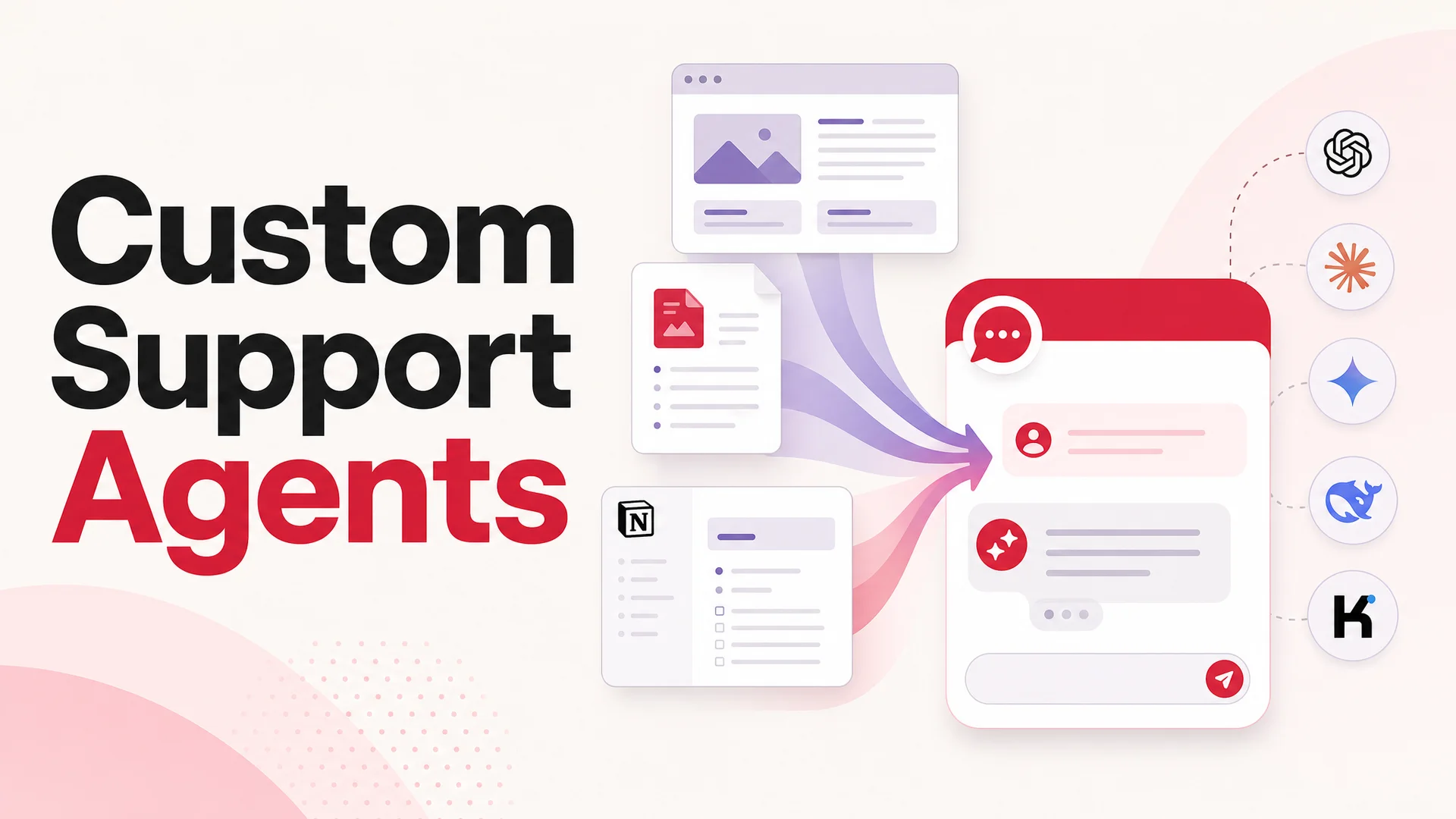
Inside ChatGPT itself, the assistant role is straightforward: schedules, drafts, reminders, recommendations. The more interesting layer is when those capabilities are embedded inside another product. Platforms like Berrydesk let businesses spin up branded agents trained on their own content, deployed inside their own websites and messaging channels, with their own AI Actions wired to their own systems. The model in the back can be GPT-5.5, Claude Opus 4.7, Gemini 3.1, or one of the open-weight frontier models - chosen per use case, not picked once and locked in.
The Multi-Model Reality of 2026
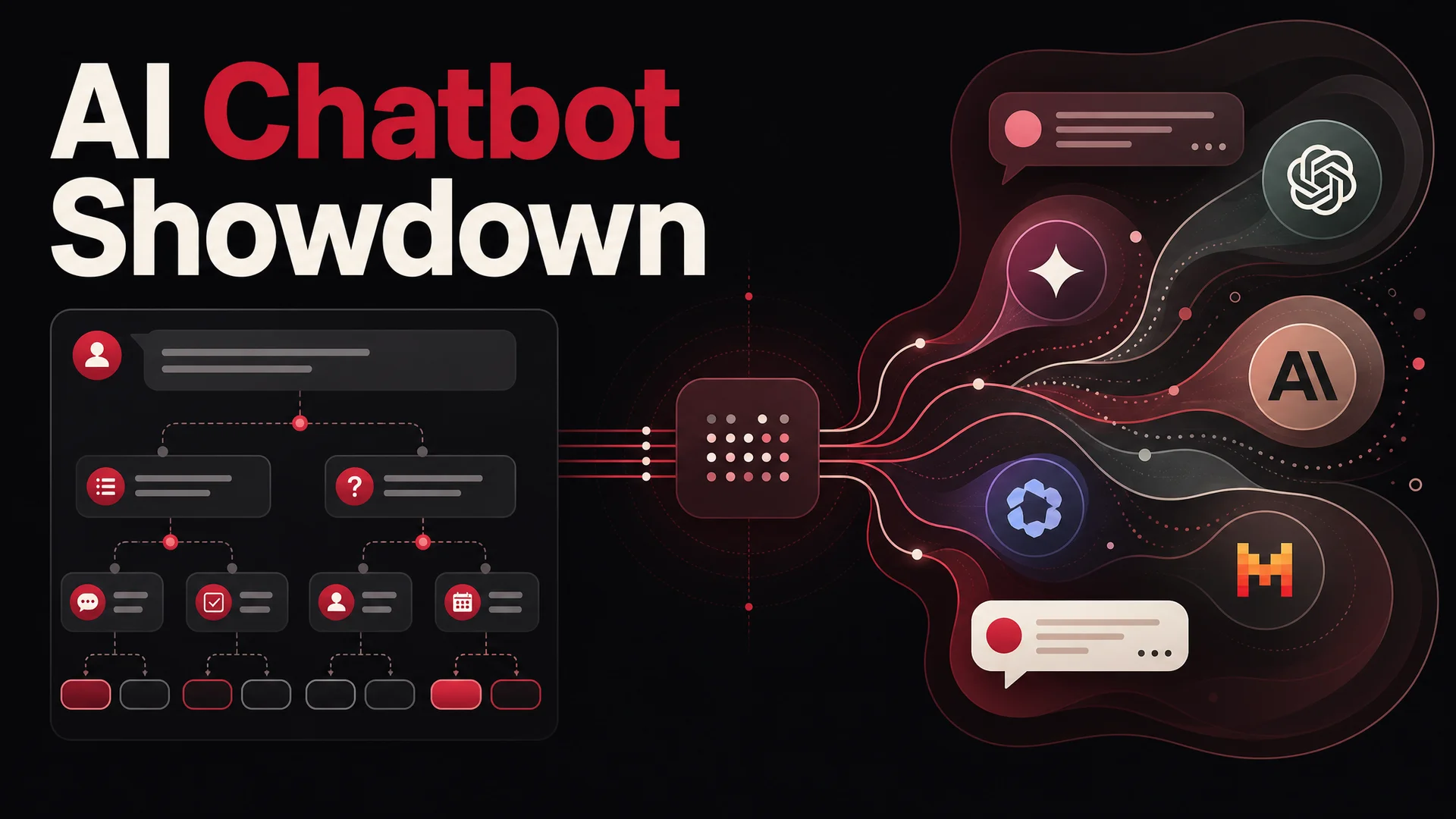
The single biggest change since the original wave of ChatGPT-only deployments is that "AI agent" no longer means "GPT call wrapped in a UI." The serious deployments are routed across multiple models, and that is where most of the cost and quality wins now come from.
What the frontier looks like
On the closed side, GPT-5.5 and GPT-5.5 Pro are OpenAI's parallel-reasoning flagships and still set the bar for general-purpose chat and agentic workflows on the OpenAI side. Anthropic's Claude Opus 4.7 leads SWE-Bench Pro at 64.3% and is the model most teams reach for on hard coding and policy-heavy reasoning. Claude Opus 4.6 and Sonnet 4.6 ship with a 1M-token context window at no extra charge. Google's Gemini 3.1 Ultra carries a 2M-token context window, is natively multimodal across text, image, audio, and video, and Gemini 3.1 Pro currently leads GPQA Diamond at 94.3%.
On the open-weight side, the picture has changed faster than most enterprise buyers realize. DeepSeek V4 shipped in late April 2026 - V4 Pro is a 1.6 trillion-parameter MoE with 49 billion active, V4 Flash is 284 billion total with 13 billion active, both with 1M context, and V4 Flash's pricing of $0.14 / $0.28 per million tokens has reset cost expectations across the board. Moonshot Kimi K2.6 is agentic-first with 12-hour autonomous coding sessions, swarms of up to 300 sub-agents, and 58.6 on SWE-Bench Pro. Z.ai's GLM-5.1, MIT-licensed, hits 58.4 on SWE-Bench Pro - beating GPT-5.4 at 57.7 and Claude Opus 4.6 at 57.3 on that benchmark - and was trained entirely on Huawei Ascend 910B chips with no Nvidia in the loop. Alibaba's Qwen 3.6 family and Xiaomi's MiMo-V2-Pro fill in around the edges with strong dense and MoE options, including local-deployable variants under Apache 2.0 and MIT.
Why this matters for support
If you are deploying an AI agent for customer support, three things follow from the landscape above.
First, costs collapsed. A year ago, every resolution cost the same regardless of difficulty because you were calling one frontier model for everything. Now you can route 70–80% of routine traffic to an open-weight or low-cost model and reserve the expensive frontier for the hard 20%, often cutting unit costs by an order of magnitude with no degradation in customer-visible quality.
Second, the context window is no longer a blocker. With 1M to 2M-token windows widely available, you can put your entire knowledge base, the full conversation history, every relevant policy doc, and the customer's account history into a single prompt. RAG is still useful for keeping costs and latency down, but it is no longer a hard requirement to make a support agent work - it is a tuning lever.
Third, agentic actions are real. The agentic capabilities in Kimi K2.6, GLM-5.1, Claude Opus 4.7, Qwen 3.6, and MiMo-V2-Pro have crossed the line from impressive demos into something you can put in production. AI Actions inside Berrydesk - booking, refunds, payment flows, order lookups, escalation - are reliable enough to run as the default path, not the optimistic path.
Finally, the MIT and Apache-licensed Chinese open weights make on-prem and air-gapped deployments viable for regulated industries that previously could not use external AI at all. A bank, a hospital network, a defense contractor - all now have realistic paths to running frontier-grade models inside their own infrastructure.
What to Watch Out For
ChatGPT and its competitors are powerful, but the failure modes that mattered in 2023 still matter, just in different shapes.
Hallucinations are smaller, not gone. Frontier models in 2026 are dramatically more accurate than the GPT-3.5 and GPT-4 generation, but they still confidently invent details under the right conditions. For customer support, the practical answer is to ground the agent in your own data - train it on your docs, sites, Notion, Drive, and YouTube content - and to enforce that the agent should refuse or escalate when the answer is not in scope. Berrydesk treats this as a default rather than something you have to remember to configure.
Source-of-truth drift. A docs site that hasn't been updated in eight months is a worse problem in 2026 than it was in 2023, because your agent is now confidently citing it to thousands of customers a day. The cost of stale documentation has gone up, not down. Plan for retraining cadence the same way you plan for releases.
Privacy and data handling. Long-context models invite teams to dump more raw data into prompts than they used to. That is fine if you understand which model you are calling, where the data is going, and what your retention policy is. It is not fine if you skipped that step. Open-weight models running on your own infrastructure or in trusted regions are part of the answer here.
Voice and authorship questions. With AI text now indistinguishable from competent human writing, "who wrote this" is a real question for marketing, legal, and support communications. Most teams settle on disclosure plus human editing on anything that goes out under a named author, and clear AI-agent branding on anything that goes out from the support channel.
Vendor concentration. Building exclusively on one model provider was already risky in 2024, and the 2025–2026 wave of open-weight frontier releases makes single-vendor deployments look more conservative, not less. Pick a platform that lets you swap or route across providers without rewriting your stack.
RAG, Long Context, or Both
A common 2026 question for support teams: with 1M-token windows on the table, do you still need retrieval-augmented generation? The honest answer is "usually yes, but for different reasons than before."
Long context handles the cases where you need the model to see a lot of material at once - a full account history, an entire policy bundle, a long conversation. RAG handles the cases where you have far more material than fits in any context window, where you need fast and cheap responses on common questions, and where you want predictable grounding in specific documents rather than letting the model wander through everything you fed it.
In practice, modern Berrydesk-style deployments use both. RAG narrows the candidate set to the dozen most relevant chunks; long context lets the model reason over those chunks plus the full conversation history without losing thread. Treat them as complementary, not as alternatives.
Single Model Versus Routed
The other big architectural call is whether to commit to one model end-to-end or route across many.
Single-model deployments are simpler to build, easier to monitor, and easier to explain to a stakeholder. They are still the right answer for low-volume internal tools or pilot deployments where the cost difference is small.
Routed deployments win on production support volume. Cheap models handle the boring 70%; frontier models handle the hard 30%; you can swap in a new release the day it ships without retraining anything. The complexity is real - you have to monitor multiple providers, handle their failure modes, and align prompts across them - but at any meaningful scale the unit-cost savings dwarf the engineering tax. Berrydesk is built around this assumption.
The Direction the Curve Is Pointing
ChatGPT's growth has not slowed and does not look like it is about to. OpenAI keeps shipping - parallel reasoning, agentic actions, voice, persistent memory, deeper file and image understanding - and competitors keep matching or leapfrogging. Claude Opus 4.7 already leads on hard coding work. Gemini 3.1 Ultra leads on multimodal and very long context. The Chinese open-weight wave (DeepSeek V4, GLM-5.1, Kimi K2.6, MiniMax M2, Qwen 3.6, MiMo) keeps cutting prices and shipping more capable agentic loops.
For customer support, the medium-term trajectory is clear enough to plan around. AI agents will resolve a steadily growing share of contacts end-to-end. The interesting work for human agents will shift toward the high-empathy and high-judgment edge cases. The cost of providing 24/7 coverage in 90+ languages will keep falling toward zero. And the choice of underlying model will continue to look less like a one-time procurement decision and more like a routing problem you tune week to week.
Where Berrydesk Fits
Berrydesk is built for this multi-model, agent-first 2026 reality. Pick the model that fits your use case - GPT-5.5, Claude Opus 4.7, Gemini 3.1, DeepSeek V4, Kimi K2.6, GLM-5.1, Qwen, MiniMax, or others - and switch as the landscape moves. Train your agent on your docs, sites, Notion, Google Drive, and YouTube content. Brand the chat widget. Wire up AI Actions for booking, refunds, payments, and lookups. Deploy to your website, Slack, Discord, WhatsApp, and beyond.
If you want to see what a properly grounded, multi-model support agent feels like for your own customers, start building one for free at berrydesk.com.
 Berrydesk
Launch your AI agent in minutes
- Pick GPT-5.5, Claude Opus 4.7, Gemini 3.1, or open-weight models like DeepSeek V4 and GLM-5.1
- Train on your docs, sites, and tools - deploy to web, Slack, WhatsApp, Discord
Set up in minutes

Chirag Asarpota is the founder of Strawberry Labs, the team behind Berrydesk - the AI agent platform that helps businesses deploy intelligent customer support, sales and operations agents across web, WhatsApp, Slack, Instagram, Discord and more. Chirag writes about agentic AI, frontier model selection, retrieval and 1M-token context strategy, AI Actions, and the engineering it takes to ship production-grade conversational AI that customers actually trust.