Picture a support team running an online plant store that ships rare carnivorous specimens, alpine succulents, and unusual orchids. They wire up an AI agent on top of a frontier model - say GPT-5.5 or Claude Opus 4.7 - and the bot is, on day one, dazzling. It writes warm replies, summarizes shipping policies, and drafts apology emails that read like a senior CX lead wrote them.
Then a customer asks how to revive a cold-shocked Nepenthes hamata after a 36-hour FedEx delay in February. The model gives a fluent, confident-sounding answer that any experienced grower would recognize as 70% correct and 30% subtly wrong. The plant might survive. It might not. The agent has no idea which.
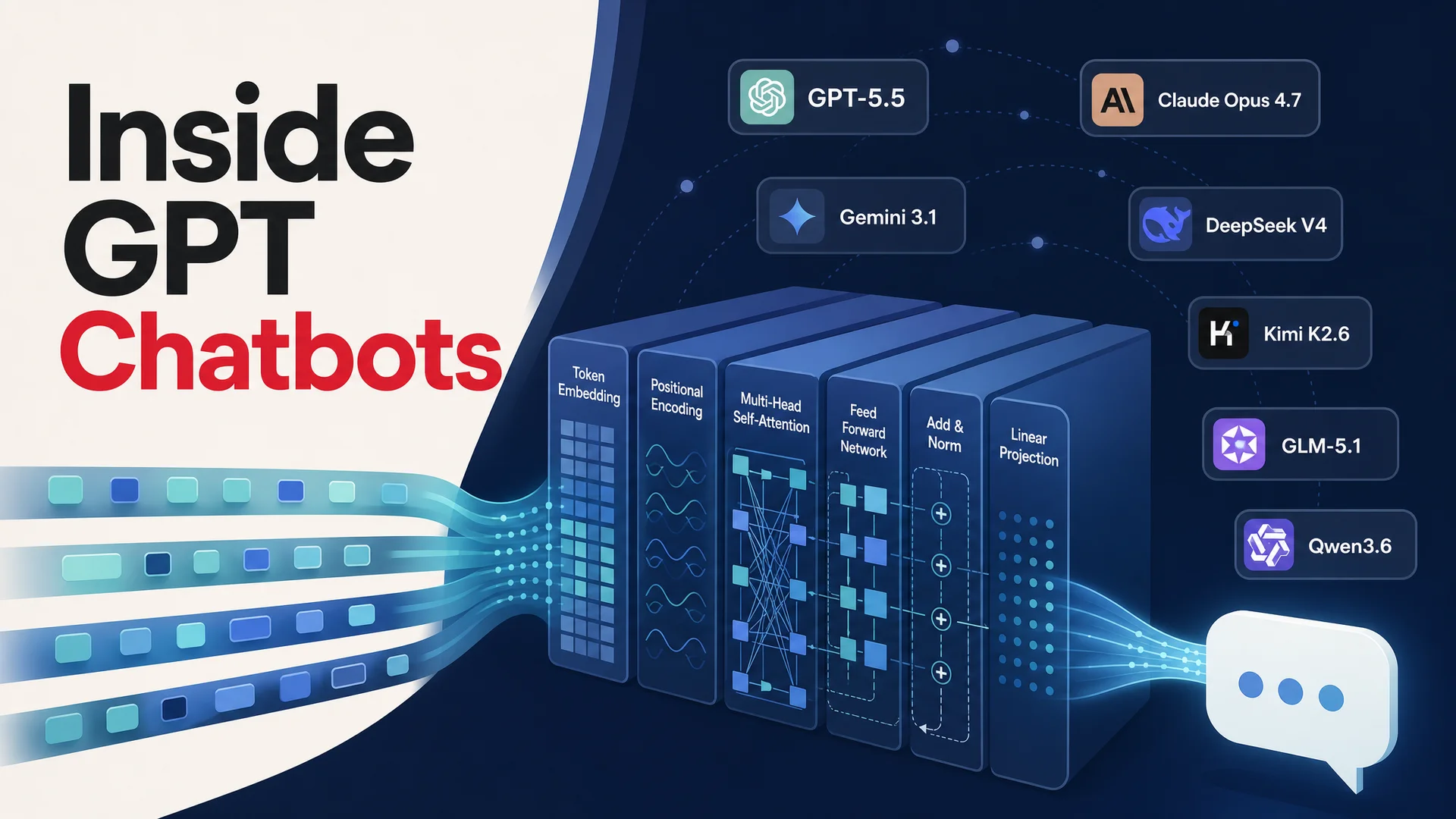
This is the gap that sits between every off-the-shelf LLM and every specialized support job. Frontier models in 2026 - GPT-5.5 Pro, Claude Opus 4.7, Gemini 3.1 Ultra, DeepSeek V4, Kimi K2.6, GLM-5.1, Qwen3.6 - have read more text than any human ever will. They can hold a million or two million tokens of context. They reason in parallel, write production code, and pass graduate-level science exams. What they cannot do, out of the box, is reliably encode the exact tone, edge cases, product taxonomy, return-policy carve-outs, or care instructions of your company.
There are three honest ways to close that gap: long-context prompting, retrieval-augmented generation (RAG), and fine-tuning. This post is about the third one - what fine-tuning actually does, when it earns its keep in 2026, and when you should reach for something simpler instead.
What fine-tuning actually means
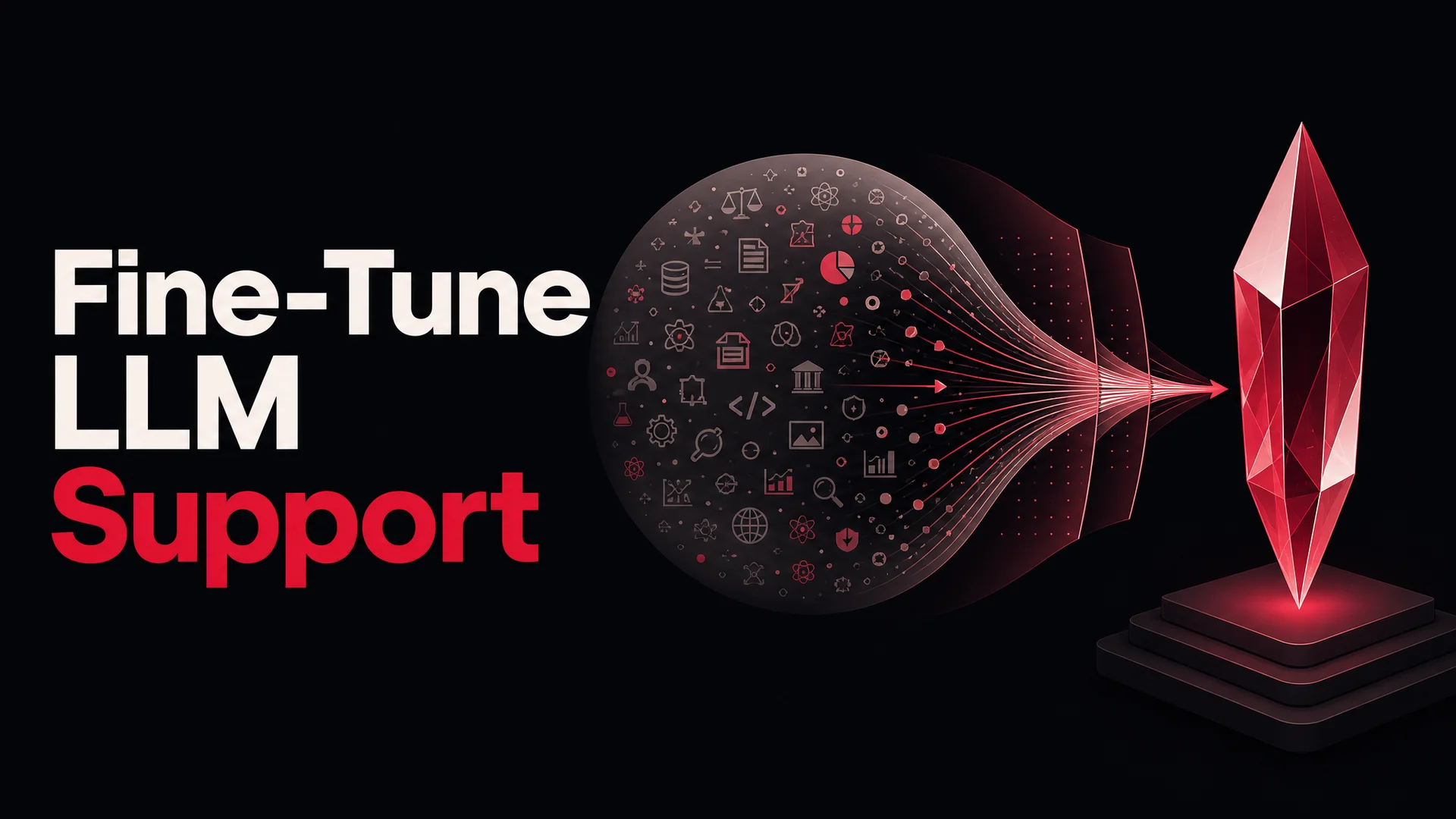
Fine-tuning is the process of taking a model that has already been pre-trained on a vast, general corpus and continuing its training on a smaller, focused dataset to bias its outputs toward a specific task, tone, or domain. The model's weights - the millions or billions of parameters that encode its knowledge - get nudged. After fine-tuning, the same input produces a different output, because the model has internalized a new set of patterns.
A pre-trained model is, by analogy, a generalist who has read the entire internet but has never worked at your company. Fine-tuning is the onboarding period where they learn your product names, your refund policy, your house style guide, and the difference between a "P1 outage" and a "P1 customer." After fine-tuning, the knowledge is baked in. You don't have to remind the model in every prompt what your tone is or how your SKUs are structured.
Crucially, fine-tuning is additive on top of pre-training. The model doesn't forget how to write English when you fine-tune it on legal contracts; it just gets better at writing the kind of English that legal contracts use. That makes it a powerful lever - but a lever you should reach for deliberately, because it's also the most expensive and least reversible of the three options.
A few hard examples
Specialized legal drafting
A boutique firm in Toronto wants to automate the first draft of commercial leases under Ontario law. A frontier model can produce something that looks like a commercial lease, but the clauses borrow from US contract templates that the model has seen far more of. Fine-tuning on a curated corpus of Ontario commercial leases, the firm's house clauses, and the relevant statutes gives the model a strong prior toward Canadian phrasing, the right governing-law boilerplate, and the firm's preferred indemnity structure. The associate who used to spend 90 minutes redlining a generic draft now spends 15 minutes on the parts that actually require judgment.
Diagnosing rare disease patterns
A hospital network wants an internal model to help clinicians triage referrals for suspected mitochondrial disorders. Off-the-shelf, even Claude Opus 4.7 will gravitate toward common differential diagnoses, because that's where the training data mass sits. Fine-tuning on the hospital's de-identified case archive, the relevant subspecialty literature, and the network's own diagnostic protocols pushes the model to consider rarer, more specific patterns first when the symptom cluster warrants it. The output isn't a diagnosis - it's a more useful starting point for the clinician.
High-volume customer support with a strong brand voice
A consumer fintech with a famously irreverent voice runs eight million support conversations a year. Their style guide is dense, their compliance footnotes are non-negotiable, and their product surface changes every quarter. Fine-tuning a smaller open-weight model - say DeepSeek V4 Flash or MiniMax M2 - on a year of approved transcripts gives them a model that sounds like the brand, knows where to put the regulatory disclaimer, and costs a fraction of a cent per resolution at their volume.
The main flavors of fine-tuning
Fine-tuning is a category, not a single technique. The right flavor depends on the size of your dataset, how narrow the task is, and how much engineering time you want to spend.
Task-specific fine-tuning
This is the narrowest flavor. You take a model that's already good at general language and train it on labeled examples of one job: classify this ticket, extract these fields, summarize this thread, route this conversation. The model gets sharply better at that one job and doesn't necessarily improve elsewhere.
Example: a media company wants every incoming news article tagged into a fine-grained taxonomy - not just "politics," but "EU politics > legislative > climate." A pre-trained model handles the coarse top-level categories well but smears the leaf nodes. A few thousand human-labeled examples, fine-tuned on a smaller open model, push leaf-node accuracy from acceptable to production-grade.
Domain-specific fine-tuning
Here the goal isn't a single task but fluency in a whole field - its vocabulary, its document structures, its implicit conventions. Domain fine-tuning is what you do when the model's general knowledge is the bottleneck, not its ability to follow instructions.
Example: a model fine-tuned on a corpus of underwriting memos, actuarial reports, and policy documents will internalize the way insurance professionals reason about risk in a way that no amount of clever prompting will replicate. It will use the right qualifiers. It will know when to hedge. It will pattern-match on subrogation language without being told what subrogation is.
Supervised fine-tuning (SFT)
SFT is the workhorse: you provide pairs of inputs and the exact outputs you want, and the model learns to map one to the other. Most production fine-tuning, including most instruction-tuned chat models you've ever used, is SFT under the hood.
Example: a SaaS company wants their support agent to reply to billing questions in a specific seven-sentence structure - acknowledge, restate, explain, link, propose, confirm, sign off. They collect a few thousand human-edited replies that follow that structure exactly, and SFT pushes the base model toward producing that shape by default, without needing a 400-token system prompt to reinforce it on every turn.
Few-shot and parameter-efficient fine-tuning
Few-shot learning, and its modern cousins like LoRA and QLoRA, lean on the model's existing competence. Instead of nudging billions of parameters, you train a tiny adapter - sometimes less than 1% of the model's size - on a small dataset. This dramatically lowers the cost and time of fine-tuning, and it makes it realistic to maintain dozens of adapters for different customers, products, or languages on top of a single shared base model.
Example: a marketplace operating in twelve countries wants the same agent to sound subtly different in each one - more formal in Japan, more casual in Brazil, more direct in Germany. Twelve LoRA adapters on top of one open-weight base model is far cheaper to train and serve than twelve fully fine-tuned models, and the quality difference for this kind of stylistic adaptation is negligible.
What the 2026 model landscape changes
Fine-tuning advice from two or three years ago assumed expensive closed models with short context windows and strict API-only access. That world is gone. The 2026 picture changes the calculus in three concrete ways.
Open weights collapse the cost floor. DeepSeek V4 Flash runs at $0.14 per million input tokens and $0.28 per million output tokens. MiniMax M2 ships at roughly 8% the price of Claude Sonnet at twice the speed. Qwen3.6-27B is a dense Apache-licensed model that beats some 397B-parameter MoE rivals on agentic coding benchmarks. GLM-5.1 is MIT-licensed, scores 58.4 on SWE-Bench Pro, and was trained entirely on Huawei Ascend chips. For most support workloads, you can fine-tune one of these models on your own data, host it yourself or on a managed inference provider, and run resolutions for fractions of a cent - no per-seat enterprise contract required.
Long context turns some fine-tuning into a tuning lever instead of a hard requirement. Gemini 3.1 Ultra's 2M-token window and Claude Opus 4.6 / Sonnet 4.6's 1M-token windows can hold an entire mid-sized knowledge base, full conversation history, and policy documents in-context. Five years ago, you fine-tuned because you literally could not fit your domain into the prompt. Now you often can. That doesn't make fine-tuning obsolete - long-context prompting is slower per turn and more expensive per token than running a fine-tuned smaller model - but it does mean fine-tuning is a deliberate choice for cost, latency, or behavior shaping, not a forced one for capability.
Agentic models make AI Actions the real product. Kimi K2.6 runs 12-hour autonomous coding sessions, Claude Opus 4.7 leads SWE-bench Pro at 64.3%, GLM-5.1 runs an 8-hour plan-execute-test-fix loop, and MiMo-V2-Pro is reasoning-first by design. For a support agent, this matters because the interesting work is no longer answering questions - it's doing things: looking up an order, issuing a refund, rescheduling a booking, applying a discount. Fine-tuning in this world is increasingly about teaching a model to call your tools correctly and recover gracefully when a tool returns an unexpected result, not just to produce nice prose.
Walking through a fine-tuning project
Imagine you're adapting an open-weight base model to draft Ontario commercial leases, using the same firm from earlier. Here is what the work actually looks like.
Step 1: Collecting and curating data
You assemble a corpus: anonymized leases the firm has executed, their preferred clause library, relevant Ontario statutes and case law summaries, and a small set of "bad" examples - drafts the firm explicitly rejected, with notes on why. The single most valuable thing you can do here is not to collect more data, but to clean and label the data you have. Inconsistent formatting, duplicate clauses, and silently outdated case citations will all be learned by the model exactly as faithfully as the good content.
Step 2: Picking a base model and training method
For a workload like this, a 27B–35B-parameter open model with strong instruction following - Qwen3.6-27B, for instance, or DeepSeek V4 Flash - is a reasonable starting point. You'd likely do parameter-efficient fine-tuning with LoRA rather than a full fine-tune, because the dataset is in the low thousands of examples, not millions. A full fine-tune on that data volume risks overfitting and would be wildly more expensive without a meaningful quality gain.
Step 3: Training and watching the loss curves
You run training. You watch evaluation loss on a held-out set of leases the model never sees during training. If evaluation loss starts to rise while training loss keeps falling, the model is memorizing rather than generalizing - you stop, reduce the learning rate, or shrink the LoRA rank. This is the single most common failure mode of first-time fine-tuning projects and it has nothing to do with the model itself.
Step 4: Evaluating the model
Generic LLM benchmarks tell you almost nothing about whether a fine-tuned legal model is good at drafting Ontario leases. You build a domain-specific eval: a set of fifty realistic prompts a junior associate might give the model, with rubric-based scoring (Did it cite the right governing law? Did it use the firm's house indemnity clause? Did it flag the hidden ambiguity in the prompt?). You compare the fine-tuned model against the base model on this eval, and also against the firm's actual junior associates if you can get the data.
A useful before/after pair looks like this:
- Before fine-tuning: "This contract is governed by applicable laws."
- After fine-tuning: "This agreement is governed by the laws of the Province of Ontario, including its conflict-of-law provisions, and the parties attorn to the exclusive jurisdiction of the courts of Ontario."
Step 5: Iterating
You almost never ship the first fine-tune. You find that the model overuses one specific phrase, or hallucinates section numbers in statutes, or is too aggressive in adding indemnity language. You go back, augment the dataset with corrective examples, retrain the LoRA adapter, and re-evaluate. Two or three iterations is normal. Six is a sign that fine-tuning isn't the right tool for the problem.
The endpoint
Eventually you have a model that drafts a passable first version of an Ontario commercial lease in seconds, that the firm's associates trust enough to use as a starting point, and that costs a few cents per draft to run. The base model alone could not do this reliably. The fine-tune can.
Fine-tuning vs RAG: pick deliberately
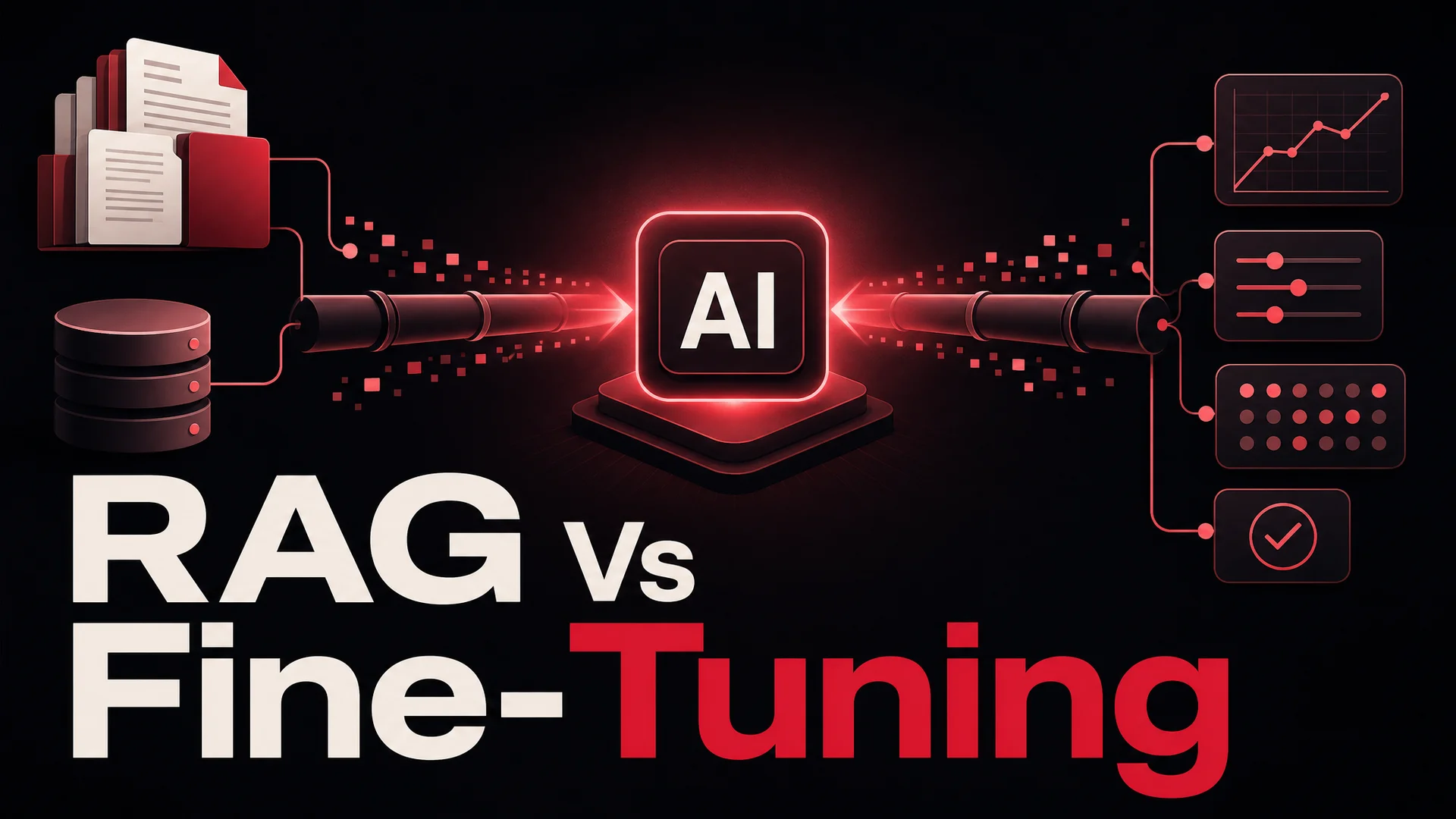
Retrieval-augmented generation and fine-tuning are often pitched as competing approaches. They aren't. They solve different problems, and most serious production support agents in 2026 use both.
Fine-tuning shapes the model
When you fine-tune, the new knowledge lives inside the weights. The model "knows" the new patterns the same way it knows English grammar - implicitly, without needing to look anything up at inference time.
Where fine-tuning shines:
- Behavior and tone. If you need every reply to follow a specific structure, voice, or compliance pattern, fine-tuning encodes that in a way prompts cannot reliably enforce at scale.
- Latency-sensitive workloads. A fine-tuned smaller model can be much faster than a frontier model with a long retrieval-augmented prompt.
- Cost at high volume. When you're handling millions of conversations, the per-token savings of running a smaller fine-tuned model dwarf the upfront training cost.
- Stable domains. Medicine, law, engineering specifications - fields where the underlying knowledge changes on a year-or-longer timescale.
Where fine-tuning hurts:
- Anything that changes weekly. Pricing, inventory, policy edits, support macros - bake these into weights and you're retraining every week, which is a path to misery.
- Per-customer knowledge in a multi-tenant product. You don't want one customer's data leaking into a model that serves another customer.
RAG injects fresh knowledge
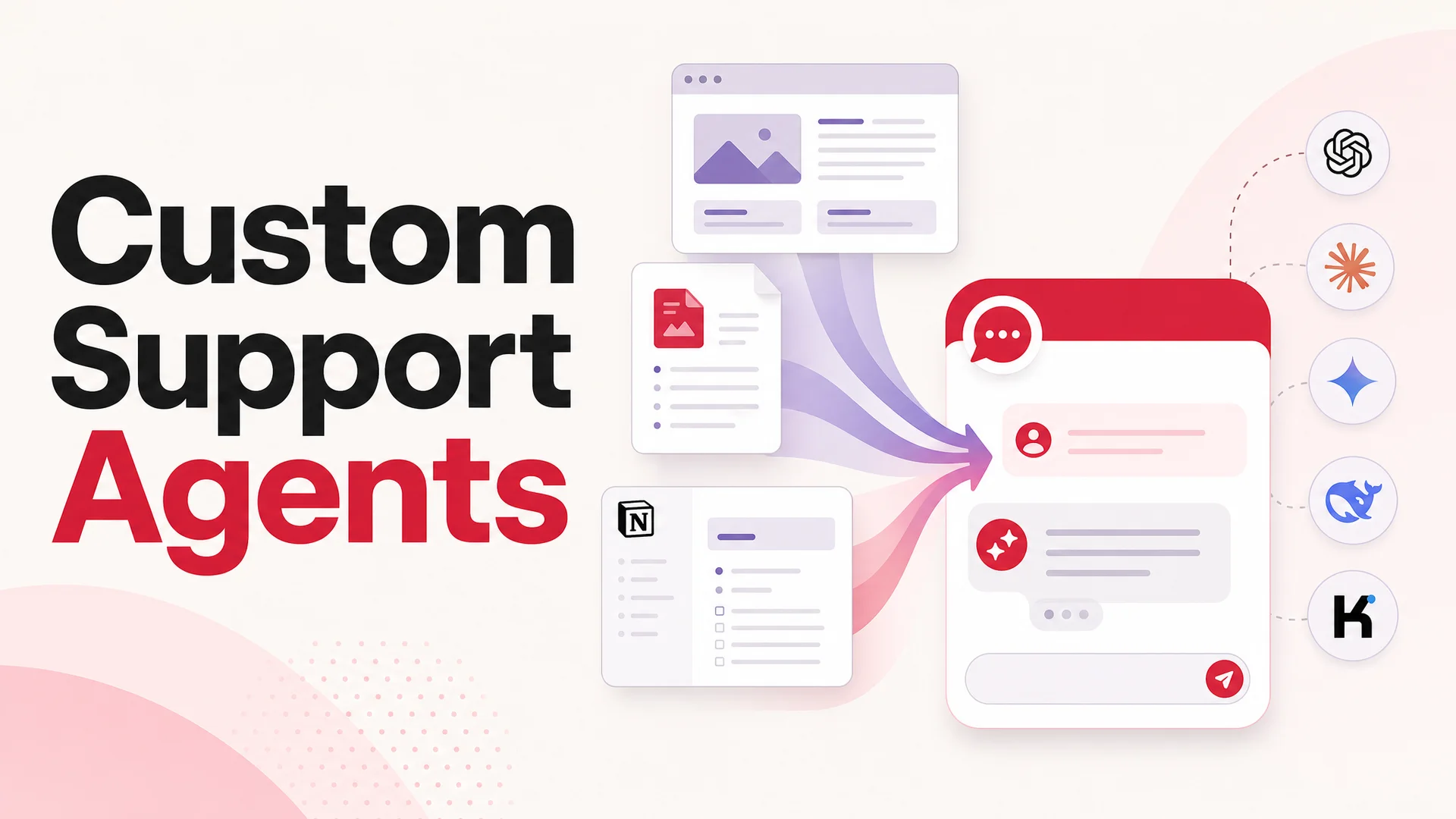
RAG keeps the model the same and changes what it sees at inference. The model writes a query, retrieves the most relevant chunks from a vector store or document index, and uses those chunks as the source of truth for its reply.
Where RAG shines:
- Fast-changing knowledge. Product docs, prices, release notes, policy updates - change the source, and the agent's answers change on the next turn.
- Multi-tenant SaaS support. Each customer's knowledge base is a separate index; no weights are shared.
- Auditability. You can show the user (and your compliance team) exactly which document the agent cited.
- Quick iteration. No retraining cycle. Edit the doc, the agent learns.
Where RAG hurts:
- Tone and behavior. You can't reliably retrieve your way into a consistent voice. That's a fine-tune problem.
- Cross-document reasoning. RAG retrieves chunks; if the answer requires synthesizing across twenty documents, retrieval often fails to surface all twenty.
The honest answer in 2026
For most customer-support deployments, the right architecture is: a strong base model (often a frontier model for hard cases, an open-weight model for routine traffic), RAG over the customer's live knowledge base, and optional fine-tuning on top - usually a small LoRA adapter - to encode tone, brand voice, and patterns the model keeps getting wrong despite good retrieval.
You don't have to start with fine-tuning. You almost certainly shouldn't. Get RAG working, route the hard tickets to a stronger model, build out your AI Actions for booking, refunds, and order lookups, and watch where the agent still misbehaves after thirty days of real traffic. The patterns you see in those failure modes are exactly what you'd want a fine-tune to fix - and now you have the data to do it.
Common pitfalls to avoid
A few traps that turn fine-tuning projects into expensive lessons:
- Fine-tuning to fix a prompt problem. If the base model can do the task with a better system prompt or a few in-context examples, fine-tuning is overkill.
- Training on synthetic data the same model produced. Model-generated training data can amplify the model's existing biases instead of correcting them. Mix in human-curated examples.
- No held-out evaluation set. If you don't have a way to measure quality before and after, you can't know whether the fine-tune helped or hurt.
- Forgetting catastrophic forgetting. A heavy full fine-tune on a narrow domain can degrade general capabilities. LoRA and similar parameter-efficient methods mitigate this; full fine-tunes need careful mixing of general and domain data.
- Picking a base model you can't actually deploy. Fine-tuning a closed frontier model means renting it forever. Fine-tuning an open-weight model means you can move providers if pricing or terms shift.
Where Berrydesk fits
Most support teams don't need to spin up a fine-tuning pipeline to get a great agent. They need to point an AI at their docs, pick a model, brand the widget, wire up actions for the things customers actually want done, and ship.
Berrydesk handles that path: you train your agent on your docs, websites, Notion, Google Drive, and YouTube content; you choose from GPT-5.5, Claude Opus 4.7, Gemini 3.1, DeepSeek V4, Kimi K2.6, GLM-5.1, Qwen, MiniMax, and others depending on cost and quality trade-offs; you add AI Actions for booking, payments, refunds, and order lookups; and you deploy to your website, Slack, Discord, WhatsApp, and beyond. RAG and routing do most of the heavy lifting, and you can layer in fine-tuned behavior where it earns its keep - not because the toolchain demands it.
Ready to see how far a well-routed, well-grounded agent can take you before you ever touch a training script? Start building on Berrydesk and find out.
 Berrydesk
Launch a domain-trained AI support agent without writing training scripts
- Train on your docs, websites, Notion, Drive, and YouTube in minutes
- Pick from GPT-5.5, Claude Opus 4.7, Gemini 3.1, DeepSeek V4, Kimi K2.6, and more
Set up in minutes

Chirag Asarpota is the founder of Strawberry Labs, the team behind Berrydesk - the AI agent platform that helps businesses deploy intelligent customer support, sales and operations agents across web, WhatsApp, Slack, Instagram, Discord and more. Chirag writes about agentic AI, frontier model selection, retrieval and 1M-token context strategy, AI Actions, and the engineering it takes to ship production-grade conversational AI that customers actually trust.