Sales is the heartbeat of every company.
You can ship a remarkable product. You can run beautifully crafted marketing. You can hire smart people and write clean copy. But the moment revenue stops, every other metric becomes a vanity exercise.
That holds whether you sell a SaaS subscription, a physical good, a high-touch service, a marketplace listing, or a digital course. If money isn't moving in, you don't have a business yet - you have an expensive experiment with a runway timer attached.
And revenue almost never appears on its own. There is always a process underneath it: discovering prospects, capturing their interest, qualifying who is actually a fit, nurturing the ones who are not quite ready, scheduling calls, sending proposals, chasing signatures, and finally closing. Multiply that across hundreds or thousands of leads a month and the math gets brutal fast.
This is exactly where most sales teams get stuck. The reps you hired to sell are instead retyping addresses into the CRM, copying meeting notes, sending the third "just checking in" email of the week, and updating deal stages by hand. Every minute spent on admin is a minute not spent in a real conversation. And conversations are still where deals get won.
Sales automation is the fix. Not "automation" as a buzzword - the deliberate work of stripping repetitive, low-judgment tasks out of your reps' day so they can spend more time on the parts of selling that actually require a human. Below is a working guide for how to think about it in 2026, what to automate, what tools are worth your time, and the tradeoffs to watch.
What sales automation actually is
Sales automation is the use of software - increasingly, AI agents - to run the repeatable parts of your pipeline without a human babysitting each step.
Almost every motion between "first touch" and "deal won" contains a stack of mechanical tasks: form intake, CRM hygiene, scoring rules, reminder emails, calendar back-and-forth, proposal drafting, post-close handoff. They matter. They just don't need a salaried human pressing buttons.
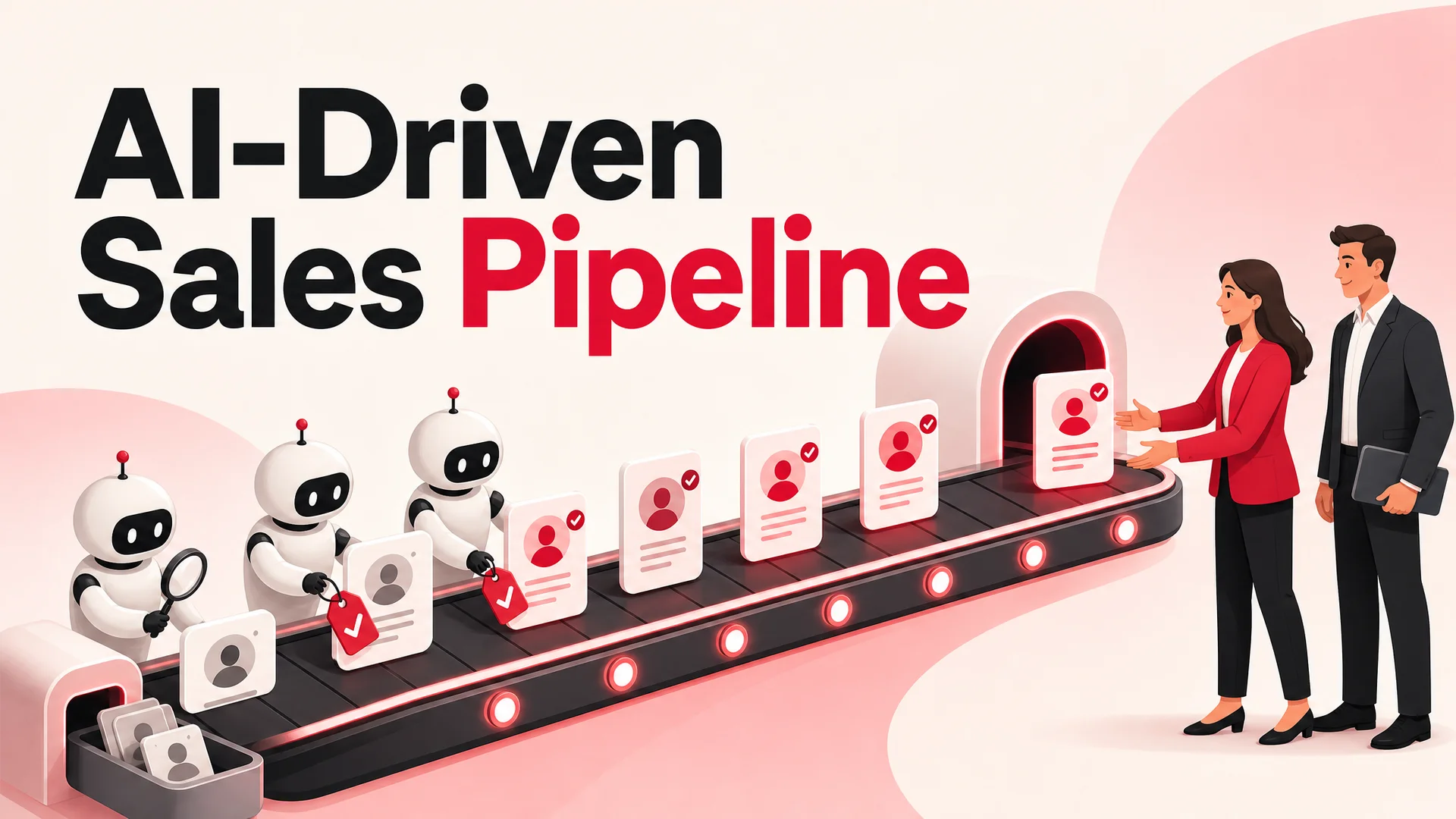
Picture a clean version of this in practice. A prospect lands on your pricing page after clicking a paid ad. They drop their email into a form. Your CRM picks them up automatically and tags them with the campaign source. A welcome email goes out within seconds. Their behavior over the next few days - pages visited, links clicked, time on site - feeds a scoring model that decides whether they are a serious lead or a casual browser. If they cross a threshold, a rep gets a Slack ping with the context already attached. If they don't, they enter a nurture sequence and stay warm until they do. Every touch is logged, time-stamped, and available for forecasting.
That is sales automation. The plumbing runs in the background; the rep only shows up when their judgment is the bottleneck.
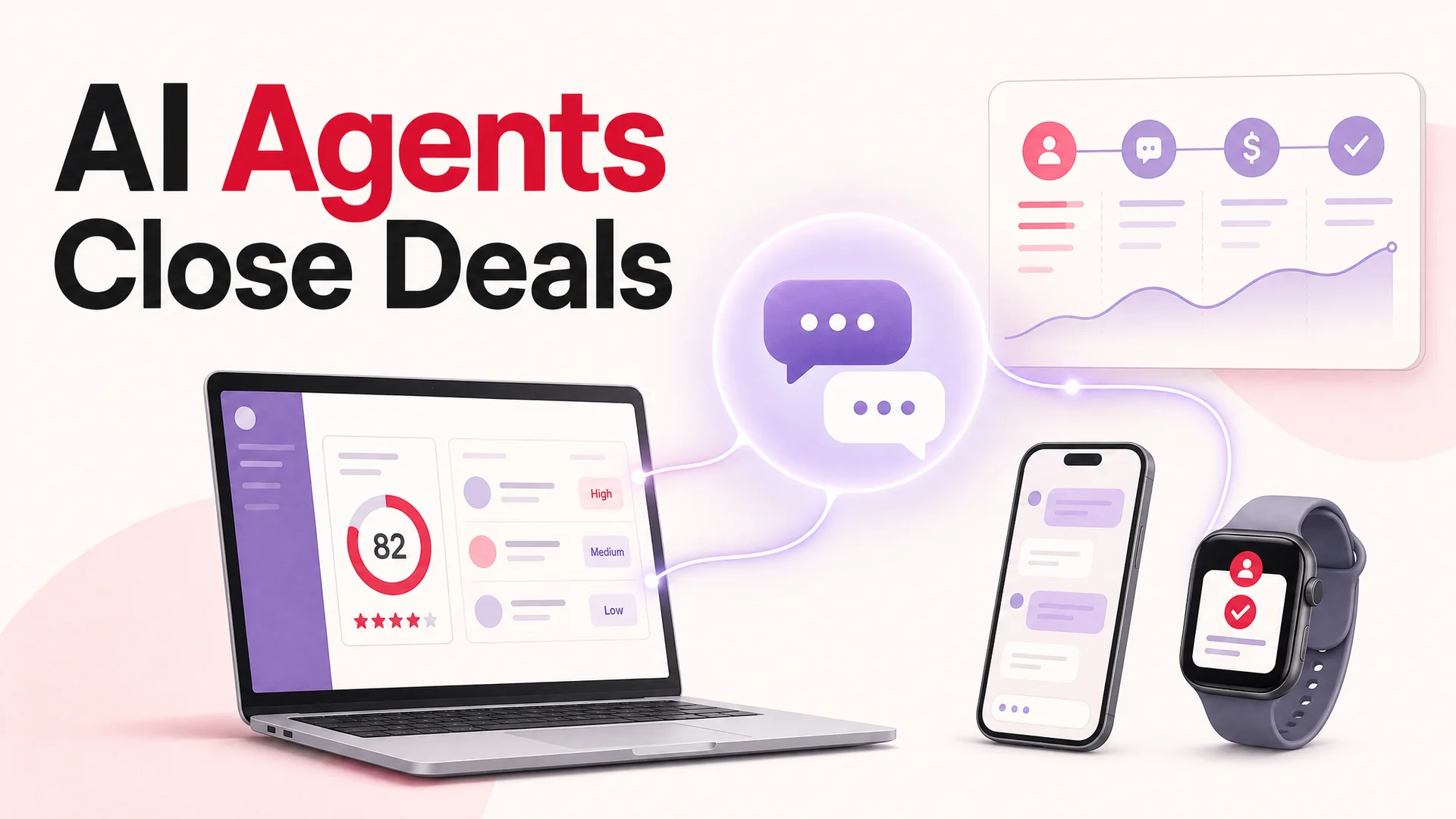
Now picture the more aggressive version, the one that has only become realistic in the last twelve months. A prospect opens a chat widget on your site at 11 p.m. on a Sunday. An AI agent - running a model like Claude Opus 4.7 or DeepSeek V4 - answers their pricing question, recognizes a buying signal, asks two qualifying questions, applies the right discount, generates a Stripe payment link inside the conversation, and books a kickoff call for Tuesday morning. By the time your AE clocks in Monday, the deal is already in the "closed-won" column.
That is also sales automation. The difference is just how much of the process the software is willing to own.
How sales automation works in practice
The first thing to understand: you are not automating everything. You are automating the right parts.
The right parts are the steps that are repetitive, data-heavy, time-bound, and don't require a rep's judgment or relationship. Anything that lives outside that box - discovery calls, complex objection handling, executive-level negotiation, multi-stakeholder champion building - should still belong to a human.
Here are the workflows where automation pays off most reliably, with the mechanics of each.
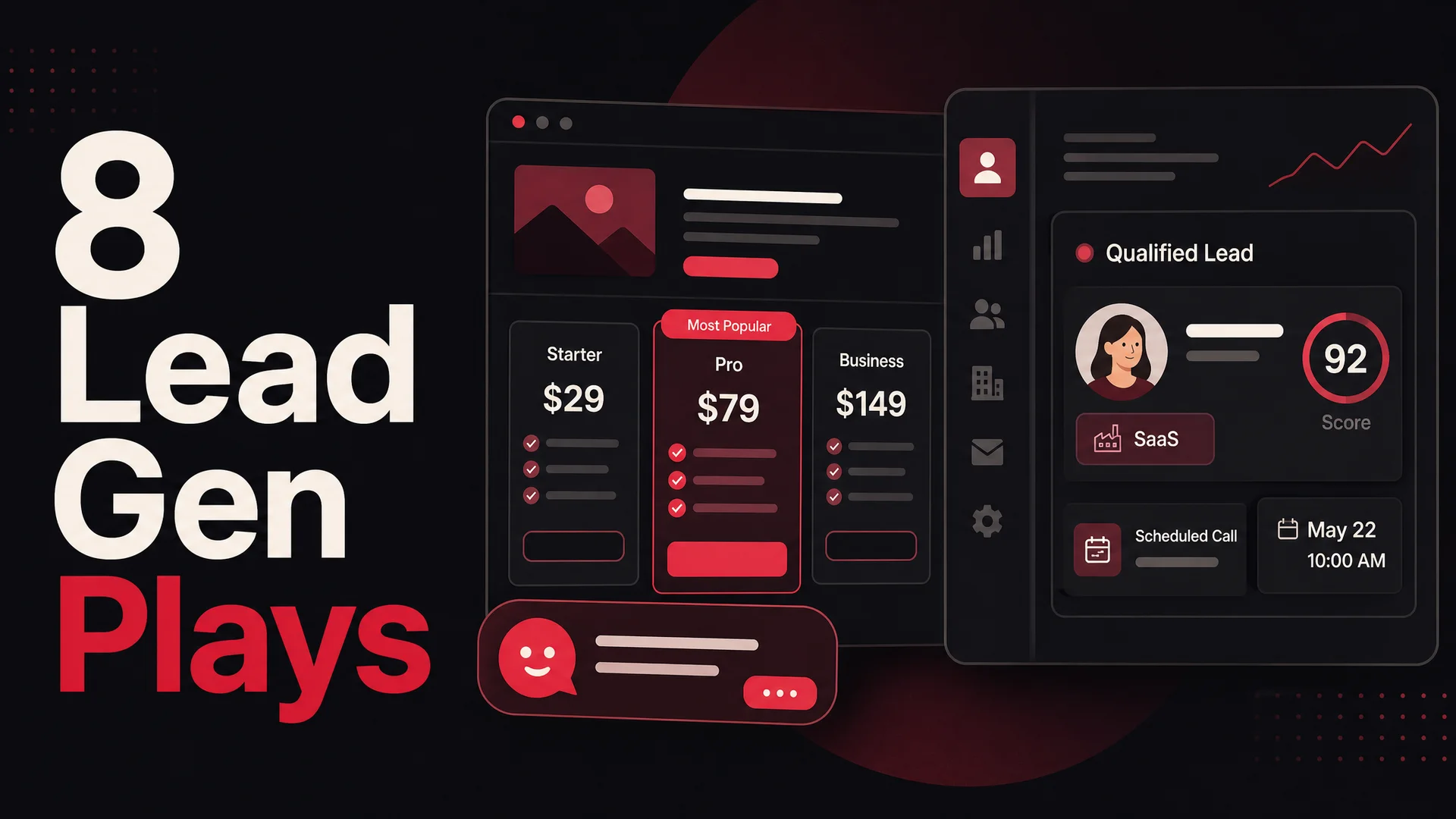
1. Lead capture. Forms, chat widgets, intent tools, and inbound channels feed prospect data straight into your CRM with the right tags, source attribution, and routing rules already applied. No spreadsheets in the middle, no copy-paste. Berrydesk's chat widget can capture leads from any page on your site - pricing, docs, blog - and write them directly to HubSpot, Salesforce, Pipedrive, or whatever you run, with full conversation transcript attached.
2. Lead scoring. Instead of rules-based scoring written by a sales ops manager three years ago, modern scoring uses AI to read engagement patterns, conversation sentiment, firmographic data, and intent signals together. The point isn't a perfect score - it's directing rep attention. A reasonable model can route the top decile to a human within minutes and let the rest stew in nurture until they raise their hand.
3. Qualification through an AI agent. This is the biggest shift since 2024. With long-context models like Claude Sonnet 4.6 and Claude Opus 4.6 shipping a 1M-token window at no surcharge, and Gemini 3.1 Ultra carrying 2M tokens, you can hand an AI agent your entire product catalog, pricing book, ICP definition, and recent conversation history and have it run a real qualifying conversation - not a four-question form pretending to be a chat. Budget, timeline, decision authority, current stack, and pain - all asked in natural conversation, all logged, all summarized for the rep before the human takes over.
4. Meeting scheduling. Calendars sync, time zones resolve, and the prospect picks a slot from a routing form that already knows which rep owns which territory or vertical. A booking link inside the chat - instead of an email asking for "a few times that work" - collapses the gap between intent and meeting.
5. Follow-up and nurturing sequences. Behavior-triggered email sequences replace the old "send everyone the same five emails on the same five days" cadence. Open the proposal? Different track. Click the security page? Different track. Go silent for ten days? Reactivation track. The system reads engagement and adjusts.
6. Proposal and quote generation. Pull the prospect's inputs from the CRM, drop them into a templated quote with the right pricing tier, send it for e-signature, and notify the rep when it's opened. Tools like PandaDoc and Qwilr have made this almost trivial; the harder part is keeping pricing rules clean enough to automate.
7. CRM updates. Calls, emails, meeting notes, and chat transcripts get logged automatically. Modern AI meeting assistants transcribe and summarize live calls, push the action items into the deal record, and surface coaching cues for the rep. The reward is clean pipeline data without a single rep complaining about admin.
8. Deal closing. This is where AI Actions earn their keep. An AI agent that can call your APIs - check inventory, apply a discount code, generate a payment link, kick off a Stripe or Shopify transaction, send a contract - is fundamentally different from a chatbot that can only talk. Done well, it closes simple deals end-to-end and hands the complicated ones to a human with a tidy summary.
9. Post-sale handoff. Once the deal is won, automation triggers onboarding emails, assigns a customer success owner, kicks off the implementation checklist, and routes the new account into the support workflow. The customer experiences a continuous arc instead of a cliff drop after signing.
The summary version: sales automation works by figuring out what doesn't need a human in the loop and quietly handing it to software. Reps spend more time on relationships and revenue. The pipeline runs cleaner. And the business stops losing leads in the cracks between handoffs.
Why this matters more in 2026 than it did two years ago
Sales automation isn't a new idea. What changed is what's possible. The 2024-era playbook was forms, drip campaigns, and a chatbot that could answer "where are your offices." The 2026 playbook is an AI agent that can hold an entire product spec, pricing model, and customer history in a single context window and act on it.
A few specific shifts make this real now.
Frontier models are dramatically more capable, and dramatically cheaper. Anthropic's Claude Opus 4.7 leads SWE-bench Pro at 64.3% for complex agentic work. OpenAI's GPT-5.5 Pro brought parallel reasoning to the mainstream when it shipped in April. Google's Gemini 3.1 Ultra carries a native 2M-token context window across text, image, audio, and video.
Open-weight models broke the cost ceiling. DeepSeek V4 Flash runs at $0.14 per million input tokens. MiniMax M2.7 hits 56.22% on SWE-Pro at roughly 8% of the price of Claude Sonnet, at twice the speed. Z.ai's GLM-5.1 - MIT-licensed - beats GPT-5.4 on agentic coding benchmarks. Alibaba's Qwen 3.6 family ships dense and MoE variants that punch above their weight on agentic tasks. For a sales agent that handles thousands of conversations a day, the cost of "let the AI handle this one" has fallen by roughly an order of magnitude in eighteen months.
Long context kills RAG-only architectures. When your model can hold a million tokens, you can drop the entire product catalog, the last quarter of customer chat history, the pricing matrix, and the ICP definition into a single prompt without retrieval gymnastics. RAG becomes a tuning lever for cost, not a hard architectural requirement.
Tool-use reliability finally crossed the production line. Models like Claude Opus 4.7, Kimi K2.6, GLM-5.1, Qwen 3.6, and Xiaomi MiMo-V2-Pro are designed agentic-first. They run multi-step plans, call external APIs cleanly, and recover from errors. Booking a call, applying a refund, generating a payment link, looking up an order - these stopped being demoware and started being something you can put in front of paying customers.
The practical effect for a sales team is this: the part of the pipeline you can confidently automate today extends much further than it did even a year ago. You no longer have to draw the line at "the bot answers FAQs and books a meeting." A well-configured agent can run a full discovery, qualify, propose, and close motion for self-serve and low-mid-ACV deals - and hand the higher-value ones to humans with a complete dossier already attached.
The benefits, beyond the obvious time savings
Saving rep time is the headline outcome of sales automation. The deeper wins are about consistency and compounding.
Speed actually wins deals. First-response time is the single best-correlated input to conversion in inbound sales. The gap between "replied in 30 seconds" and "replied in 30 minutes" is enormous. Automation collapses that to seconds, every time, on every channel. Berrydesk-deployed agents respond on web, Slack, Discord, and WhatsApp the moment a lead engages.
Consistency builds trust internally and externally. Humans forget. Humans miss follow-ups. Humans skip the "thank you for booking" email when they're slammed. Automation does it identically every single time. The result is a prospect experience that feels well-run and a rep experience where nothing falls through the cracks.
Reps focus on the work that actually moves revenue. The sales motion has roughly two halves: the mechanical half (logging, routing, scheduling, sending) and the human half (discovery calls, demo storytelling, objection handling, negotiation, champion building). Automation eats the mechanical half so reps can pour more energy into the half that compounds into commission.
Better data, better forecasting. When activity is logged automatically - and consistently - you get clean reporting. Forecasts get more accurate. Coaching gets more targeted. Sales ops stops chasing reps for missing fields. The whole org gets smarter because the data underneath it stops being a mess.
Scale stops requiring proportional headcount. A team that runs on automation handles 10 leads a day with the same rigor as 10,000. The workflow doesn't bend. You scale revenue without scaling roster.
Mistakes go down. Wrong addresses, missed follow-ups, dropped handoffs, duplicate records - these cost real money. Automation eliminates most of them by removing the human from the part of the work humans are bad at.
Personalization at scale becomes real. With AI agents that can read prior context and adapt tone, you can deliver tailored messaging to every prospect without writing each one by hand. The prospect who reads three blog posts on integrations gets a different opener than the one who came from a paid ad on pricing.
The summary: automation doesn't replace your sales team. It removes the drag from their day and gives them a leverage multiplier. Done right, the same headcount can run two or three times the pipeline volume with cleaner data and better outcomes.
The tools worth knowing in 2026
A pipeline is only as good as the stack underneath it. Here are the categories that matter and a few of the tools that lead each - chosen because they integrate cleanly with each other, not because they're the loudest in the market.
1. Berrydesk - AI sales agent for the front of the funnel
Use cases: Lead capture, qualification, FAQs, appointment booking, follow-up nurturing, deal closing through AI Actions.
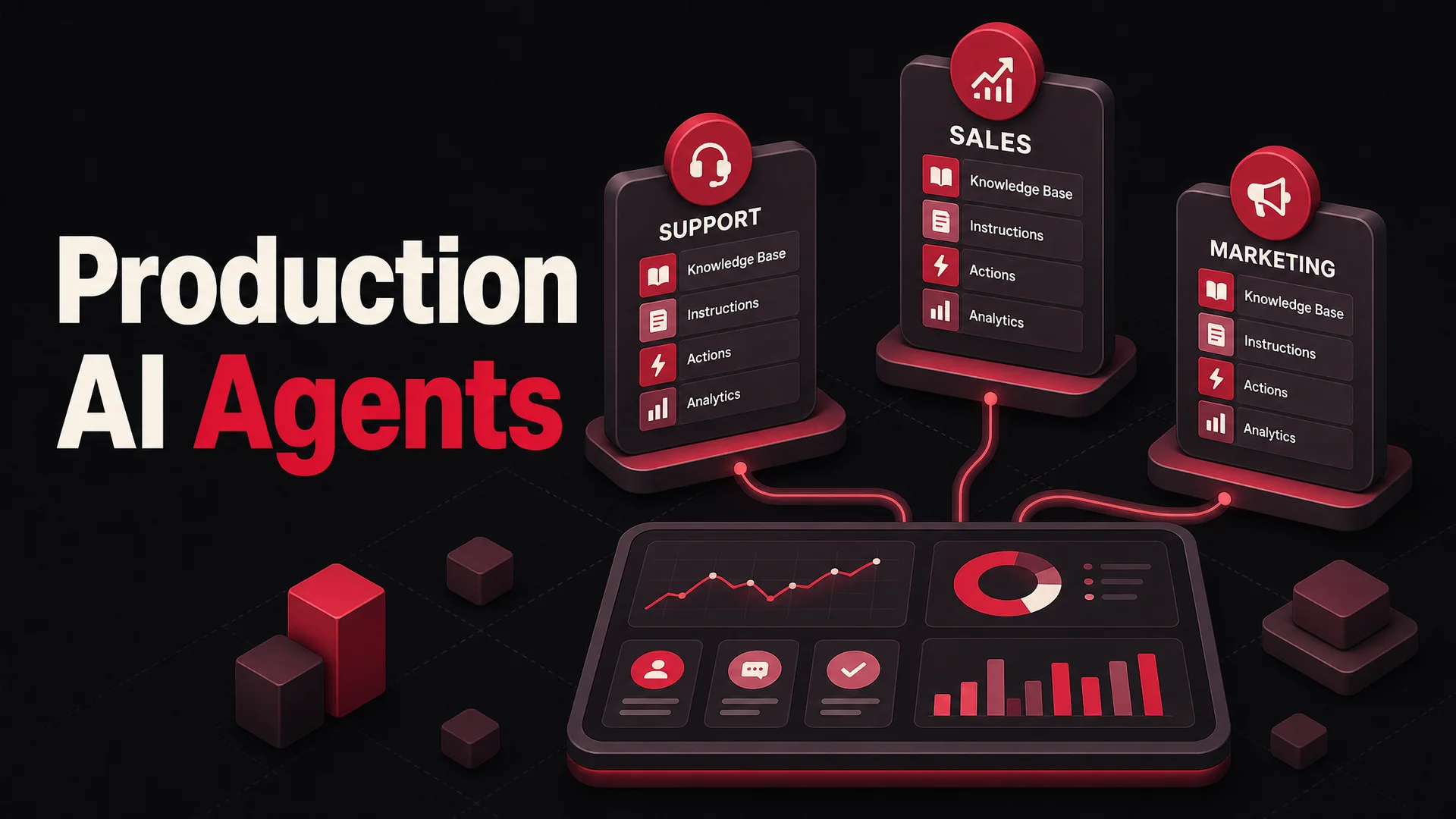
Berrydesk is the AI agent layer for the top of your funnel. You pick the model that fits your cost-and-quality target - Claude Opus 4.7, GPT-5.5, Gemini 3.1 Pro, DeepSeek V4, Kimi K2.6, GLM-5.1, Qwen 3.6, MiniMax M2.7, or others - and train it on your docs, website, Notion, Google Drive, and YouTube content. The model holds your full product context in its window, answers questions accurately, qualifies leads through natural conversation, and triggers AI Actions for booking, payments, CRM updates, and refunds when the moment is right.
Where this gets interesting in 2026 is the routing flexibility. Most support and sales agent platforms lock you to one provider. Berrydesk lets you route routine traffic to a cheap, fast open-weight model - DeepSeek V4 Flash at $0.14 per million input tokens, or MiniMax M2.7 at roughly an eighth of Claude Sonnet pricing - and reserve frontier models like Claude Opus 4.7 or GPT-5.5 Pro for the harder questions and high-value deals. The cost-per-resolved-conversation drops to fractions of a cent for the majority of traffic.
Deploys to your website, Slack, Discord, WhatsApp, and more. Connects to HubSpot, Salesforce, Pipedrive, Calendly, Stripe, Shopify, and Zapier. No-code to set up.
→ Build your AI sales agent on Berrydesk
2. HubSpot - All-in-one CRM with strong automation
Use cases: CRM, lead tracking, email automation, pipeline management, contact scoring.
Still the default for small and mid-sized companies. The sales automation suite handles assignment rules, sequences, behavior-triggered tasks, and scoring without making you stitch three tools together. The visual pipeline is clean, the email automation is solid, and the surface area of integrations is enormous. The cost is real at scale, but for a team under a hundred reps, the convenience of one platform usually wins.
3. Apollo - Lead enrichment and outbound
Use cases: Prospecting, cold email, contact enrichment, account targeting.
Apollo is the workhorse for outbound teams. Verified contact data, account-level segmentation, and multi-step sequences with intent triggers. You can wire workflows to fire on opens, clicks, replies, or website visits. Pair it with Berrydesk to handle the inbound that Apollo's outbound creates - the agent qualifies the response thread before the SDR has to engage.
4. Lemlist - Personalized cold outreach
Use cases: Cold email, multichannel sequences, personalization at scale.
Lemlist's pitch is that automated outreach doesn't have to feel automated. Dynamic images, custom variables, video snippets, A/B testing across cohorts. You can mix LinkedIn touches and cold calls into the same cadence. Worth using when you actually care about reply rates instead of just send volume.
5. Calendly - Scheduling, with routing
Use cases: Appointment booking, lead routing, calendar automation.
Modern Calendly is more than a booking link. Routing forms qualify a lead inline and assign them to the right rep based on territory, ARR band, or product interest. Pairs with Berrydesk so a hot lead can move from "I'm interested" to "Tuesday at 2 p.m. on the AE's calendar" without an email exchange.
6. Close - CRM for high-velocity inside sales
Use cases: Sales CRM, calling, email sequences, pipeline automation.
Close is built for teams that live in the CRM all day. Calling, texting, email automation, and sequences in one interface. Faster to operate than HubSpot if your motion is tight, repeatable, and inside-sales-heavy.
7. Zapier - Connective tissue
Use cases: Cross-platform automation, CRM syncing, trigger-based workflows.
Zapier connects thousands of apps and lets you build flows like: a Berrydesk agent qualifies a lead, the lead writes to your CRM, a Slack notification fires to the AE, and a follow-up sequence kicks off in the email tool. The glue between the layers.
8. Make - Visual automation with more logic
Use cases: Branching automations, multi-step flows, advanced conditions.
Make is what you reach for when Zapier's linear flows aren't enough. Conditional branches, variables, error handling, parallel paths. More setup, more power. Worth the learning curve when your workflows have real logic in them.
9. Salesloft - Enterprise sales engagement
Use cases: Multichannel cadences, coaching, forecasting, pipeline analytics.
Salesloft is built for enterprise outbound at scale. Cadences across email, phone, LinkedIn, and SMS. Call recording with AI-driven coaching. Deep CRM sync. Heavier than what a startup needs, exactly right for a large org with a structured sales motion.
10. Pipedrive - Visual pipeline CRM
Use cases: Pipeline tracking, task automation, activity-based selling.
Pipedrive's appeal is its simplicity. Drag-and-drop deals, automate stage-based triggers, and avoid the configuration sprawl that makes Salesforce miserable for small teams. If a deal stalls, fire a re-engagement email. If it moves to negotiation, drop a proposal template into the rep's queue.
Common pitfalls to avoid
Most sales automation projects don't fail because the tools don't work. They fail because the implementation drifted into territory the technology shouldn't own.
Automating discovery calls. Don't. The point of a discovery call is to build trust and uncover what isn't on the form. An AI agent can pre-qualify and summarize, but the human conversation still matters at any meaningful deal size.
Sending sequences that ignore replies. A surprising number of teams still run cadences that fire the next email even after the prospect already responded. Modern tools detect replies and pause automatically - make sure yours is set up to do it.
Letting AI agents act without guardrails. AI Actions for booking and payment are powerful, but without limits - discount caps, refund thresholds, escalation rules - you can ship surprises into production. Set hard ceilings and route anything outside them to a human.
Over-routing to humans. The opposite failure mode. If every conversation escalates to a rep within thirty seconds, you've built an expensive front-end for a person, not a sales agent. The tuning is in deciding which questions the agent should own end-to-end and which it should hand off.
Forgetting to measure resolution quality. Volume metrics - conversations handled, leads captured - are easy. Quality metrics - was the answer right, did the deal hold up, did the customer come back happy - take more work. Build in evaluation from day one or you're flying blind.
Open-weight vs. closed frontier - the cost-quality tradeoff
The other strategic decision sits at the model layer. In 2026 you're choosing between two flavors of capability:
Closed frontier. GPT-5.5, Claude Opus 4.7, Gemini 3.1 Ultra. The highest accuracy, the strongest reasoning, the cleanest tool use, and a price tag that reflects all of it. Right for the conversations where you can't afford a wrong answer - high-value enterprise deals, complex regulated industries, escalations.
Open-weight frontier. DeepSeek V4, GLM-5.1, Kimi K2.6, Qwen 3.6, MiniMax M2.7, Xiaomi MiMo-V2-Pro. Frontier-quality output at fractions of the price, with the option to self-host for compliance reasons. Right for high-volume, lower-stakes traffic - FAQ responses, simple qualification, basic order lookups.
The smart move isn't picking one. It's routing. Send the long tail of routine traffic to a cheap open-weight model. Reserve the closed frontier for the conversations that need it. A single Berrydesk agent can do this routing under the hood, and the cost difference at the end of a quarter is enormous.
Putting it together
Sales automation isn't a single product purchase. It's a deliberate stripping-out of the parts of your pipeline that drag on rep time, replaced with software - and increasingly with AI agents - that runs the same plays, faster, every time, without forgetting.
Done well, you get a pipeline that captures leads in seconds, qualifies them inside a real conversation, books meetings without back-and-forth, follows up without anyone remembering to, closes the simple deals end-to-end, and hands the complicated ones to humans with the context already neatly summarized. Your reps spend more time selling. Your data gets cleaner. Your forecasts get more accurate. Your business scales without your roster scaling proportionally.
The tooling to do this in 2026 is dramatically better than what was available even a year ago. Long-context models hold your entire product knowledge in one window. Open-weight frontier models collapsed the cost of running an AI agent at scale. Tool use is reliable enough to put in front of paying customers. The question isn't whether to automate - it's where to draw the line between agent and human, and how fast you can get the first version live.
If you want to start with the front of the funnel - capture, qualify, book, follow up, and close on simple deals - that's what Berrydesk is built for. Pick a model, point it at your docs, brand the widget, wire up the AI Actions, and deploy to your site, Slack, Discord, or WhatsApp.
 Berrydesk
Turn website traffic into closed deals
- Launch a branded AI sales agent in minutes - no code required.
- AI Actions for booking, payments, and CRM updates built in.
Set up in minutes

Chirag Asarpota is the founder of Strawberry Labs, the team behind Berrydesk - the AI agent platform that helps businesses deploy intelligent customer support, sales and operations agents across web, WhatsApp, Slack, Instagram, Discord and more. Chirag writes about agentic AI, frontier model selection, retrieval and 1M-token context strategy, AI Actions, and the engineering it takes to ship production-grade conversational AI that customers actually trust.