Customer service is no longer a back-office function. It is the part of your brand that customers actually touch - and on social media, every reply happens in public, in front of the next prospective buyer.
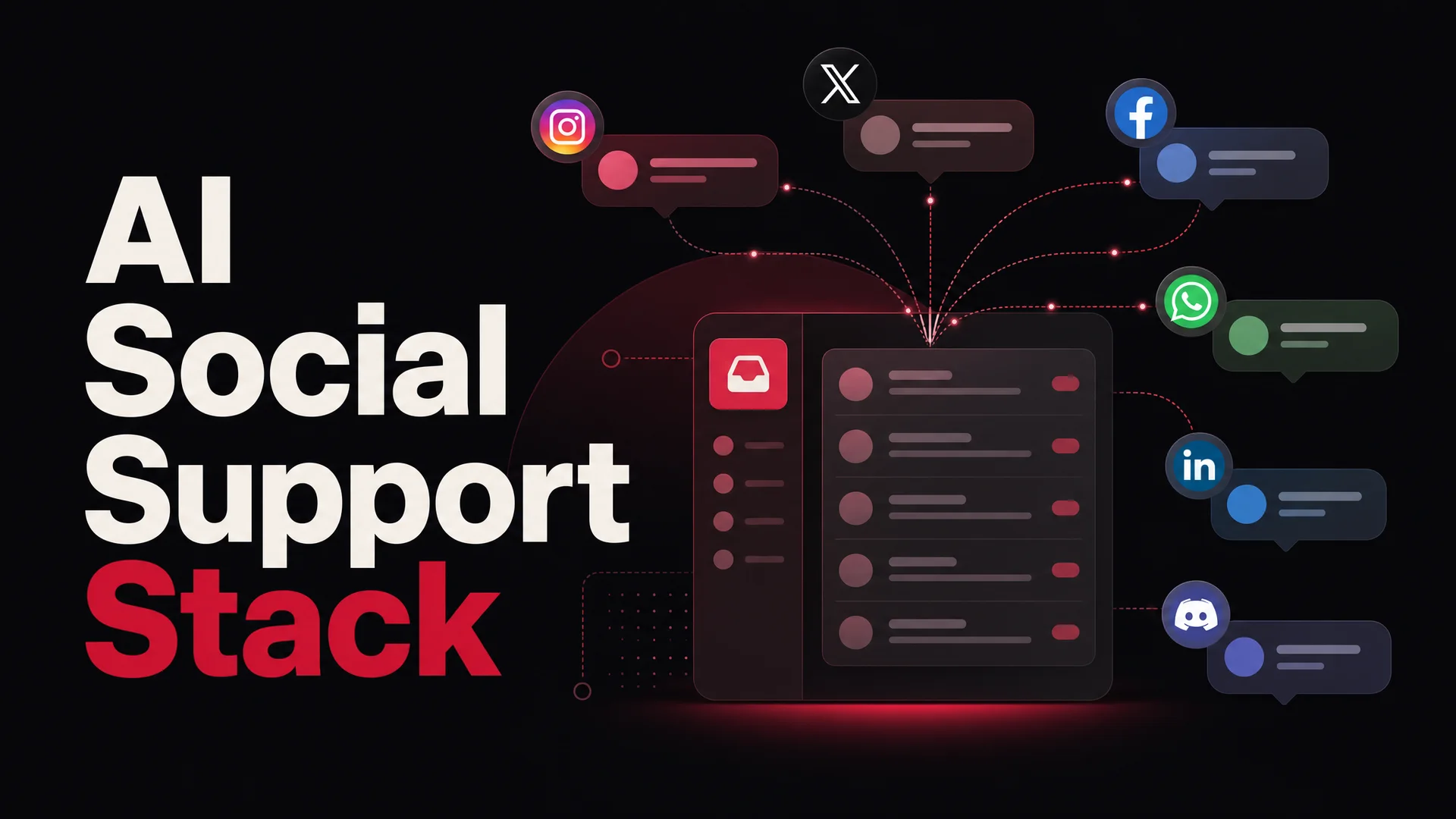
The pressure that creates is asymmetric. A delayed email is invisible. A delayed Instagram DM, an ignored quote-tweet, or a comment thread under a pinned LinkedIn post is a permanent record. Customers know that, and they have calibrated their expectations accordingly. The brands that win on social are the ones that show up fast, sound human, and resolve the issue without making the customer repeat themselves across three channels.
The tooling layer for this work has matured a lot in the past year. Agentic AI models like Claude Opus 4.7, GPT-5.5, Kimi K2.6, and GLM-5.1 can now hold a 1M-token context window, take real actions through APIs, and run autonomous workflows for hours at a time. That has shifted what a "social media customer service tool" even is - the line between a unified inbox, a helpdesk, and an AI agent is dissolving.
Below are nine platforms worth evaluating in 2026, what each is best at, and where the trade-offs sit.
1. Berrydesk
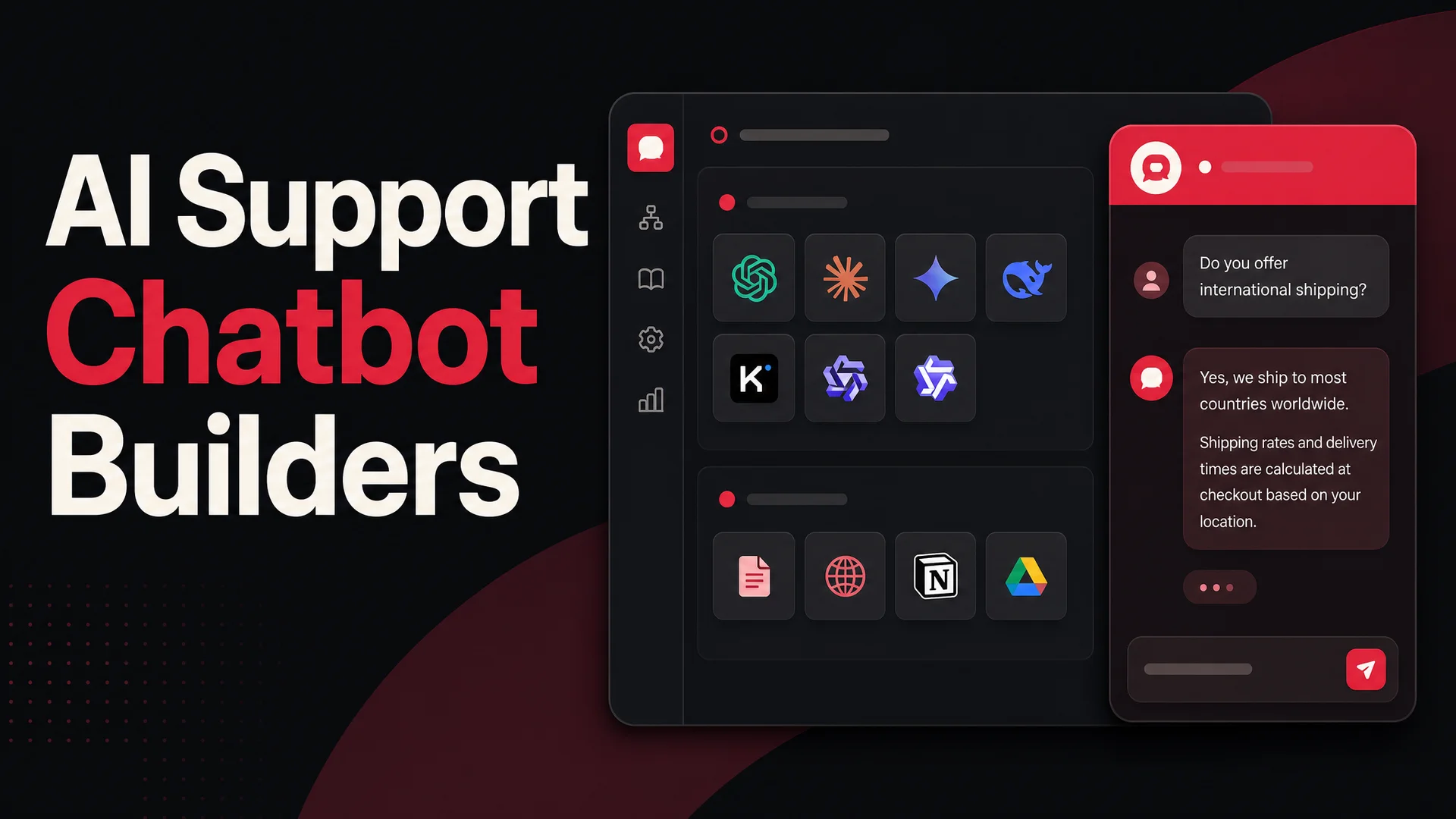
Berrydesk is an AI agent platform for customer support that ships a single agent across every channel customers actually use - your website widget, Slack, Discord, WhatsApp, Instagram and Facebook DMs, and email. The point of difference is that the agent is yours: you pick the underlying model, you train it on your own knowledge, and you wire it to your own systems through AI Actions.
Where most social inboxes route messages to humans, Berrydesk's default mode is for the agent to handle the conversation end-to-end and only escalate when it cannot. Routine traffic can be served by an inexpensive open-weight model like DeepSeek V4 Flash (around $0.14 per million input tokens) or MiniMax M2, while the harder escalations get routed to Claude Opus 4.7 or GPT-5.5 Pro - meaning resolution costs collapse at volume without sacrificing quality on the conversations that matter.
Why consider Berrydesk?
- Bring-your-own-model architecture: Choose from GPT-5.5, Claude Opus 4.7, Gemini 3.1 Ultra, DeepSeek V4, Kimi K2.6, GLM-5.1, Qwen 3.6, MiniMax M2, and others. Mix-and-match per intent.
- Train on what you actually have: Upload PDFs and docs, point at URLs, sync from Notion, Google Drive, or YouTube. The agent retrieves and grounds answers in your sources, so it does not invent policy.
- AI Actions for real work: Book appointments, take payments, look up orders, issue refunds, update CRM records - the agent does the task, not just the talking.
- Branded chat widget plus social channels: Deploy to your site in four steps, then plug the same agent into Slack, Discord, WhatsApp, and more.
- Pricing: Free tier to launch and test, paid plans scale with conversation volume. No per-seat surcharge.
→ Launch your support agent on Berrydesk.
2. Sprout Social
Sprout Social remains one of the most polished unified inboxes on the market. Its Smart Inbox pulls comments, mentions, DMs, and reviews from every connected network into a single triaged feed, and its automation rules can tag, route, and assign conversations before a human ever touches them.
Where Sprout shines is in larger marketing teams that need rich reporting alongside support. Response-time SLAs, agent productivity, conversation sentiment, and channel-by-channel volume all roll up into dashboards that executives actually read. The trade-off is price: it is built for organizations that already see social as a strategic channel, not a side project.
Why consider Sprout Social?
- Smart Inbox: Every social touchpoint in one queue, with sentiment and priority filters.
- Workflows and assignment: Route conversations by channel, language, or product line.
- Reporting: First-class analytics for response times, resolution rates, and team performance.
- Listening: Tracks brand mentions outside of direct messages.
- Pricing: Starts around $249 per seat per month on the standard plan.
3. Statusbrew
Statusbrew has carved out a strong niche as a Hootsuite alternative for support-led teams. Its Engage inbox unifies organic and paid comments, DMs, and reviews, with filters for sentiment, language, platform, and campaign - so a support agent can isolate, say, "negative Instagram comments on the new product launch" in one click.
The automation layer is where Statusbrew earns its keep. You can hide spam at scale, auto-respond to FAQ-style queries, push high-priority conversations into Slack or Microsoft Teams, and apply campaign tags for downstream reporting. For mid-market brands running a lot of paid social, the ad-comment moderation alone tends to pay for the tool.
Why consider Statusbrew?
- Unified inbox for organic comments, ad comments, DMs, and reviews
- 60+ automation rules and macros for spam, predefined replies, and routing
- Sentiment, language, and campaign filters for targeted triage
- Custom reporting with team performance and peak-activity insights
- Listening across X, Instagram, and Reddit
- Pricing: Starts at $129 per month for 5 users and 10 channels, with a 14-day free trial
4. Hootsuite
Hootsuite is the veteran in this category and has reinvented itself around AI-assisted publishing and social listening. For support, the value sits in its breadth - it integrates with more networks than almost anyone else, and its Streams view lets you build dedicated columns for keywords, mentions, and competitor activity.
Where Hootsuite tends to lose ground in 2026 is on conversational AI. Its built-in assistive features are useful for drafting replies, but it is not designed to autonomously resolve tickets the way a dedicated AI agent platform is. Most teams that pick Hootsuite end up pairing it with a separate support stack.
Why consider Hootsuite?
- Broadest channel coverage of any traditional social tool
- Streams for monitoring branded and unbranded keywords
- Assignments and approvals for collaborative response workflows
- Inbox 2.0 consolidates DMs and comments
- Pricing: Starts around $99 per month on the Professional plan
5. Zendesk
Zendesk treats social channels as just another inbound source for its ticketing engine. A DM on Instagram, a comment on Facebook, or a reply on X arrives as a ticket with full context, an audit trail, and the same SLA logic that governs your email queue. For organizations that already run on Zendesk, this is the cleanest way to bring social into the same operating model.
The platform's AI layer has expanded substantially this year, with deeper agent assist, suggested responses, and autonomous resolution for common intents. It is genuinely useful - though typically still works best when paired with a more specialized AI agent for the deflection layer, with Zendesk handling the human-in-the-loop work that follows.
Why consider Zendesk?
- Omnichannel ticketing: Social, email, chat, voice in one record
- Mature SLA and reporting tooling built for support orgs at scale
- AI agent and copilot features for deflection and assist
- Macros and triggers for repeatable workflows
- Pricing: Starts at $55 per agent per month on Suite Team
6. Freshdesk
Freshdesk plays in the same omnichannel helpdesk space as Zendesk but tends to land with smaller teams and growth-stage companies. It pulls social messages and mentions into its ticketing system, applies its Freddy AI assistant for response drafting and summarization, and offers solid collaboration features for shared queues.
The price point is the headline. Freshdesk's lower tiers are accessible enough for a five-person support team to adopt without a procurement cycle, and the social features come along for the ride rather than sitting behind an upsell. The trade-off is that the AI feels generic compared to a dedicated agent platform - it is helpful, but it is not the differentiator.
Why consider Freshdesk?
- Social-as-tickets for Facebook, Instagram, X, and WhatsApp
- Freddy AI for reply drafting, summarization, and intent detection
- Collaboration: Shared inboxes, internal notes, parent-child tickets
- Reporting: Solid out-of-the-box, customizable on higher tiers
- Pricing: Starts at $15 per agent per month on the Growth plan
7. Agorapulse
Agorapulse sits between a publishing tool and a social inbox, and it is particularly strong for agencies and multi-brand teams that need clean separation between client workspaces. The Inbox view consolidates messages, mentions, and reviews across Facebook, Instagram, X, LinkedIn, TikTok, and YouTube into a triaged feed with assignment and labelling.
What sets Agorapulse apart for support is the moderation layer - Inbox Assistant rules let you auto-hide, auto-label, or auto-reply to incoming items based on keywords, sender, or sentiment. For a brand running giveaways, paid campaigns, or anything that attracts a long tail of repeat questions, this dramatically thins the human queue.
Why consider Agorapulse?
- Unified social inbox across the major networks plus reviews
- Inbox Assistant for rule-based auto-moderation
- Team workflows with internal notes, assignments, and shared calendars
- ROI reporting that ties social activity to revenue events
- Pricing: Starts at $79 per user per month on the Standard plan
8. Zoho Social
Zoho Social is the natural pick if you are already inside the Zoho ecosystem. The integration with Zoho CRM and Zoho Desk means a customer DM can be enriched with their order history, support tickets, and lifecycle stage in the same view, which removes a lot of context-switching for the agent on the other side.
For pure-play social customer service, Zoho Social is lighter on automation than the others on this list. It is best understood as the publishing-and-engagement layer of a broader Zoho support deployment, rather than a standalone AI-driven inbox.
Why consider Zoho Social?
- Zoho CRM integration for full customer context inside the inbox
- Real-time monitoring for brand mentions and keywords
- Smart scheduling and content calendar
- Team workflows with approvals and roles
- Pricing: Starts at $15 per month on the Standard plan
9. Sprinklr
Sprinklr is the enterprise option. It is overkill for a 20-person company and exactly right for a multinational managing dozens of brands across 30+ digital channels. Its strength is the unified Customer Experience Management layer - social, messaging, voice, web, and review channels all flow through the same AI-powered platform, with sentiment scoring, intent detection, and routing handled centrally.
The Sprinklr AI layer in 2026 is meaningfully better than it was twelve months ago, especially for autonomous response on routine intents. The catch is the implementation lift: this is a platform that rewards organizations willing to invest in onboarding, configuration, and ongoing optimization. For mid-market teams the time-to-value rarely justifies it.
Why consider Sprinklr?
- Unified CXM across 30+ channels
- AI for sentiment, intent, and autonomous response at enterprise scale
- Compliance and governance features built for regulated industries
- Listening and benchmarking across categories and competitors
- Pricing: Custom, generally six figures annually
How to choose between them
The right tool depends on what you are actually optimizing for, which is usually one of three things.
Volume and deflection. If most of your social DMs are repeat questions - order status, return policy, hours, login help - your bottleneck is not response time, it is human capacity. The fix is an AI agent that resolves the routine 70% autonomously and routes the rest. Berrydesk is built for this, and the underlying economics of open-weight models like DeepSeek V4 Flash and MiniMax M2 (priced in fractions of a cent per response) make it a different cost structure than human-only support.
Triage and team workflow. If you have a real human team handling everything and just need them to stop missing messages, you want a unified inbox with strong assignment, tagging, and reporting. Sprout Social, Statusbrew, and Agorapulse all do this well. Pick based on price, network coverage, and whether you also need publishing.
Enterprise consolidation. If you are stitching together a global support operation across channels, regions, and brands, the question is which platform you anchor on - Zendesk, Freshdesk, or Sprinklr - and how the social layer plugs in. AI agents still play a role here, but as the deflection layer on top of the core ticketing engine.
What great social media customer support actually looks like
Tools matter less than how you use them. The brands customers rave about tend to share five habits.
Speed is non-negotiable. A 24-hour reply window is fine for email and unacceptable on social. The brands that win measure first-response time in minutes, not hours, and they staff and automate accordingly.
Personalization is what separates AI that works from AI that annoys. Customers will happily talk to a bot if the bot remembers their order, knows their plan, and can actually act on the request. The same bot, given no context, becomes a frustrating switchboard. This is why grounding the agent in your real data - and giving it AI Actions, not just retrieval - matters so much.
Consistency builds trust. A customer who gets one answer in DMs and a different answer in a Twitter reply will not trust either. Whether the response comes from an agent, a human, or an automation, the policy needs to be the same.
Public versus private is a judgment call. Reply publicly when the answer is useful to other customers reading the thread. Move to DMs when you need PII, account details, or a longer back-and-forth. Doing this well shows future buyers you handle problems openly, not defensively.
Engagement is not just incident response. The best social support teams celebrate customer wins, jump into product threads, and make jokes when it fits. Support is a brand surface, not just a ticket queue.
Common pitfalls to avoid
A few patterns show up again and again with teams adopting social customer service tools - worth flagging because they are easy to fix early and painful to fix late.
Picking a tool before defining the workflow. It is tempting to start with the demo and reverse-engineer your process. Don't. Map the conversation flow first - what intents arrive, who handles them, what data they need, what action ends the conversation - then choose the tool that fits.
Treating AI as a replacement instead of a routing layer. The goal is not "fire all the agents." The goal is for the AI to handle the 60–80% of conversations that are routine, with confidence scoring and clean handoff for everything else. Brands that try to push the bot to 100% break trust; brands that hide the bot entirely waste the cost savings.
Underinvesting in the knowledge layer. Modern agent platforms can handle a 1M-token context window, but only if the source material is good. Stale help center articles, contradictory policy docs, and out-of-date pricing pages will produce stale, contradictory, out-of-date answers. Treat the knowledge base as a living artifact.
Ignoring escalation analytics. The most valuable data your AI agent generates is the list of conversations it could not resolve. That list tells you what to add to the knowledge base, what new AI Actions to build, and where your product is confusing customers. Most teams never look at it.
The bottom line
Social media customer service in 2026 is not a different category from web chat, Slack, or WhatsApp support - it is one channel in an agent-driven, multi-surface conversation. The tools that hold up are the ones that recognize this and treat the channel as one input into a unified resolution flow.
If you want a single AI agent that runs across your website, your social DMs, your community channels, and your messaging apps - trained on your own knowledge, taking real actions through your own APIs, and routed to whichever model fits the job - give Berrydesk a try. You can build and deploy in an afternoon, and the free tier is enough to test on real traffic before you commit.
 Berrydesk
Run social support on a Berrydesk agent
- One agent across web chat, Slack, Discord, WhatsApp, and DMs
- Pick the model - Claude Opus 4.7, GPT-5.5, DeepSeek V4, or Kimi K2.6
Set up in minutes

Chirag Asarpota is the founder of Strawberry Labs, the team behind Berrydesk - the AI agent platform that helps businesses deploy intelligent customer support, sales and operations agents across web, WhatsApp, Slack, Instagram, Discord and more. Chirag writes about agentic AI, frontier model selection, retrieval and 1M-token context strategy, AI Actions, and the engineering it takes to ship production-grade conversational AI that customers actually trust.